Fear of Another War Weighs on Lebanon amid Regional Tensions

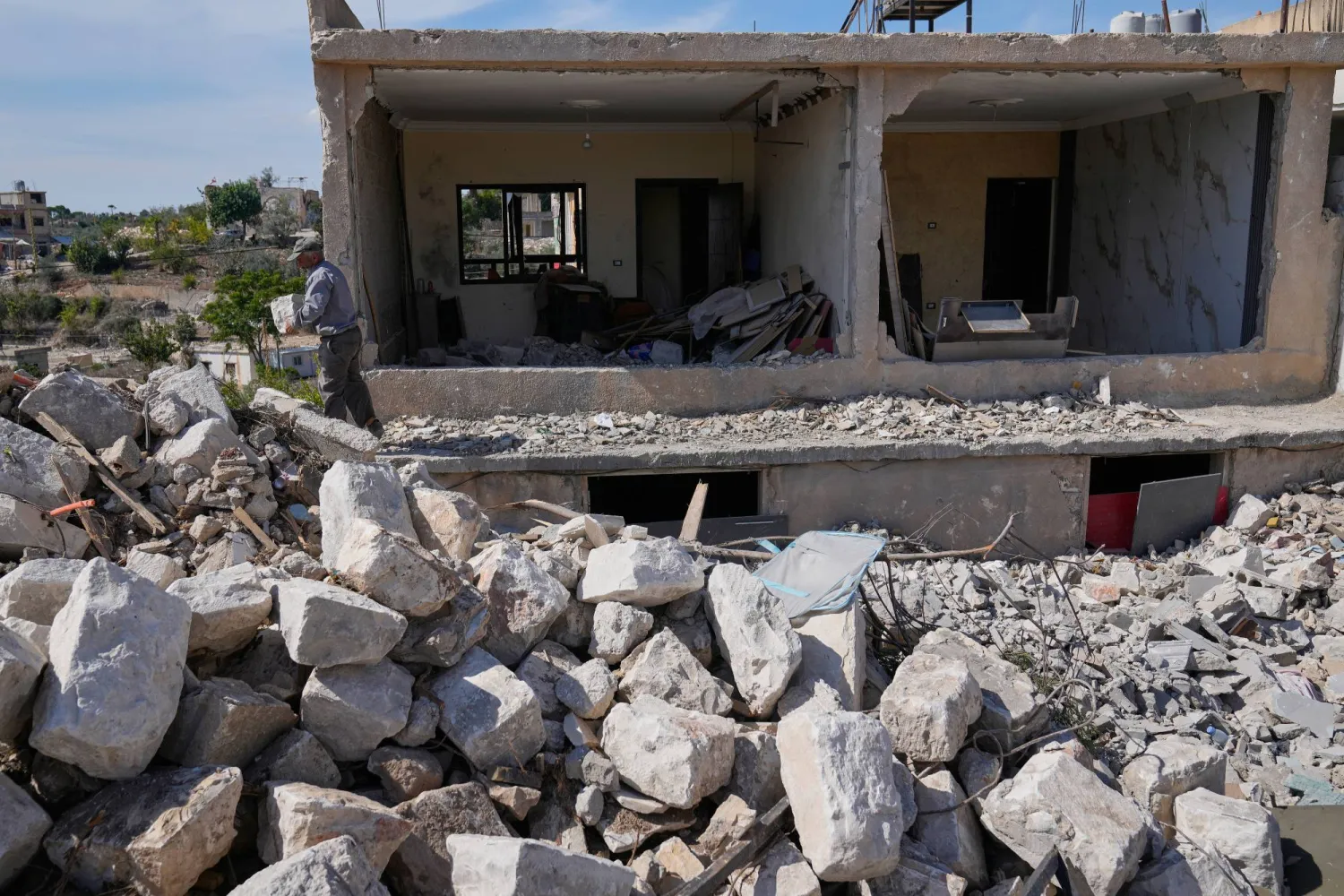
A man removes debris from his destroyed house, in Zawtar al-Gharbiyeh village, southern Lebanon, Tuesday, Oct. 20, 2026. (AP)
TT

Fear of Another War Weighs on Lebanon amid Regional Tensions

A man removes debris from his destroyed house, in Zawtar al-Gharbiyeh village, southern Lebanon, Tuesday, Oct. 20, 2026. (AP)

Lebanese people are once again confronting the possibility of war as mounting regional tensions raise fears that their country could be drawn into a wider conflict, either through Hezbollah’s involvement in a conflict involving Iran or renewed fighting with Israel.

The uncertainty is compounded by Washington’s unresolved decision on whether to resume military operations against Iran, Hezbollah’s silence over how it might respond and the Lebanese state’s inability to ensure the country remains outside the regional confrontation.

Deputy Prime Minister Tarek Mitri acknowledged “serious concerns” that a full-scale regional war could turn Lebanon into one of its battlegrounds, but cautioned that there was no concrete information pointing to such an outcome.

“We are still dealing with analysis and possibilities, not information,” he told Asharq Al-Awsat, noting that even those directly involved in mediation between Washington and Tehran lacked definitive answers.

Mitri denied that official delegations visiting Lebanon recently had advised authorities to prepare for war.

The decision to resume hostilities, he explained, would ultimately depend on US President Donald Trump, Iran’s response and Israel’s position.

“The war against Lebanon has not stopped in the first place. What we fear is that it will intensify again,” he said.

Asked about the government’s preparations for another round of fighting, Mitri pointed to its limited resources. “The state is doing everything it can on the relief front, but our capabilities are extremely limited.”
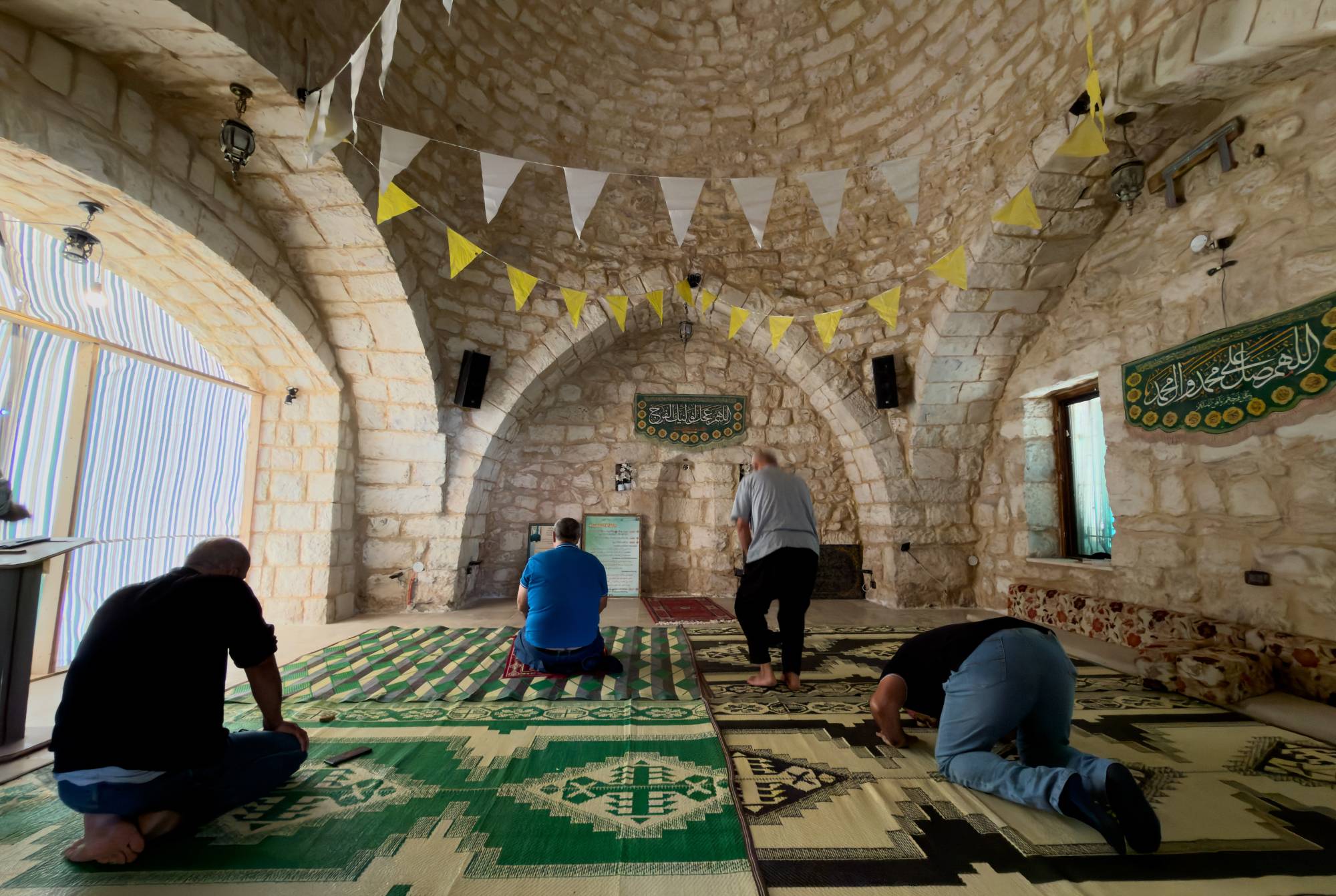
People pray inside a mosque in Zawtar al-Gharbiyeh village, southern Lebanon, Tuesday, Oct. 20, 2026. (AP)

Hezbollah remains silent

Iran-backed Hezbollah has given little indication of whether it would join a broader confrontation if Washington resumed its military campaign against Iran.

Reports suggest the group is making military and relief preparations in anticipation of renewed hostilities. Unconfirmed accounts have also said that Iran instructed Hezbollah to raise its military readiness.

Political analyst Qassem Kassir, who closely follows Hezbollah’s position, said the group had been preparing for the possibility of fresh Israeli attacks since the previous war ended.

“After every war, there is a review of what happened, lessons are drawn and preparations are made for any future confrontation,” he told Asharq Al-Awsat.

Such measures were only natural given Israel’s continuing attacks on Lebanon, he explained. But Kassir warned against drawing conclusions about Hezbollah’s intentions in the event of a US-Iranian confrontation, noting that even the likelihood of such a conflict remained uncertain.

“Even if war breaks out, many questions remain. What kind of war would it be? What would its repercussions be? How might it develop?” he wondered.

Hezbollah does not announce its decisions in advance, he explained. Its response would depend on the nature and scale of any fighting.

While preparations for different scenarios were to be expected, Kassir said there were no signs on the ground of an impending large-scale conflict.
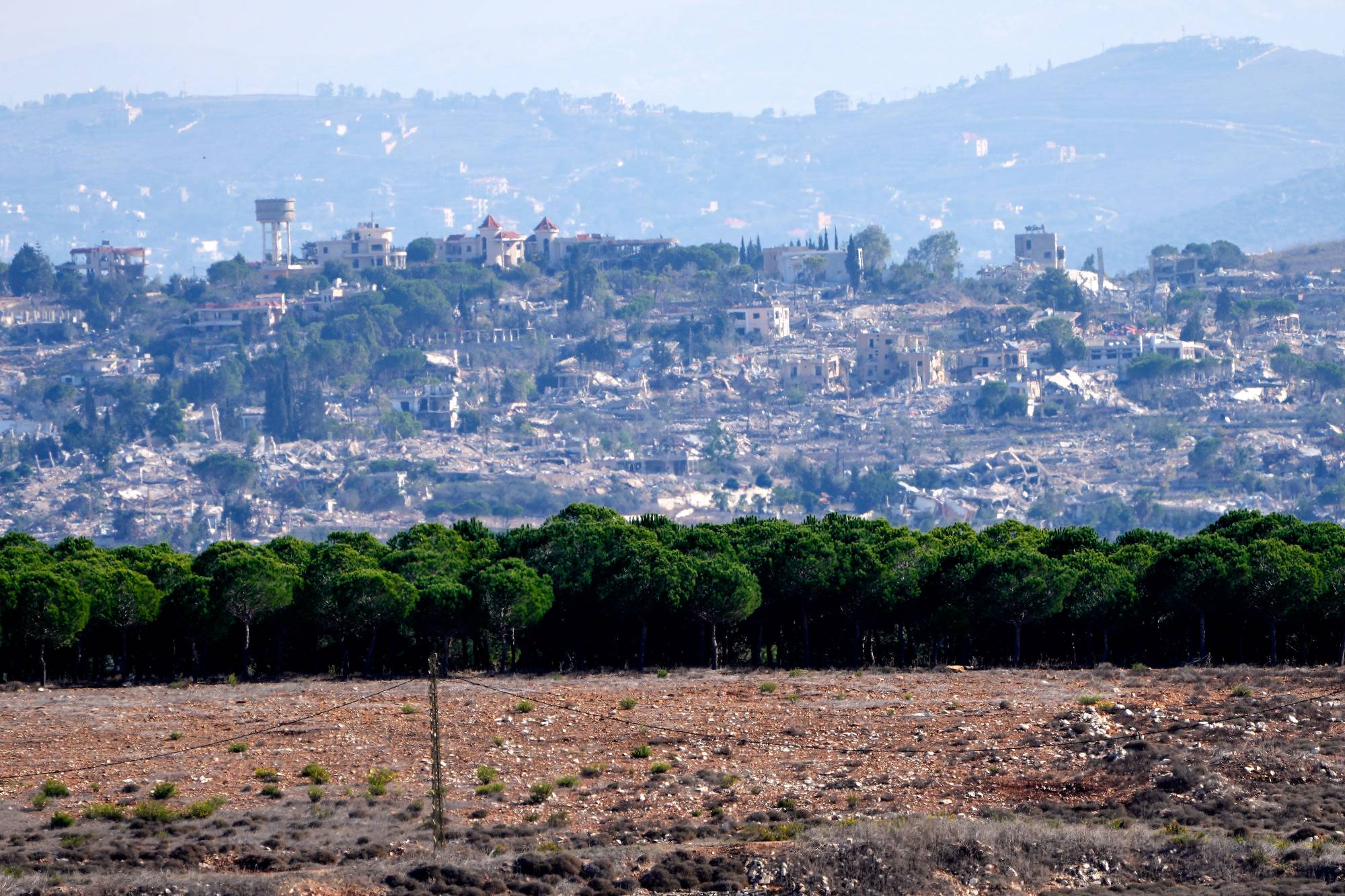
Demolished houses by Israeli forces in Kfar Tebnit village, are seen from Zawtar al-Gharbiyeh, southern Lebanon, Tuesday, Oct. 20, 2026. (AP)

Displacement fears

The anxiety is already shaping decisions among residents of South Lebanon and Beirut’s southern suburbs.

Those who can afford it continue to rent apartments in Mount Lebanon, the Iqlim al-Kharroub area and other locations considered safer when clashes between Hezbollah and Israel erupt.

For families who remain in vulnerable areas, the fear of returning to emergency shelters has become a constant concern.

Fatima M., 41, who works at a shopping center on the outskirts of Beirut’s southern suburbs, recalled taking refuge in Amchit, about 40 kilometers north of the capital, during earlier fighting.

“We are genuinely afraid of being displaced again,” she told Asharq Al-Awsat.

“I work in the southern suburbs, but the shelter where I stayed was in Amchit. We cannot endure any more tragedies or disasters. It is time for us to live in peace, like everyone else.”

Lebanon still has 63 shelters housing displaced people, including 44 educational institutions and 11 institutes and other facilities affiliated with the Education Ministry.

Ministry sources told Asharq Al-Awsat that buildings no longer used for teaching had been made available for emergency accommodation.


US Envoy Says Lebanon’s Hezbollah Should Disarm ‘Voluntarily'

Lebanese President Joseph Aoun receives US envoy Mike Waltz at the Baabda presidential palace on Monday. (NNA)
TT

US Envoy Says Lebanon’s Hezbollah Should Disarm ‘Voluntarily'

Lebanese President Joseph Aoun receives US envoy Mike Waltz at the Baabda presidential palace on Monday. (NNA)

Iran-backed Hezbollah should "voluntarily" lay down its weapons and hand them over to the Lebanese state, visiting US envoy Mike Waltz said on Monday, adding that "no country can have two armies".

"I think the message should be loud and clear, that Lebanese sovereignty must be fully restored," he said.

Waltz held separate talks in Lebanon with President Joseph Aoun and Prime Minister Nawaf Salam.


Syria Needs EU Support to Ensure Stability, Kallas Says

High Representative of the European Union for Foreign Affairs Kaja Kallas speaks prior to the Foreign Affairs Council meeting in Brussels, Belgium, 16 November 2026. (EPA)
TT

Syria Needs EU Support to Ensure Stability, Kallas Says

High Representative of the European Union for Foreign Affairs Kaja Kallas speaks prior to the Foreign Affairs Council meeting in Brussels, Belgium, 16 November 2026. (EPA)

European Union foreign ministers will discuss on Monday elevating their relationship with Syria as the war-torn country needs urgent support to ensure stability amid ‌escalating tensions ‌in the ‌region, ⁠the bloc's foreign policy ⁠chief said.

"We really see that Syria needs a lot of investments, to build ⁠up institutions and ‌its ‌reforms," Kaja Kallas ‌told reporters ahead of ‌a monthly foreign ministers meeting in Brussels.

"On the European side we ‌want to see Syrian refugees return but ⁠they ⁠need conditions to return. There's a lot we can do together because the stability of Syria is in our interest and the interest of region."


Jordan Bans Telegram App Over ‘Radicalization’ Claims

Jordanian military police stand guard outside Jordan's State Security Court in Amman, Jordan, November 15, 2026. (Reuters)
TT

Jordan Bans Telegram App Over ‘Radicalization’ Claims

Jordanian military police stand guard outside Jordan's State Security Court in Amman, Jordan, November 15, 2026. (Reuters)

Jordan announced a ban on the Telegram messaging app on Monday, citing concerns that it was being used to spread extremism, weeks after a deadly attack on a church.

"We announce the blocking of the Telegram app in Jordan, in the framework of efforts aiming to bolster digital security and protect users," the Jordanian security directorate said.

It said the move came "in the context of the commitment to protecting society and countering any uses that could contribute to and facilitate committing cyber crimes, threats, blackmail or spreading illegal content".

It also said it sought to counter "attempt to spread radicalization and extremism which affects national security".

The ban comes after the October 23 attack on a church in the southern Karak governorate that killed nine people and wounded dozens of others.

On Sunday, a court sentenced three men to death by hanging over the attack. Authorities described them as followers of a hardline extremist ideology.