


Thousands of Jordanians on Sunday laid to rest eight of the nine victims killed on Friday in a terrorist attack that targeted the Hamoud Church in the southern governorate of Karak, amid a large public and official turnout that underscored the principles of coexistence.
On Friday, gunmen suspected of being "takfiris" opened fire on churchgoers, killing nine and wounding about 25 others. The ninth victim will be buried Monday in the Sahab cemetery south of Amman, AFP reported, citing the victim's family.
The funerals extended far beyond the immediate tragedy at the church, as the village of Hamoud witnessed a national consensus that underscored Christian-Muslim fraternity and cast the terrorist crime as a catalyst for solidarity rather than strife.
An official presence dominated the funeral, with the heads of the constitutional authorities leading the ranks of mourners. Most of the governorate’s prominent figures, both Muslim and Christian, stood alongside the families of the church victims to receive condolences.
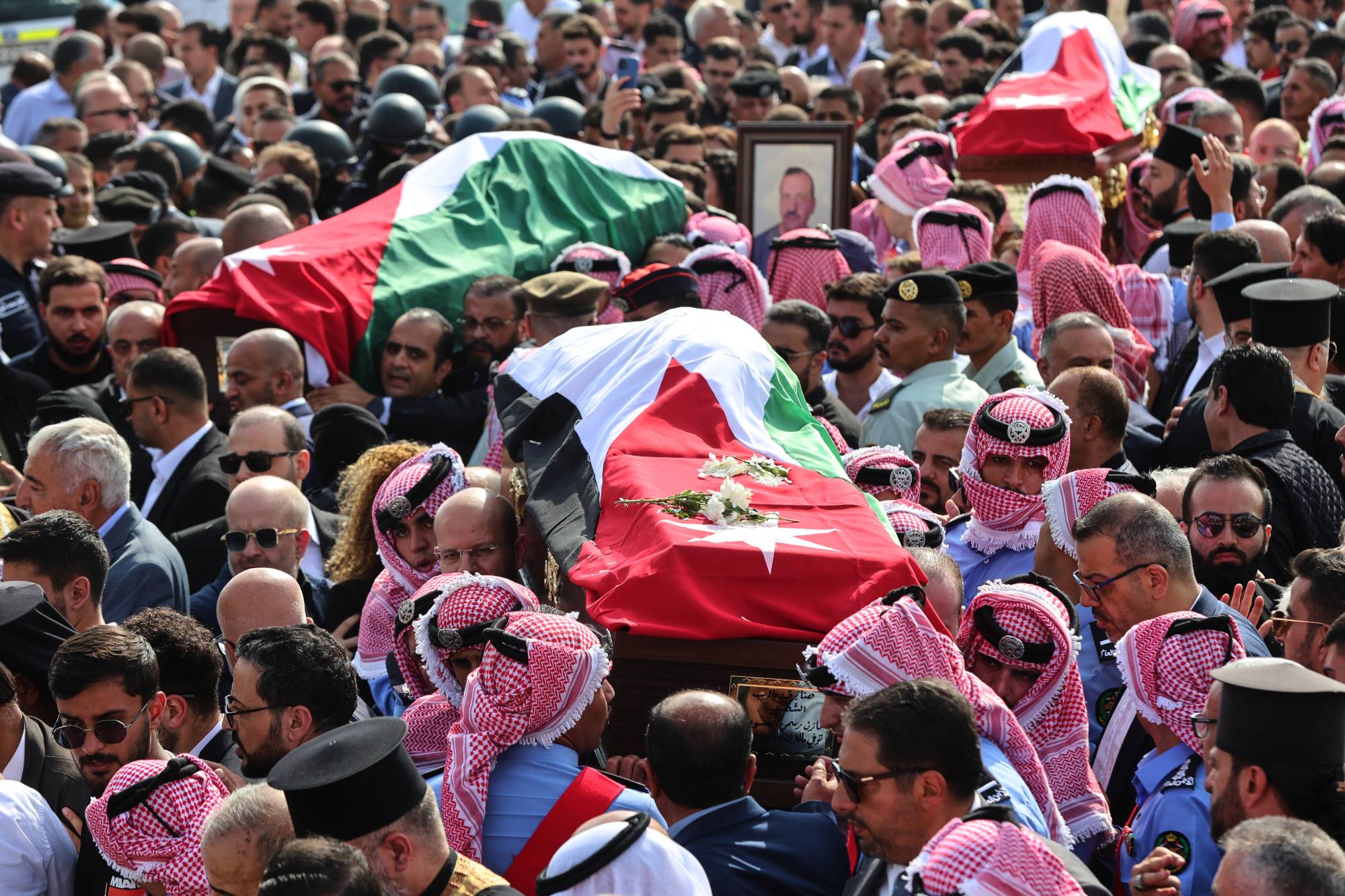
By order of Jordanian King Abdullah II, the Royal Hashemite Court undertook the arrangements and protocols for the massive funeral service, which drew thousands of people from across the kingdom.
In a reflection of the area's deep-rooted coexistence, the Christian victims killed at the church included Dr. Mohammad Al-Qassous. A member of the Al-Halsa clan, his parents chose his Muslim name out of a profound conviction that no distinction exists between the residents of a shared village. Widely recognized in the community, Al-Qassous was known as the "doctor of the poor."
Among the wounded in the terrorist attack were four Muslims, two of whom had arrived to help upon hearing the sound of gunfire.
Informed sources stated that "the past hours witnessed a continuation of search operations on a broader scale" for the attackers, noting that investigators are close to mapping and tracking the communication networks of the terrorist cell behind the church massacre.
According to the sources, the delay in announcing preliminary investigation results stems from search and tracking operations navigating the mountainous terrain east of the Karak governorate. They noted that the challenging topography of the search sites demands caution, particularly amid concerns that the militants may have cached weapons for use in further operations. Authorities are continuing to raid locations where suspects are believed to be hiding.
Prime Minister Jafar Hassan stated Sunday, during a cabinet meeting that opened with a recitation of Al-Fatiha for the victims, that "all state agencies are working to apprehend the terrorists behind the Karak crime so they face the punishment they deserve."
"This is not merely a security battle; this is a battle of awareness and ideology. Nations and homelands collapse when strife, bigotry, racism, and extremism spread within their societies,” he added.
During the funeral ceremonies, Asharq Al-Awsat observed striking scenes that encapsulated feelings of grief, anger, and a commitment to national unity.
As Muslim clerics stood alongside Christian clergy around the church, the victims' coffins were placed at the beginning of the farewell ceremony on a white cloth bearing a message of peace and adorned with flowers, before being carried in a solemn military funeral on the shoulders of general security personnel, draped in Jordanian flags.
Another scene encapsulated the depths of anger, as young Jordanian men wore the Shemagh (a red Jordanian headdress) upside down - a tribal custom that symbolizes a demand for revenge - expressing their outrage over the crime.
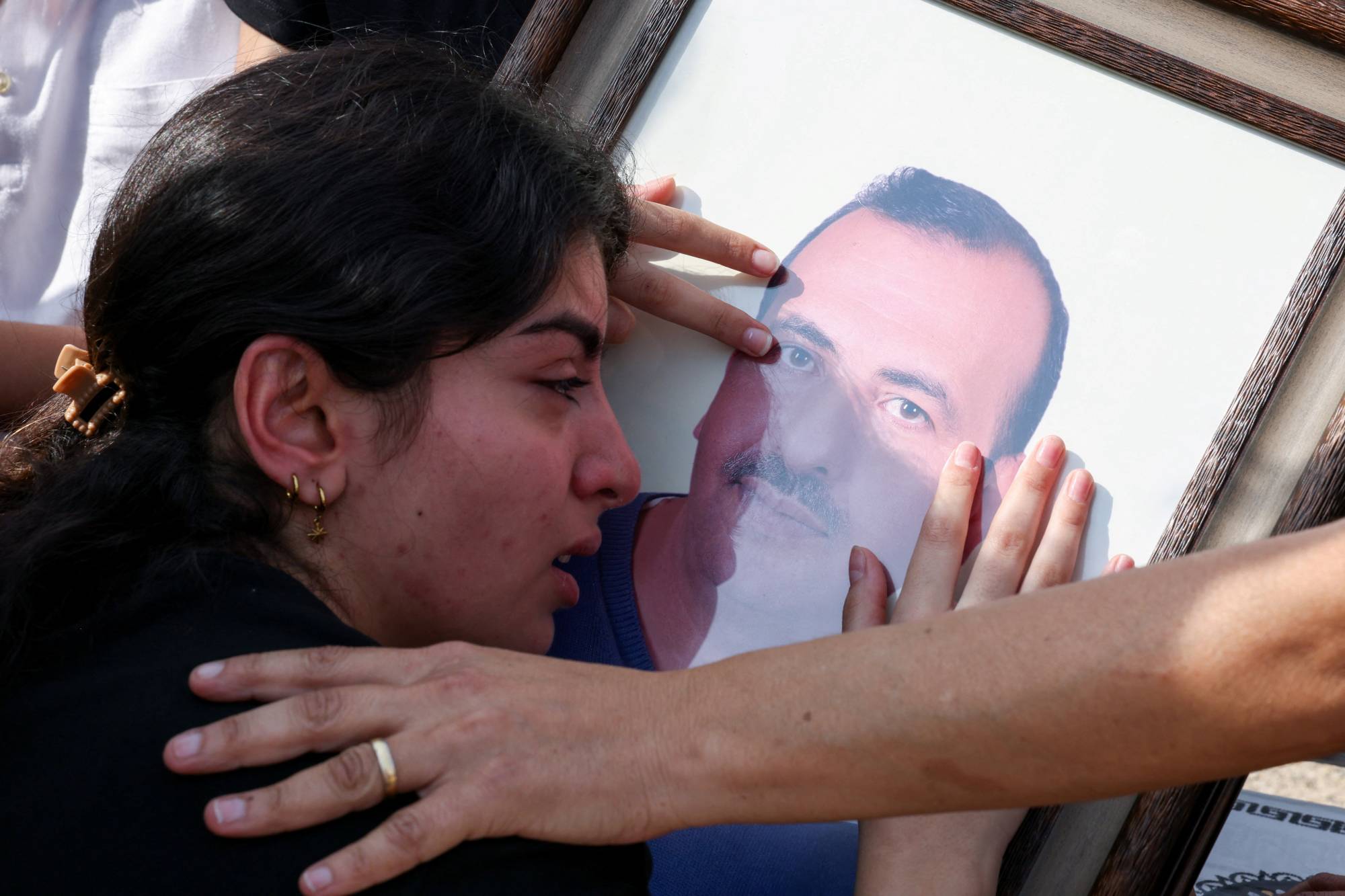
Following the burials, the ululations of the victims' mothers, wives, daughters, and sisters filled the air, blending with the tears of farewell in a scene that united the pain of loss with immense pride in the departed.


