‘No Fuel to Keep Babies Warm’: Shortages Push Hospitals in Yemen’s Taiz to Brink

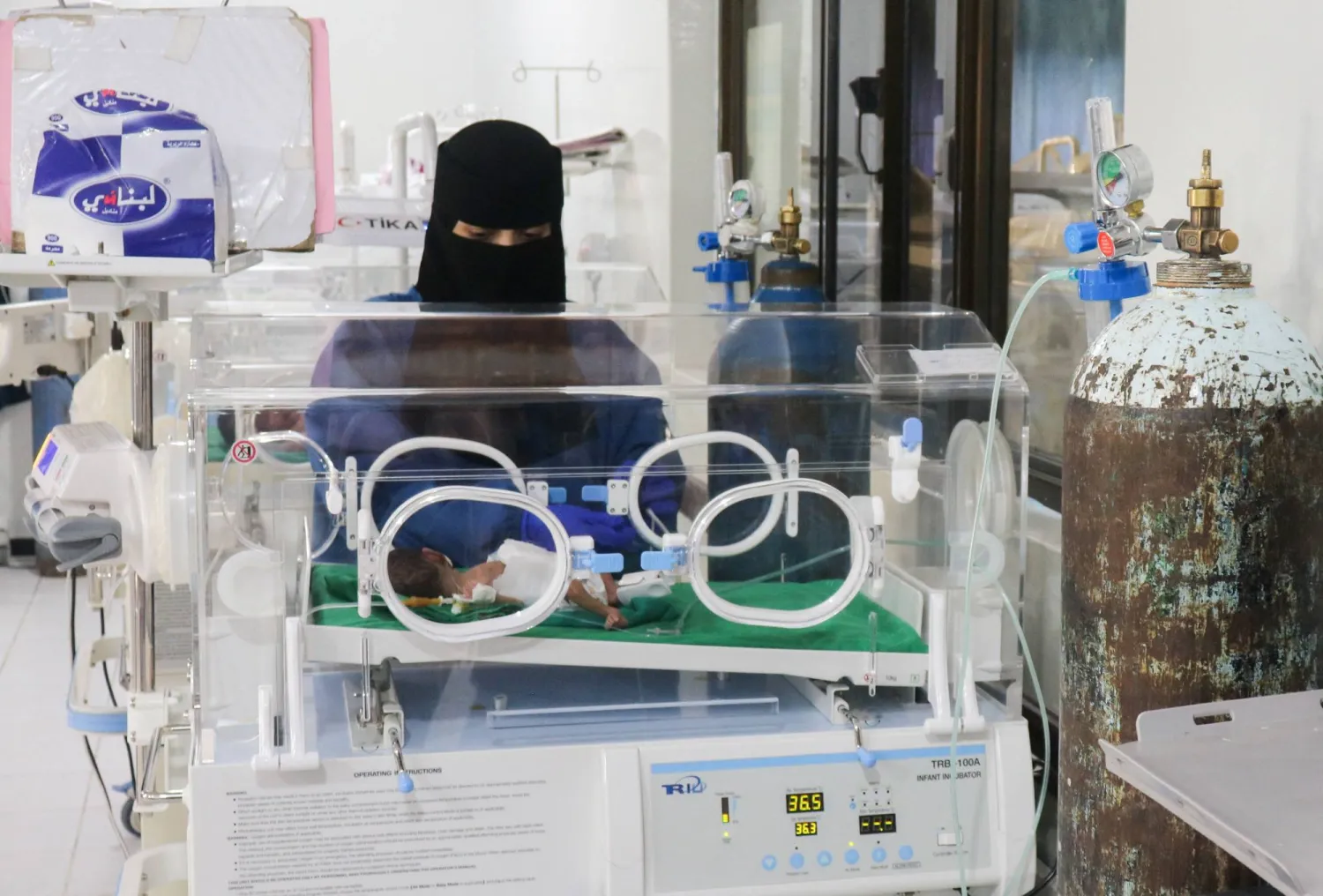
A nurse attends to a newborn baby inside an incubator at a hospital in the southwestern city of Taiz, Yemen, October 23, 2026. (Reuters)
TT

‘No Fuel to Keep Babies Warm’: Shortages Push Hospitals in Yemen’s Taiz to Brink

A nurse attends to a newborn baby inside an incubator at a hospital in the southwestern city of Taiz, Yemen, October 23, 2026. (Reuters)

Fuel shortages in Yemen's besieged city of Taiz have forced one hospital to cut the number of incubators it can operate from 40 to 10, putting newborn babies at risk as weeks of fighting choke off vital supplies and deepen a humanitarian crisis affecting hundreds of thousands of people.

"There's no oxygen, there's no fuel to run the incubators, to keep the babies warm," said Nada Ahmed, a nurse in the neonatal unit of the Yemeni-Swedish Hospital for Maternity and Childhood.

Nawal Najeeb, a supervisor in the neonatal unit, warned the facility could be forced to halt operations if fuel supplies do not arrive.

"It will be a catastrophe for the babies, a catastrophe of deaths ‌and disabilities."

Taiz has ‌been largely isolated since October 3, with fighting preventing humanitarian supplies ‌from ⁠entering and civilians from ⁠leaving, following an escalation in clashes between the legitimate government and the Iran-aligned Houthi group.

FUEL PRICES SURGE

Key supply routes, including the Taiz-Aden corridor, have been blocked by Houthi forces, worsening shortages of water, food and fuel. The city hosts nearly half of the 250,000 people displaced by the latest fighting, according to the United Nations.

In Taiz city, 42 health facilities are reporting acute shortages of fuel, oxygen, medicines and medical supplies, WHO spokesperson Christian Lindmeier said.

Fuel prices have surged to 2,000 Yemeni rials per liter, driver Abdullah ⁠al-Radfani told Reuters.

Oxfam Yemen's policy, advocacy and media manager, Fatma Jaffar Shotah, ‌described one dialysis patient who has to spend two nights ‌at a healthcare center rather than traveling home between sessions because regular journeys have become unaffordable, the cost ‌rising from half a dollar to around $10.

"Fuel shortage inside the city is having catastrophic impacts ‌on people's lives," she said.

The strain is being felt beyond Taiz. Aid group Médecins Sans Frontières (MSF) said fuel shortages were causing power outages at hospitals and primary healthcare centers in the southern governorates of Aden and Lahj, affecting operating theatres and intensive care units.

HUNGER AND MALNUTRITION

UN agencies and aid groups also warned of worsening ‌hunger and malnutrition. The World Food Program says that more than 800,000 people have been cut off from food assistance in Taiz and surrounding ⁠areas.

UNICEF spokesperson Ricardo Pires ⁠said 52,000 of the 168,000 children screened in Taiz so far this year are acutely malnourished, including more than 11,500 suffering from severe acute malnutrition.

Although UNICEF has put in place nearly 8,000 cartons of life-saving therapeutic food, enough to sustain treatment services for around three months, Pires warned that worsening insecurity and movement restrictions could hamper future deliveries and prevent families from reaching treatment centers.

MSF said growing displacement was aggravating child malnutrition in southern Yemen, an area which has already faced a long-standing hunger crisis, as families flee fighting in the north and along the west coast.

Between September 15 and October 22, MSF screened 299 children under 5 at its mobile clinics in Aden and Lahj. Forty-four children, or 14.7%, were suffering from moderate acute malnutrition, while 28 children, or 9.4%, were severely malnourished and in need of hospital care.

"In each location we go, on a daily basis, we see at least one or two children who are in severe acute malnutrition," said MSF's mobile health activity manager, Sara Ghanem.


UNICEF Stresses Need to Allow Humanitarian Aid into Gaza to Save Children

A Palestinian evacuates with their belongings from the remains of their homes, where they had been living near the Yellow Line, east of the Zeitoun neighborhood in eastern Gaza City, 14 November 2026.EPA/MOHAMMED SABER
TT

UNICEF Stresses Need to Allow Humanitarian Aid into Gaza to Save Children

A Palestinian evacuates with their belongings from the remains of their homes, where they had been living near the Yellow Line, east of the Zeitoun neighborhood in eastern Gaza City, 14 November 2026.EPA/MOHAMMED SABER

The United Nations Children’s Fund (UNICEF) Middle East and North Africa Regional Office said the international community must exert pressure on the Israeli occupation to allow more humanitarian aid into the Gaza Strip and ensure access to children throughout the territory. It stressed that children in Gaza are deprived of the most basic necessities of life.

The office said that despite a year having passed since the announcement of the ceasefire, children in the Gaza Strip continue to suffer, SPA reported.

It noted that 360 children had been killed and more than 1,700 seriously injured since the ceasefire was announced, describing this as a flagrant violation of the ceasefire.

It added that conditions in the Gaza Strip are tragic, particularly with the onset of winter and heavy rainfall. The office also indicated that UNICEF had expanded its humanitarian response since the ceasefire and was working to provide healthcare and safe water to more than one million people. However, humanitarian needs in the Gaza Strip remain far greater than the assistance being provided.

The office stressed that the Israeli occupation continues to tighten restrictions and prevent the entry of some essential supplies, including spare parts for water and sewage systems and shelter materials.


Lebanese, Syrian Interior Ministers Hold 'Special' Meeting in Damascus

Syrian Interior Minister Anas Khattab welcomes Lebanese Interior Minister Ahmad al-Hajjar (Lebanese Interior Ministry)
TT

Lebanese, Syrian Interior Ministers Hold 'Special' Meeting in Damascus

Syrian Interior Minister Anas Khattab welcomes Lebanese Interior Minister Ahmad al-Hajjar (Lebanese Interior Ministry)

Lebanese and Syrian officials continued efforts to strengthen communication and coordination on Sunday as Lebanon's Interior and Municipalities Minister Ahmad al-Hajjar visited Damascus and met his Syrian counterpart, Anas Khattab.

The visit marked another step toward reorganizing relations between the two countries, particularly on security and border issues, amid shared challenges and a growing need for cooperation between their respective agencies.

Al-Hajjar met Khattab at the Syrian Interior Ministry headquarters in the first official meeting between the two ministers. Their talks focused on priorities for bilateral cooperation and mechanisms to improve coordination between the relevant authorities.

Syria's Interior Ministry said Minister Anas Khattab had received his Lebanese counterpart and that the meeting reviewed bilateral relations and explored ways to strengthen security cooperation and coordination between the two ministries, serving the interests of both countries and their peoples while reinforcing regional security and stability.

Al-Hajjar arrived at the Syrian Interior Ministry headquarters on Sunday morning, where Khattab welcomed him at an official reception ceremony.

The Lebanese minister was accompanied by Brig. Gen. Sami Nassif, secretary of the Central Internal Security Council, and a delegation from the Ministry of Interior and Municipalities.

Khattab: Committed to Strengthening Relations

Syrian Interior Minister Anas Khattab described the meeting as special, saying the discussions addressed ways to enhance cooperation and coordination on issues of mutual interest.

According to the Syrian Arab News Agency (SANA), Khattab wrote on X that the two sides had reaffirmed the depth of Syrian-Lebanese relations and their shared commitment to developing ties across all fields in ways that would serve the security and stability of both countries and their peoples.

Sources at Lebanon's Interior Ministry said the meeting lasted more than an hour and a half and covered a range of shared issues, particularly security matters.

These included border control, official and unofficial crossings, measures being implemented along the border and the issue of detainees.

Lebanese Interior Minister Ahmad al-Hajjar also wrote on X that he had been honored to accept an invitation from his Syrian counterpart, Anas Khattab, to visit historic Damascus.

He described stops at the Interior Ministry, the streets of Old Damascus, Bab Touma, the Umayyad Mosque and Mount Qasioun as giving the visit a special character.

Al-Hajjar said the trip had provided an opportunity to discuss cooperation and coordination on several issues, particularly security matters.

He reaffirmed that Lebanon and Syria were brotherly countries and expressed his determination to strengthen cooperation in ways that would serve their shared interests.

The visit follows a series of Lebanese-Syrian contacts and meetings in recent months aimed at developing practical mechanisms to address outstanding bilateral issues.

In August, a joint delegation from Syria's Interior and Foreign Ministries met Al-Hajjar and several senior Lebanese officers in Beirut to discuss major issues of mutual concern and ways to strengthen security cooperation between the two countries.

On the eve of his visit to Damascus, Al-Hajjar stressed the importance of improving relations and coordination between Lebanon and Syria, noting that security cooperation had produced positive results in combating drug trafficking and terrorism.

His visit also followed a Lebanese ministerial delegation's trip to Damascus on November 2, led by Deputy Prime Minister Tarek Mitri.

The delegation included Labor Minister Mohammad Haidar, Education and Higher Education Minister Rima Karami, and Social Affairs Minister Hanine El Sayed, along with a technical delegation from the Interior Ministry.

The Lebanese officials discussed several shared issues with their Syrian counterparts, notably Syrian displacement and the return of refugees, regulating the presence of Syrian nationals in Lebanon, and border control, alongside educational, social and labor matters.

Al-Hajjar had initially been scheduled to join the November 2 visit but postponed his trip to Damascus after an emergency prevented his planned meeting with the Syrian interior minister from taking place.


Yemeni Presidency: Redeployment of Forces Near Bab Al-Mandab a 'Calculated Military Move'

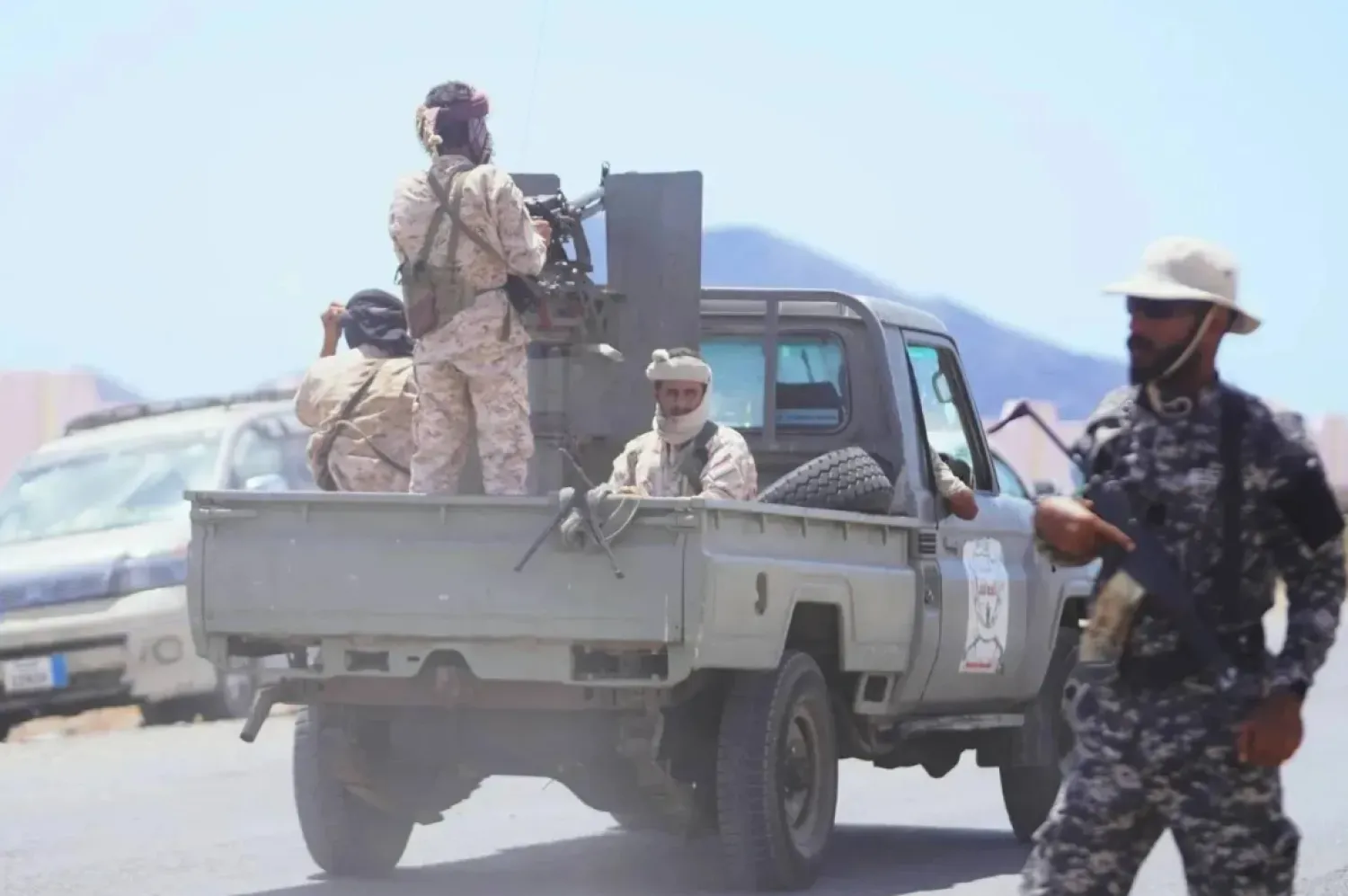
Members of Yemen's Southern Giants Brigades near the Bab Al-Mandab Strait (AP)
TT

Yemeni Presidency: Redeployment of Forces Near Bab Al-Mandab a 'Calculated Military Move'

Members of Yemen's Southern Giants Brigades near the Bab Al-Mandab Strait (AP)

A source in the Yemeni presidency told Asharq Al-Awsat that the Southern Armed Forces' redeployment around Bab Al-Mandab and Dhubab was a calculated military move aimed at achieving three main objectives: protecting Aden, reinforcing the fronts in Lahj and creating the conditions to break the siege of Taiz and liberate the province.

Jaber Mohammed, a media adviser to the Yemeni presidency and former director of the office of Abu Zara'a Al-Muharrami, explained that the redeployment from the vicinity of Bab Al-Mandab and Dhubab should not be interpreted as a withdrawal in the military sense, but rather as a move to redistribute troops and reinforce positions with greater influence over the course of the fighting.

He described the redeployment as a calculated military move intended to protect Aden, strengthen the fronts in Lahj and create the conditions for lifting the siege of Taiz.

Yemeni Armed Forces spokesman Col. Majed Abdullah Al-Nazili said the Southern Forces' commitment to breaking the siege of Taiz represented a national stance at a particularly sensitive stage, stressing that protecting the capital, Aden, and lifting the siege of Taiz were national and moral responsibilities aimed at confronting the threat posed by Houthi militia violations.

According to observers, Aden and its neighboring provinces constitute a strategic hinterland and a major political, economic and population center. Reinforcing defensive lines around the city is therefore closely linked to protecting state institutions and preventing the fighting from spreading toward the capital.

Jaber noted that deploying troops along the exposed coastal strip made them more vulnerable to attack, while the greatest danger lay in the mountainous heights overlooking Bab Al-Mandab, Dhubab and Mayyun Island.

Control of those heights, he explained, would allow the occupying force to threaten the coastline and outflank troops stationed along it.

He added that the Southern Forces had repositioned themselves in the Al-Suqyah area, approximately six to eight kilometers from Bab Al-Mandab, keeping them within the operational area of the front.

A Southern military commander warned that losing the heights overlooking the coast could open the way for an advance toward Lahj and Aden, particularly given the proximity of Ras Al-Arah and Al-Mudaribah to the Al-Buraiqah district of Aden.

He said securing the elevated positions would help protect the coastal strip and allow troops to operate in more militarily advantageous terrain, reducing the strain of maintaining exposed positions.

In a statement, the Southern Armed Forces said the redeployment was a response to changing battlefield priorities and did not represent an abandonment of the fight against the Houthis or efforts to lift the siege of Taiz.

The statement emphasized that protecting Aden, its institutions and its residents remained a priority, alongside reinforcing the front lines and confronting existing threats.

The forces reaffirmed their commitment to continuing operations with the support of the Saudi-led Coalition to Support Legitimacy in Yemen until state institutions were restored and enabled to carry out their responsibilities.

The presidential media adviser said that since the launch of Operation Fajr Yemen on October 5, Southern Forces had advanced toward Dhubab Airport and parts of Bab Al-Mandab and Kahbub.

He noted that Al-Wazi'iyah and the highlands overlooking the coast remained strategically important, adding that, in his assessment, the Kahbub mountains were still under the control of forces affiliated with the Yemeni government.

Jaber Mohammed said assessing the terrain, troop positions, the enemy's weapons and methods of attack was essential to operational planning.

He added that expanding the fighting across multiple fronts could disperse Houthi forces and ease pressure on individual battlefronts.

Meanwhile, Yemeni military sources stressed that Aden's security was nonnegotiable and that any threat to the temporary capital would be met with a firm response.

They said the developments involved more than the redeployment of military units, describing them as part of efforts to prevent new realities from being imposed by force and to safeguard state institutions and national resources.

Yemeni Armed Forces spokesman Al-Nazili had previously emphasized that liberating Bab Al-Mandab and the western coast was an inherent right of the armed forces.

He called on the international community to fulfill its responsibilities by contributing to the liberation efforts, given the strait's vital importance to maritime security and international trade.

Al-Nazili said the armed forces remained united in carrying out their duties to protect the Yemeni people and their resources and confront threats from the Houthi militia.

He reaffirmed that Operation Fajr Yemen would continue pursuing its stated objectives until the threat posed by the Houthis was eliminated.