


Lebanon’s EDL Begins Cutting Power to Ministries, Municipalities and Public Institutions over Unpaid Dues

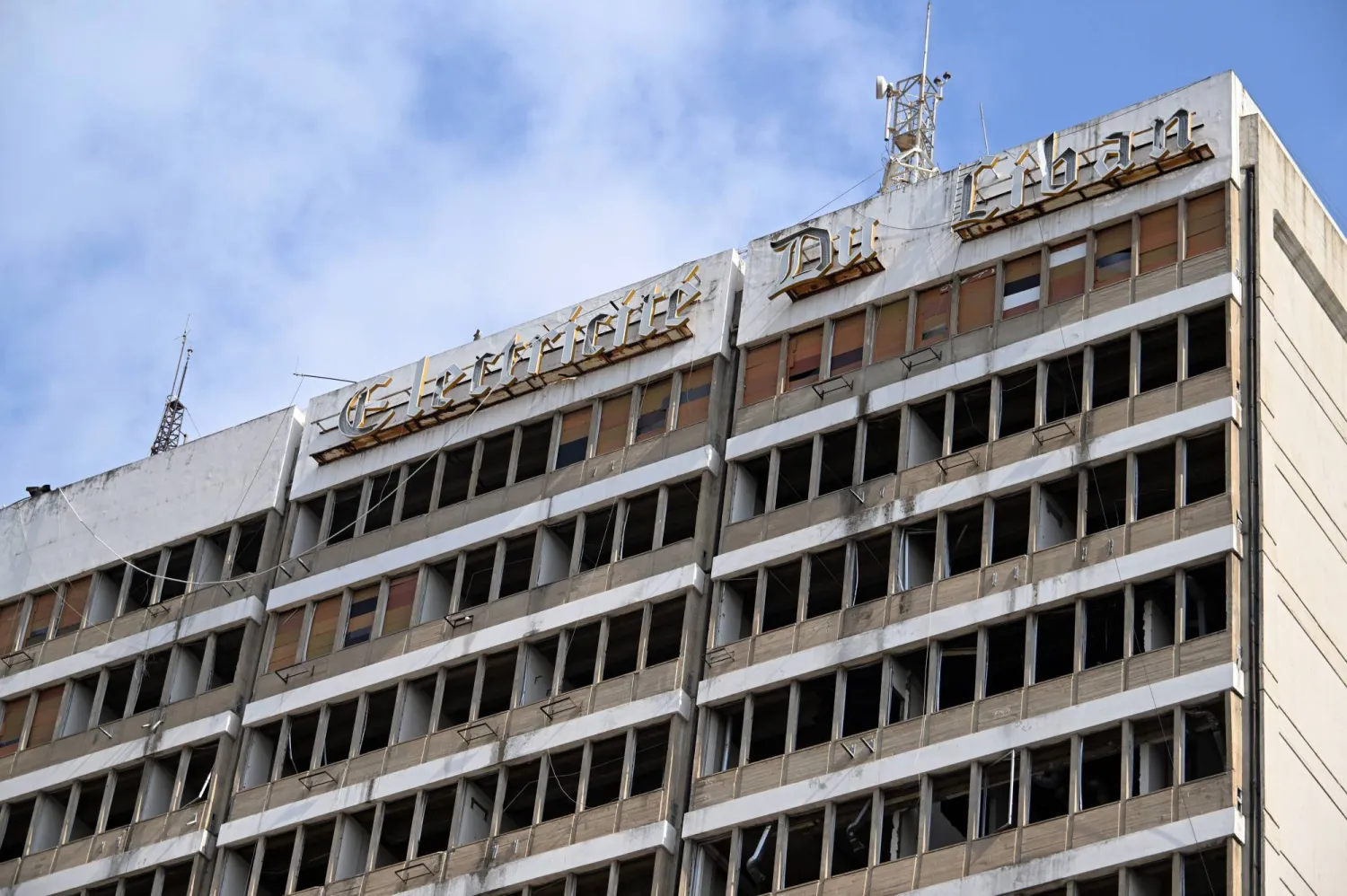
The offices of Electricite du Liban in Beirut on August 17, 2024. (EPA)
TT

Lebanon’s EDL Begins Cutting Power to Ministries, Municipalities and Public Institutions over Unpaid Dues

The offices of Electricite du Liban in Beirut on August 17, 2024. (EPA)

Lebanon’s public power utility, "Electricite du Liban" (EDL), began on Monday implementing measures to disconnect electricity supply to public administrations, public institutions, and municipalities that have failed to settle their financial dues.

This unprecedented move, in terms of its sweeping scope, targets ministries, official bodies, water authorities, and municipalities. It comes amid a severe financial crisis confronting the state utility due to the accumulation of public sector debts.

An initial list obtained by Asharq Al-Awsat revealed the names of institutions and administrations covered by the measures. They include the Council for Development and Reconstruction, Ministry of Public Works and Transport, Directorate General of Urban Planning, Directorate General of Education at the Ministry of Education and Higher Education, the Land Registry Directorates, and the Directorate General of Customs, in addition to subscriptions belonging to the Ministry of Telecommunications across various regions.

An informed source confirmed to Asharq Al-Awsat that "the decision to cut electricity to public institutions and administrations that fail to settle their dues does not aim to punish them or disrupt their work, but rather to enforce respect for the law and establish permanent financial regularity in paying electricity bills, thereby ensuring that EDL secures its rights and the continuity of its operations."

The source explained that "the primary objective is not the power disconnection itself, but rather to push public institutions to assume their financial responsibilities and settle their accumulated obligations on a regular basis, instead of continuing to pile up debts and resorting to temporary fixes whenever the crisis intensifies."

Rafik Hariri International Airport in Beirut successfully avoided a power disconnection after the Civil Aviation Authority reached an understanding with EDL. The agreement stipulates the payment of a portion of the accumulated dues and the rescheduling of the remaining amounts, alongside a commitment to settle incoming bills on a regular basis.

The accumulated dues owed by the Directorate General of Civil Aviation reached around $22.8 million, according to figures circulated regarding public sector debts.

These measures come in light of EDL’s need to collect regular revenues to finance fuel purchases and operate power plants. Its dues from public administrations and institutions reached around a quarter of a billion dollars.

The problem of arrears dates back to years of irregular electricity bill payments and has worsened with the tariff increase and the lack of sufficient credit availability among some administrations. This presents a dual challenge related to settling past debts and ensuring the payment of new consumption.


Jordan Bans Telegram App Over ‘Radicalization’ Claims

Jordanian military police stand guard outside Jordan's State Security Court in Amman, Jordan, November 15, 2026. (Reuters)
TT

Jordan Bans Telegram App Over ‘Radicalization’ Claims

Jordanian military police stand guard outside Jordan's State Security Court in Amman, Jordan, November 15, 2026. (Reuters)

Jordan announced a ban on the Telegram messaging app on Monday, citing concerns that it was being used to spread extremism, weeks after a deadly attack on a church.

"We announce the blocking of the Telegram app in Jordan, in the framework of efforts aiming to bolster digital security and protect users," the Jordanian security directorate said.

It said the move came "in the context of the commitment to protecting society and countering any uses that could contribute to and facilitate committing cyber crimes, threats, blackmail or spreading illegal content".

It also said it sought to counter "attempt to spread radicalization and extremism which affects national security".

The ban comes after the October 23 attack on a church in the southern Karak governorate that killed nine people and wounded dozens of others.

On Sunday, a court sentenced three men to death by hanging over the attack. Authorities described them as followers of a hardline extremist ideology.


Confrontation between Iraqi PM, Kataib Hezbollah Intensifies

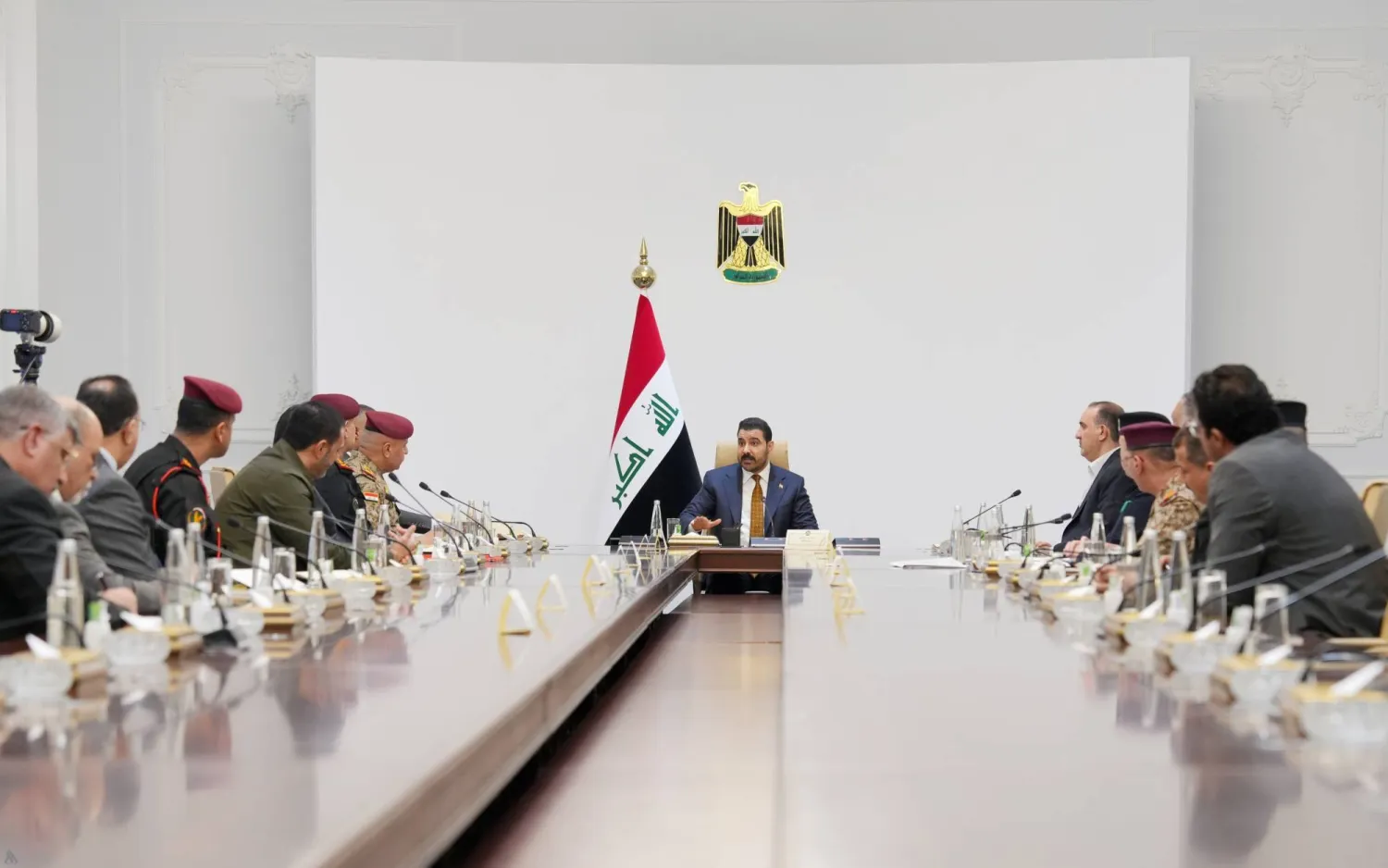
Iraqi PM Ali al-Zaidi chairs a security meeting on Sunday on oil smuggling in Jurf al-Sakhar. (INA)
TT

Confrontation between Iraqi PM, Kataib Hezbollah Intensifies

Iraqi PM Ali al-Zaidi chairs a security meeting on Sunday on oil smuggling in Jurf al-Sakhar. (INA)

Iraqi Prime Minister Ali al-Zaidi has won half the battle against armed factions by referring dozens of security and military officials across Babil province’s operational sectors to the judiciary for failing to halt oil smuggling in Jurf al-Sakhar, an area that has been held by the Kataib Hezbollah faction.

The government has made strides in its efforts to impose state monopoly over arms, including by offering government positions as incentives to several armed groups.

A number of those factions, including Kataib Hezbollah and Harakat al-Nujaba, have however refused to surrender their arms, arguing that they are “ideological” and tied to what is known as the “unity of arenas”, as promoted by Iran.

However, the sudden revelation that the armed faction, which has controlled Jurf al-Sakhar for years, was involved in smuggling oil passing near the area by puncturing pipelines has largely changed the equation.

The revelation was made after the security-political committee formed by al-Zaidi managed to enter the previously off-limits area to the authorities. There, it uncovered oil smuggling operations involving tanker trucks.

The development prompted al-Zaidi, who is also Commander-in-Chief of the Armed Forces, to issue several decisions viewed by experts as paving the way, for the first time, for a real confrontation with the armed factions to allow military units to enter the area.

According to a statement from the Office of the Commander-in-Chief of the Armed Forces, al-Zaidi chaired an emergency security meeting on Saturday evening to review the findings of a committee investigating oil smuggling in Jurf al-Sakhar.

The committee confirmed the accuracy of Federal Intelligence and Investigations Agency reports detailing oil smuggling operations, unauthorized refineries, and administrative irregularities.

“In light of the investigation’s findings, the Commander-in-Chief of the Armed Forces directed that all suspects involved in the oil smuggling operations be referred to the judiciary and that legal measures be taken against them,” it added.

He also decided to relieve the following officials in Babil of their duties: the police chief, the director of northern Babil police, the director of Babil intelligence and counterterrorism at the Ministry of Interior, the director of national security in Babil, the director of intelligence and security for Babil province at the Ministry of Defense, the director of Babil intelligence, the commander of the Popular Mobilization Forces (PMF) in Babil, the commander of the Energy Police’s Sixth Brigade at the Ministry of Interior, and the director of the Oil Pipelines Company at the Ministry of Oil.

“The Commander-in-Chief directed that operations commanders, provincial police chiefs, and directors of security and intelligence agencies bear full responsibility for any oil smuggling incidents occurring within their sectors of responsibility.”

He stressed the need to tighten oversight and security measures to prevent these practices and hold those negligent accountable, stressing that “not a single inch of Iraq, from Zakho to Basra, will remain a place where smuggling is practiced.”

Legal expert Ali al-Tamimi told Asharq Al-Awsat that “Iraq today faces the most dangerous threat to its sovereignty: weapons outside state control.”

He said the PM’s measures in Jurf al-Sakhar sparked widespread legal debate even though the moves align with the constitution.

“These referrals and dismissals are grounded in Article 78, which designates the prime minister as the direct executive responsible for the state's general policy and commander-in-chief of the armed forces,” he remarked.

He added: “Individuals who sabotage oil infrastructure are prosecuted as terrorists under the Anti-Terrorism Law and could gave penalties up to the death penalty.”


UNICEF Stresses Need to Allow Humanitarian Aid into Gaza to Save Children

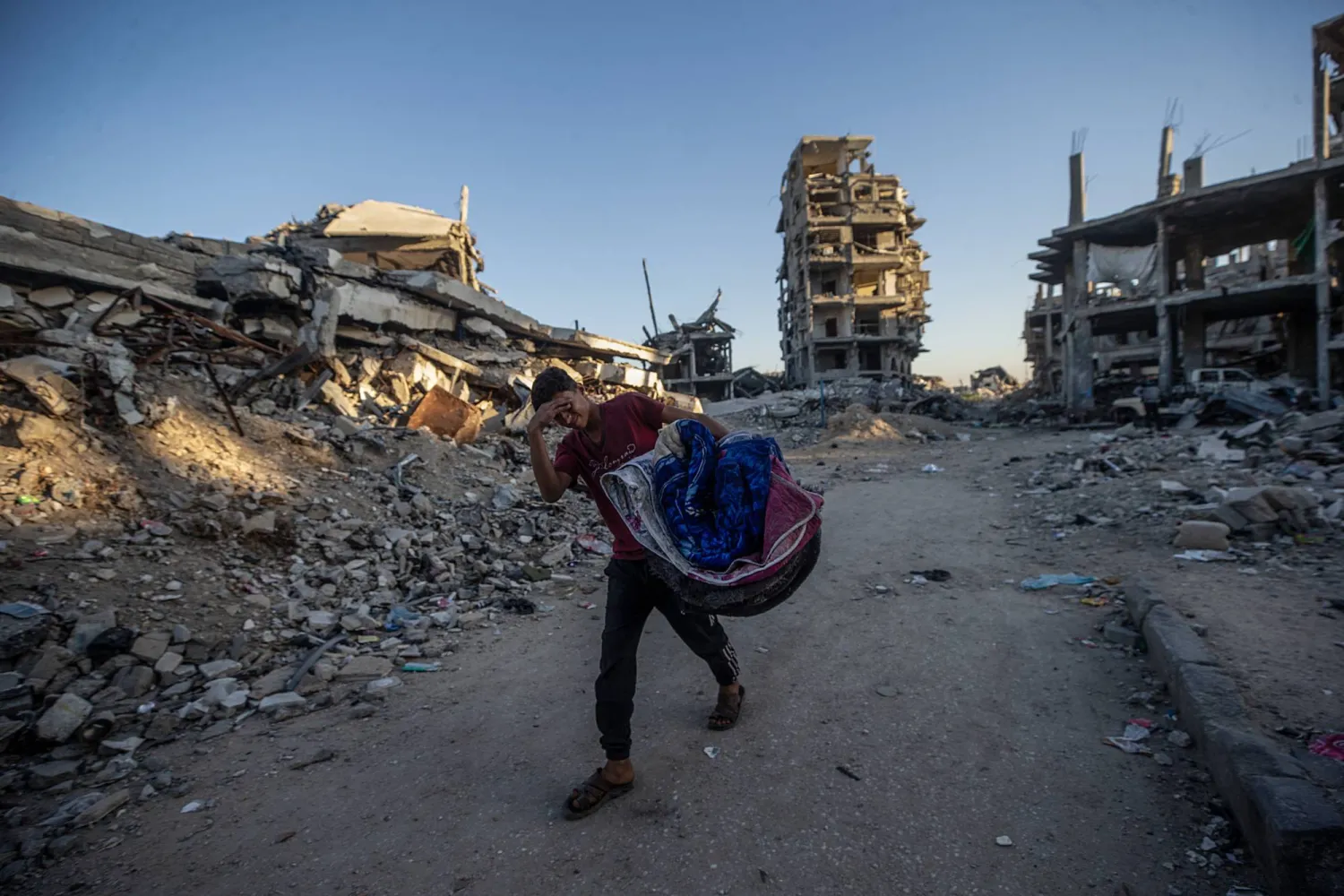
A Palestinian evacuates with their belongings from the remains of their homes, where they had been living near the Yellow Line, east of the Zeitoun neighborhood in eastern Gaza City, 14 November 2026.EPA/MOHAMMED SABER
TT

UNICEF Stresses Need to Allow Humanitarian Aid into Gaza to Save Children

A Palestinian evacuates with their belongings from the remains of their homes, where they had been living near the Yellow Line, east of the Zeitoun neighborhood in eastern Gaza City, 14 November 2026.EPA/MOHAMMED SABER

The United Nations Children’s Fund (UNICEF) Middle East and North Africa Regional Office said the international community must exert pressure on the Israeli occupation to allow more humanitarian aid into the Gaza Strip and ensure access to children throughout the territory. It stressed that children in Gaza are deprived of the most basic necessities of life.

The office said that despite a year having passed since the announcement of the ceasefire, children in the Gaza Strip continue to suffer, SPA reported.

It noted that 360 children had been killed and more than 1,700 seriously injured since the ceasefire was announced, describing this as a flagrant violation of the ceasefire.

It added that conditions in the Gaza Strip are tragic, particularly with the onset of winter and heavy rainfall. The office also indicated that UNICEF had expanded its humanitarian response since the ceasefire and was working to provide healthcare and safe water to more than one million people. However, humanitarian needs in the Gaza Strip remain far greater than the assistance being provided.

The office stressed that the Israeli occupation continues to tighten restrictions and prevent the entry of some essential supplies, including spare parts for water and sewage systems and shelter materials.