
Iraqi officials fear Iran-backed armed factions could spiral out of control if fighting with the United States resumes, as conflicting reports of an airstrike on a security facility in eastern Iraq, denied by Baghdad, add to tensions.
A senior source in the ruling Coordination Framework alliance said the government was working to keep Iraq out of a new conflict by negotiating directly with armed factions to persuade them to remain neutral.
The talks are being conducted through influential intermediaries, the source said.
Baghdad is also deploying security forces to poorly controlled areas and remote locations outside major cities, as it recently did in Basra province, to prevent armed groups from attacking neighboring countries if war breaks out.
But the source, who is familiar with internal discussions on the regional escalation, cast doubt on the government's ability to contain the fallout from a war.
He said Baghdad could struggle to rein in Iran-backed factions or safeguard Iraqi oil exports, which have recently recovered to more than 3 million barrels per day.
Even before regional tensions intensified, the government was struggling to resolve the issue of weapons held by armed factions. Doubts over its disarmament strategy have deepened since a deadline to bring those weapons under state control was pushed back from Sept. 30 to June 30, 2027.
The Coordination Framework had been negotiating with the factions through a political committee of senior political figures.
But amid mounting fears of renewed war, reports have circulated widely that Prime Minister Ali al-Zaidi opened a separate channel of communication with the armed groups, bypassing the committee.
A political source told Asharq Al-Awsat that Iran-backed factions may have updated their lists of targets inside Iraq and across the region as the prospect of war grows.
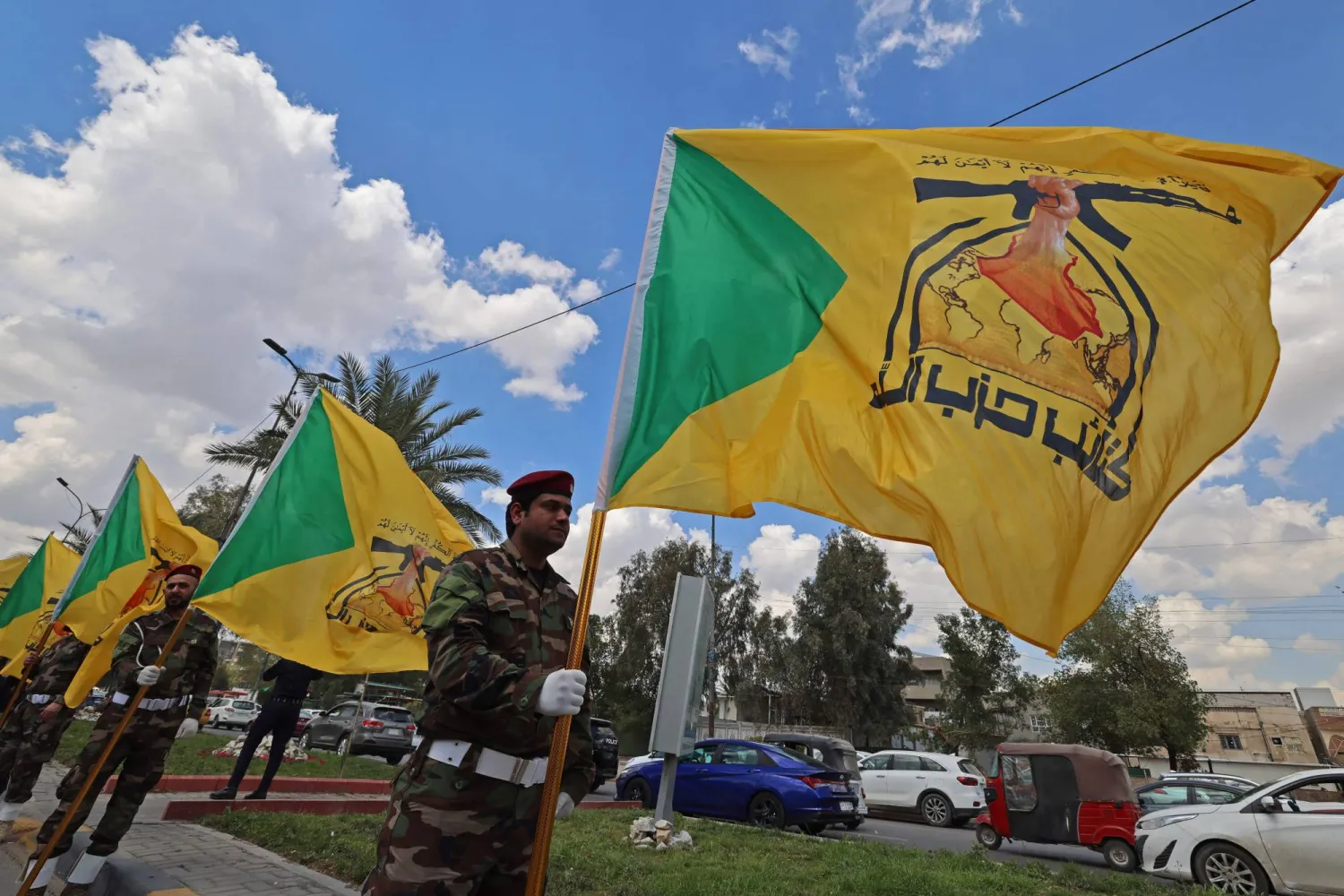
Saud al-Saedi, a lawmaker from the Hoquq Movement, the political wing of the Kataib Hezbollah faction, denied that al-Zaidi had personally intervened in the negotiations.
Saedi told reporters that the Coordination Framework had reached understandings with the factions on reorganizing their weapons.
The plan called for a joint committee bringing together representatives of the factions, the government, the Popular Mobilization Forces (PMF) and the Coordination Framework, he said.
But al-Zaidi has yet to sign the agreement, Saedi added, suggesting that the prime minister was under US pressure.
US warning
Meanwhile, Washington has stepped up pressure on Baghdad over weapons outside state control, according to political sources cited by local news agency Shafaq News.
The sources said Steven Fagin, the US charge d'affaires in Iraq, had delivered direct warnings to government and political figures in recent days, stressing that Washington was closely monitoring efforts to bring weapons under state control.
Failure to honor commitments or produce a concrete plan to end the presence of weapons beyond state control by June 30 could prompt Washington to designate Iraq a "state sponsor of terrorism" and impose sanctions and other measures, the sources quoted Fagin as warning.
As Baghdad remains silent on the possibility of renewed war, armed factions have largely adopted the same approach.
But the Ansar Allah al-Awfiya movement, an ally of former Prime Minister Mohammed Shia al-Sudani, broke that silence last Friday, warning Washington against using Iraqi territory or airspace to attack Iran while pledging neutrality if war erupts.
The movement's spokesperson, Ali al-Fatlawi, said it would remain neutral as long as Iraq was not used as a launchpad for attacks on neighboring countries.
He also urged Washington not to violate Iraqi airspace.
"Any violation of Iraqi sovereignty will prompt a response from the movement," Fatlawi said, adding that its leadership would decide the nature of that response according to the circumstances.
In recent days, armed factions and affiliated media outlets reported dozens of incursions into Iraqi airspace by US warplanes and reconnaissance aircraft.
The claims coincided with western media reports that US and Israeli fighter jets had conducted exercises over Iraq and several other countries in the region, simulating strikes on Iran.
On Tuesday, media reports said a Popular Mobilization Forces facility in the eastern province of Diyala had come under air attack.
But Lieutenant General Saad Maan, an official with Iraq's Security Media Cell, dismissed the reports.
"There is no truth to reports of any attack or airstrike in the province," he said in a brief statement.