Lebanon: Four Former Army Generals Questioned as Defendants in Beirut Port Blast Probe

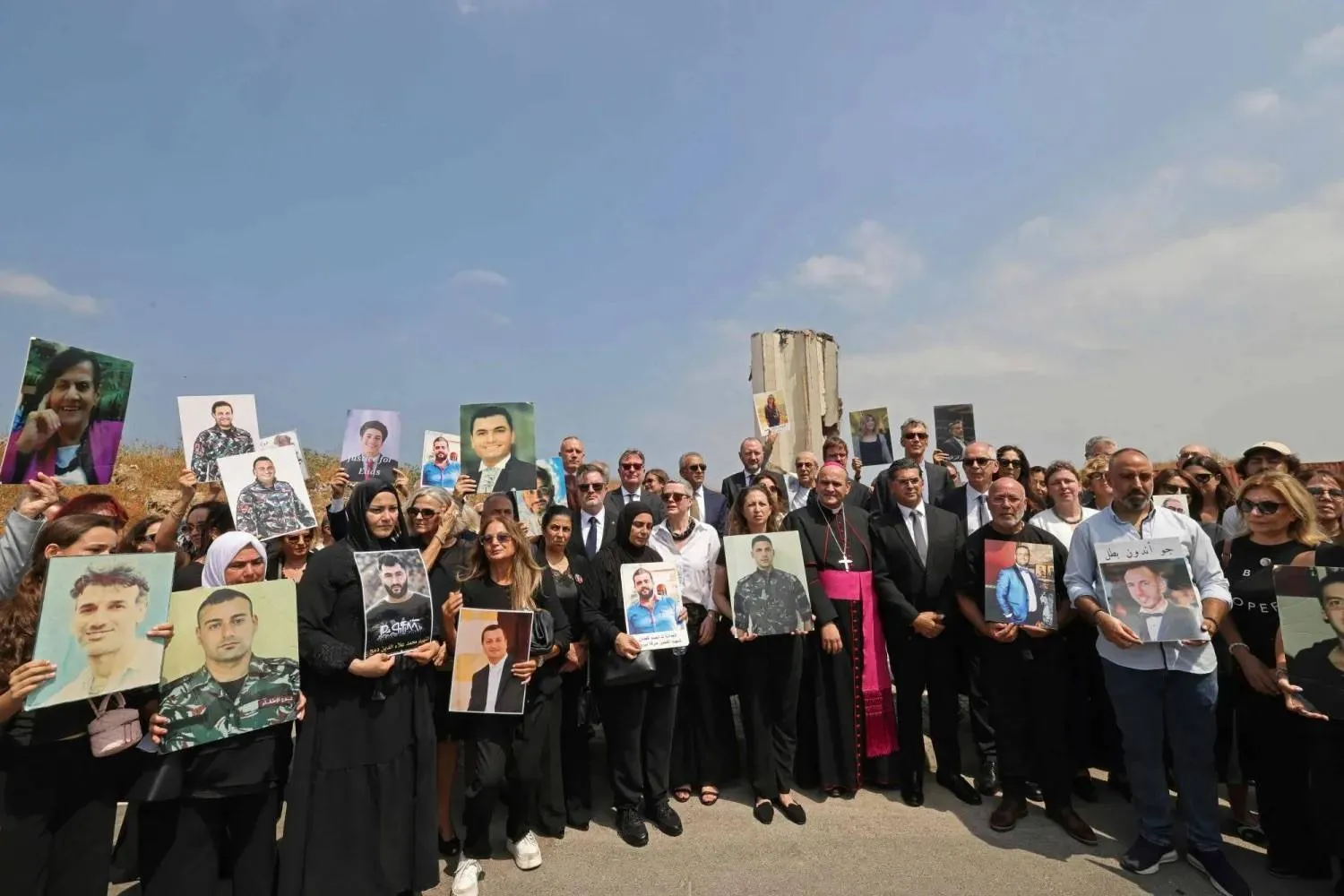
Families of victims of the 2020 Beirut port explosion and ambassadors from several countries commemorate the sixth anniversary of the blast (File photo: AFP). 
TT

Lebanon: Four Former Army Generals Questioned as Defendants in Beirut Port Blast Probe

Families of victims of the 2020 Beirut port explosion and ambassadors from several countries commemorate the sixth anniversary of the blast (File photo: AFP). 

The investigation into the Beirut port explosion took a new turn on Wednesday as judicial investigator Judge Tarek Bitar questioned four former Lebanese Army generals as defendants, expanding the scope of legal proceedings ahead of an indictment expected before the end of the year.

The hearing also marked the first attendance of a representative of the Public Prosecutor’s Office at the Court of Cassation, Judge Mohammad Saab.

Those questioned during the lengthy session were former Lebanese Army Chief of Staff Maj. Gen. Walid Salman, former Deputy Chief of Staff for Equipment Brig. Gen. Manuel Karjian, former head of the Ammunition Department Brig. Gen. Georges Moussa, and former director of the Equipment Directorate Brig. Gen. Munir Abou Zeid.

Their defense lawyers, lawyers representing the civil claimants and Cassation Advocate General Judge Mohammad Saab attended the hearing.

A judicial source told Asharq Al-Awsat that the officers had been summoned based on a substantive submission prepared by Saab, in which he brought allegations against them over suspicions that they had prior knowledge of the presence of ammonium nitrate at Beirut port.

The source explained that the questioning focused on “the suspicions outlined in the submission, in preparation for further investigation and a determination of the judicial position regarding each defendant, without the allegations necessarily establishing responsibility.”

Judicial Cooperation

Saab’s attendance marked the first time a representative of the Public Prosecutor’s Office at the Court of Cassation had participated in an investigative hearing before Bitar in the case.

It also signaled cooperation between the judicial investigator and the prosecutor’s office, which had previously boycotted Bitar and suspended cooperation with him when Judge Ghassan Oueidat headed the office.

The questioning ended without any decision on whether the four officers would be detained or released, leaving their legal status unresolved.

“Bitar did not issue an arrest warrant against any of them, nor did he decide to release them or require them to sign a residence undertaking, leaving the matter unresolved,” the judicial source explained.

The source did not disclose the content of the officers’ statements or their responses to the allegations.

Previously Questioned Defendants to Be Summoned Again

Bitar’s next steps will extend beyond the four former officers.

According to the same judicial source, the investigator is preparing to summon all those he previously questioned without issuing decisions concerning their cases.

They include former Prime Minister Hassan Diab, former Interior Minister Nohad Machnouk, former General Security Director-General Maj. Gen. Abbas Ibrahim and former State Security Director-General Maj. Gen. Tony Saliba, as well as judges and senior officials.

The move will bring previously deferred decisions back before Bitar as he continues investigating the allegations against the four officers.

The upcoming summonses will involve individuals whose procedural status remains unresolved, making the next round a crucial step in determining the measures to be taken before the indictment is finalized.

Those facing allegations will remain in a state of uncertainty over the judicial measures that await them.

Indictment Expected Before Year-End

Meanwhile, the Public Prosecutor’s Office at the Court of Cassation will prepare a supplementary substantive submission concerning the four officers and forward it to Bitar as soon as possible, according to the judicial source.

The supplementary submission will be added to the case file Bitar is reviewing as he prepares his indictment, taking into account the latest questioning sessions and the statements obtained.

The source stressed that Bitar “is committed to issuing the indictment before the end of this year,” adding that he would soon devote his attention to reviewing the case file and drafting the indictment.


Syria Needs EU Support to Ensure Stability, Kallas Says

High Representative of the European Union for Foreign Affairs Kaja Kallas speaks prior to the Foreign Affairs Council meeting in Brussels, Belgium, 16 November 2026. (EPA)
TT

Syria Needs EU Support to Ensure Stability, Kallas Says

High Representative of the European Union for Foreign Affairs Kaja Kallas speaks prior to the Foreign Affairs Council meeting in Brussels, Belgium, 16 November 2026. (EPA)

European Union foreign ministers will discuss on Monday elevating their relationship with Syria as the war-torn country needs urgent support to ensure stability amid ‌escalating tensions ‌in the ‌region, ⁠the bloc's foreign policy ⁠chief said.

"We really see that Syria needs a lot of investments, to build ⁠up institutions and ‌its ‌reforms," Kaja Kallas ‌told reporters ahead of ‌a monthly foreign ministers meeting in Brussels.

"On the European side we ‌want to see Syrian refugees return but ⁠they ⁠need conditions to return. There's a lot we can do together because the stability of Syria is in our interest and the interest of region."


Jordan Bans Telegram App Over ‘Radicalization’ Claims

Jordanian military police stand guard outside Jordan's State Security Court in Amman, Jordan, November 15, 2026. (Reuters)
TT

Jordan Bans Telegram App Over ‘Radicalization’ Claims

Jordanian military police stand guard outside Jordan's State Security Court in Amman, Jordan, November 15, 2026. (Reuters)

Jordan announced a ban on the Telegram messaging app on Monday, citing concerns that it was being used to spread extremism, weeks after a deadly attack on a church.

"We announce the blocking of the Telegram app in Jordan, in the framework of efforts aiming to bolster digital security and protect users," the Jordanian security directorate said.

It said the move came "in the context of the commitment to protecting society and countering any uses that could contribute to and facilitate committing cyber crimes, threats, blackmail or spreading illegal content".

It also said it sought to counter "attempt to spread radicalization and extremism which affects national security".

The ban comes after the October 23 attack on a church in the southern Karak governorate that killed nine people and wounded dozens of others.

On Sunday, a court sentenced three men to death by hanging over the attack. Authorities described them as followers of a hardline extremist ideology.


Confrontation between Iraqi PM, Kataib Hezbollah Intensifies

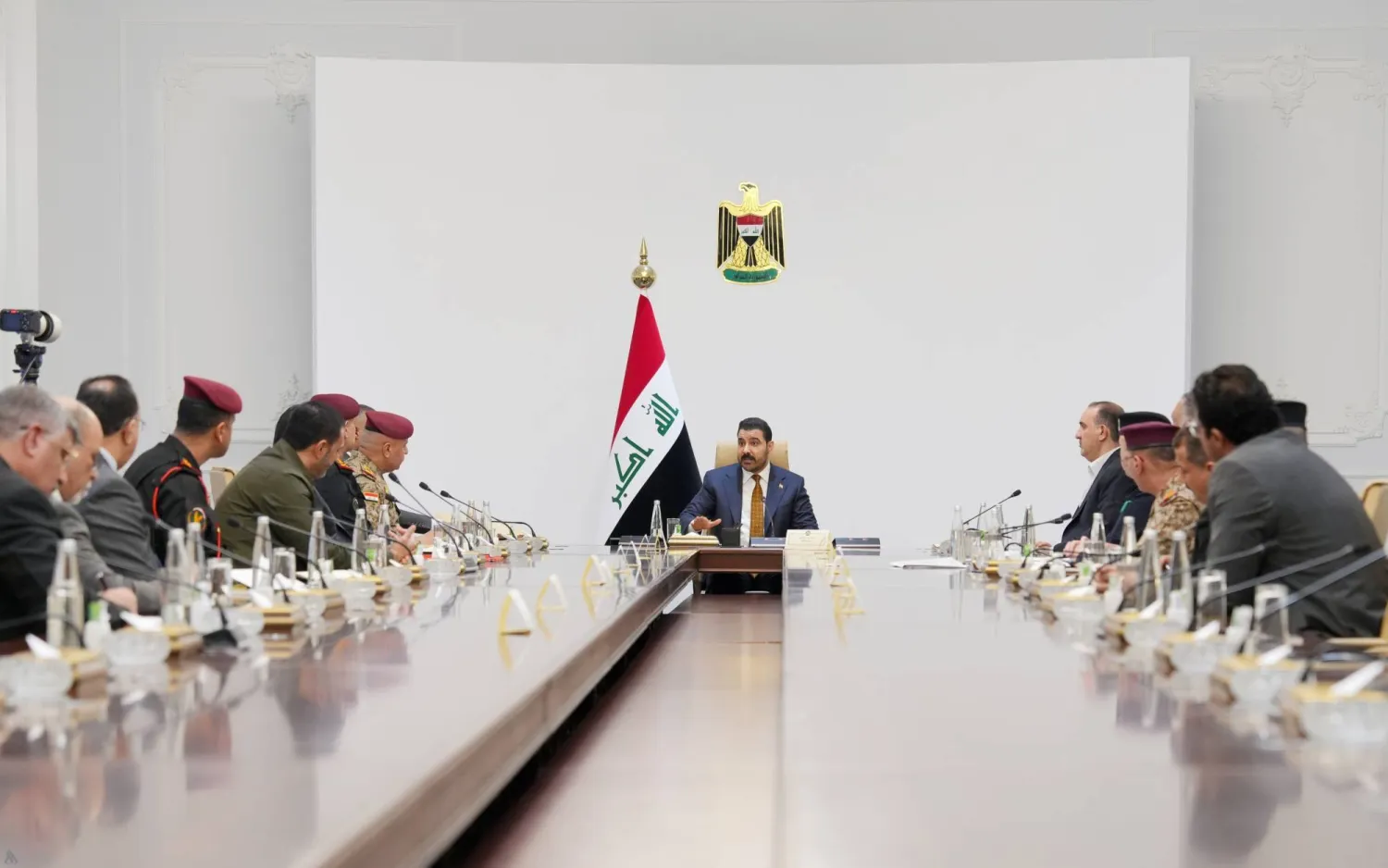
Iraqi PM Ali al-Zaidi chairs a security meeting on Sunday on oil smuggling in Jurf al-Sakhar. (INA)
TT

Confrontation between Iraqi PM, Kataib Hezbollah Intensifies

Iraqi PM Ali al-Zaidi chairs a security meeting on Sunday on oil smuggling in Jurf al-Sakhar. (INA)

Iraqi Prime Minister Ali al-Zaidi has won half the battle against armed factions by referring dozens of security and military officials across Babil province’s operational sectors to the judiciary for failing to halt oil smuggling in Jurf al-Sakhar, an area that has been held by the Kataib Hezbollah faction.

The government has made strides in its efforts to impose state monopoly over arms, including by offering government positions as incentives to several armed groups.

A number of those factions, including Kataib Hezbollah and Harakat al-Nujaba, have however refused to surrender their arms, arguing that they are “ideological” and tied to what is known as the “unity of arenas”, as promoted by Iran.

However, the sudden revelation that the armed faction, which has controlled Jurf al-Sakhar for years, was involved in smuggling oil passing near the area by puncturing pipelines has largely changed the equation.

The revelation was made after the security-political committee formed by al-Zaidi managed to enter the previously off-limits area to the authorities. There, it uncovered oil smuggling operations involving tanker trucks.

The development prompted al-Zaidi, who is also Commander-in-Chief of the Armed Forces, to issue several decisions viewed by experts as paving the way, for the first time, for a real confrontation with the armed factions to allow military units to enter the area.

According to a statement from the Office of the Commander-in-Chief of the Armed Forces, al-Zaidi chaired an emergency security meeting on Saturday evening to review the findings of a committee investigating oil smuggling in Jurf al-Sakhar.

The committee confirmed the accuracy of Federal Intelligence and Investigations Agency reports detailing oil smuggling operations, unauthorized refineries, and administrative irregularities.

“In light of the investigation’s findings, the Commander-in-Chief of the Armed Forces directed that all suspects involved in the oil smuggling operations be referred to the judiciary and that legal measures be taken against them,” it added.

He also decided to relieve the following officials in Babil of their duties: the police chief, the director of northern Babil police, the director of Babil intelligence and counterterrorism at the Ministry of Interior, the director of national security in Babil, the director of intelligence and security for Babil province at the Ministry of Defense, the director of Babil intelligence, the commander of the Popular Mobilization Forces (PMF) in Babil, the commander of the Energy Police’s Sixth Brigade at the Ministry of Interior, and the director of the Oil Pipelines Company at the Ministry of Oil.

“The Commander-in-Chief directed that operations commanders, provincial police chiefs, and directors of security and intelligence agencies bear full responsibility for any oil smuggling incidents occurring within their sectors of responsibility.”

He stressed the need to tighten oversight and security measures to prevent these practices and hold those negligent accountable, stressing that “not a single inch of Iraq, from Zakho to Basra, will remain a place where smuggling is practiced.”

Legal expert Ali al-Tamimi told Asharq Al-Awsat that “Iraq today faces the most dangerous threat to its sovereignty: weapons outside state control.”

He said the PM’s measures in Jurf al-Sakhar sparked widespread legal debate even though the moves align with the constitution.

“These referrals and dismissals are grounded in Article 78, which designates the prime minister as the direct executive responsible for the state's general policy and commander-in-chief of the armed forces,” he remarked.

He added: “Individuals who sabotage oil infrastructure are prosecuted as terrorists under the Anti-Terrorism Law and could gave penalties up to the death penalty.”