
As Lebanese citizens await the repercussions of the US and Israeli election results on their country's domestic situation, and whether these will lead to a regional war involving Lebanon or a major political agreement that inevitably includes it, reports have recently emerged of reassurances conveyed to several Lebanese officials that Hezbollah does not intend to participate in any future war in support of Iran.
For many, however, these reassurances appear insufficient, given the experience of the latest round of fighting. At the time, Hezbollah was reportedly said to have informed Parliament Speaker Nabih Berri that it would not join the conflict, only to reverse its position and open fire toward Israel on March 2.
Some reports at the time pointed to conflicting decisions between the group's political and military wings, with the position of those controlling operations on the ground, and Tehran behind them, ultimately prevailing.
This raises serious questions about whether decision-making within Hezbollah remains centralized, with a political and organizational leadership whose decisions are binding on all its institutions, or whether the military wing and commanders on the ground now have the final say.
More importantly, does Hezbollah still retain any independence in its decision-making, or are strategic decisions concerning war now determined in Tehran according to Iranian interests and calculations?
Assessments differ between those who believe Hezbollah continues to operate under a centralized organizational structure that leaves no room for conflicting political and military decisions, and those who argue that the transformations the group has undergone, particularly following the latest confrontations and the losses suffered by its leadership, have made military decision-making more closely tied to Iran and significantly weakened the political leadership's room for maneuver.
What Is the Decision-Making Shura Council?
Political writer Dr. Qassem Qassir, who closely follows Hezbollah's positions, explained that the group's leadership is represented by the Decision-Making Shura Council, which makes decisions binding on all its bodies and institutions, including the Political Council and the Jihad Council.
Qassir denied that the Political Council could adopt one position while the Jihad Council made a conflicting decision.
"There is one centralized decision made by the Decision-Making Shura Council, and everyone abides by it," he said.
According to Qassir, the council includes Hezbollah's secretary-general, the head of its Executive Council, the head of its parliamentary bloc, the head of its Political Council and the secretary-general's political aide.
But what about the reassurances reportedly delivered to Lebanese officials that Hezbollah does not intend to become involved in another war?
Speaking to Asharq Al-Awsat, Qassir stressed that "there are no serious, definitive guarantees or promises of this kind."
He explained that Hezbollah determines its position according to developments on the ground and cannot make decisions in advance without knowing the nature of unfolding events.
He also argued that the likelihood of war had diminished following the US and Israeli elections, as Washington and Tel Aviv were preoccupied with their domestic affairs, unless Israel decided to launch a new attack on Lebanon.
The Decision Lies With the Revolutionary Guards
Political writer Ali Al-Amin, editor-in-chief of the Janoubia news website, offered a different assessment.
He argued that "the final say within Hezbollah has always belonged, and continues to belong, to those on the ground," adding that the military wing controls operations and represents a direct and effective extension of Iran's Islamic Revolutionary Guard Corps (IRGC).
Speaking to Asharq Al-Awsat, Al-Amin asserted that "the decision to ignite a war in Lebanon, whether during the previous round or in any future confrontation, is primarily an Iranian decision governed by Iranian interests. Hezbollah has no real room to alter or oppose it."
Al-Amin also pointed to recent statements by Iranian Supreme Leader Ali Khamenei about opening the battle across multiple fronts and geographical areas.
He argued that these remarks "reflect a single rhythm controlled by Tehran, which the other parties are required to follow."
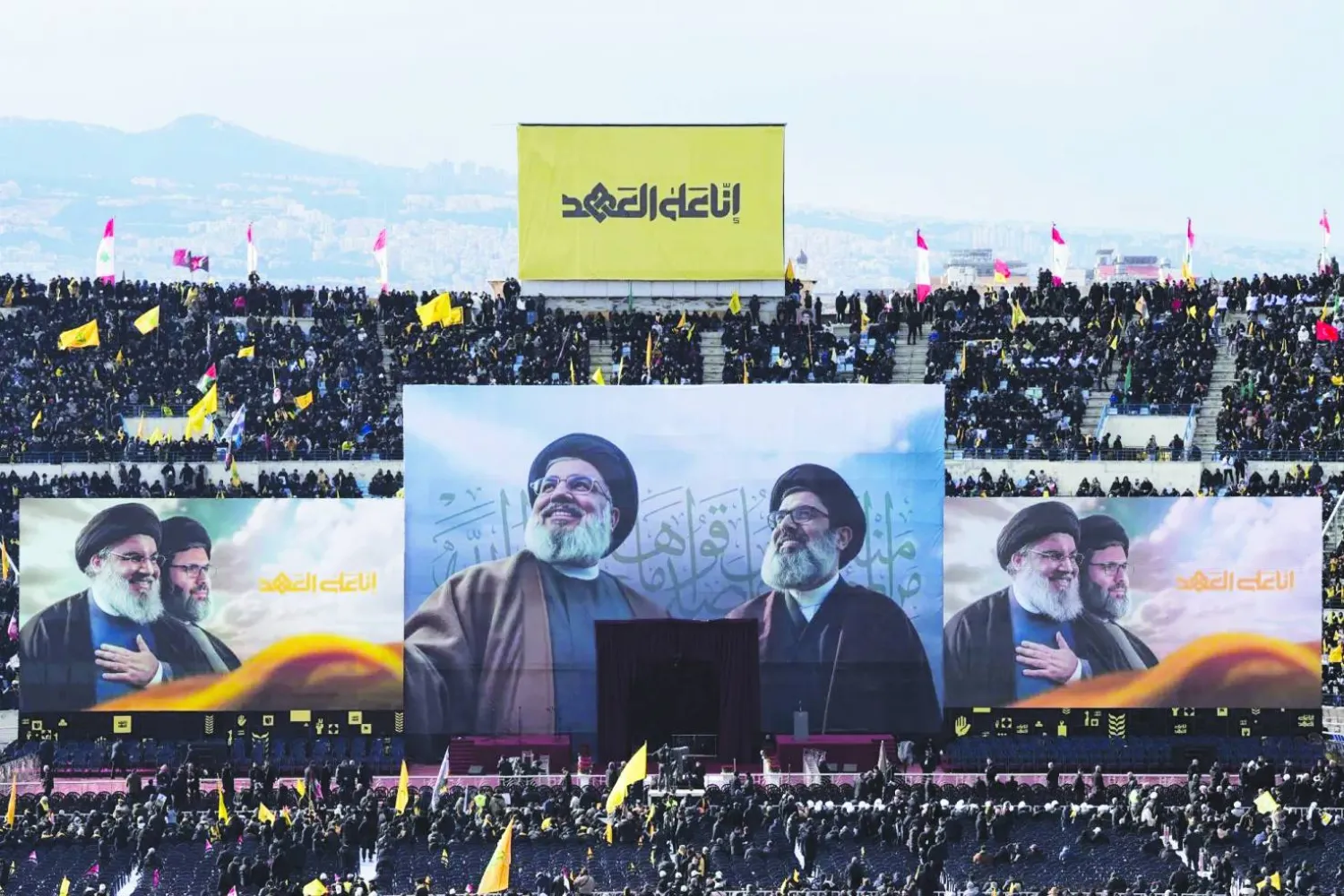
Al-Amin maintained that the room for maneuver once available to Hezbollah's political wing under former Secretary-General Hassan Nasrallah and other senior leaders no longer exists, given the changes that have affected the group's structure and leadership.