Iran Shadows Washington’s Moves in Lebanon as Visits, Calls Fuel Race for Influence

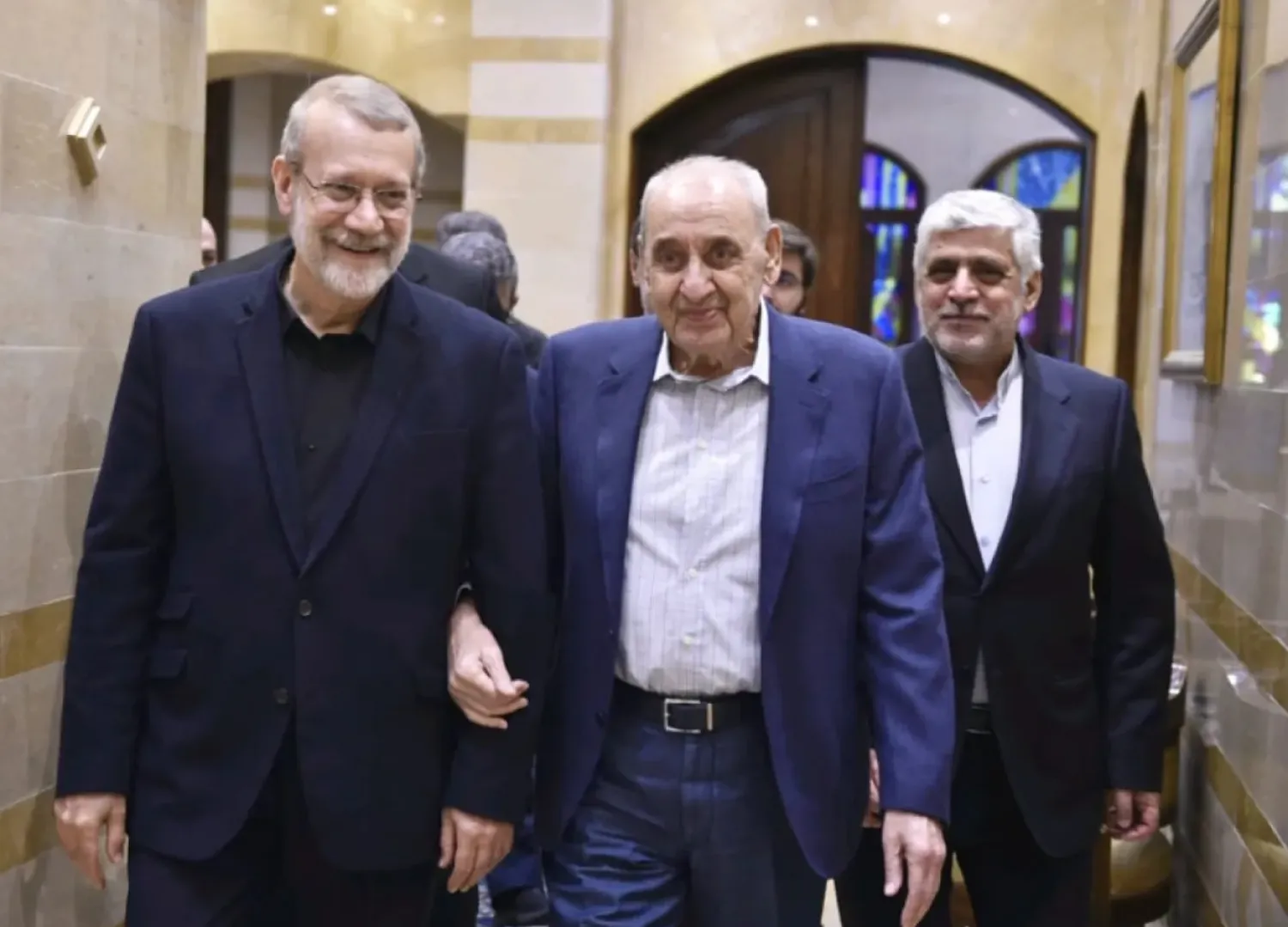
Ali Larijani, former senior adviser to Khamenei, with Lebanese Parliament Speaker Nabih Berri (File photo: Lebanese Parliament Media Office)
TT

Iran Shadows Washington’s Moves in Lebanon as Visits, Calls Fuel Race for Influence

Ali Larijani, former senior adviser to Khamenei, with Lebanese Parliament Speaker Nabih Berri (File photo: Lebanese Parliament Media Office)

Iran is keeping a close watch on Washington's moves in Lebanon and moving swiftly to counter them.

From dispatching senior officials to Beirut to calling Parliament Speaker Nabih Berri directly, Tehran has repeatedly sought to match or respond to US diplomatic initiatives in a contest for influence over Lebanese decision-making.

The message, according to the pattern of Iranian moves, is clear: Tehran will not let Washington dictate Lebanon's next chapter alone.

"Every time a US official visits Beirut, an Iranian official follows, even when there is nothing to discuss," a former Lebanese prime minister told Asharq Al-Awsat.

The pattern has become more pronounced in recent years, particularly since the 2024 war, the former premier said.

Ministerial sources said Iranian envoys typically follow US diplomatic moves with visits and meetings, particularly with Tehran's Lebanese allies, to gauge Washington's latest positions and learn what was discussed behind closed doors.

The contacts are also part of an exchange of political messages between Tehran and Washington, the sources told Asharq Al-Awsat.

Iran, they said, wants to show that it still holds the Lebanese card — and retains the leverage to shape political settlements.

The pattern was particularly evident in the autumn of 2024, as international efforts, led largely by Washington, intensified to halt Israel's war on Lebanon.

Iranian Foreign Minister Abbas Araghchi visited Beirut on Oct. 4. A week later, Iranian Parliament Speaker Mohammad Baqer Qalibaf arrived, saying he had diverted his trip to Switzerland to deliver a "message of support" from then-Supreme Leader Ali Khamenei.

The diplomatic maneuvering continued in November as a US ceasefire initiative gained ground.

On Nov. 14, US Ambassador Lisa Johnson handed Berri a draft of Washington's ceasefire proposal.

The following day, Ali Larijani, then an adviser to Iran's supreme leader, arrived in Beirut for talks with Berri and then-Prime Minister Najib Mikati.

He declared Iran's support for "any decision Lebanon makes to achieve a ceasefire."

Tehran's Familiar Playbook

Former Lebanese minister Boutros Harb sees little new in Tehran's approach.

Iran, he said, has long treated Lebanese groups aligned with it as subordinates, speaking and negotiating on their behalf rather than allowing Lebanon to pursue an independent negotiating position based on its national interests.

But the stakes are now higher, Harb told Asharq Al-Awsat.

Lebanon has an opportunity to capitalize on international diplomatic efforts, he said, while Iran is working to prevent the Lebanese file from being separated from its own negotiations with Washington.

Tehran wants to keep that card in hand to demonstrate that it remains an influential regional player, he added.

"Tehran treats Lebanon as an Iranian province, as though there were no state or government," Harb said.

He acknowledged that Lebanon's political landscape had changed to some extent under President Joseph Aoun and Prime Minister Nawaf Salam.

"But unfortunately, the card is still in Iran's hands, and it is exploiting it to preserve its regional role," he said.

Lebanon Tied to US-Iran Talks

By 2026, Tehran's diplomatic push had increasingly shifted from visits to telephone calls carrying political messages tied to negotiations with Washington.

The shift became particularly apparent after Iran announced that it had told mediators any ceasefire agreement with the United States and Israel must also halt Israeli attacks on Lebanon.

On April 1, Berri said Araghchi had conveyed Iran's insistence that any agreement include Lebanon.

"What applies to Tehran applies to Beirut," Berri quoted the Iranian foreign minister as saying.

The pattern resurfaced on July 9, when a US diplomatic move in Beirut coincided with a visit by an Iranian delegation led by Deputy Foreign Minister Vahid Jalalzadeh.

While US Ambassador Michel Issa met Aoun to discuss implementation of the Lebanese-Israeli framework agreement, the Iranian delegation held talks with Berri and Deputy Prime Minister Tarek Mitri.

The latest episode came on Nov. 16, following a Beirut visit by US Ambassador to the United Nations Mike Waltz.

Waltz met Lebanon's president, prime minister and parliament speaker and urged Hezbollah to voluntarily hand over its weapons to the state.

"No country can have two armies," he said.

That same day, Qalibaf called Berri, stressing Iran's "special interest" in Lebanon.

Regional calm, he said, could not return without an end to the war in Lebanon and the restoration of Lebanese sovereignty over all its territory.

Hezbollah's Weapons: Another Front

Iran's response to US moves has not been confined to ceasefire diplomacy.

The same pattern emerged in August 2025, when Lebanon's government decided to draw up a plan to bring all weapons under state control, amid US pressure to carry it out.

On Aug. 13, Ali Larijani, then secretary of Iran's Supreme National Security Council, visited Beirut and met Lebanon's president, prime minister and parliament speaker.

He opposed foreign pressure over Hezbollah's weapons, calling instead for "dialogue among the Lebanese" and warning against imposing "foreign dictates on Lebanon."

Five days later, US envoy Tom Barrack and deputy US envoy Morgan Ortagus arrived in Beirut to follow up on Washington's roadmap for placing weapons exclusively under state control and to discuss security issues.


Iran Shadows Washington’s Moves in Lebanon as Visits, Calls Fuel Race for Influence

Ali Larijani, former senior adviser to Khamenei, with Lebanese Parliament Speaker Nabih Berri (File photo: Lebanese Parliament Media Office)
TT

Iran Shadows Washington’s Moves in Lebanon as Visits, Calls Fuel Race for Influence

Ali Larijani, former senior adviser to Khamenei, with Lebanese Parliament Speaker Nabih Berri (File photo: Lebanese Parliament Media Office)

Iran is keeping a close watch on Washington's moves in Lebanon and moving swiftly to counter them.

From dispatching senior officials to Beirut to calling Parliament Speaker Nabih Berri directly, Tehran has repeatedly sought to match or respond to US diplomatic initiatives in a contest for influence over Lebanese decision-making.

The message, according to the pattern of Iranian moves, is clear: Tehran will not let Washington dictate Lebanon's next chapter alone.

"Every time a US official visits Beirut, an Iranian official follows, even when there is nothing to discuss," a former Lebanese prime minister told Asharq Al-Awsat.

The pattern has become more pronounced in recent years, particularly since the 2024 war, the former premier said.

Ministerial sources said Iranian envoys typically follow US diplomatic moves with visits and meetings, particularly with Tehran's Lebanese allies, to gauge Washington's latest positions and learn what was discussed behind closed doors.

The contacts are also part of an exchange of political messages between Tehran and Washington, the sources told Asharq Al-Awsat.

Iran, they said, wants to show that it still holds the Lebanese card — and retains the leverage to shape political settlements.

The pattern was particularly evident in the autumn of 2024, as international efforts, led largely by Washington, intensified to halt Israel's war on Lebanon.

Iranian Foreign Minister Abbas Araghchi visited Beirut on Oct. 4. A week later, Iranian Parliament Speaker Mohammad Baqer Qalibaf arrived, saying he had diverted his trip to Switzerland to deliver a "message of support" from then-Supreme Leader Ali Khamenei.

The diplomatic maneuvering continued in November as a US ceasefire initiative gained ground.

On Nov. 14, US Ambassador Lisa Johnson handed Berri a draft of Washington's ceasefire proposal.

The following day, Ali Larijani, then an adviser to Iran's supreme leader, arrived in Beirut for talks with Berri and then-Prime Minister Najib Mikati.

He declared Iran's support for "any decision Lebanon makes to achieve a ceasefire."

Tehran's Familiar Playbook

Former Lebanese minister Boutros Harb sees little new in Tehran's approach.

Iran, he said, has long treated Lebanese groups aligned with it as subordinates, speaking and negotiating on their behalf rather than allowing Lebanon to pursue an independent negotiating position based on its national interests.

But the stakes are now higher, Harb told Asharq Al-Awsat.

Lebanon has an opportunity to capitalize on international diplomatic efforts, he said, while Iran is working to prevent the Lebanese file from being separated from its own negotiations with Washington.

Tehran wants to keep that card in hand to demonstrate that it remains an influential regional player, he added.

"Tehran treats Lebanon as an Iranian province, as though there were no state or government," Harb said.

He acknowledged that Lebanon's political landscape had changed to some extent under President Joseph Aoun and Prime Minister Nawaf Salam.

"But unfortunately, the card is still in Iran's hands, and it is exploiting it to preserve its regional role," he said.

Lebanon Tied to US-Iran Talks

By 2026, Tehran's diplomatic push had increasingly shifted from visits to telephone calls carrying political messages tied to negotiations with Washington.

The shift became particularly apparent after Iran announced that it had told mediators any ceasefire agreement with the United States and Israel must also halt Israeli attacks on Lebanon.

On April 1, Berri said Araghchi had conveyed Iran's insistence that any agreement include Lebanon.

"What applies to Tehran applies to Beirut," Berri quoted the Iranian foreign minister as saying.

The pattern resurfaced on July 9, when a US diplomatic move in Beirut coincided with a visit by an Iranian delegation led by Deputy Foreign Minister Vahid Jalalzadeh.

While US Ambassador Michel Issa met Aoun to discuss implementation of the Lebanese-Israeli framework agreement, the Iranian delegation held talks with Berri and Deputy Prime Minister Tarek Mitri.

The latest episode came on Nov. 16, following a Beirut visit by US Ambassador to the United Nations Mike Waltz.

Waltz met Lebanon's president, prime minister and parliament speaker and urged Hezbollah to voluntarily hand over its weapons to the state.

"No country can have two armies," he said.

That same day, Qalibaf called Berri, stressing Iran's "special interest" in Lebanon.

Regional calm, he said, could not return without an end to the war in Lebanon and the restoration of Lebanese sovereignty over all its territory.

Hezbollah's Weapons: Another Front

Iran's response to US moves has not been confined to ceasefire diplomacy.

The same pattern emerged in August 2025, when Lebanon's government decided to draw up a plan to bring all weapons under state control, amid US pressure to carry it out.

On Aug. 13, Ali Larijani, then secretary of Iran's Supreme National Security Council, visited Beirut and met Lebanon's president, prime minister and parliament speaker.

He opposed foreign pressure over Hezbollah's weapons, calling instead for "dialogue among the Lebanese" and warning against imposing "foreign dictates on Lebanon."

Five days later, US envoy Tom Barrack and deputy US envoy Morgan Ortagus arrived in Beirut to follow up on Washington's roadmap for placing weapons exclusively under state control and to discuss security issues.


200 Yemeni Scholars Urge Action to End Houthi Siege of Taiz

The conference of Yemeni scholars and preachers in Makkah discussed a range of religious issues and efforts to counter the Houthis. (Asharq Al-Awsat)
TT

200 Yemeni Scholars Urge Action to End Houthi Siege of Taiz

The conference of Yemeni scholars and preachers in Makkah discussed a range of religious issues and efforts to counter the Houthis. (Asharq Al-Awsat)

Two hundred Yemeni religious scholars and preachers have called for a concerted official and public campaign to break the Houthi siege of Taiz, urging that the group's violations against religious scholars, mosques, Quran memorization schools and religious institutions be documented and brought before Islamic and international forums to hold the international community to its responsibilities.

In a final statement issued at their conference in Makkah, the scholars rejected any armed groups that challenge or undermine state institutions, declaring the establishment of a state a religious necessity and urging Yemenis to rally behind it.

They warned that the Houthi movement threatened Yemen's religion, unity, identity and security, calling for a coordinated response through scholarship, intellectual debate, religious outreach and the media.

The scholars also condemned terrorism and extremism in all forms, firmly rejecting the use of religion or sectarian affiliation to justify either. They reaffirmed the sanctity of life, property and honor and urged Yemeni scholars, preachers and citizens to put national interests first, close ranks and overcome their differences.

The demands emerged from a conference of Yemeni scholars and preachers held in Makkah on Wednesday under the auspices of Saudi Arabia's Ministry of Islamic Affairs, Dawah and Guidance.

Its final statement praised the deep historical and fraternal ties between Saudi Arabia and Yemen, commending the kingdom's leadership and people for supporting Yemen, its government, scholars and institutions, and for promoting moderation and combating extremism and terrorism.

Participants condemned Houthi attacks on Saudi Arabia, its citizens and residents, as well as civilian sites and vital infrastructure in both countries.

They also denounced any attacks on Makkah and Madinah, stressing the sanctity of the two holy cities and declaring that Saudi Arabia's security was inseparable from Yemen's. Any threat to the kingdom, they said, threatened regional security and stability.

The gathering praised Yemeni religious scholars and the Yemeni Scholars Association for speaking out, supporting the state and confronting the Houthi movement.

It also criticized religious figures who had issued fatwas, or religious rulings, in support of the Houthi militias and to justify their actions, singling out the so-called Yemen Scholars League.

The scholars urged Muslim religious leaders, organizations and scholarly councils to expose and condemn Houthi violations and oppose the group's targeting of Islam's two holiest mosques.

They thanked Saudi King Salman bin Abdulaziz, Custodian of the Two Holy Mosques, and Crown Prince Mohammed bin Salman, the kingdom's prime minister, for their longstanding support of Yemen and its legitimate government against the Houthi takeover.

They credited Saudi Arabia's support with helping, "after God," to halt the expansion of what they called the "Safavid project" in Yemen.

The participants also praised Saudi Minister of Islamic Affairs, Dawah and Guidance Sheikh Abdullatif Al-Asheikh for sponsoring the Communication with Yemeni Scholars Program.

Scholars warn of threats to Yemen's identity

Held under the theme "Supporting the State and Protecting Identity," the conference examined the role of religious scholars in confronting the challenges facing Yemen.

Sheikh Mohammed al-Arifi, an adviser at the Saudi Ministry of Islamic Affairs and supervisor of the Communication with Yemeni Scholars Program, called for closer cooperation among scholars and preachers to confront the intellectual and religious challenges facing Yemen and the wider region.

He praised Saudi Arabia's support for Yemen under King Salman and Crown Prince Mohammed bin Salman, highlighting the kingdom's consistent backing of Yemen's legitimate government.

Al-Arifi said the conference addressed one of the gravest challenges in Yemen's modern history: the role of religious scholars in confronting what he called Houthi terrorism.

He accused the Houthis of hijacking the state and seeking to erase Yemen's identity and heritage, replacing them with an alien identity rooted in what he described as an Iranian expansionist project rejected by Yemenis.

He cited what he called grave Houthi violations, including the killing of innocent people, intimidation of civilians, destruction of mosques and Quranic schools, and the siege of Taiz, which he said had left residents facing hunger and fear.

He also accused the group of tampering with school curricula, targeting the religious beliefs of younger generations and undermining the standing of the Prophet Muhammad's companions.

Al-Arifi said the Houthis had crossed every red line with attacks and threats against Islam's two holiest mosques, describing them as a flagrant violation of the sanctity of Islamic holy sites.

He also condemned attacks on Saudi cities and civilian facilities, stressing that the security of Saudi Arabia and Yemen was indivisible.

The gravity of Yemen's crisis, he said, placed a profound responsibility on religious scholars to protect society from extremist ideas, expose Houthi ideology and counter its arguments.

He stressed that establishing a state was a religious necessity to protect religion, life, property and honor.

Yemeni minister urges support for state, armed forces

Yemeni Minister of Endowments and Guidance Sheikh Turki al-Wadei said the gathering reflected the depth of ties between Yemen and Saudi Arabia and underscored the responsibility borne by religious scholars and preachers.

He urged scholars to expose what he described as the ideological deviations of the Iranian-backed Houthi militia and the dangers of its sectarian rhetoric, which he said fueled division and conflict.

He stressed their role in shielding communities from misinformation and extremism while safeguarding religion and holy sites.

Al-Wadei pointed to the suffering and attacks resulting from the Houthi takeover, saying the group's actions had threatened security in both Yemen and Saudi Arabia, as well as the safety of Islam's two holiest mosques and their visitors.

He said supporting state institutions and the armed forces in protecting religion and the country, restoring state authority and securing stability was a core duty of scholars and preachers.

He placed that responsibility within the "Dawn of Yemen" campaign announced by Rashad al-Alimi, chairman of Yemen's Presidential Leadership Council.

Al-Wadei thanked Saudi Arabia's leadership, government and people for their longstanding support, citing continued military, political, economic, humanitarian and development assistance to Yemen.

He also praised the Saudi Ministry of Islamic Affairs, Dawah and Guidance for its efforts in serving Islam and Muslims.

Conference sessions examined scholars' responsibility to preserve Yemen's religious and national identity, counter extremist ideologies, uphold the state's position under Islamic law and support the legitimate government.

They also reviewed the history of Saudi-Yemeni relations, highlighting the historical bonds and shared destiny of the two countries.


Al-Zaidi Roadmap Divides Jurf al-Sakhar Security Duties Among Joint Forces

Members of Iraq’s Kataib Hezbollah patrol a road in Jurf al-Sakhar, south of Baghdad, November 17, 2026. (Reuters)
TT

Al-Zaidi Roadmap Divides Jurf al-Sakhar Security Duties Among Joint Forces

Members of Iraq’s Kataib Hezbollah patrol a road in Jurf al-Sakhar, south of Baghdad, November 17, 2026. (Reuters)

Iraqi Prime Minister Ali al-Zaidi has ordered a joint deployment of army, police and Popular Mobilization Forces (PMF) units to secure Jurf al-Sakhar, under a plan dividing security responsibilities among the forces, official documents showed on Wednesday.

Al-Zaidi, who is also commander-in-chief of the armed forces, issued the directive in response to a proposal from PMF chief Faleh al-Fayyad to put the area under the control of PMF, with the Energy Police protecting an oil pipeline.

A letter from the commander-in-chief's office to the PMF outlined a security plan assigning parts of Jurf al-Sakhar to Defense Ministry troops, Interior Ministry forces and PMF brigades.

A political source said the plan reflected al-Zaidi's vision for ending the crisis in Jurf al-Sakhar but cautioned that it was too early to expect political consensus on what he described as an "ambitious" proposal.

The directive comes amid a dispute over security control of Jurf al-Sakhar, where armed factions, including Kataib Hezbollah, have wielded influence for years.

The government is seeking to reorganize security deployments and extend state authority over the area. The Iran-backed faction has warned the government against sending troops to the region.

Informed Iraqi sources told Asharq Al-Awsat that al-Zaidi had rejected what they described as a compromise proposal from Esmail Qaani, commander of Iran's Revolutionary Guards' Quds Force, during talks that lasted until dawn last Wednesday.

The proposal concerned security arrangements for Jurf al-Sakhar.

Al-Zaidi insisted that government troops enter the area and Kataib Hezbollah withdraw, the sources said.

The dispute was not over whether to reach a settlement but how to cordon off Jurf al-Sakhar and deploy security forces without triggering a confrontation between Shiite factions and government troops, they added.

During meetings with Qaani and leaders of the Coordination Framework, al-Zaidi presented photographs, data and figures about the area, prompting several alliance leaders to shift their positions and back his position, according to the sources.

Fahd al-Jabouri, a senior figure in the Hikma Movement, said al-Zaidi showed Coordination Framework leaders satellite images and intelligence gathered through recently contracted satellites covering Iraqi territory.

The material revealed what was happening in Jurf al-Sakhar.

Al-Jabouri said the prime minister assured the alliance's leaders that he had no intention of launching an armed confrontation. Instead, his plan called for cordoning off the area, leaving further discussions over its administration for a later stage.

Al-Jabouri denied reports that disagreements within the Coordination Framework had prompted leaders to walk out of the meeting or caused a split over al-Zaidi's position.

Iraqi authorities shut several gates to Baghdad's fortified Green Zone early on Wednesday, coinciding with talks over the security arrangements in Jurf al-Sakhar.

The closures affected entrances providing direct access to key government and security institutions. Authorities gave no reason for the move.