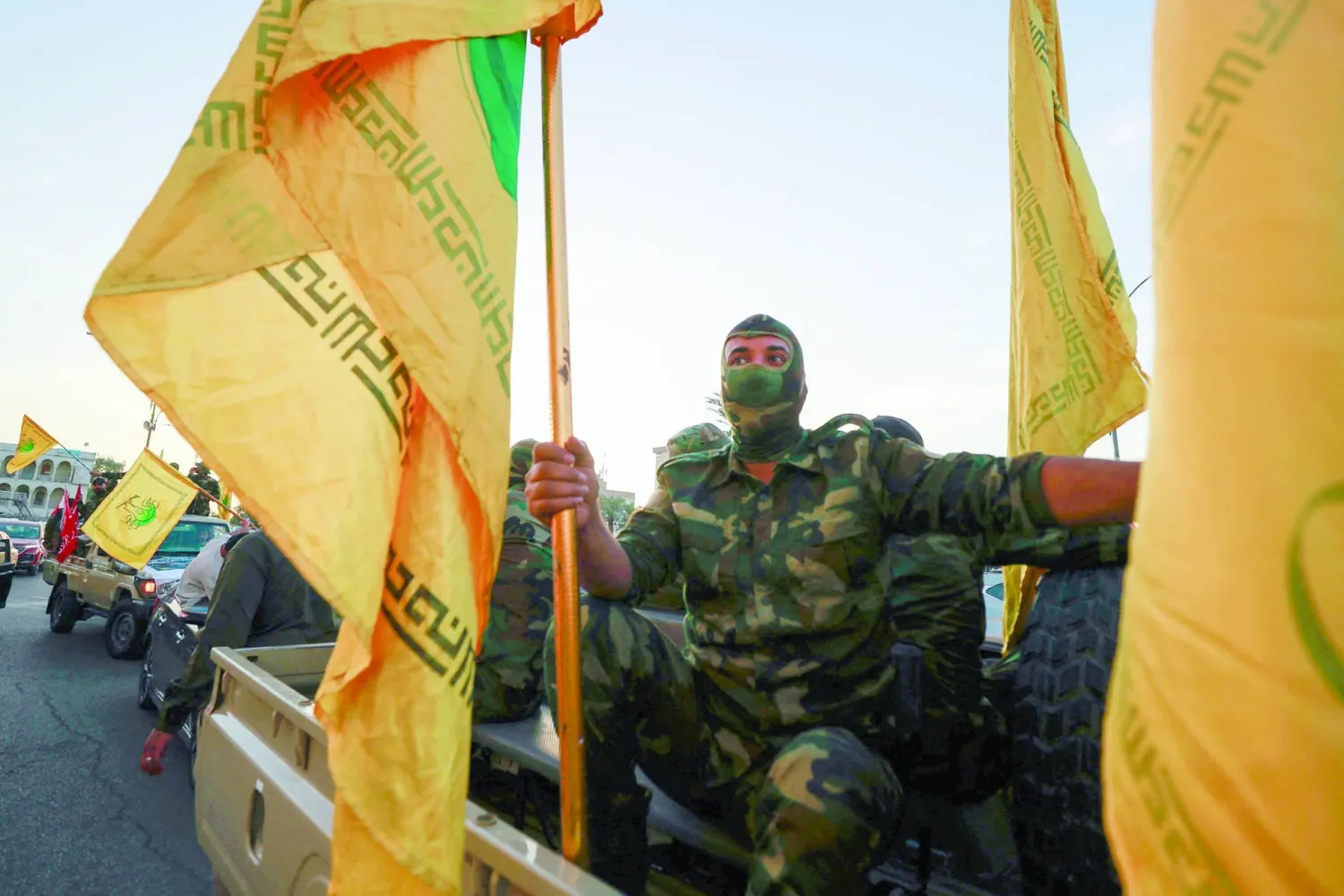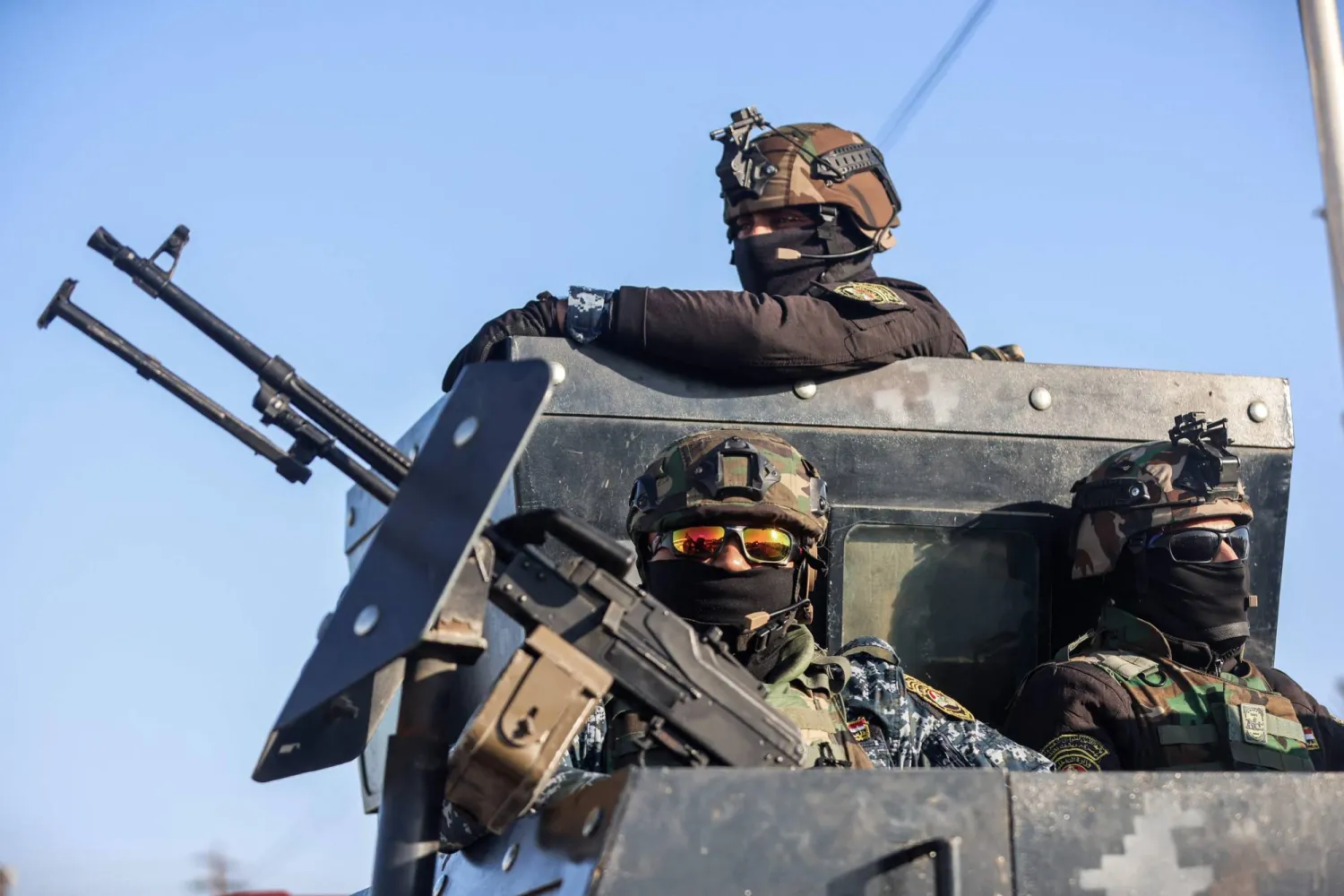

Iraq's prime minister has ordered the energy ministry to manage oilfields under the control of the Kurds, in a risky move likely to further strain relations with their semi-autonomous region after he sought to rein in the pro-Iran Kataib Hezbollah.
The decision announced on Tuesday comes as Prime Minister Ali al-Zaidi cracks down on Tehran's most powerful faction ally in Iraq, Kataib Hezbollah, and senior officials accused of running a years-long smuggling ring that generated hundreds of millions of dollars off oil stolen from the major crude producer.
The anti-smuggling drive and his push for control over the oilfields put the 41-year-old multimillionaire businessman on a course for direct confrontation with two of the most powerful entrenched groups that have defied Baghdad's central control for decades: Iran-aligned factions and Kurdish leaders.
Both steps also encroach on the vital interests of organizations that have grown hugely powerful throughout the tumultuous decades of conflict since US-led forces toppled Saddam Hussein in 2003.
When one of al-Zaidi's predecessors tried to crack down on pro-Iranian factions, a drone attack struck his home in what officials called an assassination attempt.
"This is a concerted effort by the Iraqi government to try and say 'The region is transforming. There is so much happening. We are on the brink of potential devastation like we've seen elsewhere. We need to kind of get our house in order'. And I think that's what's driving the government's actions," said London-based Renad Mansour, deputy director of the Middle East and North Africa Program and director of the Iraq Initiative at Chatham House.
Kataib Hezbollah, one of dozens of pro-Iranian armed groups with political sway accused of operating with impunity in Iraq, rejected the findings of an official high-level investigation into the smuggling network.
The prime minister of the Kurdish region, Masrour Barzani, rejected the Baghdad government's decisions to centralize control over oil and border crossings, saying they were baffling and "in no way acceptable".
"There have been mixed messages. The delegations we have met have given us a different message that pointed towards resolving outstanding issues on the basis of the constitution," Barzani said.
PM SAYS DECISION AIMS TO PROTECT 'IRAQ'S WEALTH'
Al-Zaidi's order, which was announced by his office on Tuesday, covers oilfields in Diyala, Kirkuk, Salahuddin and Nineveh provinces and follows a probe into smuggling at state-run North Oil Company, which manages the northern oil and gas fields.
Khormala, the main oilfield under Kurdish security control, appeared to be covered by the order, three people familiar with the matter said. Given past tensions with Baghdad, one of them said Kurdish authorities would likely resist any move by the federal oil ministry to take over management of the field.
"The Kurdistan region may use the absence of an oil and gas law as a pretext for refusing to hand over the oil wells. This would lead to a political and constitutional debate over how to implement the decisions," said Baghdad-based political analyst Hamza Mustafa.
"In taking these decisions, he has moved away from political deal-making and favoritism. He is unconcerned about securing the support of those political forces for another term."
A statement from his office said the prime minister's directive was based on the principle that "national sovereignty is indivisible and protecting Iraq's wealth is a battle for survival in which the state puts an end to all forms of smuggling."
RELATIONS BETWEEN BAGHDAD AND KURDS FRAUGHT FOR YEARS
Iraq's central government has been chipping away at the influence of Kurdish leaders for years. And the departure from Iraq in September of the last remaining US forces — key allies of the Kurds — has diminished their political leverage against al-Zaidi's moves, analysts say.
In a further move directly challenging Kurdish authorities' decades-long bid to completely run their own affairs, al-Zaidi ordered the border authority to take over all crossings in the Kurdistan region, which borders Türkiye, Iran and Syria. He also directed the Kurdistan Regional Government to approve exports of crude oil and petroleum products only through the federal oil ministry.
Al-Zaidi, meanwhile, removed the head of the border crossings authority and suspended North Oil Company's director general and his deputies pending further investigation.
Relations between the national government and Kurdish authorities have been fraught for years.
Iraq's Kurds held a 2017 referendum on independence, which elicited fierce opposition from Baghdad and regional powers. The vote prompted military and economic retaliation from Baghdad, which retook the strategic oil-producing city of Kirkuk and other areas.
A previous dispute over Kurdish authorities' sales of oil without Baghdad's approval halted pipeline shipments to Türkiye for more than two years before the sides agreed in September 2025 to restart them.
Al-Zaidi is trying to attract large-scale investment in Iraq. Analysts, however, say that first requires establishing the political and economic stability that has been lacking since Saddam's fall.
The upheaval and strong ties with factions and prominent Shiite politicians who support them have allowed Iran to steadily gain widespread influence in Iraq.
"These are good decisions, but unfortunately, they come late. Since the beginning of 2003 until now, oil smuggling is present — in the south, in the north, in the center — with no oversight," said retired government employee Nouri Ghani.
"Unfortunately, officials are smuggling oil. This is astonishing."