

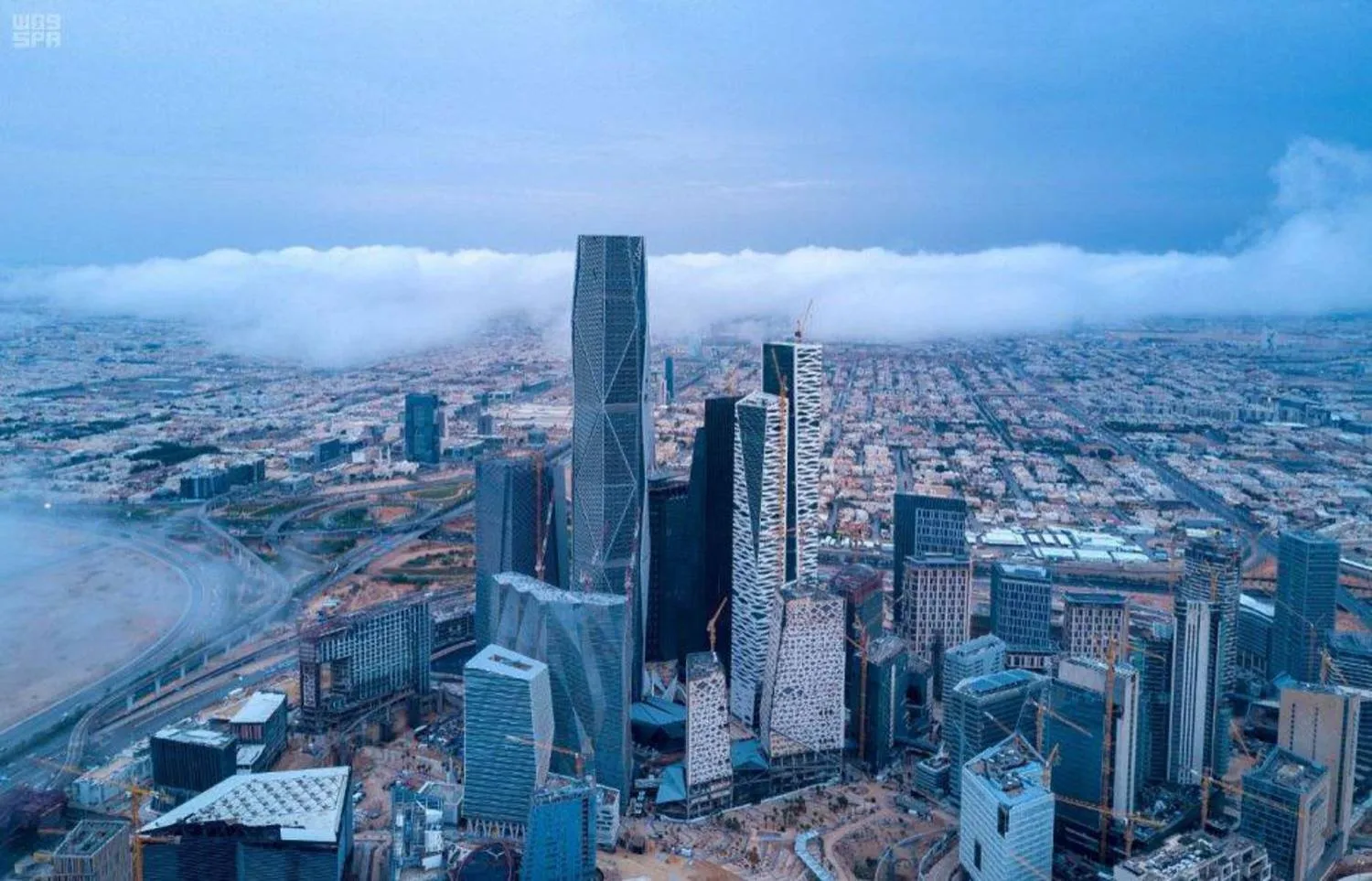

FDI Into Saudi Arabia Grows 10.2%

A growth of FDI in Saudi Arabia. (Asharq Al-Awsat)
TT

FDI Into Saudi Arabia Grows 10.2%

A growth of FDI in Saudi Arabia. (Asharq Al-Awsat)

Saudi Arabia attracted SAR 8.1 billion ($2.1 billion) in foreign direct investment in the first quarter of 2023, marking a 10.2 percent growth year-on-year (YOY), showed a government report.

The bulletin disclosed that the Kingdom’s GDP grew by 3.8 percent in Q1 of the year compared to the same period last year.

Moreover, the workforce participation of Saudi citizens stood at 52.4 percent, while unemployment touched 8.5 percent.

The Ministry of Economy and Planning revealed that the deposits of authorities, government, and semi-government parties in May reached SAR 623 billion ($166 billion), an increase of 19.4 percent on a monthly basis.

Furthermore, the volume of banks’ liabilities to the government amounted to SAR 528 billion ($140.8 billion) in May, an increase of 9 percent YOY.

Total consumer spending through ATMs (POS and SADAD) in May amounted to approximately 170.1 billion riyals ($45.3 billion), up 13.8 percent YOY

The bulletin further highlighted a 2.6 percent growth in consumer loans to SAR 448 billion ($119.4 billion) in Q1 compared to the year-ago period.

The Saudi Authority for Industrial Cities and Technology Zones (MODON) has attracted new investments from the private sector at a value of SAR2.77 billion ($738.6 million) during Q2 2023. This was a 23 percent jump from the SR2.26 billion ($602.6 million) recorded during Q2 2022.

MODON said that 1,226 foreign investment deals came from 67 countries, mainly Egypt, Jordan, India, the US, and the UK.

The foreign factories are focused on several main industrial activities such as the manufacture of shaped metal products, the manufacture of rubber and plastic products, other non-metallic mineral products, chemical industry and its products, in addition to the manufacture of food products.

The number of factories exceeded 6,000 during the Q2 of 2023. Industrial contracts also witnessed a 23% growth in the same period.

MODON added that Jeddah - located in the west of the Kingdom - was allocated the greatest number of contracts, comprising 29 percent of the overall agreements. Al-Kharj - located in the center of the Kingdom - issued 13 percent of total agreements.

Among the industries, the food sector secured the most contracts in the second quarter, representing 17 percent, followed by the mining sector at 9 percent. While the chemicals and rubbers sectors claimed 6 percent of contracts each, the machinery and equipment sector secured 5 percent of agreements issued in the second quarter of 2023.

MODON has also developed qualitative capabilities to attract global and regional investments, which contributed to increasing the total number of ready-made factories to reach 1,263 units.

The allocated industrial areas increased by 100 percent and the logistical contracts recorded 234.

In order to achieve its strategic goals of providing services and products that enhance the investments of MODON’s Shareek, achieve business sustainability, and create an enabling investment environment, MODON has made during the Q2 of 2023 several achievements, of which, is the launching of MODON Oasis project in Yanbu on an area of 500,000 square meters.



Bessent Says Disappointed by EU-India Deal; South Korea Must Ratify Trade Deal

 Treasury Secretary Scott Bessent speaks during an event at Carnegie Mellon Auditorium, Wednesday, Jan. 28, 2026, in Washington. (AP)
Treasury Secretary Scott Bessent speaks during an event at Carnegie Mellon Auditorium, Wednesday, Jan. 28, 2026, in Washington. (AP)
TT

Bessent Says Disappointed by EU-India Deal; South Korea Must Ratify Trade Deal

 Treasury Secretary Scott Bessent speaks during an event at Carnegie Mellon Auditorium, Wednesday, Jan. 28, 2026, in Washington. (AP)
Treasury Secretary Scott Bessent speaks during an event at Carnegie Mellon Auditorium, Wednesday, Jan. 28, 2026, in Washington. (AP)

US Treasury Secretary Scott Bessent said on Wednesday he was disappointed by Europe's decision to strike a major trade agreement with India, saying it showed Europe put trade ahead of the interests of the Ukrainian people.

Bessent told CNBC that Europe had been buying refined products made in India with sanctioned Russian oil supplies, and had been unwilling to match higher US tariffs on Indian goods because they were separately negotiating a trade agreement.

The European Union on Tuesday finalized a long-delayed trade deal with India that aims to boost two-way trade and reduce the bloc's reliance on the United States amid growing ‌global trade tensions.

The deal ‌is expected to double EU exports to India ‌by ⁠2032 by eliminating or ‌reducing tariffs on 96.6% of traded goods by value, and will lead to savings of 4 billion euros ($4.8 billion) in duties for European companies, the EU said.

Asked whether this deal and others among countries excluding the United States would threaten the US, Bessent said: "They should do what's best for themselves, but I will tell you, I found, I find the Europeans very disappointing."

He said the deal made it clear why Brussels had balked ⁠at joining Washington's decision to impose 25% tariffs on India last year as part of a push to reduce ‌its purchases of Russian oil.

"The Europeans were unwilling to join ‍us, and it turns out, because they ‍wanted to do this trade deal," he said. "So, every time you hear a ‍European talk about the importance of the Ukrainian people, remember that they put trade ahead of the Ukrainian people."

Bessent last week had signaled the potential removal of the 25% additional US tariffs on India following a sharp reduction in Indian imports of Russian oil.

Bessent's disparaging comments about Europe came amid heightened tensions after President Donald Trump threatened to raise tariffs on imports from certain European countries over their opposition to his pursuit ⁠of Greenland. That tariff threat was later dropped, but it left many Europeans unsettled and anxious about the future of Transatlantic trade.

US officials remain frustrated that the EU has not enacted the tariff reductions it promised as part of a framework trade deal reached with Washington in July.

Those concerns were heightened this week when Trump raised duties on imports from South Korea to 25% from 15%, citing slow moves by the country's parliament to implement a framework trade agreement reached with Washington last year.

Bessent defended Trump's action, saying it was "helpful to get things moved along", adding that the South Korean parliament needed to ratify the trade deal.

Trump on Tuesday said he expected the United States and South Korea to ‌work out a solution, but he did not elaborate.

South Korean officials are due to arrive in Washington on Wednesday for talks with trade officials.


Amazon to Cut 16,000 Jobs Worldwide

This photograph shows the Amazon logo displayed outside of an Amazon Fresh grocery store in Torrance, California on July 29, 2025. (AFP)
TT

Amazon to Cut 16,000 Jobs Worldwide

This photograph shows the Amazon logo displayed outside of an Amazon Fresh grocery store in Torrance, California on July 29, 2025. (AFP)

US online retail and cloud computing giant Amazon said Wednesday that it would be cutting 16,000 jobs worldwide as part of a restructuring, as it focuses spending on artificial intelligence.

The job cuts, which follow already flagged plans to cut its workforce by 14,000 posts, are aimed at "reducing layers, increasing ownership, and removing bureaucracy," senior vice president Beth Galetti said in a statement.

Media reports from October had said the roughly 30,000 job cuts planned in total would impact nearly 10 percent of the 350,000 office jobs at Amazon, without affecting the distribution and warehouse workers that make up the bulk of its 1.5 million employees.

At the time the company refused to comment on the reports, which said they came amid increased investments in artificial intelligence.

Amazon did not give any breakdown of the latest job cuts on Wednesday, saying only that "every team will continue to evaluate the ownership, speed, and capacity to invent for customers, and make adjustments as appropriate."

The company will release its full-year 2025 results on February 5. In its last quarterly earnings statement in October, the company said it spent $1.8 billion on severance costs tied to planned job cuts.

Amazon said that new positions will be offered to employees where possible, without giving further details on which divisions will be affected by the cuts.

The layoffs are in line with a trend to trim white-collar management jobs across big tech. Microsoft in July said it had slashed a little less than four percent of its global workforce, about 15,000 jobs.

Facebook owner Meta has also cut jobs over the past year, in a move intended to remove organizational bloat following aggressive hiring during the pandemic.

Dutch tech giant ASML on Wednesday said it would cut hundreds of management jobs to improve internal organization, with HP and Oracle also announcing recent layoffs.

Like other tech giants, Amazon is making massive investments to grab a slice of the AI revolution pie.

It is particularly banking on the performance of its subsidiary Amazon Web Services (AWS), the world's leading cloud provider, which is engaged in a race against its fast-growing rivals, Microsoft Azure and Google Cloud.

And spending on developing new AI-based chips and services is growing exponentially. In December, Amazon announced that it would invest more than $35 billion in India.


Global Labor Market Conference Concludes in Riyadh with Signing of 90 Agreements

The conference was held under the patronage of Custodian of the Two Holy Mosques King Salman bin Abdulaziz Al Saud and organized by the Ministry of Human Resources and Social Development. (SPA)
TT

Global Labor Market Conference Concludes in Riyadh with Signing of 90 Agreements

The conference was held under the patronage of Custodian of the Two Holy Mosques King Salman bin Abdulaziz Al Saud and organized by the Ministry of Human Resources and Social Development. (SPA)

The third annual Global Labor Market Conference (GLMC 2026) concluded in Riyadh on Tuesday with the signing of 90 agreements between government entities and the private sector.

The deals aim to support labor-market development and are set to impact over 6 million beneficiaries within Saudi Arabia and beyond.

The event was held under the patronage of Custodian of the Two Holy Mosques King Salman bin Abdulaziz Al Saud and organized by the Ministry of Human Resources and Social Development, drawing an international audience of more than 10,000 participants, including 40 labor ministers and over 200 speakers and experts representing more than 100 countries.

The signed agreements cover skills development and leadership capacity building through training partnerships and international professional accreditation, and accelerating digital transformation with advanced technology solutions and artificial intelligence (AI) through deals to develop digital services, automation solutions, and cybersecurity.

Priority fields covered by the agreements include expanding opportunities for flexible employment and freelancing while connecting individuals to new economic opportunities, and establishing sustainable sectoral and developmental partnerships that link training with the actual labor market and support local economies.

The success of the third GLMC underscores Saudi Arabia’s commitment to its leading role in shaping the future of work globally by fostering innovation, strengthening partnerships, and empowering the workforce to ensure sustainable, resilient, and inclusive labor markets.