


Saudi Arabia Maintains Control over Inflation at 2.3%

A food and consumer goods markets in Saudi Arabia (Asharq Al-Awsat)
TT

Saudi Arabia Maintains Control over Inflation at 2.3%

A food and consumer goods markets in Saudi Arabia (Asharq Al-Awsat)

Saudi Arabia’s government has effectively managed to contain inflation, slowing it down to its lowest level in a year, recording 2.3% in July compared to 2.7% in the same month of the previous year.

This was even lower than the 2.7% recorded in June.

The government’s control over the inflation rate is the result of economic measures and actions it swiftly undertook early on to confront the global surge in prices.

Experts interviewed by Asharq Al-Awsat emphasize the significance of the decrease in actual housing rental rates in July, which stood at 10.3 %, down from 10.8 % in June. This factor has played a pivotal role in reining in the inflation rate in the Kingdom.

Notably, housing rental costs constitute the largest sub-category in the consumer price index, accounting for 21 % of the index weight.

Experts also highlight the contributions of government initiatives and programs related to the real estate and housing sector in boosting the supply of real estate products in general, particularly residential apartments.

This has had a direct impact on rental prices. Additionally, the reduction in real estate financing due to the recent interest rate hike by the Saudi Central Bank has also played a role.

Mohammed Makni, a finance and investment professor at the College of Economics and Administrative Sciences at Imam Muhammad Ibn Saud Islamic University, explains that the inflation rate has experienced consecutive declines in the past three months, attributed mainly to the ongoing interest rate hikes by the Saudi Central Bank.

“In July of the previous year, the Federal Reserve decided to raise the interest rate by 25 basis points, and Saudi Arabia followed suit by raising its interest rate by the same level. This reduced the liquidity in the local market and consequently impacted the inflation rate,” Makni told Asharq Al-Awsat.

“According to the latest statistics from the Saudi Central Bank, consumer loans during the second quarter of the current year have witnessed a decrease, reaching 443 billion riyals ($118.1 billion), confirming the Kingdom's approach of draining liquidity from the local market,” he added.

Makni further elucidates that most activities in the Consumer Price Index during July showed a positive change. He anticipated the inflation rate to remain stable around 2% to 2.5% in the coming months, depending on the decisions taken by the US Federal Reserve.

Makkah Gears Up for Ramadan with Tourism Drive, Record Hospitality Growth  

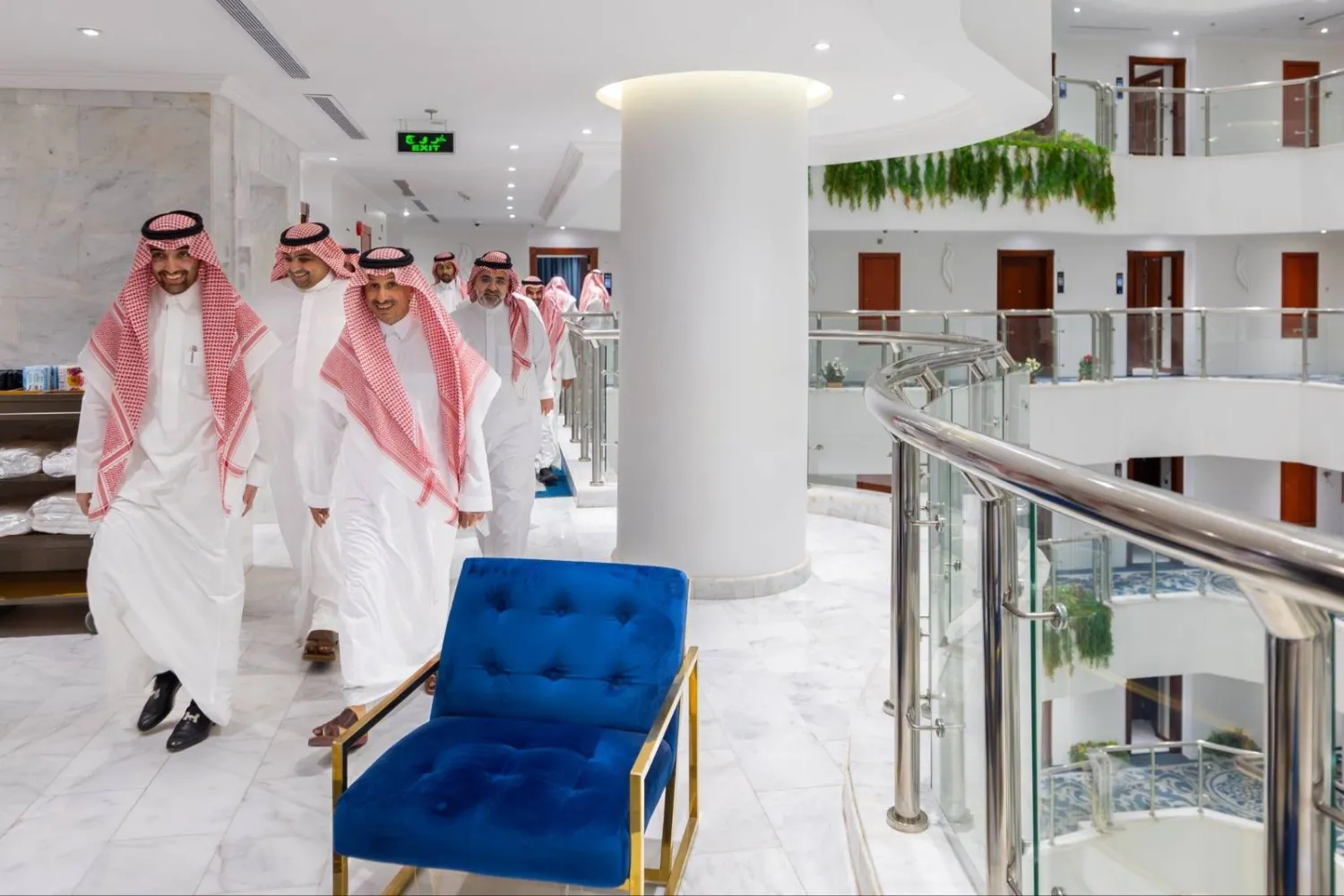
Tourism Minister Ahmed Al-Khateeb and other officials during his inspection tour on Tuesday. (Asharq Al-Awsat)
TT

Makkah Gears Up for Ramadan with Tourism Drive, Record Hospitality Growth  

Tourism Minister Ahmed Al-Khateeb and other officials during his inspection tour on Tuesday. (Asharq Al-Awsat)

Saudi Arabia’s Ministry of Tourism has raised the readiness of Makkah’s hospitality sector to its highest level ahead of the holy month of Ramadan, stressing that serving pilgrims and visitors remains a top national priority.

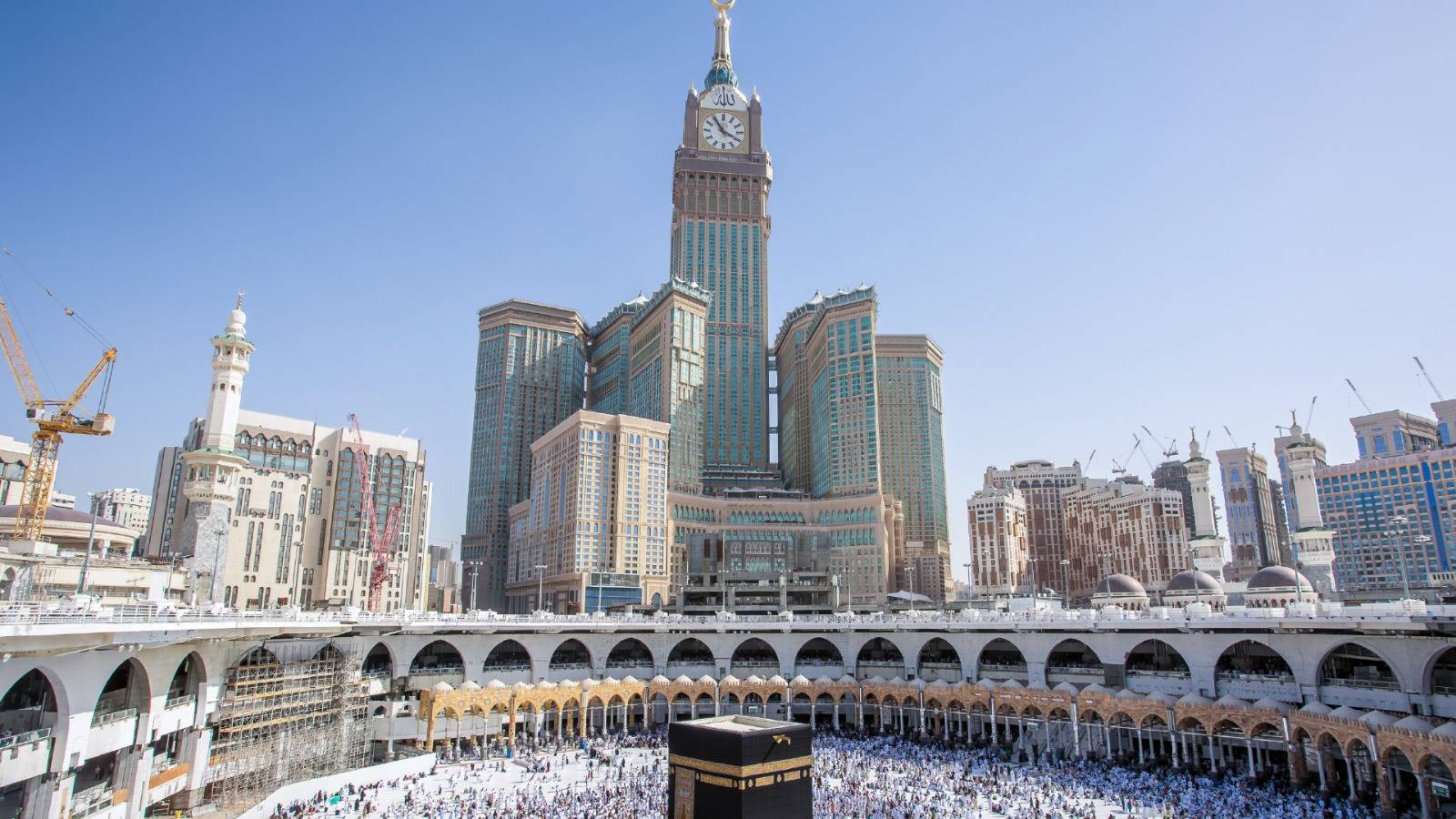
Makkah is preparing to receive worshippers and visitors amid a marked expansion in hospitality capacity. The city now has more than 2,200 licensed accommodation facilities, reflecting growth of 35 percent over the past year. The number of licensed hotel rooms has exceeded 380,000, up 25 percent, while total domestic and inbound tourism spending is projected to surpass SAR 143 billion ($38.1 billion) in 2025.

The wider Makkah region recorded unprecedented performance indicators last year, both in visitor numbers and tourism spending, underscoring sustained growth and operational readiness.

Total domestic and international visitors exceeded 50 million, marking a 14 percent increase compared with 2024.

Tourism Minister Ahmed Al-Khateeb announced the figures during an annual inspection tour on Tuesday, stressing that the indicators reflect a major expansion in accommodation capacity and record growth in visitor numbers.

The tour included inspections of temporary lodging facilities designated for pilgrims, part of a proactive plan to increase capacity during peak seasons, alongside early preparations for the upcoming Hajj.

Vision 2030 targets surpassed

Official data has shown that Saudi Arabia has exceeded its Vision 2030 targets for the Umrah. The number of pilgrims arriving from abroad rose from 8.5 million in 2019 to more than 18 million in 2025, surpassing the original goal of 15 million by 2030.

A number of hotels surrounding the Grand Mosque in Makkah. (General Authority for Awqaf)

Service quality indicators improved as well, with pilgrim satisfaction reaching 94 percent, exceeding Vision 2030 benchmarks.

Workforce development kept pace with demand, as the number of licensed tour guides rose to more than 980, a 23 percent increase.

Masar Mall project

Al-Khateeb announced a joint financing agreement between the Tourism Development Fund and the Arab National Bank with Hamat Holding to support the Masar Mall project. The development carries a total cost of SAR 936 million (about $250 million).

The project is expected to become the largest shopping center in Makkah with the capacity to accommodate around 20 million visitors annually.

Its location near the Haramain High-Speed Railway station and a direct pedestrian link to the Grand Mosque are expected to strengthen the city’s commercial and tourism infrastructure.

Jeddah: Gateway to pilgrims

Meanwhile, Jeddah continues to consolidate its position as a complementary destination to Makkah and a primary gateway for pilgrims, while also expanding its role as a coastal tourism hub.

The city welcomed more than 13 million domestic and international visitors in 2025, a 10 percent increase from 2024. Tourism spending reached SAR 28 billion ($7.47 billion), up 6 percent year on year.

Jeddah’s hospitality sector also expanded, with more than 500 licensed facilities and over 33,000 licensed rooms.

The city is currently developing 46 tourism projects valued at SAR 21 billion ($5.6 billion) and expected to add more than 11,000 hotel rooms and further strengthen its tourism infrastructure and economic value.


ECB President Lagarde Reportedly Plans to Quit Before Macron's Term Ends

FILE PHOTO: European Central Bank (ECB) President Christine Lagarde addresses the press following the ECB's Governing Council meeting, at the ECB headquarters in Frankfurt, Germany, February 5, 2026. REUTERS/Jana Rodenbusch/File Photo
TT

ECB President Lagarde Reportedly Plans to Quit Before Macron's Term Ends

FILE PHOTO: European Central Bank (ECB) President Christine Lagarde addresses the press following the ECB's Governing Council meeting, at the ECB headquarters in Frankfurt, Germany, February 5, 2026. REUTERS/Jana Rodenbusch/File Photo

European Central Bank President Christine Lagarde plans to leave her job before next year's French presidential election to allow Emmanuel Macron to have an input into picking her successor, the Financial Times reported on Wednesday.

Lagarde's term is due to end in October 2027 but some fear that the far right may win the French presidential race ‌in the spring of ‌2027, complicating the selection for the ‌new ⁠leader of Europe's most ⁠important financial institution.

Citing a person familiar with the matter, the FT said Lagarde has not yet decided on the exact timing of her departure but was keen on Macron and German Chancellor Friedrich Merz to be the key deciders in who succeeds her. Macron cannot run again for a third term.

"President Lagarde is ⁠totally focused on her mission and has not ‌taken any decision regarding the end ‌of her term," Reuters quoted an ECB spokesperson as saying.

The FT report comes only ‌a week after Bank of France Governor Francois Villeroy de Galhau ‌said he would step down in June this year, more than a year before the end of his term, allowing Macron to name his replacement before the presidential election that the far-right could win.

While it ‌will be up to all leaders from the 21-nation euro zone to pick Lagarde's successor, ⁠past practice ⁠suggests that any successful candidate must have both German and French support to clinch the role.

There are no formal candidates for the job yet but several names have been floating among ECB circles as potential ECB presidents. The most prominent among these are former Dutch central bank chief Klaas Knot and Bank for International Settlements General Manager Pablo Hernandez de Cos.

Lagarde's non-renewable term at the ECB runs until October 31, 2027. Prior to heading the ECB, she was managing director of the International Monetary Fund from 2011 to 2019 and before that, the French finance minister.


UK Inflation Falls to 3.0% in January

Pedestrians cross Westminster Bridge in front of Parliament during the early morning hours in London, Tuesday, Feb. 10, 2026.(AP Photo/Kin Cheung)
TT

UK Inflation Falls to 3.0% in January

Pedestrians cross Westminster Bridge in front of Parliament during the early morning hours in London, Tuesday, Feb. 10, 2026.(AP Photo/Kin Cheung)

Britain's annual ‌rate of consumer price inflation fell to 3.0% in January from 3.4% in December, official figures showed on Wednesday.

A Reuters poll of economists had shown a median forecast of 3.0% in January and the Bank of England projected earlier this month that the headline measure of inflation would slow to ‌2.9%.

British inflation ‌has run higher than in ‌the ⁠United States and in ⁠the euro zone where it stood at 2.4% and 1.7% respectively in January.

But the BoE expects the pace of price rises to slow sharply to almost its 2% target in ⁠April as last year's rises ‌in utility costs and ‌other government-controlled tariffs fall out of ‌the annual comparison.

Investors expect the central bank ‌to cut its benchmark interest rate to 3.5% at its next meeting in March after a tight vote to keep borrowing costs ‌on hold in February although some policymakers remain worried about underlying ⁠inflation ⁠pressure.

Financial markets on Tuesday also priced a second quarter-point interest rate cut by the BoE by the end of in 2026.

ONS data last week painted a downbeat picture of Britain's economy at the end of 2025 with output barely growing. Figures released on Tuesday showed the labor market was still losing jobs although there were some signs of a stabilization.
