


Saudi-US-Chinese Alliance Launches Green Energy Investment Company

A field of solar panels at Saudi Arabia’s King Abdulaziz City of Sciences and Technology. (Reuters)
TT

Saudi-US-Chinese Alliance Launches Green Energy Investment Company

A field of solar panels at Saudi Arabia’s King Abdulaziz City of Sciences and Technology. (Reuters)

A Saudi-American-Chinese alliance announced the launch of a green energy investment company under the name, Skytower, which will be specialized in transferring the latest short and long energy storage solutions to enable the energy mix in Saudi Arabia.

This alliance came following a visit by a US-Chinese trade delegation to Saudi Arabia on May 29, as part of efforts to launch an international green energy consortium based in Riyadh, consisting of multinational companies, to invest in advanced technologies for sustainable green economy, with the aim to reach zero carbon emissions.

The agreement aims to facilitate the access of the alliance members to the Saudi market, support green energy projects, and reinforce the Kingdom’s plan to reach carbon neutrality.

The coalition includes US and Chinese non-governmental organizations that share economic and environmental goals, and seek to build a new model for a sustainable, low-carbon future.

The delegation stated that its objectives are based on the Saudi Vision 2030 and the Net Zero 2060 programs.


Green energy technology

Dr. Eric Fang, CEO of Skytower Zero Carbon industry Park, told Asharq Al-Awsat about green energy opportunities in the Kingdom and their importance to the global economy.

He emphasized that Saudi Arabia enjoyed vast wind and solar resources, with new energy storage technology that is driving the use of renewable energy.

He also pointed to the establishment of a complete supply chain in energy storage, at a time when Saudi Arabia is preparing to lead the world in the use of green energy.

He said he saw Saudi Arabia as a major force in driving the adoption of renewable energy transition towards a greener society, adding that the current ambitious plan to fuel the economy with 50 percent of green energy was evidence of the Kingdom’s commitment to establishing a net-zero society in the future.

Moreover, the addition of hydrogen and ammonia technology to the energy mix would drive energy transmission to a high speed, he remarked.

On the future of investment in zero carbon in Saudi Arabia, the CEO of Skytower said that future, or as Saudi Arabia calls it the zero-carbon society, is worth trillions. The Kingdom will lead the world in industrial transformation, digital transformation, research and development innovation, materials development, all of which are foundations for a zero carbon investment.


The future of Chinese companies in Saudi Arabia

On the opportunities available to Chinese companies in the Kingdom, Fang stressed that China’s investments in carbon removal, green manufacturing, green infrastructure development, and integrated renewable energy production that combines solar and wind energy, hydrogen, and ammonia, in addition to green biotechnology... were all excellent opportunities in the Kingdom.

According to Fang, all products that are manufactured in Saudi Arabia can be exported to the Middle East, North Africa, Africa, the United States, China, Asia and the European Union. This promotes the strategy of green industry development, which attracts Chinese enterprises, he underlined.


Opportunities for American companies in the Kingdom

The CEO of Skytower enumerated the opportunities available to American companies in Saudi Arabia, in the “technology applications market that covers not only the Kingdom, but also the countries of the Gulf Cooperation Council, Africa and the European Union.”

He explained that the great American engineering and innovation skills were today at the heart of economic development around the world.

He added that Saudi Arabia represents a unique new market for American companies, with the capacity for manufacturing, research and development to help create a regional center for innovation to fuel Vision 2030 and the Net Zero 2060 Goal 2060.


Comprehensive global experiences

Fang shed light on the opportunities for Saudi-American-Chinese investment cooperation and the benefits that such alliance would bring to the world in the field of green energy and zero carbon.

He noted that the new consortium would benefit from the strength of innovation in the United States, the Chinese industry and the manufacturing strength of the Saudi market to build a unique comprehensive solution development and planning company, with a holistic approach for the supply chain and the sustainability of renewable energy sources, which in turn will drive an unprecedented healthy green industry development.

In short, Skytower will bring 40 years of Chinese industry growth management and policy experiences, 40 years of technological innovation in the United States that support China’s development experiences, and 40 years of China industrial park policy, government incentives, and management expertise. The alliance will also provide a systematic and integrated approach to the needs of the Saudi industry development, while understanding the requirements for the company to enter the market, the CEO concluded.



Saudi Arabia’s 2025 Budget: Record Non-Oil Revenues, Sustained Investment in Well-Being

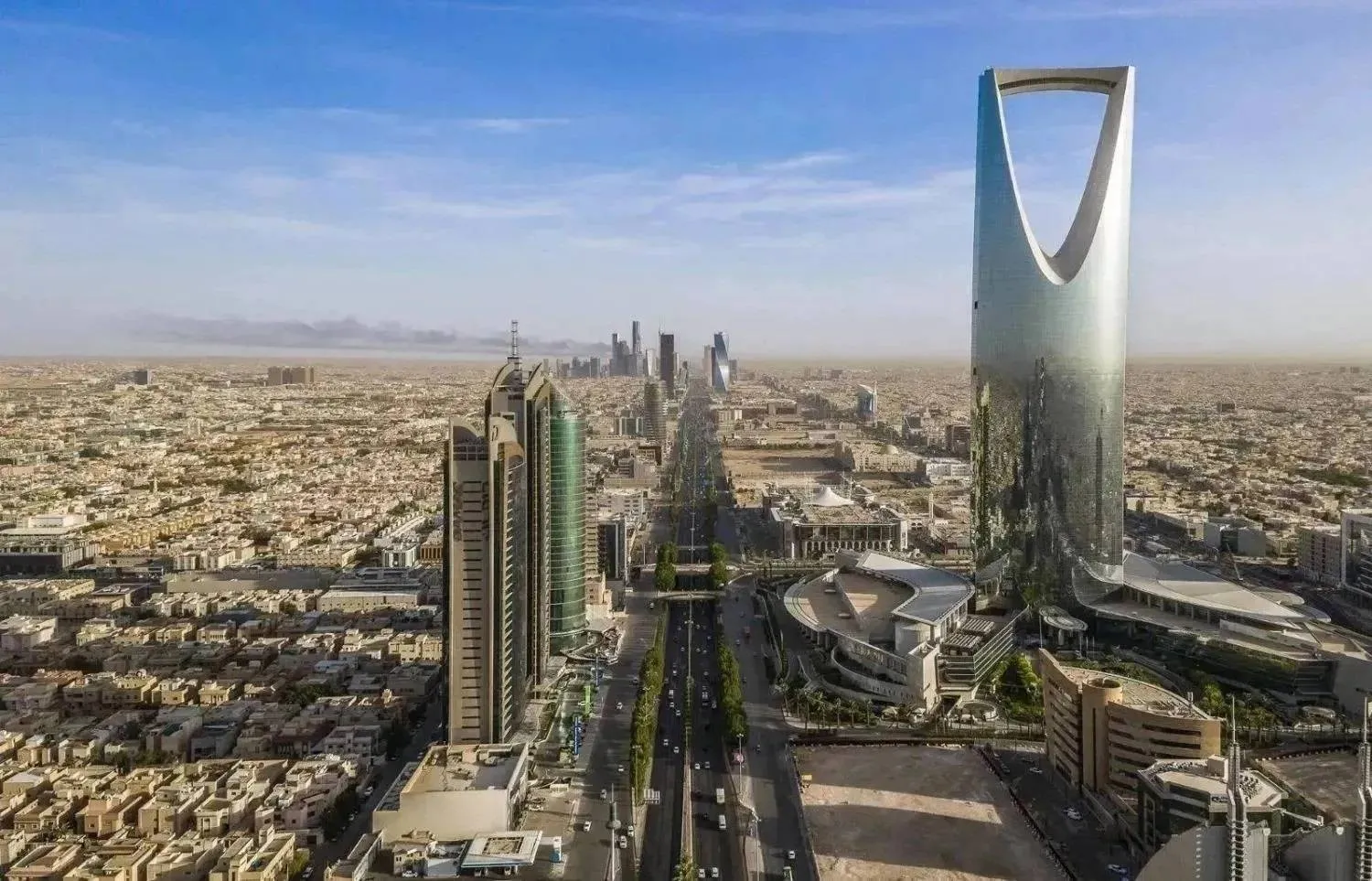
The Saudi capital, Riyadh (SPA) 
TT

Saudi Arabia’s 2025 Budget: Record Non-Oil Revenues, Sustained Investment in Well-Being

The Saudi capital, Riyadh (SPA) 

Saudi Arabia closed the 2025 fiscal year with a strong economic performance underscoring the momentum of its national transformation drive and the resilience of its economy.

Official results pointed to what authorities described as a strategic balance between expansionary spending and maintaining fiscal discipline.

The year marked a significant milestone in the implementation of Vision 2030, with fiscal indicators translating into major projects and enhanced public services that directly affect citizens’ quality of life.

The results also reinforced international confidence in the Kingdom’s economic stability and long-term prospects.

Total government revenues for 2025 reached approximately SAR 1.111 trillion (USD 296.5 billion). Non-oil revenues rose to a historic SAR 505.3 billion (USD 134.7 billion), underscoring the effectiveness of reforms aimed at reducing reliance on oil and building more stable and diversified revenue streams capable of sustaining growth under varying global conditions.

Government expenditure in 2025 totaled SAR 1.388 trillion (USD 370.2 billion). Spending was primarily directed toward sectors central to quality of life. Health and social development accounted for the largest allocation at SAR 278.9 billion (USD 74.4 billion), followed by education at SAR 212.5 billion (USD 56.6 billion).

The allocations highlight the leadership’s emphasis on strengthening healthcare systems, expanding social protection and improving educational outcomes, with human capital development remaining a cornerstone of long-term economic transformation.

As capital spending accelerated and major projects advanced, the 2025 budget recorded a deficit of SAR 276.6 billion (USD 73.8 billion), including SAR 94.8 billion (USD 25.3 billion) in the fourth quarter.

Authorities said the deficit was fully financed through debt issuances and capital market instruments, without drawing on government reserves. Official reserves remained stable at SAR 399.1 billion (USD 106.4 billion).

By financing the annual deficit entirely through debt markets rather than reserve withdrawals, the government demonstrated confidence in its access to capital and its ability to manage liquidity and financial obligations effectively.

Officials say the strong fiscal position sends a positive signal to domestic and international investors, reinforcing private-sector confidence and supporting continued investment momentum.


Four Years into War, Russia’s Energy Revenues Drop but Oil Keeps Flowing 

Flags fly over graves, including those of Russian soldiers killed during the conflict against Ukraine, on the eve of the fourth anniversary of the start of Russia’s military campaign, at Lemeshovo cemetery in the Moscow region, Russia, February 23, 2026. (Reuters)
TT

Four Years into War, Russia’s Energy Revenues Drop but Oil Keeps Flowing 

Flags fly over graves, including those of Russian soldiers killed during the conflict against Ukraine, on the eve of the fourth anniversary of the start of Russia’s military campaign, at Lemeshovo cemetery in the Moscow region, Russia, February 23, 2026. (Reuters)

The money ‌Russia earned from exporting oil and gas dropped over the last 12 months, even as the country's oil exports increased in volume, according to data released on Tuesday, the fourth anniversary of Moscow's full-scale invasion of Ukraine.

Russia relies heavily on energy revenues to support its war in Ukraine - a link that has led Western countries to impose increasingly strict sanctions on Russian fuel, seeking to weaken the country's military effort.

An analysis published by the non-profit Centre for Research on Energy ‌and Clean Air ‌found that Russia's revenues from oil, gas, ‌coal ⁠and refined product ⁠exports totaled 193 billion euros in the 12-month period ended February 24, 2026, down by 27% from the comparable period pre-invasion.

While Russia's gas exports have collapsed since 2022, sanctions have so far not dented Russia's oil export volumes - but, rather, forced Moscow to sell oil at lower prices.

Russia's ⁠revenues from crude exports in the last 12 ‌months decreased by 18%, year-on-year, ‌CREA said. At the same time, crude export volumes remained 6% above ‌pre-invasion levels, at 215 million tons.

In response to Western ‌sanctions, Moscow has redirected most of its seaborne crude to China, India and Türkiye, often relying on a “shadow fleet” of ageing, uninsured tankers to circumvent Western sanctions.

But tougher restrictions could hit Russian fuel exports harder ‌this year.

US President Donald Trump has made diversification away from Russian crude a condition of ⁠a trade ⁠deal with India.

The European Union is discussing a sweeping ban on any business that supports Russia's seaborne crude exports, going far beyond previous sanctions. The bloc failed to pass those sanctions on Monday, as Hungary vetoed them owing to a dispute over a damaged Ukrainian oil pipeline.

Russia exports over a third of its oil in Western tankers with the help of Western shipping services. The planned EU ban would end that practice, which mostly supplies India and China, and render obsolete a price cap on Russian oil purchases that G7 countries have tried to enforce.


Oil Rises to Near Seven-month Highs on US-Iran Tensions

FILE PHOTO: A view of West Qurna oilfield is seen in Basra, southeast of Baghdad, March 29, 2014. REUTERS/Essam Al-Sudani/File Photo
TT

Oil Rises to Near Seven-month Highs on US-Iran Tensions

FILE PHOTO: A view of West Qurna oilfield is seen in Basra, southeast of Baghdad, March 29, 2014. REUTERS/Essam Al-Sudani/File Photo

Oil prices rose on Tuesday, nearing seven-month highs, with traders assessing risks to supply from any military escalation as another round of US-Iran nuclear talks loomed.

Brent crude futures rose 48 cents, or 0.7%, to $71.97 a barrel by 0658 GMT, while US crude futures climbed 45 cents, or 0.7%, to $66.76 a barrel.

Brent is trading at its highest since July 31, while WTI is at its firmest since August 1.

"At this stage, geopolitics is clearly doing most of ‌the heavy lifting for ‌oil prices, with the current firmness largely driven by ‌anticipation ⁠rather than actual ⁠supply loss," said Phillip Nova senior market analyst Priyanka Sachdeva.

"The risk of possible military escalation in the Middle East is gaining traction, and thus, traders appear to hedge against worst-case scenarios."

Iran and the US will hold a third round of nuclear talks on Thursday in Geneva, Oman's Foreign Minister Badr Albusaidi said on Sunday.

The United States wants Iran to give up its nuclear program, but ⁠Iran has adamantly refused, and denied it is trying to ‌develop an atomic weapon.

The State Department is ‌pulling out non-essential government personnel and their families from the US embassy in ‌Beirut, a senior State Department official said on Monday, amid growing concerns about ‌the risk of a military conflict with Iran.

US President Donald Trump said in a social media post on Monday that it will be a "very bad day" for Iran if it does not make a deal.

"In the near-term, geopolitical factors related to ‌the US-Iran conflict are likely to be the primary driver for oil prices," said OANDA senior market analyst Kelvin ⁠Wong.

"For now, WTI ⁠crude oil is evolving in a short-term bullish dynamic, holding above its 20-day moving average, acting as a key short-term support at $63.90/barrel."

On the trade policy front, Trump on Monday warned countries against backing away from recently negotiated trade deals with the US after the Supreme Court struck down his emergency tariffs, saying that he would hit them with much higher duties under different trade laws.

"US President Donald Trump created uncertainty for global growth and fuel demand with a new round of tariff hikes," UOB Bank analysts said in a client note.

Trump said on Saturday he would raise a temporary tariff to 15% from 10% on US imports from all countries, the maximum level allowed under the law.