Oil Rises to Near Seven-month Highs on US-Iran Tensions

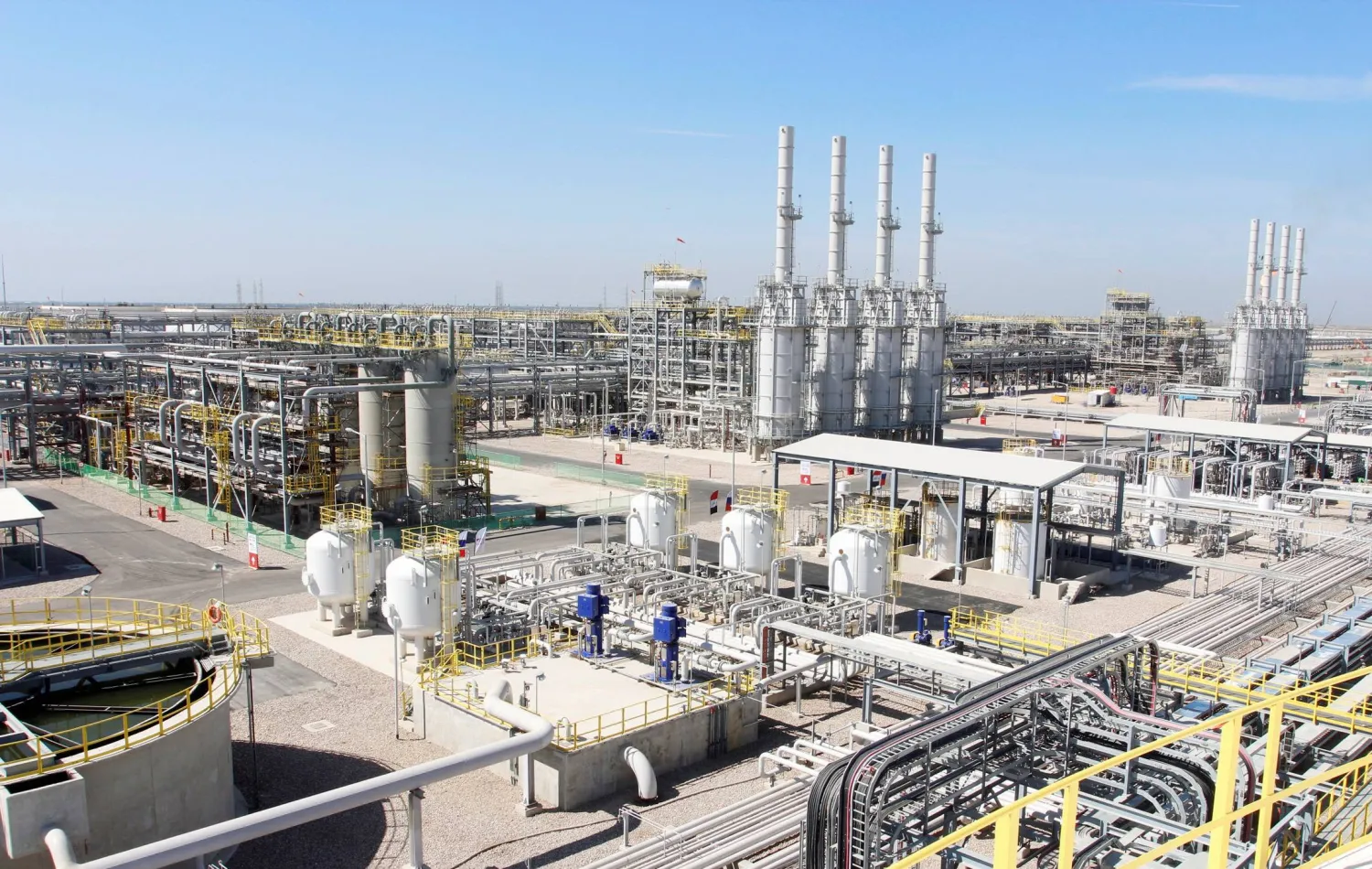
FILE PHOTO: A view of West Qurna oilfield is seen in Basra, southeast of Baghdad, March 29, 2014. REUTERS/Essam Al-Sudani/File Photo
TT

Oil Rises to Near Seven-month Highs on US-Iran Tensions

FILE PHOTO: A view of West Qurna oilfield is seen in Basra, southeast of Baghdad, March 29, 2014. REUTERS/Essam Al-Sudani/File Photo

Oil prices rose on Tuesday, nearing seven-month highs, with traders assessing risks to supply from any military escalation as another round of US-Iran nuclear talks loomed.

Brent crude futures rose 48 cents, or 0.7%, to $71.97 a barrel by 0658 GMT, while US crude futures climbed 45 cents, or 0.7%, to $66.76 a barrel.

Brent is trading at its highest since July 31, while WTI is at its firmest since August 1.

"At this stage, geopolitics is clearly doing most of ‌the heavy lifting for ‌oil prices, with the current firmness largely driven by ‌anticipation ⁠rather than actual ⁠supply loss," said Phillip Nova senior market analyst Priyanka Sachdeva.

"The risk of possible military escalation in the Middle East is gaining traction, and thus, traders appear to hedge against worst-case scenarios."

Iran and the US will hold a third round of nuclear talks on Thursday in Geneva, Oman's Foreign Minister Badr Albusaidi said on Sunday.

The United States wants Iran to give up its nuclear program, but ⁠Iran has adamantly refused, and denied it is trying to ‌develop an atomic weapon.

The State Department is ‌pulling out non-essential government personnel and their families from the US embassy in ‌Beirut, a senior State Department official said on Monday, amid growing concerns about ‌the risk of a military conflict with Iran.

US President Donald Trump said in a social media post on Monday that it will be a "very bad day" for Iran if it does not make a deal.

"In the near-term, geopolitical factors related to ‌the US-Iran conflict are likely to be the primary driver for oil prices," said OANDA senior market analyst Kelvin ⁠Wong.

"For now, WTI ⁠crude oil is evolving in a short-term bullish dynamic, holding above its 20-day moving average, acting as a key short-term support at $63.90/barrel."

On the trade policy front, Trump on Monday warned countries against backing away from recently negotiated trade deals with the US after the Supreme Court struck down his emergency tariffs, saying that he would hit them with much higher duties under different trade laws.

"US President Donald Trump created uncertainty for global growth and fuel demand with a new round of tariff hikes," UOB Bank analysts said in a client note.

Trump said on Saturday he would raise a temporary tariff to 15% from 10% on US imports from all countries, the maximum level allowed under the law.


Riyadh to Host Global Logistics, Supply Chain Forums in November

A view of Riyadh, Saudi Arabia. (SPA)
TT

Riyadh to Host Global Logistics, Supply Chain Forums in November

A view of Riyadh, Saudi Arabia. (SPA)

Under the patronage of Custodian of the Two Holy Mosques King Salman bin Abdulaziz Al Saud, Saudi Arabia will host the second editions of the Global Logistics Forum (GLF) and the UNCTAD Global Supply Chain Forum (GSCF) in Riyadh from November 29 to December 1, reported the Saudi Press Agency on Tuesday.

The GLF, organized by the Saudi Ministry of Transport and Logistic Services, and the GSCF, hosted in partnership with the United Nations and the Saudi Ports Authority, form a pivotal international platform bringing together global leaders, decision-makers, and experts in transport, supply chains, and international trade.

Aligning with Saudi Vision 2030, the GLF aims to solidify the Kingdom's position as a global logistics hub connecting continents while driving innovation, global connectivity, and sustainable supply chains.

The Ministry of Transport and Logistic Services stressed that the co-located forums will serve as a premier launchpad for strategic initiatives and international partnerships, inviting global specialists to participate.

The inaugural 2024 GLF in Riyadh drew over 13,000 attendees, 140 speakers, and 80 exhibitors from more than 30 countries, resulting in 67 agreements valued at over SAR16 billion ($4.3 billion).


Saudi Arabia Tightens Auto Dealer Obligations to Protect Consumers, Improve Ownership Experience

People are seen at the Riyadh Motor Show. (Riyadh Season)
TT

Saudi Arabia Tightens Auto Dealer Obligations to Protect Consumers, Improve Ownership Experience

People are seen at the Riyadh Motor Show. (Riyadh Season)

Saudi Arabia’s auto market is moving toward greater discipline and competition as the Ministry of Commerce steps up oversight of dealers, seeking to strengthen consumer protection and improve compliance with after-sales service requirements.

The ministry announced it had suspended an auto dealership, barred it from importing vehicles and fined it SAR 8.12 million ($2.1 million) after recording 175 violations. These included failure to provide spare parts and replacement vehicles to customers during maintenance, as well as other breaches involving consumer rights, the Commercial Agencies Law and its implementing regulations.

The ministry investigated the violations, contacted affected consumers and followed up to ensure they received their rights and due compensation, including replacement vehicles.

It also summoned the manufacturer, oversaw corrective measures and recall campaigns, and began transferring the brand to another dealer after verifying its readiness and ability to provide the necessary services.

Mohammed Al-Farraj, chief asset management officer at Arbah Capital, told Asharq Al-Awsat that Saudi Arabia’s large auto market and sustained demand make it one of the region’s most attractive, supported by population and economic growth, expansion of the non-oil economy and mega-projects, and growth in tourism and logistics.

The availability and variety of financing options play a key role in supporting demand, particularly because cars are a necessity for a large segment of the population rather than a luxury, Al-Farraj noted.

Market performance is influenced by vehicle prices, financing costs, income levels and supply, as well as competition among brands and the quality of after-sales services.

Al-Farraj described the ministry’s tougher oversight as a positive step toward protecting consumers and improving market discipline, stressing that a dealer’s obligations do not end with a sale but extend to warranties, maintenance, spare parts and replacement vehicles when needed.

Stronger after-sales compliance should bolster market confidence and gradually shift competition toward quality and reliability rather than price alone.

Al-Farraj expects intensifying competition to push dealers to focus more on the value offered throughout vehicle ownership, including total cost of ownership and customer service.


Mega-Projects, Investment Flows Draw Bank of Jordan to Saudi Arabia

A group photo of Bank of Jordan officials following the inauguration ceremony for the bank’s first branch in Riyadh. (Asharq Al-Awsat)
TT

Mega-Projects, Investment Flows Draw Bank of Jordan to Saudi Arabia

A group photo of Bank of Jordan officials following the inauguration ceremony for the bank’s first branch in Riyadh. (Asharq Al-Awsat)

Saudi Arabia’s appeal extends beyond rising foreign investment and expanding mega-projects to the banking sector, where institutions see the economic transformation driven by Vision 2030 as an opportunity to establish a long-term presence in one of the region’s fastest-growing markets.

Bank of Jordan Group’s entry into the Kingdom reflects growing interest among regional financial institutions in tapping the country’s expanding investment cycle.

The group opened its first branch in Riyadh on Monday, launching its financial and banking operations in Saudi Arabia. The move underscores the Kingdom’s ability to attract not only capital, but also financial institutions seeking to finance the next phase of investment.

Mega-projects, private sector expansion and growing foreign and domestic investment are creating significant opportunities for banks to provide financing solutions and services to companies and investors. At the same time, Saudi Arabia is seeking to deepen the financial sector’s role as a driver of growth and economic diversification.

Saleh Hammad, general manager of Bank of Jordan Group, told Asharq Al-Awsat that the bank’s strategy is based on a clear view of the economic transformations reshaping Saudi Arabia and the wider region.

The group has pursued carefully considered regional expansion, focusing on markets with sustainable economic fundamentals and strategic importance, with Saudi Arabia at the forefront.

Hammad said the Kingdom is undergoing an unprecedented economic transformation under Vision 2030, fueled by investment growth, private-sector expansion and the development of its financial and banking environment.

Establishing a presence in one of the region’s leading financial and economic hubs strengthens Bank of Jordan’s position as a regional institution capable of supporting trade, development and investment opportunities, he noted.

Hammad also highlighted Saudi Arabia’s strong banking system and evolving regulatory environment, supported by the Saudi Central Bank, as key advantages that enhance the group’s position while creating added value for clients and investors.