

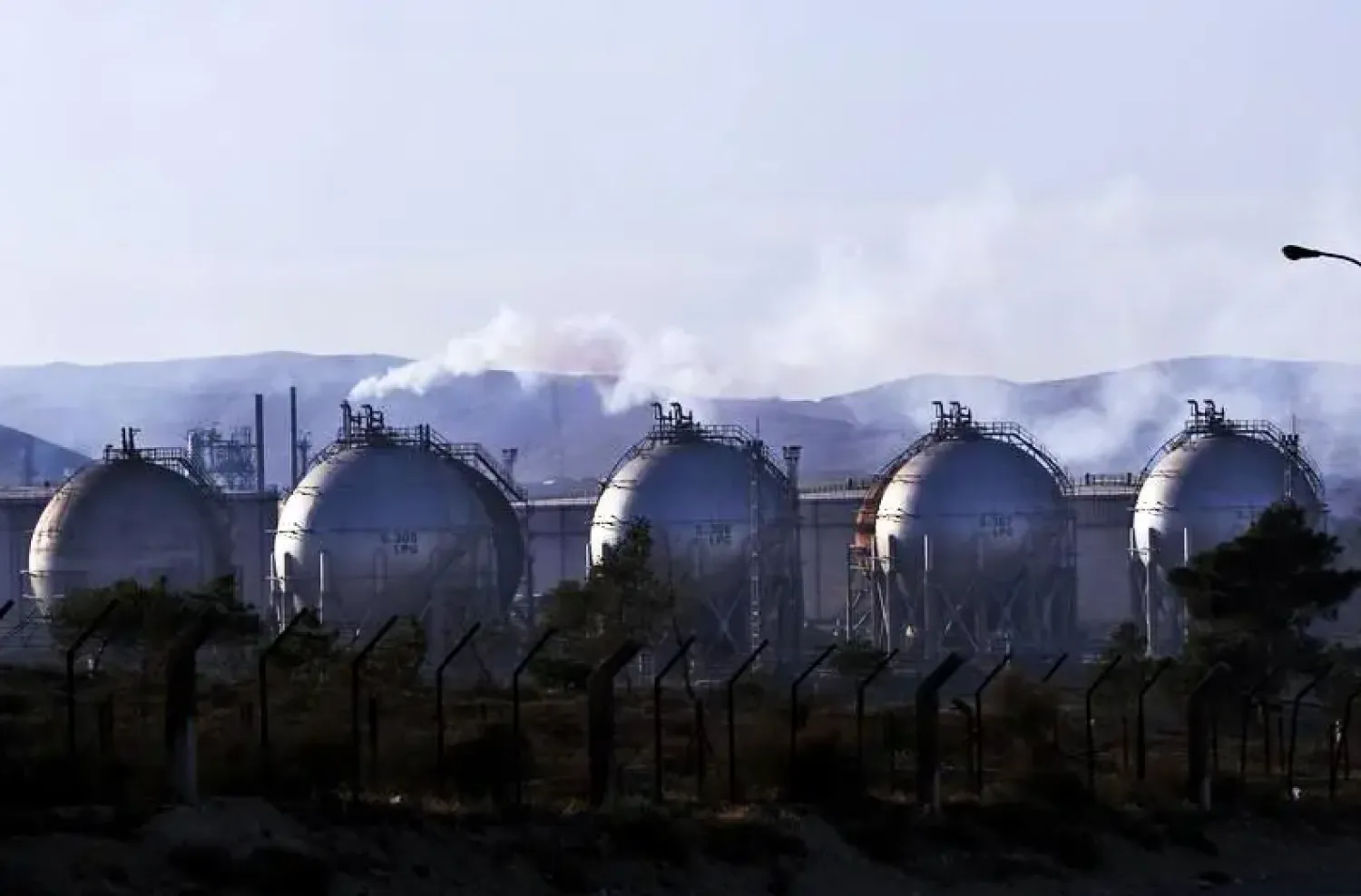

Jordan Offers Investment Opportunities for Oil Shale Exploration

Spherical tanks are seen at the Jordan Petroleum Refinery in the city of Zarqa. (Reuters)
TT

Jordan Offers Investment Opportunities for Oil Shale Exploration

Spherical tanks are seen at the Jordan Petroleum Refinery in the city of Zarqa. (Reuters)

Jordan’s Ministry of Investment announced new investment prospects through the online platform to explore and extract oil shale.

According to the platform, there are more than 18 known oil shale sites in Jordan, including al-Lajjun, al-Sultani, Jurf al-Darawish, al-Attar, Umm al-Ghadran, Wadi Maghar, Suwaqa, Khan al-Zubaib, and al-Thamd.

The investor must develop and invest in infrastructure assets and create new construction opportunities, long-term returns for shareholders, and concession rights.

The data showed that most of the leading oil shale places of proven commercial importance are in central and southern Jordan and can be easily reached via the desert road between Amman and Aqaba.

Oil shale is also found in the areas of Wadi al-Adhiyah, Wadi al-Nadhiyah, Asfir al-Mahatta, the Ghazimah Mountains, Wadi Abu al-Hamam, and most of these areas are close to the infrastructure services necessary for investment.

The data indicated that oil shale is defined as a sedimentary rock in which the organic content (kerogen) is insoluble in organic solvents but instead forms oil-like liquid hydrocarbons when subjected to thermal decomposition at temperatures of up to 500 – 600°C.

Jordan has a sizeable domestic resource of oil shale spread across 60 percent of the Kingdom’s total area, making it the fourth-largest oil shale reserve worldwide.

According to the data provided by the platform, oil shale is a safe and long-term solution to Jordan’s significant energy needs.

Many studies and surveys conducted on the use of oil shale in several locations in Jordan confirmed that the material can be exploited through three paths: heating the deep oil shale to produce oil, distilling the oil shale through surface mining, and direct combustion of oil shale to generate electricity.



Hapag-Lloyd: Resuming Normal Shipping to Take 6-8 Weeks if Mideast Stabilizes

This aerial picture shows stacks of shipping containers at Tanjung Priok Port, Jakarta, March 31, 2026. (Photo by BAY ISMOYO / AFP)
TT

Hapag-Lloyd: Resuming Normal Shipping to Take 6-8 Weeks if Mideast Stabilizes

This aerial picture shows stacks of shipping containers at Tanjung Priok Port, Jakarta, March 31, 2026. (Photo by BAY ISMOYO / AFP)

Hapag-Lloyd voiced cautious optimism on Wednesday on the prospect of resuming shipping through the Strait of Hormuz after a two-week ceasefire agreed between the US and Iran, but said that resuming normal traffic throughout its network would take at least 6-8 weeks.

Speaking in a call to customers, CEO Rolf Habben Jansen echoed guarded remarks ⁠by peer container ⁠shipping group Maersk, saying that more security assurances were needed.

“Even if a ceasefire has now been agreed overnight, I would say that it's fair to ⁠say that the conflict in the Middle East is still severely disrupting shipping, but also supply chains," the Hapag CEO said, adding that the situation was "fluid".

According to Reuters, he estimated additional costs from the Middle East crisis at $50 million to $60 million a week and warned that the German company ⁠would ⁠have to pass on some of that to its customers. That was up from $40-$50 million stated previously.

He added that about 1,000 ships were still stuck in the region, six of which from his company with a combined capacity of about 25,000 standard containers.


Turkish Shares Rise After Iran Ceasefire Deal, Lira Set for Rare Daily Gain

10 July 2020, Türkiye, Istanbul: People stand behind a Turkish national flag in front of Hagia Sophia in Istanbul. (dpa)
TT

Turkish Shares Rise After Iran Ceasefire Deal, Lira Set for Rare Daily Gain

10 July 2020, Türkiye, Istanbul: People stand behind a Turkish national flag in front of Hagia Sophia in Istanbul. (dpa)

Banking and ‌airline stocks led a more than 4% rise in Turkish shares and the lira was on track for a rare daily gain on Wednesday, as the two-week Middle East ceasefire sparked a relief rally across global markets.

At 0823 GMT, Türkiye's blue-chip BIST 100 index was up 4.3%, while the banking index rose 8.8%. Shares in airline ‌carriers Turkish ‌Airlines and Pegasus climbed more than ‌6% ⁠each.

The United States ⁠and Iran have agreed to a two-week ceasefire and Pakistan Prime Minister Shehbaz Sharif said in a post on X that he had invited Iranian and US delegations to meet in Islamabad on Friday.

The ⁠lira traded at 44.5400 against ‌the dollar, strengthening from ‌Tuesday's close of 44.6065.

The currency had lost about ‌1.5% in value since the US-Israeli strikes ‌on Iran began at the end of February. With a year-to-date loss of 3.6% and inflation reaching to 10% in the first three ‌months of the year, the lira has gained in real terms.

Before the ⁠two-week ⁠ceasefire agreement, economists had been expecting the central bank to reflect a cumulative 300 basis points of tightening delivered via liquidity measures in the main policy rate, which stands at 37%.

Markets are now watching whether the two-week ceasefire evolves into a more permanent arrangement, which could reshape expectations for policy tightening at the central bank's next monetary policy committee meeting on April 22.


Gulf Markets Jump on US-Iran Ceasefire Agreement

A man follows the stock market at the Dubai Financial Market in Dubai (EPA)
TT

Gulf Markets Jump on US-Iran Ceasefire Agreement

A man follows the stock market at the Dubai Financial Market in Dubai (EPA)

Stock markets in the Gulf region jumped on Wednesday in line with global equities after US President Donald Trump agreed to a two-week ceasefire with Iran on Tuesday.

Trump said the last-minute deal was subject to Iran's agreement to pause its blockade of oil and gas supplies through the Strait of Hormuz, which before the war typically handled about one-fifth of global oil and liquefied natural gas shipments.

Iranian Foreign Minister Abbas Araqchi said Tehran would cease counter-attacks and provide safe passage through the waterway if attacks against it stopped.

Pakistani Prime Minister Shehbaz Sharif ⁠said he had ⁠invited Iranian and US delegations to meet in Islamabad on Friday.

Saudi Arabia's benchmark index opened 1.4% higher, lifted by gains in banking and energy stocks.

Oil giant Saudi Aramco gained 2.1%, while largest lender Al Rajhi Bank added 2.4%.

Dubai's main market spiked as much as 8.5%, its highest intraday gain in more than 11 years, with the heavyweight real estate and financial sectors outperforming.

At 0730 GMT the Dubai index was trading 6.4% higher, led by a 9.8% jump in blue-chip developer Emaar Properties and an 11.3% rise in top lender Emirates NBD ⁠Bank.

Abu Dhabi's benchmark index climbed as much as 4.9% in early trade, its biggest jump in six years, boosted by gains in the financial, real estate, logistics and energy sectors.

At 0730 GMT the Abu Dhabi index was up 3.2% with the largest lender, First Abu Dhabi Bank, rising 8.3% and real estate giant Aldar Properties jumping 8.8%.

Energy firm Adnoc Gas gained 3.8%, while Abu Dhabi Ports Company advanced 9.8%.

In Qatar, the index jumped 3.4%, as all its constituents advanced, led by energy shares.

Petrochemical maker Industries Qatar jumped 6.2% and Qatar Gas Transport surged 8%, the top gainer.

The Gulf's biggest lender, Qatar National Bank, climbed 3.7%.