


Final Day of InFlavour in Riyadh Celebrates Regional F&B Ecosystem

InFlavour ended its three-day run on Wednesday. (SPA)
TT

Final Day of InFlavour in Riyadh Celebrates Regional F&B Ecosystem

InFlavour ended its three-day run on Wednesday. (SPA)

InFlavour ended its three-day run at Riyadh Exhibition and Conference Center, Malham, on Wednesday with the region’s growing start-up industry at the top of the menu. Prominent figures from across the Middle East took to the inaugural event’s various stages to share personal growth stories, while the first Five-Star Pitch Fest – a three-day knock-out competition for F&B start-ups – confirmed its winners.

Speaking on the Main Course stage early in the afternoon, Jordanian chef Manal Al Alem discussed the importance of keeping tradition and culture alive. With more than four million followers on Instagram and in excess of 2.6 million subscribed to her YouTube channel, the “Queen of the Arabian Kitchen” believes social media can help rather than hinder when it comes to ensuring younger generations remain connected with their food heritage.

“It is an ongoing challenge with the new generation as they are so used to quick food – the press of a button nowadays means you can have any cuisine you wish,” she said. “Also, traditional food can sometimes be one-dimensional in terms of flavors and the new generation prefers multiple flavors when they eat a meal.

“I like to use my influence on social media to try and encourage my followers to try different things. I work with them to find ways of merging tradition with current trends and have seen some incredible recipes come out of social media. I always like to engage with my followers and leave comments on how they can improve their creations – I believe this is very important when trying to inject traditional culture into modern cuisine trends.”

Later on the same stage, the grand finale of InFlavour’s inaugural Five-Star Pitch Fest saw the industry’s brightest and best start-ups compete to win one of three coveted prizes: The “Plant The Idea Award” for best early-stage start-up included a US$10,000 prize; “Flourishing Founder Award” celebrated the best well-established start-up and also provided a prize of US$10,000; while the “InFlavour Award” was given to the most impressive startup overall, rewarding the winners with a check for US$30,000.

Starting on InFlavour’s opening day, 33 semi-finalists battled it out on stage to impress the 24 investors-turned-judges and secure one of six finalist spots. The grand finale welcomed Prince Khaled bin Alwaleed bin Talal Al Saud, the founder and CEO of KBW Ventures, alongside industry veterans Andrew D Ive, founder and managing general partner of Big Idea Ventures, and Dana Al Salem, founder of Merit Capital, as part of the judging panel, who scored the start-ups based on how each tackled creativity, innovation, potential, functionality, impact, and people and society.

Taking home the “Plant The Idea Award” for best early-stage start-up was Saudi-based Terraxy, a spin-off from King Abdullah University of Science and Technology (KAUST). Commercializing its SandX and CarboSoil technologies, Terraxy aims to address the ongoing challenges posed by harsh and arid environments by ultimately providing low-cost and environmentally friendly solutions for growing plants in deserts.

The “Flourishing Founder Award” for best well-established start-up, meanwhile, was Saudi-based Barakah, an online marketplace that enables food retailers to sell their surplus products and meals to consumers at heavily discounted prices.

Taking home the “InFlavour Award” and its US$30,000 prize was US-based A Dozen Cousins, a natural food brand that makes convenient and nutrient-rich meals, side dishes, and sauces inspired by traditional Creole, Caribbean and Latin American recipes.

“I was thrilled to showcase our brand and what we’ve built over the years,” said Ibraheem Basir, company founder and CEO. “It was so refreshing to hear all the pitches and it’s always a privilege to emerge as the winner. Looking ahead, our future involves continued growth, expanding distribution, and entering new markets. The prize money will help us expand our team and allocate resources efficiently.”

Speaking on the experience of judging some of the most innovative start-ups in the F&B ecosystem, Prince Khaled added: “It has been an incredible three days of pitches. We’ve seen some truly groundbreaking innovations and products from around the world. It is really exciting to see how these start-ups plan to transform not only the wider world’s F&B landscape, but also specifically Saudi Arabia’s. Congratulations once again to all participants and especially the three winners.”

Earlier in the day, Alia AlKasimi, the co-founder of Oh Delices Creative, had delivered a masterclass focused on current trends, spotlighting a cookbook her company created using only generative artificial intelligence (AI), and what potential repercussions the technology could have on the food marketing industry.

“After seeing so much talk about the possibilities of AI, my team and I got together in February of this year to explore how we could use these tools in our work, and in particular, the culinary space,” she said.

“We set out to make a cookbook solely using both text and image-based generative AI. As we are a Morocco-based company, we asked the program to come up with dishes that have never been done before, but still encompass the tradition of Moroccan food. What came out was nothing short of amazing,” she added.

Some of the dishes that made the final cut of Spice & Machine: 10 Moroccan Recipes Born From Artificial Intelligence include a strawberry harissa gazpacho, orange honey quinoa, and a Moroccan mint tea cake. Yet before they could be included, first Al Kasimi and her team needed to generate supporting images – and then, of course, the best part: Testing the recipes for real.

“I’ll be honest, we were all expecting the dishes to taste horrible, but we ended up changing next to nothing as every dish worked perfectly,” she said. “It was a real eye-opener for us all just how powerful AI can be if you learn to harness it properly. A project like this would usually take seven people up to four weeks to create – we did this with two people in less than a week. Is AI going to replace humans? It’s a broad question, but what I do know is humans who have learnt to properly utilize AI will replace humans who haven’t. That much is certain.”

Organized by Tahaluf, the Informa LLC joint venture with the Events Investment Fund and SAFCSP, and with the support of the Saudi Ministry of Environment, Water and Agriculture, the inaugural InFlavour proved a hive of activity with tens of thousands of visitors being joined by 400 brands, 200 investors, and 200 speakers representing 143 countries across the three days.
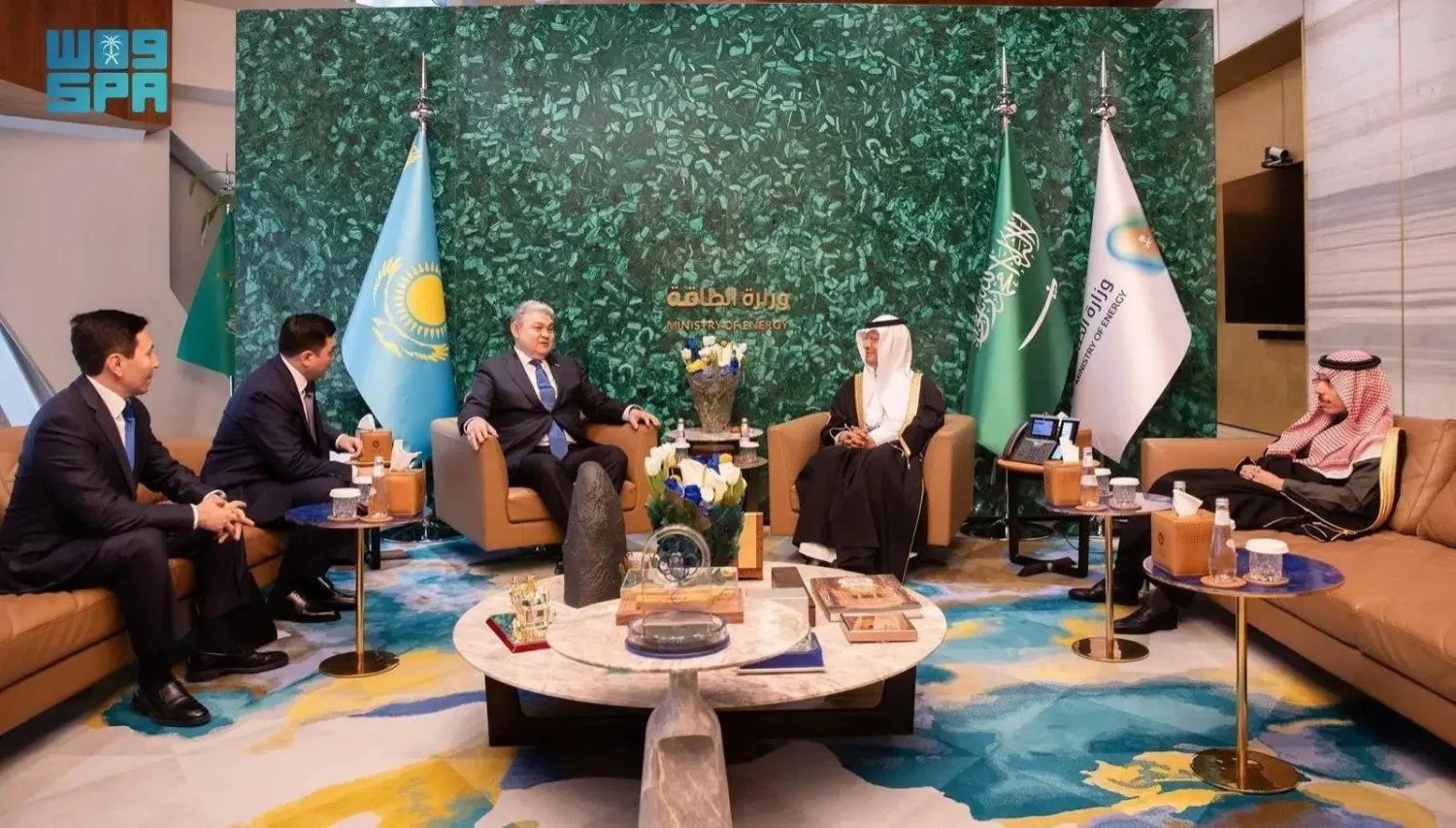



Saudi Arabia, Kazakhstan Agree to Establish Coordination Council

Saudi Minister of Energy Prince Abdulaziz bin Salman bin Abdulaziz receives Kazakhstan’s Foreign Minister Yermek Kosherbayev in Riyadh. (SPA)
TT

Saudi Arabia, Kazakhstan Agree to Establish Coordination Council

Saudi Minister of Energy Prince Abdulaziz bin Salman bin Abdulaziz receives Kazakhstan’s Foreign Minister Yermek Kosherbayev in Riyadh. (SPA)

Saudi Arabia and Kazakhstan agreed to establish a Saudi-Kazakh Coordination Council, reported the Saudi Press Agency on Tuesday.

Saudi Minister of Energy Prince Abdulaziz bin Salman bin Abdulaziz received in Riyadh Kazakhstan’s Foreign Minister Yermek Kosherbayev. Saudi FM Prince Faisal bin Farhan bin Abdullah and Minister of Energy of Kazakhstan Yerlan Akkenzhenov also attended the meeting.

The talks tackled the establishment of the coordination council, which will be chaired by the Saudi minister of energy and Kazakhstan’s foreign minister. The council reflects the two countries’ commitment to strengthening cooperation and expanding their bilateral partnership.

Prince Abdulaziz and Kosherbayev signed an agreement on the establishment of the council, which aims to boost coordination and consultation between the two countries and develop frameworks for cooperation across various sectors of mutual interest, elevating bilateral relations to broader levels.

Prince Abdulaziz and Kosherbayev discussed relations between their countries and ways to develop them further, especially in the energy field. They tackled opportunities for cooperation and investment in renewable energy and energy storage systems and discussed oil market developments.


Saudi-Qatari Partnership Paves Way for Logistics Corridors to Boost Regional Trade Efficiency 

The MoU was signed by Mawani President Eng. Suliman Almazroua and CEO of Qatar Ports Management Company Captain Abdullah Mohammed Al-Khanji. (QNA)
TT

Saudi-Qatari Partnership Paves Way for Logistics Corridors to Boost Regional Trade Efficiency 

The MoU was signed by Mawani President Eng. Suliman Almazroua and CEO of Qatar Ports Management Company Captain Abdullah Mohammed Al-Khanji. (QNA)

The Saudi Ports Authority (Mawani) and Qatar Ports Management Company signed on Tuesday a memorandum of understanding (MoU) aimed at boosting maritime and logistics cooperation between the two sides.

The agreement will contribute to the development of the ports sector, raising operational efficiency, and supporting regional and international trade flows.

The MoU was signed by Mawani President Eng. Suliman Almazroua and CEO of Qatar Ports Management Company Captain Abdullah Mohammed Al-Khanji. Qatari Ambassador to Saudi Arabia Bandar bin Mohammed Al Attiyah attended the signing ceremony.

The agreement reflects Saudi Arabia and Qatar’s commitment to building effective partnerships, exchanging expertise, establishing an organized framework for cooperation management, and developing joint investment opportunities in line with Saudi Vision 2030 and Qatar National Vision 2030.

The MoU outlines eight key areas of cooperation, including the exchange of best practices in port management and operations, and the study of opportunities for direct maritime and land connectivity between the ports of both countries to enhance trade flow efficiency.

It includes collaboration in logistics services, exploring the establishment of joint maritime corridors serving bilateral and regional trade, and assessing the feasibility of creating shared regional distribution centers.

In the fields of digital transformation and artificial intelligence, the two sides agreed to deepen cooperation on developing smart systems, data governance, and the unified maritime window, thereby boosting operational efficiency and keeping pace with technological advancements in the maritime sector.

The MoU places strong emphasis on maritime safety and environmental protection, including exchanging expertise in combating marine pollution and emergency response; developing joint maritime emergency plans; establishing an emergency communication line between the two countries; and cooperating to ensure compliance with international conventions, conduct joint exercises, and develop risk monitoring systems.

The cooperation also covers human capital development through joint training programs and field-exchange of expertise, as well as academic and research collaboration in maritime transport and logistics.

In terms of joint investment, both sides will study local and global investment opportunities in ports and related services and coordinate with the private sector to support these initiatives.

The MoU further includes cooperation in cruise tourism through enhanced maritime connectivity and joint promotion of Gulf cruise routes, as well as international and regional representation by coordinating positions in international maritime organizations and supporting joint initiatives, notably “Green Ports” and “Safe Sea Corridors.”

The agreement reflects the commitment of Mawani and Qatar Ports Management Company to advancing the ports sector and boosting its role as a key driver of trade and economic growth, contributing to Gulf integration and enhancing regional competitiveness in maritime and marine services.


Golden Halal Logo Launched at Makkah Halal Forum  

The Makkah Halal Forum 2026 was held from February 14 to 16. (SPA)
TT

Golden Halal Logo Launched at Makkah Halal Forum  

The Makkah Halal Forum 2026 was held from February 14 to 16. (SPA)

The Makkah Halal Forum 2026, which concluded on Monday, marked a pivotal milestone in the development of Saudi Arabia's halal industry, ushering in a new phase of structured institutional action.

This shift moves the sector beyond theoretical discourse toward a fully integrated implementation framework. It cements the Kingdom’s global leadership in halal and boosts the credibility of Saudi products in international markets.

The forum that began on February 14 witnessed the launch of a package of strategic enablers reflecting the maturity of the Saudi experience in the sector. Chief among them was the introduction of the Halal Academy as a specialized knowledge and training arm dedicated to building professional expertise and raising standards across the entire value chain.

The event also saw the unveiling of the Golden Halal logo, a high-level accreditation mark designed to provide global markets with a unified benchmark of trust, underscoring the Kingdom’s commitment to the highest standards of quality and compliance.

These initiatives signal a strategic shift that goes beyond the traditional concept of religious oversight. Instead, they frame halal as a comprehensive industrial and economic system that integrates Sharia compliance with high quality standards, advanced governance, and digital traceability. The approach is expected to boost the competitiveness of Saudi exports and facilitate their entry into global markets.

National success stories highlight the tangible impact of this transformation. CEO and founder of Roya Factory for Food Products Rasha Al Sanea noted that Saudi accreditation has evolved into a comprehensive quality certification that provides companies with a clear competitive edge abroad.

She noted that obtaining certification involves a rigorous process, including assessments of facility safety, manufacturing quality, and compliance with global standards ahead of final audits. These measures strengthen product reliability and boost readiness for international expansion.

The presence of international delegations and trade missions in Makkah on the sidelines of the forum helped accelerate expansion opportunities and open direct export channels to several markets, she added.

Pairing the Saudi Made logo with accredited halal marks, foremost among them the Golden Halal logo, enhances global consumer confidence and gives Saudi products a strong presence across diverse cultures and markets, she stressed.