


Saudi Arabia Shows the World its Vision for Expo Riyadh 2030

Artistic paintings and singing performances impressed the forum’s guests (Asharq Al-Awsat)
TT

Saudi Arabia Shows the World its Vision for Expo Riyadh 2030

Artistic paintings and singing performances impressed the forum’s guests (Asharq Al-Awsat)

The closing forum to host the Riyadh Exhibition (Expo 2030), which was held by the Royal Commission for the City of Riyadh, was successful by all standards.

The choice of the place, in the Meudon forest - located west of Paris and known for its beautiful lake and spacious building suitable for major events - was in harmony with the purpose of the Saudi presentation, which is to delight the eyes and ears with the exceptional watercolor paintings.

The artistic scenes presented by the Saudi bands, accompanied by musical performances by a large orchestra of 56 musicians, came to dazzle the forum’s guests. Hundreds of attendees responded to the invitation, highlighting support for Saudi Arabia for winning the hosting of Expo 2030.

It was clear to everyone that the exhibition falls completely within the framework of Vision 2030 and its various ambitions. The large and high-ranking official Saudi delegation, the warm hospitality, and the good organization were all elements that gave the forum a special flavor.

According to the sources of the Saudi delegation, there are serious chances of Saudi Arabia winning the privilege to host the international event, even though Seoul, the capital of South Korea, is deploying great efforts to influence the members of the International Bureau of Exhibitions and win them over to its advantage.

The final word is due to be announced on Nov. 28, on the occasion of the General Assembly of the Bureau International des Expositions, where the competing countries will be given the last opportunity to present their arguments, after which a vote will take place to appoint the winning party immediately.

The Riyadh exhibition carries the slogan, “Together We Shape the Future” (a better tomorrow, climate action and prosperity for all), and will be held for six months (from October 1, 2031 until the end of March 2031).

Organizers expect the event to achieve record numbers on many levels. The exhibition will stretch over 6 million square meters, while 179 countries will join the event. Virtual visitors are expected to reach one billion, and in person visitors will account for 40 million, in addition to the participation of 246 non-governmental bodies.

SAMA Governor: Saudi Arabia Maintains Considerable Economic Resilience Despite Regional Tensions

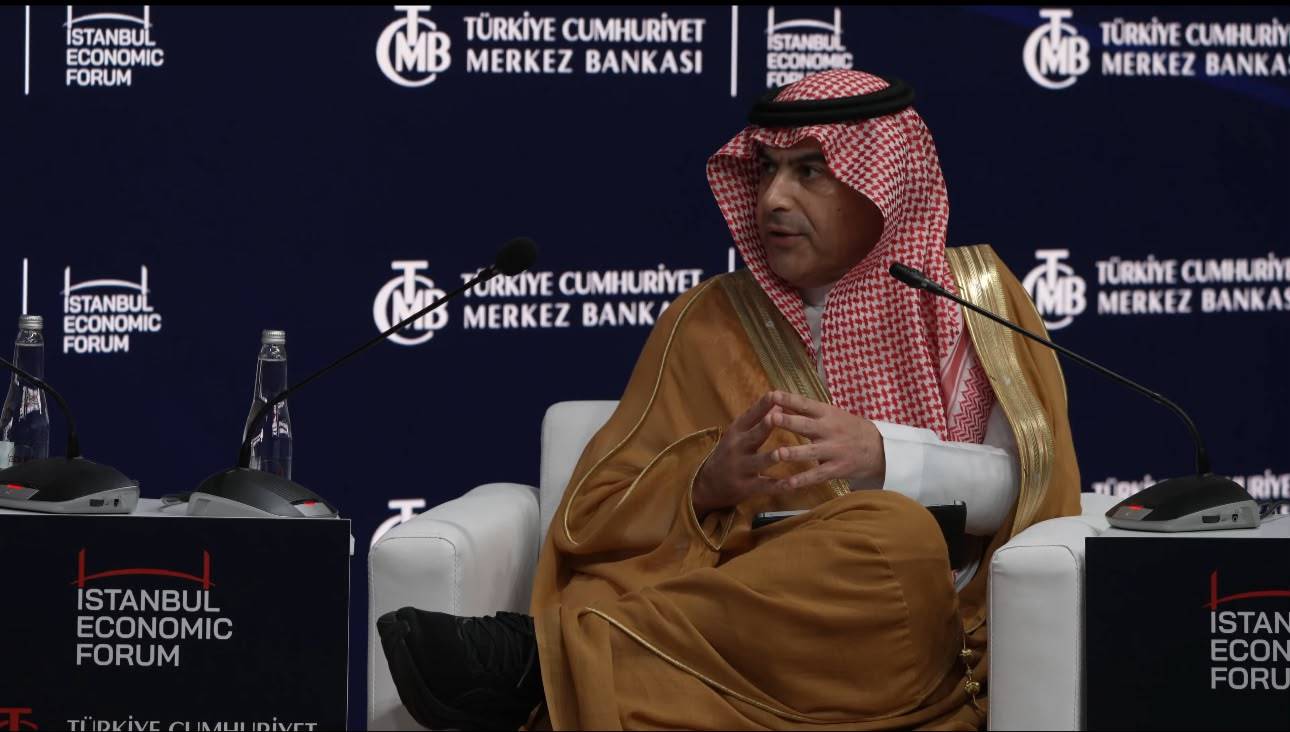
Ayman Alsayari during his participation in the Istanbul Economic Forum (Asharq Al-Awsat)
TT

SAMA Governor: Saudi Arabia Maintains Considerable Economic Resilience Despite Regional Tensions

Ayman Alsayari during his participation in the Istanbul Economic Forum (Asharq Al-Awsat)

Saudi Central Bank (SAMA) Governor Ayman Alsayari said the global economy has shown considerable resilience despite successive geopolitical shocks, but warned that continued conflict in the region was complicating the outlook for growth and inflation.

Speaking at the Istanbul Economic Forum on Thursday, Alsayari said global economic growth was projected at approximately 3% in 2026, following repeated downward revisions, with a recovery expected in 2027. Global inflation, meanwhile, was forecast at around 4.7%, raising concerns about renewed price pressures after a period of easing inflation since 2024.

Turning to Saudi Arabia, Alsayari said the Kingdom had maintained considerable economic resilience despite its proximity to regional tensions, supported by strong foreign reserves and assets, long-term infrastructure investments and economic diversification under Vision 2030.

He highlighted the importance of investments in energy infrastructure, particularly the East-West Pipeline, and in maintaining oil exports amid disruptions affecting the Strait of Hormuz and the Red Sea.

The pipeline has helped Saudi Arabia continue meeting customer demand, he said.

Ayman Alsayari speaking during a session at the Istanbul Economic Forum (Asharq Al-Awsat)

Alsayari said Saudi Aramco had prepared for potential disruptions by establishing oil reserves in different parts of the world, allowing it to continue supplying customers during the conflict.

The governor stressed that recent developments demonstrated the importance of investing in critical infrastructure during periods of stability to strengthen the economy's capacity to absorb unexpected shocks.

The SAMA governor said Saudi banks had maintained their financial resilience since the beginning of the regional conflict, supported by strong liquidity and capital positions.

According to June 2026 data, the banking sector's liquidity coverage ratio stood at 170%, its capital adequacy ratio at 20.9%, and its net stable funding ratio at 114.6%.

He said Saudi banks continued to benefit from the Kingdom's A+ sovereign credit rating, which supported their access to international financing markets despite rising risk premiums.

Domestic liabilities accounted for 87.1% of total liabilities at Saudi banks, significantly limiting their exposure to capital outflow risks.

Alsayari said the Saudi economy recorded negative growth for two consecutive quarters in 2026, largely reflecting weakness in the oil sector.

However, non-oil economic activity continued to expand, growing by approximately 2% in the first quarter and 1% in the second quarter.

He attributed the resilience of domestic demand partly to population growth and record-low unemployment among Saudi nationals, alongside the progress achieved through the Kingdom's economic diversification program.

Inflation in Saudi Arabia remained moderate at 1.8% as of mid-August 2026, supported by government measures, including domestic fuel price caps, and the Saudi riyal's peg to the US dollar.

Alsayari said the currency peg had helped limit imported inflation, given the structure of the Saudi economy.


WTO Raises 2026 Global Merchandise Trade Growth Forecast to 3.9% On AI Boom

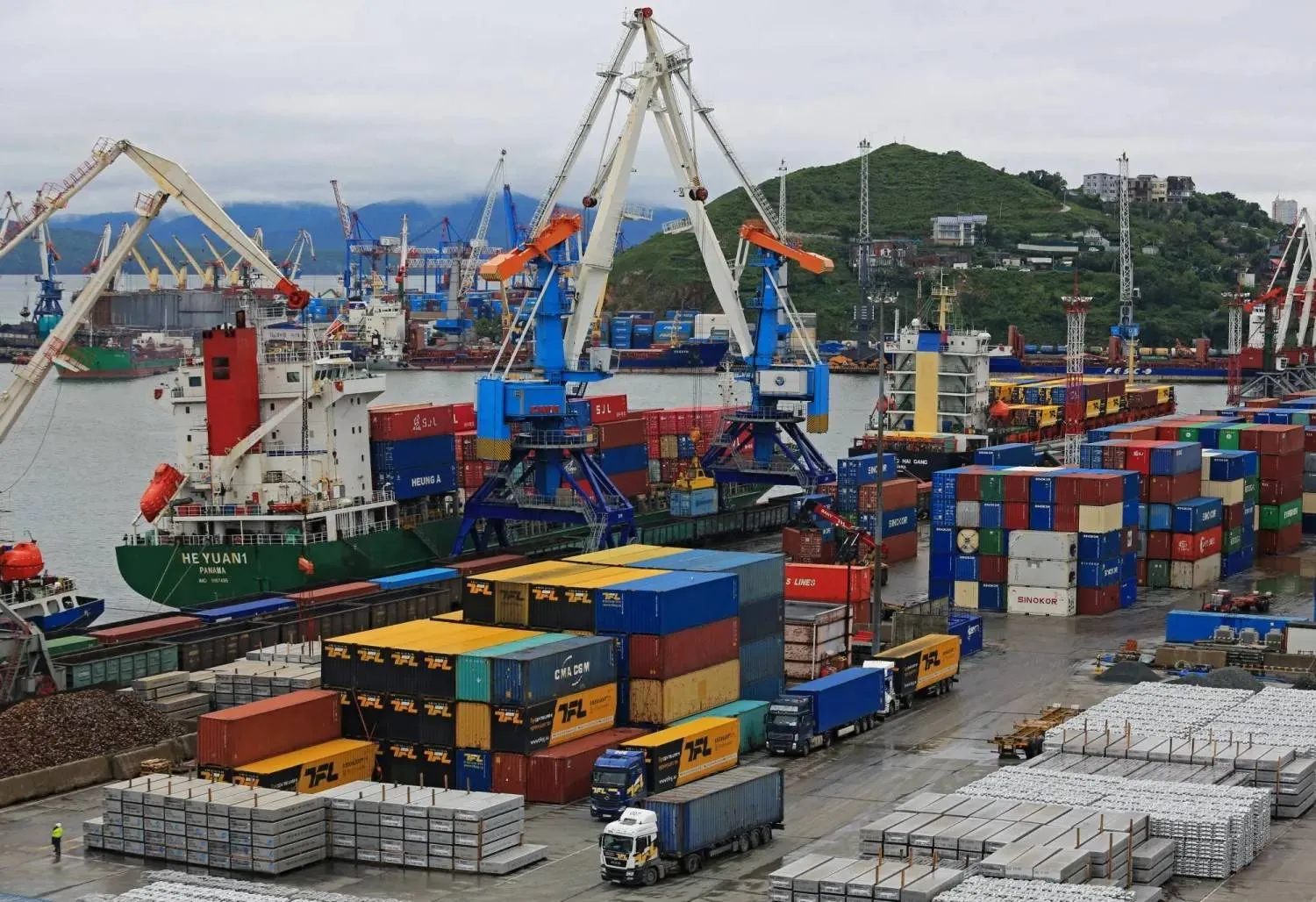
A view shows shipping containers at a commercial port in Vladivostok, Russia August 25, 2023. REUTERS/Tatiana Meel/File Photo 
TT

WTO Raises 2026 Global Merchandise Trade Growth Forecast to 3.9% On AI Boom

A view shows shipping containers at a commercial port in Vladivostok, Russia August 25, 2023. REUTERS/Tatiana Meel/File Photo 

The World Trade Organization (WTO) has upgraded its global merchandise trade growth forecast for 2026 to 3.9%, a significant jump from its previous 1.9% projection made in March.

The upward revision is primarily driven by surging investments in artificial intelligence (AI) and adaptable supply chains, which have successfully cushioned economic shocks from the ongoing Middle East conflict.

The latest WTO Global Trade Outlook and Statistics report expects 4.1% growth in 2027, up from a previous forecast of 2.6%, and marginally below 2025 trade volume growth of 4.2%.

A surge in spending on semiconductors and AI data centers provided a significant boost, with trade in those products jumping 67% from a year earlier, the report said.

It said in the first half of 2026, AI-enabling goods such as semiconductors and servers accounted for 47% of global merchandise trade growth.

The WTO said merchandise trade had proved more resilient than expected in the face of disruptions, as stronger demand for AI-related products offset some of the impact of the war and supply chain disruptions.

However, the Geneva-based trade watchdog downgraded its outlook for services trade to 3.3% in 2026, down ⁠from a previous baseline forecast of 4.8%, due to higher aviation fuel costs linked to the conflict in the Middle East.

Growth forecasts this year for transport and travel services, both of which rely heavily on the region, were also cut to 0.9% and 0.2%, respectively. Services trade growth is forecast to rebound to 6.4% in 2027.

Regional Disparities

The WTO report said Asia is set to lead merchandise trade growth in 2026, with imports rising 9.5% and exports 9.9%, while Africa is also expected to post strong growth, with imports up 8.9% and exports ⁠up 5.6%.

Import growth is forecast to remain subdued in North America at 1.4%, although exports are expected to increase 5.7%. By contrast, both imports and exports in the Middle East are projected to contract sharply, falling 15.4% and 17.2%, respectively.

The WTO said signs of wider fragmentation between rival geopolitical ⁠trade blocs had eased while world GDP is expected to grow by 2.6% in 2026, with the largest gains in Asia at 4.3%, followed by Africa and South America, while the Middle East is expected to see a sharp drop in output of 4%.

AI Leads Trade

The report also noted one of the widest gaps in recent years between the growth in world merchandise trade volumes — at 3.5% year-on-year in the ⁠first half of 2026 — and the dollar value of trade, at 15%, reflecting higher prices for energy products and strong demand for AI-enabling goods.

In value terms, AI-enabling goods accounted for nearly half of global merchandise trade growth in the first half of 2026, but remain highly geographically concentrated, the report said.

It then warned that several risks could still affect the forecast such as diminishing household purchasing power due to higher fuel and fertilizer costs linked to disruption of the Strait of Hormuz, a critical route for global energy supplies, and the Russian war in Ukraine, as well as any slowdown in AI investment.

Also, the WTO said signs of wider fragmentation between rival geopolitical ⁠trade blocs had eased, but decoupling between the US and China had accelerated and was now the main driver of divergence in global trade patterns.

US imports from China fell 29% in 2025, reducing China's share of total US imports to 9.3% from more than 20% before trade tensions between the world's two largest economies flared up in 2018, the report said.


World Bank Praises Saudi Arabia’s Experience in Data Governance and AI Development

General view of Riyadh, Saudi Arabia. (SPA)
TT

World Bank Praises Saudi Arabia’s Experience in Data Governance and AI Development

General view of Riyadh, Saudi Arabia. (SPA)

In its regional economic report for the Middle East and North Africa, the World Bank highlighted the Kingdom of Saudi Arabia’s experience in data governance and the development of national infrastructure supporting artificial intelligence (AI).

The report —released in October 2026 and titled "From Gap to Opportunity: AI, Jobs, and Growth"— underscored the Kingdom's progress in developing AI models and computing capabilities, as well as in technology investments, the Saudi Press Agency reported Friday.

The bank commended the Kingdom's progress—represented by the Saudi Data and AI Authority (SDAIA)—in building a national data and AI ecosystem. It regarded the Saudi experience as a benchmark for developing institutional models for data and AI governance, while highlighting the role of institutional integration and national support in accelerating capacity building in this field.

The World Bank dedicated a standalone case study to SDAIA’s experience. The study examined the authority's role in governing the national data ecosystem and accelerating the adoption of AI technologies through the National Data Management Office, the National Center for Artificial Intelligence, and the National Information Center, as well as the regulatory, developmental, and technical roles it plays in supporting the Kingdom’s digital transformation.

The World Bank highlighted the Kingdom's progress in adopting AI technologies, noting that the adoption rate among Saudi enterprises reached approximately 28% in 2024—surpassing the 20% average recorded by OECD countries in 2025—with the highest adoption rates observed in the telecommunications, information technology, finance, and insurance activities.

The report also presented findings from an International Finance Corporation (IFC) study showing a 100% AI adoption rate among companies headquartered in the Kingdom.

The report also highlighted the Kingdom's advancement in the Stanford University AI Index, recognizing it as a global leader in developing cutting-edge AI models—a field in which the Kingdom was among the region's first to innovate.

It also commended SDAIA's efforts to develop national data infrastructure—specifically through the Data Bank—and its role in fostering data integration and exchange among entities, while minimizing data duplication and fragmentation to support reliable AI applications.

Regarding governance, the report highlighted the Kingdom's progress in establishing regulatory frameworks for data governance and protection. This includes SDAIA’s role in implementing the Personal Data Protection Law and developing national controls and standards, alongside the National Data Index—which monitors government entities' compliance with data management and governance controls—and the National AI Index, which measures government entities' readiness to adopt AI technologies and tracks their progress in this field.

The World Bank highlighted the Kingdom's efforts to build AI human capacity, citing SDAIA's "SAMA" initiative. This initiative exceeded its target by training over 1.2 million people in AI skills—reflecting the Kingdom's commitment to expanding AI knowledge and making these skills accessible to broad segments of society.

The report underscored the Kingdom's experience in establishing robust national foundations for data and artificial intelligence. It noted that effective data governance is a cornerstone of digital transformation, fosters innovation, and supports safe, responsible AI applications, adding that the Saudi model offers a valuable reference for nations seeking to build their own national ecosystems in this field.
