PIF Prices International Bond Offering at $5 Bn

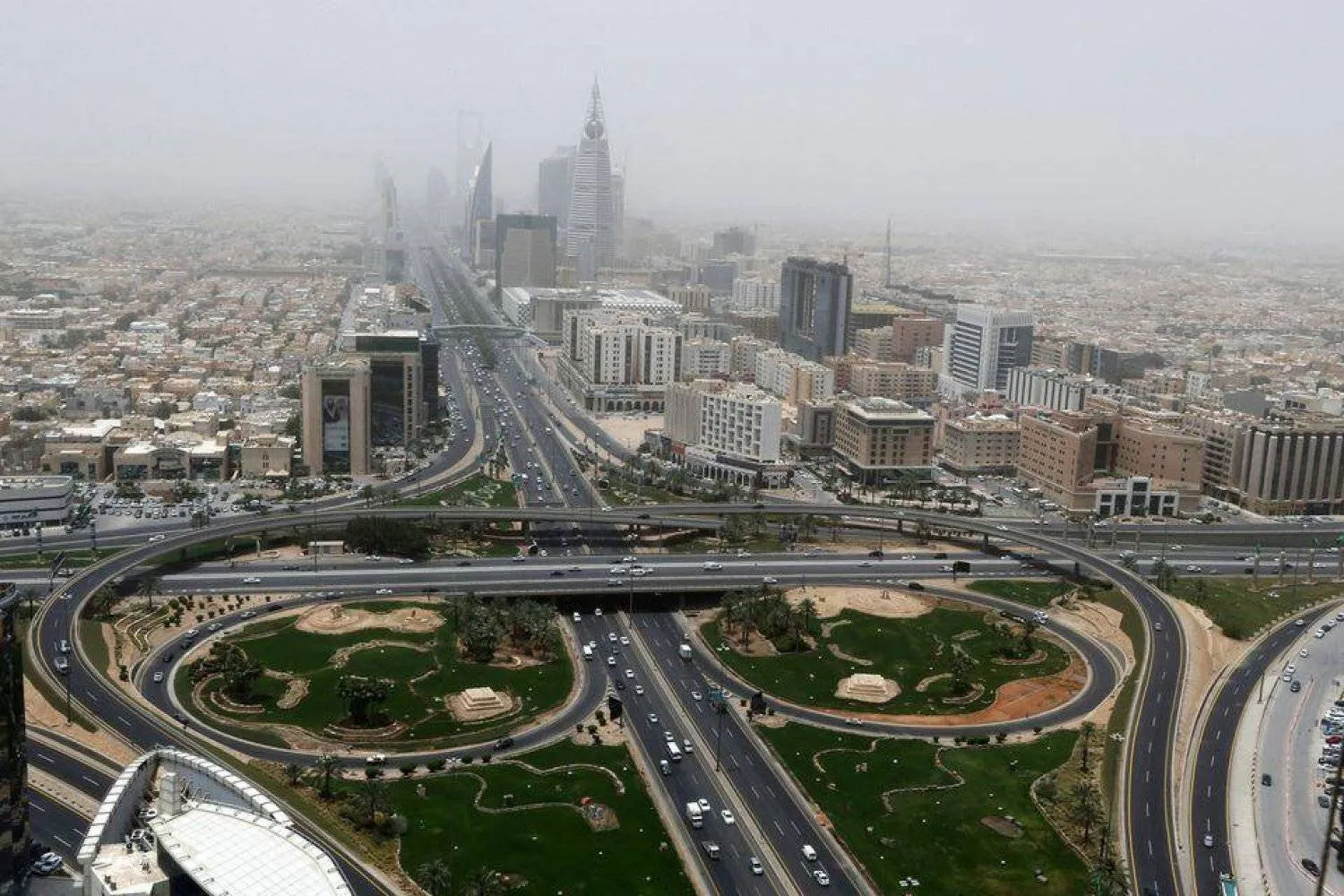
Aerial view of Riyadh (Reuters)
TT

PIF Prices International Bond Offering at $5 Bn

Aerial view of Riyadh (Reuters)

Saudi Public Investment Fund (PIF) completed pricing a $5 billion Reg S international bond offering under its Euro Medium-Term Note Program, aligning with its strategy to diversify funding sources continually.
According to the Fund, the offering was over five times oversubscribed, with order books reaching $27 billion.
The offering comprised the following three tranches: $1.75 billion with a 5-year coupon maturing in 2029, $1.75 billion with a 10-year coupon maturing in 2034, and $1.5 billion with a 30-year coupon maturing in 2054.
Head of Global Capital Finance Division Fahad al-Saif said that continued strong demand from international institutional investors is a testament to the ongoing success of PIF's medium-term capital raising strategy.
He added that it reflects PIF's strong credit profile and financial strength, highlighting its role as one of the key drivers of Saudi Arabia's economic transformation and one of the most significant and impactful sovereign wealth funds globally.
Loans and debt instruments represent one of PIF's four sources of funding. PIF is rated A1 by Moody's with a positive outlook and A+ by Fitch with a stable outlook.
The Fund is one of the world's largest and most influential sovereign wealth funds, and Saudi Crown Prince Mohammed bin Salman heads its board of directors.
Since 2015, the Board of Directors of the Public Investment Fund has been reconstituted and placed under the direction of the newly formed Council of Economic and Development Affairs (CEDA).
The step gave PIF greater autonomy and better-defined national strategic responsibilities.
The Fund also plays a pioneering role in advancing the transformation and diversification of the Saudi economy, in addition to its contribution to shaping the features of the future of the global economy.
The Fund has established more than 93 companies since 2017. It is working to build a diversified portfolio by entering into attractive, long-term investment opportunities in 13 strategic sectors at the local and international levels.
PIF's strategy aims to empower many promising sectors and contribute to increasing local content by creating partnerships with the private sector, in addition to pumping at least SR150 billion annually into the local economy.
It also works to transfer technologies, localize knowledge, and establish a prosperous and sustainable economy in the Kingdom.
As the investment arm of the Kingdom, the Fund has worked to enter into distinguished investments and build strategic alliances and partnerships with many prestigious global institutions and entities.
It contributed to achieving real long-term value for the Kingdom that is consistent with the objectives of Vision 2030.
The Public Investment Fund created an operational governance model that highlights its mission and main objectives, in line with the best international practice, as the application of this model enhances the level of transparency and effectiveness in decision-making and progress in the future.



Four Saudi Companies Sign Agreements to Develop Syrian Oil and Gas Fields 

Saudi and Syrian officials are seen at Tuesday's signing ceremony. (SANA)
TT

Four Saudi Companies Sign Agreements to Develop Syrian Oil and Gas Fields 

Saudi and Syrian officials are seen at Tuesday's signing ceremony. (SANA)

Under the supervision and follow-up of the Saudi Ministry of Energy, four Saudi companies, TAQA, ADES Holding, Arabian Drilling, and the Arabian Geophysical and Surveying Company (ARGAS), signed on Tuesday agreements with the Syrian Petroleum Company covering services, technical support, and the development of oil and gas fields in Syria.

The agreements build on the ongoing cooperation between Saudi Arabia and Syria in the energy sector. They come within the framework of implementing the memoranda of understanding signed on August 28 and the subsequent technical workshops and field visits to gas fields and associated facilities, reported the Saudi Press Agency.

Tuesday’s deals include an agreement between ADES Holding and the Syrian Petroleum Company that sets out the basic principles for the development, operation, and production of gas fields. It defines the core terms that will form the basis of a final technical services contract to develop and operate gas fields and associated facilities within the designated contract area.

The agreement aims to increase production across five gas fields, Abu Rabah, Qamqam, North Al-Faydh, Al-Tiyas, and Zumlat al-Mahar, as well as any additional areas agreed upon at a later stage.

The second deal is a master service agreement between TAQA and the Syrian Petroleum Company to provide advanced, integrated solutions and services for the construction and maintenance of oil and gas fields and wells in Syria.

The agreement aims to boost operational efficiency and boost production using the latest technologies and state-of-the-art equipment.

Another master service agreement, between ARGAS and the Syrian Petroleum Company, will provide 2D and 3D seismic surveying and related technical services to support exploration and drilling activities.

It establishes a long-term cooperation framework designed to advance petroleum exploration and development in Syria’s energy sector, ensuring rapid response, operational flexibility, and the efficient initiation of technical projects.

The fourth agreement, between Arabian Drilling Company and the Syrian Petroleum Company, calls for the provision of drilling and workover services for oil and gas wells in Syria, including the leasing and operation of onshore drilling and workover rigs.

Arabian Drilling will supply the drilling and workover rigs, deliver workover operations and operational support, and provide workforce training and development.


Egypt’s Inflation Eases to 12.3% in November 

Boats sail on the Nile River in Cairo, Egypt, December 9, 2025. (Reuters)
TT

Egypt’s Inflation Eases to 12.3% in November 

Boats sail on the Nile River in Cairo, Egypt, December 9, 2025. (Reuters)

Egypt's annual urban consumer inflation slowed slightly to 12.3% in November after a month-on-month drop in food prices, statistics agency CAPMAS said on Wednesday, with inflation coming in lower than analyst expectations.

The median forecast in a poll of 14 analysts had been for inflation to climb to 13.1%. The urban consumer inflation rate in October was 12.5%.

Month-on-month, urban consumer prices rose by 0.3% in November, CAPMAS said. Food and beverage prices rose by an annual 0.7% but fell by a monthly 2.6%, it said.

The annual inflation rate has plunged from a record 38% in September 2023, helped by an $8 billion financial support package from the International Monetary Fund in March 2024.

Inflation has been in part fueled by an expanding money supply. M2 money supply grew by an annual 21.68% in October, central bank data showed.

The central bank's monetary policy committee left its overnight lending rate unchanged at its last meeting on November 20, but cut rates by 100 basis points in October and 200 points in August as inflation slowed.

The policy committee is next scheduled to review overnight interest rates at a meeting on December 25.


Egypt, Israel in Advanced Talks to Approve Israeli $35 Billion Gas Agreement

Israeli Energy Minister Eli Cohen and US Ambassador Mike Huckabee visiting the Leviathan platform in October. (Israeli Energy Ministry)
TT

Egypt, Israel in Advanced Talks to Approve Israeli $35 Billion Gas Agreement

Israeli Energy Minister Eli Cohen and US Ambassador Mike Huckabee visiting the Leviathan platform in October. (Israeli Energy Ministry)

Israel’s Ministry of Energy announced on Tuesday that negotiations over a natural gas supply agreement with Egypt have reached an “advanced stage,” though some issues remain unresolved.

Israel signed its largest-ever export deal in August to supply Egypt with up to $35 billion worth of natural gas from the Leviathan field.

After marathon discussions this week between the Leviathan partners and Israel’s Ministry of Energy and Infrastructure, a final agreement was reached that will allow the export of 130 BCM (billion cubic meters) to Egypt for $35 billion, the largest export agreement in the country's history.

Israel's Energy Minister Eli Cohen has said he was holding up approval for the gas deal to secure better commercial terms for the Israeli market, according to Reuters. On Tuesday, he confirmed that talks were still ongoing.

As part of the agreement, the Leviathan Partners, NewMed Energy, Chevron and Ratio Petroleum Energy, will commit to a guaranteed price for the domestic economy, to give priority to the Israeli economy, so that if there are any malfunctions in the Tanin, Karish or Tamar fields, it will transfer gas directly to the local economy.

One of the issues that senior Washington officials have been dealing with is ensuring that US energy major Chevron, which owns 39.66% of Leviathan, remains committed to the deal.

The partners are expected to make an investment decision to expand the Leviathan field infrastructure withing two weeks, once the Israeli government announces its final approval.