Egypt's Annual Urban Consumer Price Inflation Decreased to 32.5% in April

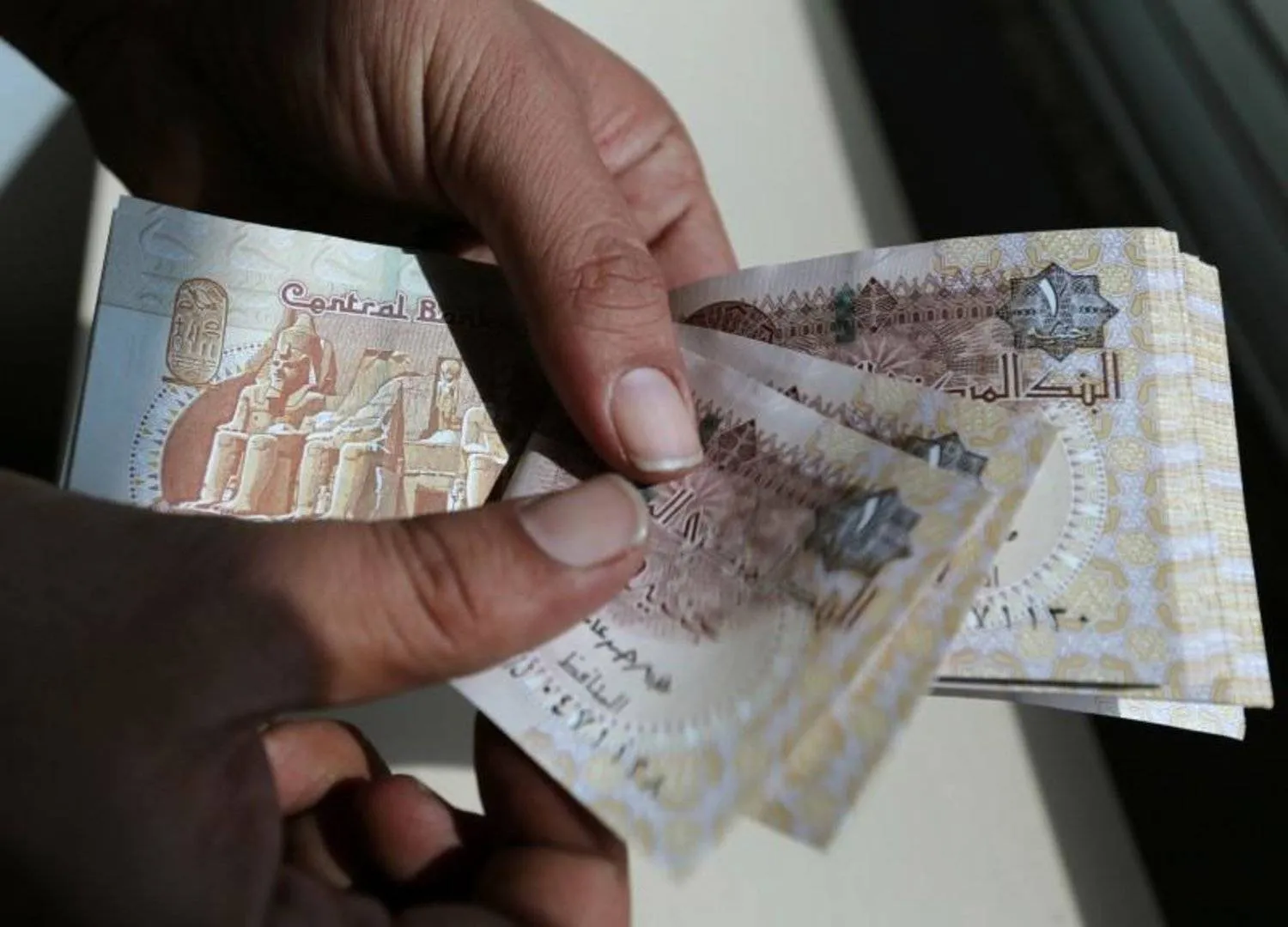
A man counts Egyptian notes outside bank in Cairo, Egypt October 24, 2016. REUTERS/Mohamed Abd El Ghany
TT

Egypt's Annual Urban Consumer Price Inflation Decreased to 32.5% in April

A man counts Egyptian notes outside bank in Cairo, Egypt October 24, 2016. REUTERS/Mohamed Abd El Ghany

Egypt's annual urban consumer price inflation rate decreased to 32.5% in April from 33.3% in March, slowing slightly more than analysts had expected, data from the country's statistics agency CAPMAS showed on Thursday.
Month-on-month, prices rose by 1.1% in March, up from 1.0% in February. Food prices declined in March by 0.9%, though they were 40.5% higher than a year ago.
A poll of 17 analysts had expected annual inflation to dip to a median 32.8%, continuing a slowing trend that started in September, when inflation reached a peak of 38.0%.
The central bank has tightened its monetary policy, hiking interest rates by 600 basis on March 6, the same day it signed a $8 billion financial support package with the International Monetary Fund and let the currency plummet.
Egypt promised the IMF in the March agreement it would resume tightening if necessary to prevent further erosion of the purchasing power of households.
The government last month also increased the price of a range of petrol, diesel and other fuels, part of a commitment made to the IMF.
Inflation has been elevated for the past year, driven largely by rapid growth in the money supply.



Gold Prices Retreat as Trump Threatens Further Attacks on Iran

An Indian woman displays a gold jewelry piece at a jewelry store in Bangalore (AFP)
TT

Gold Prices Retreat as Trump Threatens Further Attacks on Iran

An Indian woman displays a gold jewelry piece at a jewelry store in Bangalore (AFP)

Gold retreated from two-week highs on Thursday after US President Donald Trump said that Washington would continue its military campaign in Iran in the coming weeks, pushing crude prices sharply higher and dampening hopes of interest rate cuts.

Spot gold was down 2% at $4,664.39 per ounce, as of 0439 GMT, snapping a four-day winning streak, while US ‌gold futures slid 2.5% ‌to $4,691.10.

The pullback followed bullion's climb to ‌its ⁠highest level since March ⁠19, prior to Trump's remarks, said Reuters.

In a prime-time address to the nation late on Wednesday, Trump said the United States would carry out aggressive strikes on Iran over the next two to three weeks and was nearing "completion of its main strategic objectives" in the conflict.

"Gold is pulling back after two superb days, as ⁠President Trump was quite bellicose in his tone, referring ‌to aggressive plans over the coming ‌weeks... it suggests the optimism of the last few days was exuberant ‌and there will be some retracement ahead of the long ‌weekend," independent metals trader Tai Wong said.

Markets reacted swiftly: the 10-year US Treasury yield and the dollar index both advanced, pressuring dollar-denominated gold.

Meanwhile, Brent crude surged more than 6% after Trump indicated continued targeting of Iran's energy ‌infrastructure, raising supply concerns.

Gold had already been under pressure, dropping 11% in March, its worst monthly performance ⁠since 2008, ⁠following the outbreak of the Iran conflict on February 28. The surge in oil prices has fueled inflation concerns, complicating the Federal Reserve's monetary policy outlook.

Expectations for U.S. rate cuts remain low through most of 2026. Bets for a December reduction have fallen to just 12%, down from around 25% before Trump's latest comments.

While gold typically benefits during periods of inflationary pressure and geopolitical tension, higher interest rates reduce its appeal by increasing the opportunity cost of holding the non-yielding asset.

In other metals, spot silver fell 4.6% to $71.67, platinum dropped 2.5% to $1,914.61 and palladium shed 1.4% to $1,451.92.


Oil Rallies, Stocks Tumble as Trump Says US to Hammer Iran Further

Oil prices surged and stocks sank after Donald Trump's address to the nation. Alex Brandon / POOL/AFP
TT

Oil Rallies, Stocks Tumble as Trump Says US to Hammer Iran Further

Oil prices surged and stocks sank after Donald Trump's address to the nation. Alex Brandon / POOL/AFP

Oil prices spiked and stocks sank on Thursday after Donald Trump reiterated that US forces would hammer Iran for another two to three weeks but offered no solution to the closure of the Strait of Hormuz that has crippled global markets.

Investors appeared to be unimpressed with the US president's much-anticipated address to the nation, in which he again called on countries that rely on the waterway for their energy supplies to reopen it themselves, AFP said.

The comments came amid growing fears about the economic impact of the crisis, which has seen governments introduce support measures, with the World Bank saying it was "extremely concerned".

In a speech lasting less than 20 minutes, Trump added little to what he has said in the past, warning that "over the next two to three weeks, we are going to bring them back to the Stone Ages, where they belong".

He also told the nation that US forces would meet all their battlefield goals "very, very shortly".

The address dented a nascent recovery in world markets that had come after Trump said earlier this week that the war would be ending "very soon", while his Iranian counterpart said his country had the "necessary will" to end it.

Brent crude, which had fallen back below $100 a barrel Wednesday, surged as much as five percent to hit $106.29, while West Texas Intermediate jumped more than four percent to as high as $104.29.

Trump "spoke of objectives met, but not of resolution. Of continued strikes, not withdrawal. Of optional escalation, not closure", wrote Stephen Innes at SPI Asset Management.

"The message was not one of panic, but it was unmistakably one of unfinished business. And in markets, unfinished business is oxygen for volatility.

"So oil did what oil always does when the illusion cracks. It surged, not because the war suddenly worsened, but because the market had prematurely priced in the expectation that it would end."

The reaction among equity traders was no better, with Seoul -- which soared more than eight percent Wednesday -- losing three percent. Tokyo, Hong Kong, Shanghai, Singapore, Taipei and Sydney were also well down.

The speech "did not contain what the market had hoped for -- namely, indications of an end to the fighting", Jumpei Tanaka, of Pictet Asset Management, said. "Instead, he suggested a potential escalation of the situation, which is a clear negative for stocks."

Markets have endured huge volatility since the US-Israeli war on Iran was launched on February 28, with the president frequently U-turning after making policy statements, particularly with regards to foreign relations and military operations.

His announcements that Washington and Tehran were in peace talks have often been denied by the Iranian republic, while its Revolutionary Guards insisted the strait will remain closed to the country's "enemies".

Trump's repeated demand that countries that rely on energy through the Strait of Hormuz "get your own oil" comes as Britain prepares to host a meeting of about 35 nations Thursday to discuss how to reopen the waterway.

The meeting will "assess all viable diplomatic and political measures that we can take to restore freedom of navigation, guarantee the safety of trapped ships and seafarers and resume the movement of vital commodities", UK Prime Minister Keir Starmer said.

Meanwhile, the World Bank Managing Director Paschal Donohoe said he was fearful about the global economic impact of the crisis.

"We are extremely concerned regarding the effect that this will have on inflation, on jobs and on food security," he told AFP as the Bank announced a new partnership with the International Monetary Fund and International Energy Agency to coordinate aid responses.


IEA, IMF and World Bank to Coordinate Response to Middle East War's Impact

A displaced man prepares his shisha, at a temporary encampment for displaced people, amid escalating hostilities between Israel and Hezbollah, in Beirut, Lebanon, April 1, 2026. REUTERS/Raghed Waked
TT

IEA, IMF and World Bank to Coordinate Response to Middle East War's Impact

A displaced man prepares his shisha, at a temporary encampment for displaced people, amid escalating hostilities between Israel and Hezbollah, in Beirut, Lebanon, April 1, 2026. REUTERS/Raghed Waked

The heads of the International Energy Agency, International Monetary Fund, and World Bank on Wednesday said they will form a coordination group to maximize their response to the significant economic and energy impacts of the war in the Middle East.

In a joint statement, the three global bodies noted that the war had caused major disruptions in the region and triggered one of the largest supply shortages in global energy market history.

"At these times of high uncertainty, it is paramount that our institutions join forces to monitor developments, ⁠align analysis, and coordinate ⁠support to policymakers to navigate this crisis," the heads of the IMF, IEA and World Bank said.

The new coordination group will assess the severity of impacts across countries, coordinate a response mechanism, and mobilize stakeholders to deliver support to countries in need, the international bodies said.

The response mechanism could include targeted policy advice, assessment of potential financing needs ⁠and related provision of financial support, including through low or zero-percent financing, as well as unspecified risk mitigation tools, they said.

Thousands of people have been killed across the Middle East in the war, which began when the US and Israel struck Iran on February 28, triggering Iranian attacks on Israel, US bases and the Gulf states, while opening a new front in Lebanon.

Now in its second month, the conflict has spread across the region, disrupting energy supplies and threatening to send the global economy into a tailspin.

"The impact is substantial, global, and highly asymmetric, disproportionately ⁠affecting energy ⁠importers, in particular low-income countries," Reuters quoted the IMF, IEA and World Bank as saying.

They noted that the war was already resulting in higher oil, gas and fertilizer prices, while triggering concerns about food prices and affecting global supply chains of helium, phosphate, aluminum, and other commodities. Tourism had also been hit.

"The resulting market volatility, weakening of currencies in emerging economies, and concerns about inflation expectations raise the prospect of tighter monetary stances and weaker growth," the organizations said.

"We are committed to working together to safeguard global economic and financial stability, strengthen energy security, and support affected countries and people on their path to sustained recovery, growth, and job creation through reforms," they said.