US Overtakes China as Germany’s Top Trading Partnerhttps://english.aawsat.com/business/5009686-us-overtakes-china-germany%E2%80%99s-top-trading-partner
US Overtakes China as Germany’s Top Trading Partner
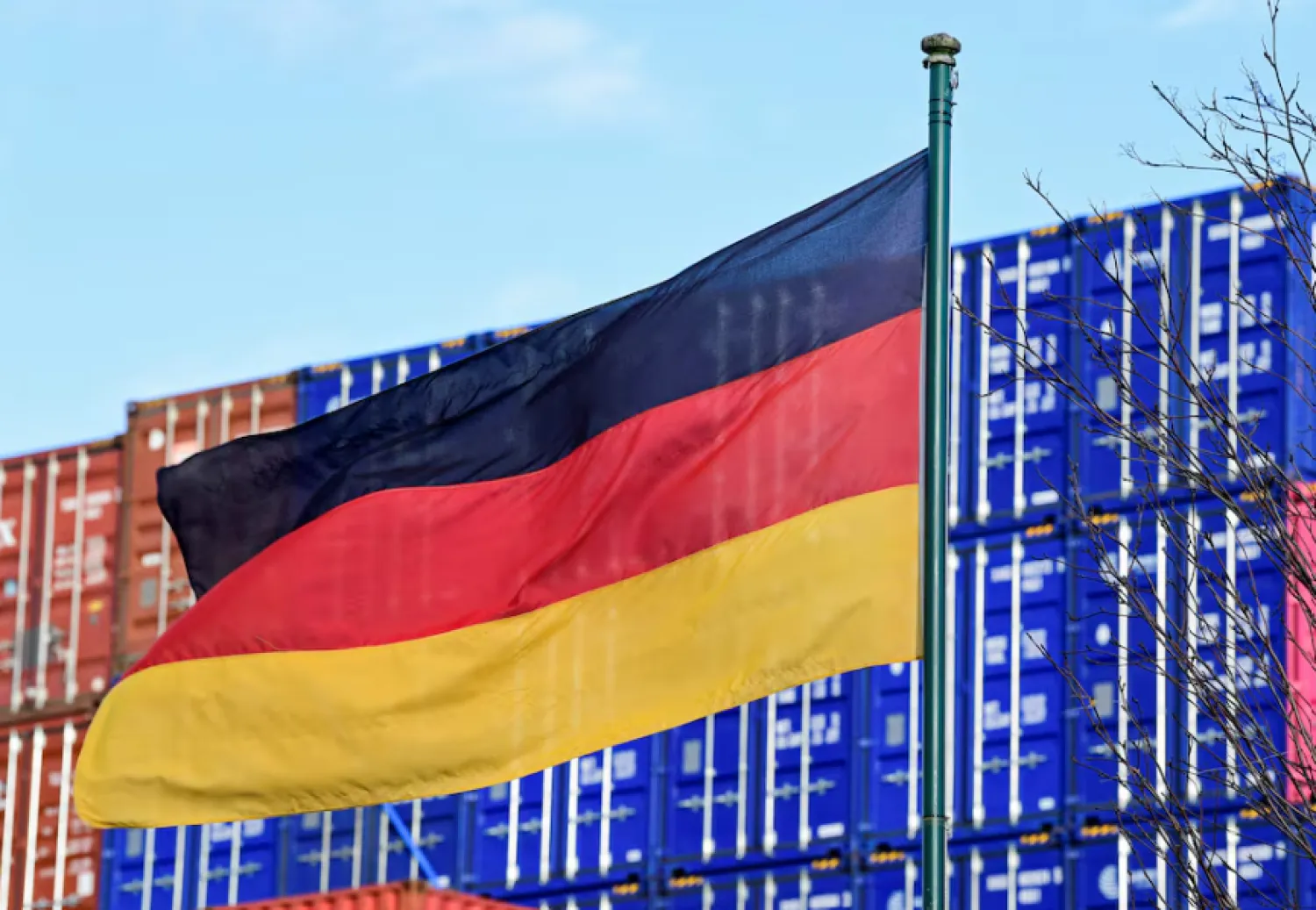
A German flag blows in the wind in front of a stack of containers at the harbour in Hamburg, Germany, February 24, 2022. REUTERS/Fabian Bimmer/File Photo Purchase Licensing Rights
US Overtakes China as Germany’s Top Trading Partner
A German flag blows in the wind in front of a stack of containers at the harbour in Hamburg, Germany, February 24, 2022. REUTERS/Fabian Bimmer/File Photo Purchase Licensing Rights
The United States overtook China as Germany's most important trading partner in the first quarter of this year, according to Reuters.
Germany's trade with the United States - exports and imports combined - totalled 63 billion euros ($68 billion) from January to March, while the figure for China was just under 60 billion euros, the data showed.
In 2023, China was Germany's top trading partner for the eighth year in a row, with volumes reaching 253 billion euros, although that was only a few hundred million ahead of the US.
"German exports to the US have now risen further due to the robust economy there, while both exports to and imports from China have fallen," said Commerzbank economist Vincent Stamer, explaining the first quarter shift.
Structural reasons are also a factor, he said.
"China has moved up the value chain ladder and is increasingly producing more complex goods itself, which it used to import from Germany," said Stamer. "In addition, German companies are increasingly producing locally instead of exporting goods from Germany to China."
Germany has said it wants to reduce its exposure to China, citing political differences and accusing Beijing in its first China strategy announcement last year of "unfair practises". But Berlin has been vague on policy steps to reduce dependencies.
German imports of goods from China fell almost 12% year-on-year in the first quarter, while exports of goods to China fell just over 1%, said Juergen Matthes, from German economic institute IW.
"The fact that the Chinese economy is performing worse than many had hoped, while the US economy is exceeding expectations, is presumably contributing to this," said Matthes.
The US now accounts for around 10% of German goods exports. China's share has fallen to less than 6%, Matthes said.
"With a clear global economic headwind for the German economic model, a reorientation - also geopolitically motivated - seems to be taking place: away from system rival China and towards transatlantic partner US," he added.
It is unclear, however, whether this will continue.
"If the White House administration changes after the US elections in November and moves more in the direction of closing off markets, this process could come to a standstill," said Dirk Jandura, president of the BGA trade association.
BP's Ousted Chairman: 'I Won't Let a False Narrative Go Undisputed'https://english.aawsat.com/business/5277840-bps-ousted-chairman-i-wont-let-false-narrative-go-undisputed
BP's Ousted Chairman: 'I Won't Let a False Narrative Go Undisputed'
FILE PHOTO: Vehicles drive past a BP (British Petroleum) petrol station in Liverpool, Britain, February 7, 2023. REUTERS/Phil Noble/File Photo
Albert Manifold on Wednesday hit out after being sacked as chairman of British energy giant BP, saying that he would "not allow a false narrative to go unchallenged.”
"I dispute entirely the characterization of my conduct," he said in an emailed statement to the Financial Times and other financial media, one day after BP unexpectedly removed him after less than one year in the role.
The group cited "serious concerns" about governance standards, oversight and conduct at the company.
"I was removed without warning and without explanation," Manifold said.
"During my time as chairman I worked to drive genuine change at BP -- cutting costs, challenging excess, and holding the organization to higher standards."
According to anonymous sources quoted by the Financial Times, other directors viewed Manifold as too aggressive and believed he exerted excessive control over the company.
Amanda Blanc, a senior independent director, had said that while he "helped bring a welcome focus and pace to BP's transformation,” the board had "been surprised and disappointed to learn of governance oversight and conduct issues it deems unacceptable.”
BP faced a shareholder backlash at its annual meeting last month as investors rejected a resolution that would have reduced its climate reporting requirements.
Some of the investor discontent was directed at Manifold, with 82 percent of shareholders voting in favor of his election -- below the near-unanimous support typically received by directors.
He had become chairman in October, replacing Helge Lund, who departed after a major reset at the British energy giant that saw it shelve carbon-reduction targets to focus on fossil fuel output.
Türkiye Curbs Russian Urals Imports as Prices Risehttps://english.aawsat.com/business/5277839-t%C3%BCrkiye-curbs-russian-urals-imports-prices-rise
Türkiye Curbs Russian Urals Imports as Prices Rise
Crude oil tanker near the port city of Nakhodka, Russia (Reuters)
Türkiye is set to cut imports of Russia's Urals crude from Baltic and Black Sea ports this month to the lowest level in almost one and a half years, according to data from LSEG, Kpler and trading sources.
Türkiye is the largest importer of seaborne Russian crude in the Mediterranean and the world's third-largest after India and China. It mainly buys Urals and only occasionally other grades.
Kpler data shows Türkiye's Urals imports are expected to average about 161,000 barrels per day this month, down from 189,000 bpd on average in January-April and 302,000 bpd in May 2025.
The drop comes despite reduced crude supply from the Gulf, which has pushed global oil prices higher.
"Türkiye is used to Russian crude at a significant discount. They were not prepared to buy the grade at such high price levels," a trader at a major Western firm said.
Two other sources said the fall in Urals shipments to Türkiye in April and May was driven by stronger demand in Asia, particularly in India. "There was not much available in the market,” one trader said.
As a result, seaborne Urals exports to Türkiye are set to fall to their lowest since at least January 2025, LSEG data shows.
The decline is partly offset by higher Turkish imports of CPC Blend from the Caspian region, a grade sourced from both Russia and Kazakhstan depending on the cargo.
Following the outbreak of the Iran war, the premium for Urals on a delivered ex-ship basis in Indian ports rose as high as $8 per barrel against Brent, before easing to about $2 to $4 per barrel.
That remains well above levels seen before the conflict.
Russia increased crude loadings from its western ports by around 9% in the first half of May to 2.35 million to 2.4 million bpd from about 2.2 million bpd on average in April.
Saudi Real Estate Legislation Places Makkah and Madinah at the Center of Global Investment Ambitionshttps://english.aawsat.com/business/5277794-saudi-real-estate-legislation-places-makkah-and-madinah-center-global-investment
Saudi Real Estate Legislation Places Makkah and Madinah at the Center of Global Investment Ambitions
An aerial view showing the urban boom and major hospitality projects surrounding the Grand Mosque in Makkah (SPA).
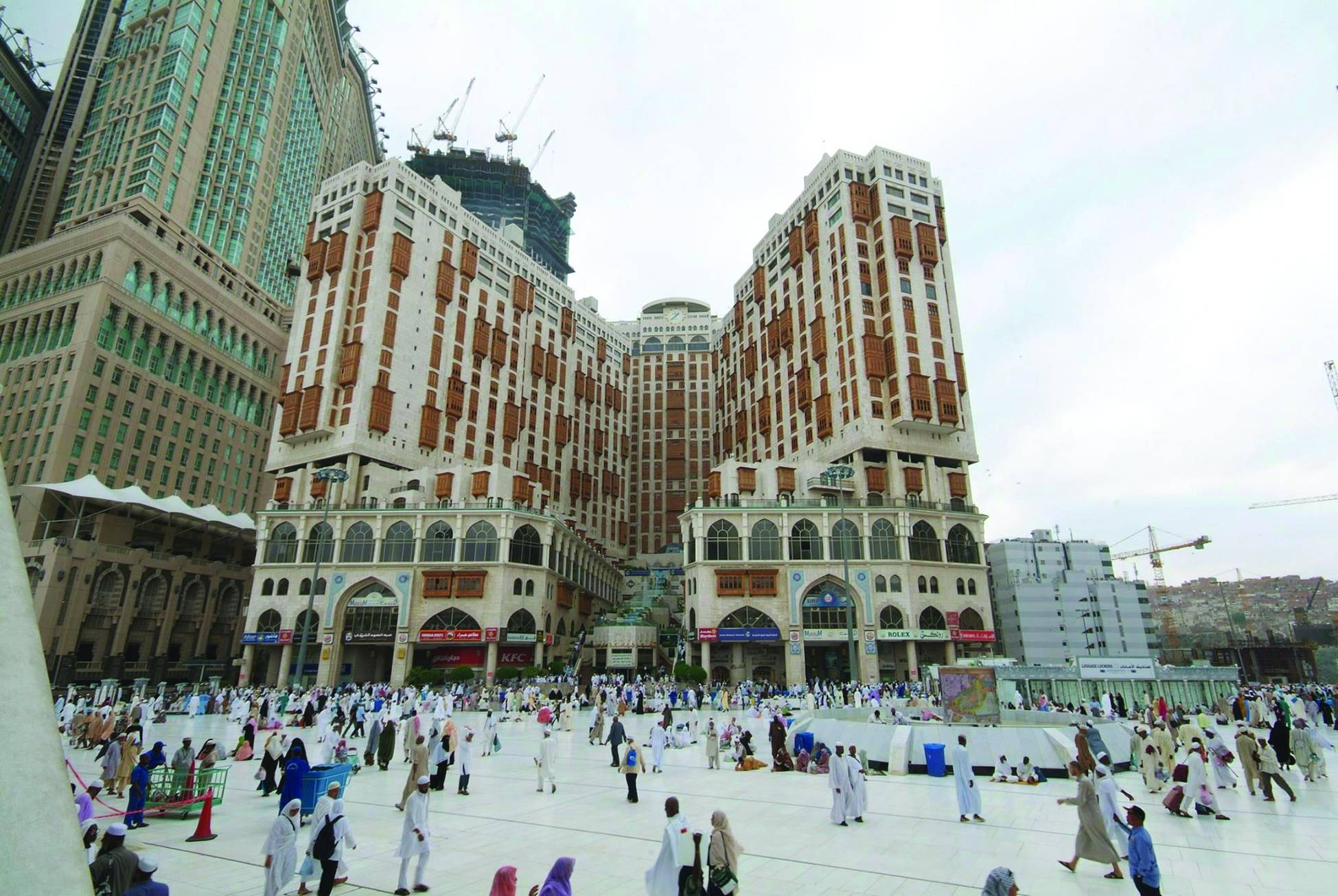
Saudi Arabia’s legislative and regulatory environment has become the primary driver reshaping the investment landscape in Makkah and Madinah, pushing the real estate sector beyond its traditional local framework toward a global horizon. This structural transformation, fueled by an unprecedented package of regulatory decisions approved by the government during 2025 and brought into effect at the start of 2026, has led to the emergence of an innovative real estate market model based on diversifying investment products and attracting major international companies and investors.
These regulatory reforms are being reinforced by a boom in mega infrastructure projects surrounding the Two Holy Mosques, embodying the goals of Saudi Vision 2030 to increase capacity for pilgrims and transform the western region into a magnet for foreign capital. This shift is reflected in a series of structural decisions and on-the-ground projects that have already begun reshaping the investment sector.
Last year saw the issuance of several major decisions and regulations, most notably the Saudi Cabinet’s approval in July of an updated system allowing non-Saudis to own property in the Kingdom, subject to specific ownership controls in the two holy cities. The decision came into force at the beginning of this year, with analysts expecting it to directly contribute to attracting international companies, increasing demand for residential and hospitality units, and broadening the investor base in the sector.
Extending these reforms further, the Capital Market Authority announced in January 2025 that foreigners would be permitted to invest in Saudi-listed companies owning permanent or temporary real estate assets within the boundaries of Makkah and Madinah. The move aims to boost foreign capital inflows, raise liquidity levels in real estate projects tied to the Hajj and Umrah ecosystem, and support the development of advanced hotels and residential complexes near the holy sites.
Within this broader development framework, Saudi Crown Prince Mohammed bin Salman launched the “King Salman Gateway” project in Makkah last October as a mixed-use destination spanning 12 million square meters adjacent to the Grand Mosque. The project includes around 50,000 residential units and 16,000 hotel rooms, while allowing ownership for Muslims worldwide in line with the Kingdom’s non-Saudi property ownership system.
Makkah is also home to the “Masar Destination” project, which stretches across 1.25 million square meters and is designed to accommodate 158,000 residents through 13,000 housing units distributed across 82 towers, in addition to 24,000 hotel units in 58 towers and 19,000 serviced apartments.
In Madinah, the “Rua Al Madinah” project is under development across an area of 1.35 million square meters, featuring around 80,000 hotel rooms and nearly 500 residential units. According to Ahmed bin Wasl Al-Juhani, CEO of Rua Al Madinah Holding Company, one of the Public Investment Fund’s subsidiaries, project completion has surpassed 65 percent.
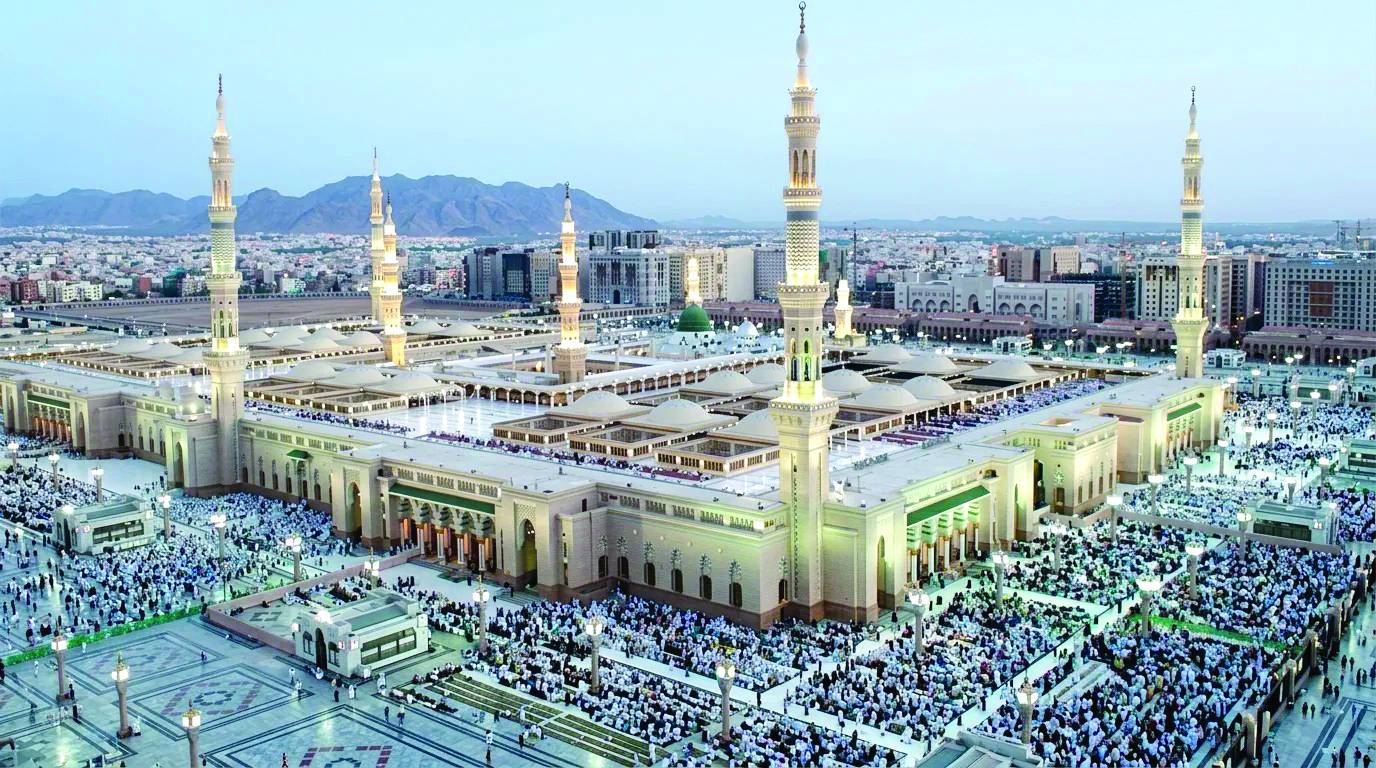
Madinah (Ministry of Awqaf)
Infrastructure Projects Double Land Market Values
These mega projects and newly adopted regulations are being integrated with major infrastructure networks approved by the state to increase the number of pilgrims and Umrah visitors. They include the historic expansions of the Grand Mosque, modernization of transport and logistics networks surrounding the Two Holy Mosques, and regulation of urban development in the holy sites.
This has driven steadily rising demand for the hospitality sector, including hotels and serviced apartments, while significantly increasing the market value of strategic land plots near the Grand Mosque.
Amid this boom, Al Rajhi Capital and Thakher Development signed a memorandum of understanding last Thursday to establish a real estate investment fund in Makkah with investments exceeding SAR2 billion ($534.6 million). The fund, located within the “Thakher Makkah” project, aims to support the hospitality and housing sectors while enhancing the investment experience in the holy city.
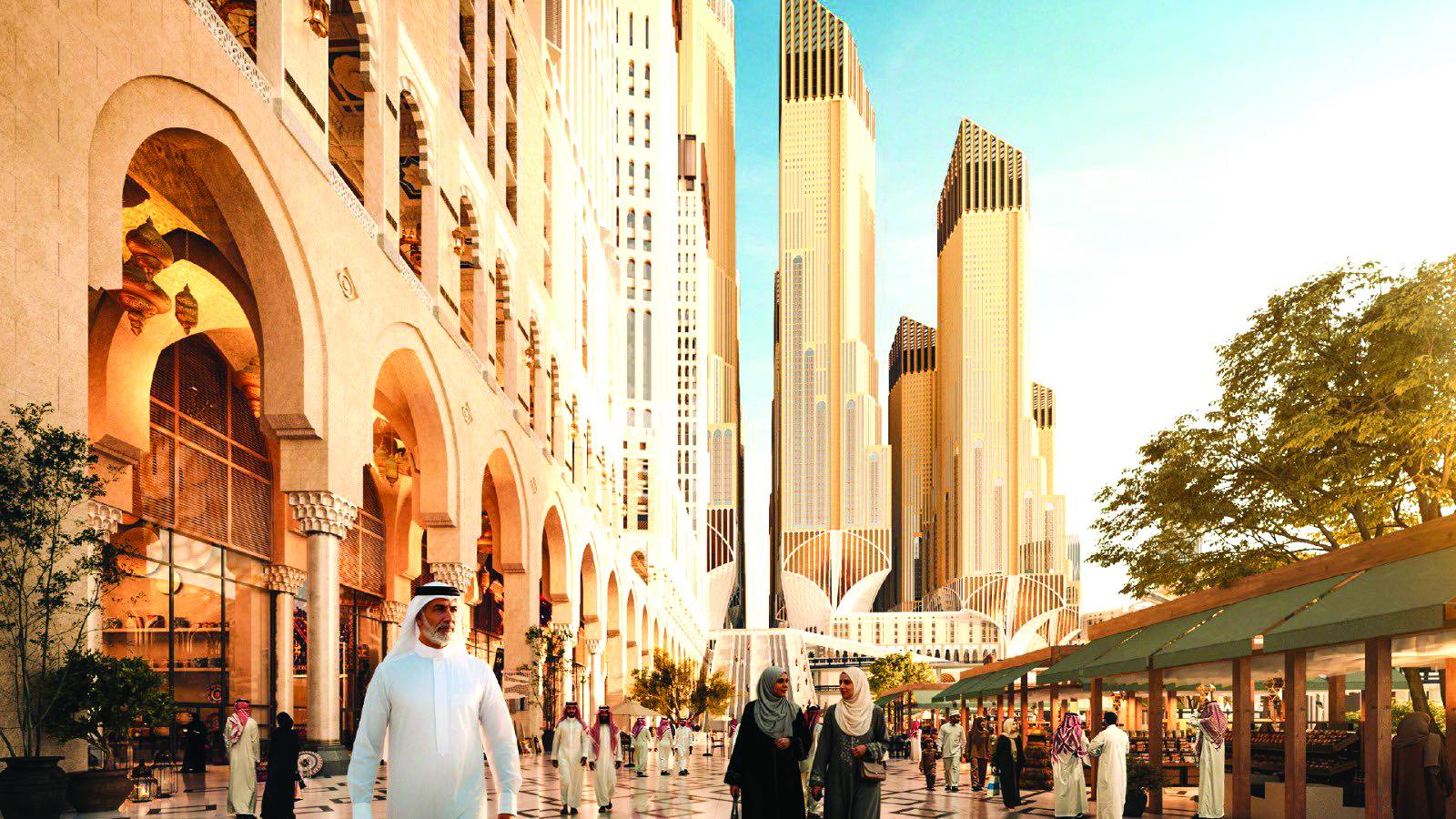
A master plan of the “King Salman Gateway” project (SPA).
Record Profits
This legislative boom has also positively reflected on the financial results of real estate companies operating in the two regions and listed on the Saudi stock market, Tadawul, with firms posting record annual profit growth in 2025.
Jabal Omar Development recorded an exceptional elevenfold jump in profits, posting net earnings exceeding SAR2.39 billion ($637.3 million) in 2025, compared with around SAR200 million ($53.3 million) in 2024. The company also maintained positive momentum in the first quarter of 2026, posting SAR116.99 million ($31.2 million) in profits.
Makkah Construction and Development Company also posted a 15 percent rise in profits to SAR474 million ($126.4 million), compared with SAR411 million ($109.6 million) in 2024, while continuing its growth trajectory in the first quarter of 2026 with an 8 percent increase to SAR162.2 million ($43.2 million).
Meanwhile, Taiba Investments reported a 9.3 percent increase in profits, reaching SAR364 million ($97.1 million) in 2025, compared with SAR411 million ($109.6 million) in 2024. The company also maintained positive performance, generating profits exceeding SAR124.8 million ($33.3 million) during the first quarter of 2026.
Entry of Foreign Developers Intensifies Competition
Providing an analytical reading of the market, real estate expert and appraiser engineer Ahmed Al-Faqih told Asharq Al-Awsat that Makkah and Madinah represent the spiritual destination of two billion Muslims worldwide, noting that these regulations create momentum capable of meeting the aspirations of a broad segment of Muslims seeking property ownership in the western region, which also includes Jeddah and Taif.
He expected the deeper impact of these systems to become evident during the first and second quarters of 2027.
Al-Faqih added that the impact would extend to increasing both the volume and quality of real estate transactions, with greater focus on the residential sector compared with agricultural and industrial sectors. He also predicted accelerated real estate development through the launch of tailored products that account for the diverse cultures of targeted nationalities.
He noted that the western region’s market is expected to witness the entry of non-Saudi developers who will compete with local developers on the quality of real estate products. He added that government regulators are focusing on two core principles: “real estate balance and sustainability,” which would further increase the market’s attractiveness to international capital and shift it from randomness toward regulation and steadily rising profitability over the coming decade.
Serving the Pilgrim Ecosystem
Ayman Al-Sultan, a real estate sector observer, told Asharq Al-Awsat that real estate activity in Makkah and Madinah is inherently tied to a broader economic and urban ecosystem dedicated to serving pilgrims, noting that development over recent years has been comprehensive across both urban and regulatory tracks.
He pointed out that regulatory updates related to allowing non-Saudis to own property under specific controls, alongside opening investment in Saudi-listed companies holding real estate assets within the two cities, reflect a direction toward broadening the investment base within a clear regulatory framework that preserves the unique status of the two holy cities.
He added that major infrastructure projects linked to Hajj and Umrah have boosted interest in real estate projects tied to hospitality, housing, and support services for the Two Holy Mosques. Based on market observations, he said the convergence between regulation and urban development is steering the market toward more organized projects linked to Hajj and Umrah-related services in the coming phase.
The mixed-use residential and commercial complex developed by Makkah Construction and Development overlooking the Grand Mosque (Makkah Construction and Development).
Current Hajj Season Translates Legislative Boom Into Reality
These regulatory developments are casting a direct shadow over the current Hajj season, which is witnessing peak human and investment flows. Observers believe this season represents the clearest practical reflection of infrastructure flexibility following the implementation of the latest legislative decisions.
Residential and hotel complexes surrounding the Two Holy Mosques are no longer merely static real estate assets. Instead, they have evolved into a core pillar of an integrated hospitality system managed by investment funds and listed companies seeking to meet growing demand within an attractive and stable regulatory environment.
Ultimately, this intensive operational momentum, coinciding with the influx of pilgrims, demonstrates that the new real estate model in Makkah and Madinah has moved beyond the theoretical planning phase and entered the stage of tangible returns.
The convergence between flexible government legislation and massive capital spending on infrastructure places the western region on the threshold of a golden investment decade that is redrawing the map of international real estate development and reinforcing the status of the Two Holy Mosques as a central hub for sustainable development and rising economic growth in line with the ambitions of Saudi Vision 2030.
In the final analysis, this integration between regulatory achievement and the realities of the current season confirms that real estate in the holy capital and Madinah has already entered a phase of maximum investment appeal.
لم تشترك بعد
انشئ حساباً خاصاً بك لتحصل على أخبار مخصصة لك ولتتمتع بخاصية حفظ المقالات وتتلقى نشراتنا البريدية المتنوعة