


France’s Finances to Come under Further Strain Whoever Wins Election

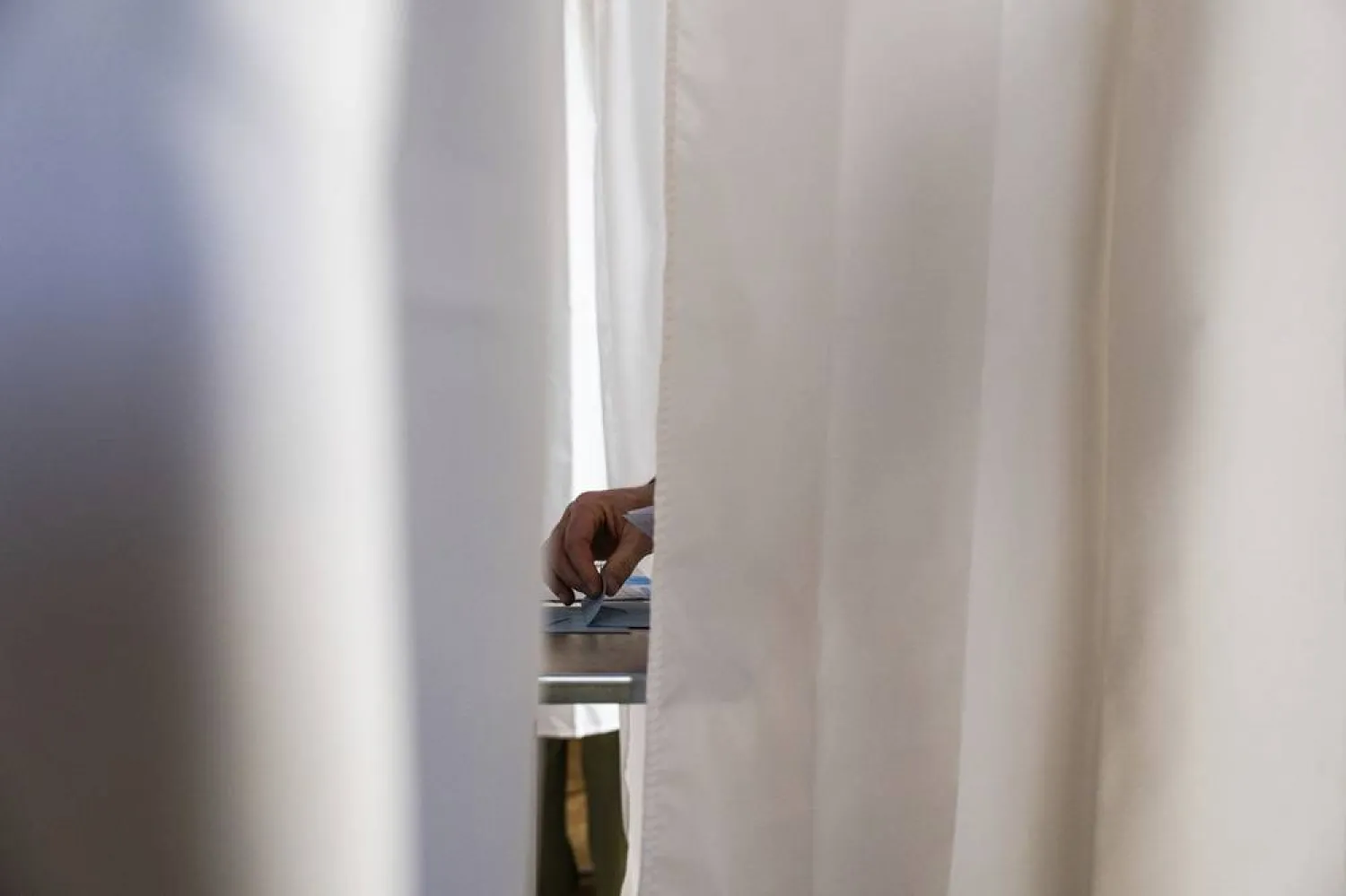
 A voter prepares to cast a ballot at a polling station for the first round of the parliamentary elections in Paris, Sunday June 30, 2024. (AP)
A voter prepares to cast a ballot at a polling station for the first round of the parliamentary elections in Paris, Sunday June 30, 2024. (AP)
TT

France’s Finances to Come under Further Strain Whoever Wins Election

 A voter prepares to cast a ballot at a polling station for the first round of the parliamentary elections in Paris, Sunday June 30, 2024. (AP)
A voter prepares to cast a ballot at a polling station for the first round of the parliamentary elections in Paris, Sunday June 30, 2024. (AP)

Already under scrutiny from ratings agencies, financial markets and Brussels, France's public finances are likely to come under more strain no matter what the outcome of a snap parliamentary election, which starts with a first round of voting on Sunday.

The main parties have all promised new spending but their plans to pay for it are short on detail and do not always stack up.

Polls indicate that the far-right National Rally (RN) will come first, followed by the New Popular Front left-wing alliance and President Emmanuel Macron's Together trailing in third.

The outgoing government had promised to cut the budget deficit from 5.5% of Gross Domestic Product last year to a European Union ceiling of 3% by 2027 - an objective that may be unattainable after the vote, which concludes with a second round on July 7.

FAR-RIGHT NATIONAL RALLY

If it forms a government, the RN wants as soon as July to cut value added (VAT) sales tax on energy, which it says would cost 7 billion euros for the rest of this year and 12 billion in a full year.

The RN says it would be financed by obtaining a 2-billion-euro rebate on France's EU budget contribution, although the bloc's 2021-27 budget has long since been voted into the books.

The party is counting on big gains from ramping up a levy on exceptional profits from power producers and replacing a tonnage tax on shipowners with normal corporate tax, although that sector's bumper profits of recent years is likely to subside.

The RN also wants to annul a cutback in the duration of unemployment benefits due from in July, a move that the outgoing government says would cost 4 billion euros.

Further out, the RN aims to index pensions to inflation, reduce the retirement age to 60 for people who started work at 20 or before, exempt some workers under the age of 30 from income tax and raise teacher and nurses wages.

It also wants to go ahead with cuts in local business taxes that the current government has had to suspend because they could not be afforded.

The RN would also scrap a 2023 increase in the retirement age to 64 from 62, replacing it with a more progressive system which remains to be specified. The party says it would stick with existing plans to cut the budget deficit in line with France's commitments to EU partners.

Targeting welfare spending on foreign citizens and cutting red tape, the RN has pledged to go head with 20 billion in budget savings this and next year, which the current government has struggled to come up with and detail.

It further wants to renegotiate the European Central Bank's mandate to give it a new focus on jobs, productivity and financing long-term projects.

LEFT-WING NEW POPULAR FRONT

The New Popular Front (NFP) alliance says its first moves would include a 10% civil servant pay hike, providing free school lunches, supplies and transport while raising housing subsidies by 10%.

It says that it can cover the cost by raising 15 billion euros with a tax on superprofits, which remains to be detailed, and reinstating a wealth tax on financial assets, also for 15 billion euros.

Additionally the group wants to freeze prices of basic food items and energy while raising the minimum wage by 14% with subsidies for small firms that cannot otherwise cope.

The alliance would then in 2025 hire more teachers and healthcare workers, step up home insulation with subsidies, boosting public spending by an additional 100 billion euros.

It says the cost would be covered by closing tax loopholes, making income tax much more progressive, restoring the wealth tax on financial assets and setting a maximum inheritance for families of 12 million euros.

From 2026, public spending would reach 150 billion euros annually, notably by increasing the culture and sports ministries' budgets to 1% of GDP.

The NFP would also scrap the 2023 increase in the retirement age and wants to eventually reduce it to 60. The alliance says the extra spending would be financed by tax hikes and stronger growth, but it does not plan to reduce the budget deficit and rejects the EU's fiscal rules.

CENTRIST 'TOGETHER' ALLIANCE

While Macron's party is committed to cutting the budget deficit to 3% of GDP by 2027, institutions from the national auditor to the IMF had serious doubts even before the snap election was called.

Since then, the party has pledged to cut power bills by 15% from 2025 and to match pension hikes to increases in inflation. It says that it will raise public sector wages, but its program does not say by how much.

The party remains committed to no broad tax hikes and will increase the amount parents can gift children tax-free.



GCC GDP Jumps to $2.3 Trillion

GCC countries continued to record GDP growth, supported by economic diversification programs and fiscal reforms (Oman News Agency).
TT

GCC GDP Jumps to $2.3 Trillion

GCC countries continued to record GDP growth, supported by economic diversification programs and fiscal reforms (Oman News Agency).

A statistical report published on Sunday showed that the economies of the Gulf Cooperation Council countries recorded growth in gross domestic product, supported by economic diversification programs and fiscal reforms. Combined GDP reached $2.3 trillion, ranking ninth globally, with a growth rate of 2.2 percent.

The report revealed that GCC countries achieved qualitative advances in 2024 across competitiveness, energy, trade, and digitization, driven by growth in non-oil sectors, improved quality of life, the development of digital infrastructure, and a stronger regional and international presence.

In the “GCC in Numbers” report issued by the Statistical Center for the Cooperation Council for the Arab Countries of the Gulf, it was emphasized that GCC states continue to record real GDP growth “thanks to economic diversification programs and fiscal reforms, with GDP reaching $2.3 trillion, ranking ninth globally, and posting growth of 2.2 percent.”

The report also showed improvement in global economic indicators, including competitiveness, resilience, and economic dynamism.

GCC countries ranked first globally in oil reserves at 511.9 billion barrels, third worldwide in natural gas production at 442 billion cubic metres, and second globally in natural gas reserves at 44.3 billion cubic metres.

GCC countries ranked 10th globally in total exports valued at $849.6 billion, 11th in imports at $739.0 billion, 10th in total trade at $1.5895 trillion, and sixth worldwide in trade balance surplus at $109.7 billion.


Algeria Tenders to Buy Nominal 50,000 Metric Tons Soft Milling Wheat

Mature spring wheat awaits harvest on a farm near Beausejour, Manitoba, Canada August 20, 2020. REUTERS/Shannon VanRaes/File Photo
TT

Algeria Tenders to Buy Nominal 50,000 Metric Tons Soft Milling Wheat

Mature spring wheat awaits harvest on a farm near Beausejour, Manitoba, Canada August 20, 2020. REUTERS/Shannon VanRaes/File Photo

Algeria's state grains agency OAIC has issued an international tender to buy soft milling wheat to be sourced from optional origins, European traders said on Sunday.

The tender sought a nominal 50,000 metric tons but Algeria often buys considerably more in its tenders than the nominal volume sought, Reuters reported.

The deadline for submission of price offers in the tender is Tuesday, February 24, with offers having to remain valid until Wednesday, February 25. The wheat is sought for shipment in three periods from the main supply regions including Europe: April 16-30, May 1-15 and May 16-31. If sourced from South America or Australia, shipment is one month earlier.

Algeria is a vital customer for wheat from the European Union, especially France, but Russian and other Black Sea region exporters have been expanding strongly in the Algerian market.


Brazil's Lula Urges Trump to Treat All Countries Equally

Brazilian President Luiz Inacio Lula da Silva gestures during a press conference in New Delhi, India, February 22, 2026. REUTERS/Adnan Abidi
TT

Brazil's Lula Urges Trump to Treat All Countries Equally

Brazilian President Luiz Inacio Lula da Silva gestures during a press conference in New Delhi, India, February 22, 2026. REUTERS/Adnan Abidi

Brazil's President Luiz Inacio Lula da Silva on Sunday urged Donald Trump to treat all countries equally after the US leader imposed a 15 percent tariff on imports following an adverse Supreme Court ruling.

"I want to tell the US President Donald Trump that we don't want a new Cold War. We don't want interference in any other country, we want all countries to be treated equally," Lula told reporters in New Delhi.

The conservative-majority Supreme Court on Friday ruled six to three that a 1977 law Trump has relied on to slap sudden levies on individual countries, upending global trade, "does not authorize the President to impose tariffs".

According to AFP, Lula said he would not like to react to Supreme Court decisions of another country, but hoped that Brazil's relations with the United States "will go back to normalcy" soon.

The veteran leftist Brazilian leader is expected to travel to Washington next month for a meeting with Trump.

"I am convinced that Brazil-US relation will go back to normalcy after our conversation," Lula, 80, said, adding Brazil only wanted to "live in peace, generate jobs, and improve lives of our people".

Ties between Brazil and the United States appear to be on the mend after months of animosity between Washington and Brasilia.

As a result, Trump's administration has exempted key Brazilian exports from 40 percent tariffs that had been imposed on the South American country last year.

"The world doesn't need more turbulence, it needs peace," said Lula who arrived in India on Wednesday to attend a summit on artificial intelligence.

On Saturday, India and Brazil agreed to boost cooperation on critical minerals and rare earths and signed a raft of other deals after a meeting between Lula and Prime Minister Narendra Modi.