


OPEC, IEA Again Forecast Different Oil Demand Growth

An offshore oil rig is seen in the Caspian Sea near Baku, Azerbaijan, October 5, 2017. REUTERS/Grigory Dukor/File Photo
TT

OPEC, IEA Again Forecast Different Oil Demand Growth

An offshore oil rig is seen in the Caspian Sea near Baku, Azerbaijan, October 5, 2017. REUTERS/Grigory Dukor/File Photo

OPEC and the International Energy Agency (IEA) again forecasted different short and medium-term global oil demand growth, reports issued by both organizations revealed this week, while OPEC's forecasts are at the high end of what the industry expects.

The Organization of the Petroleum Exporting Countries stuck to its forecast for relatively strong growth in global oil demand in 2024 and next year, saying on Wednesday that resilient economic growth and air travel would support fuel use in the summer months.

But the IEA said global oil demand growth will slow to just under a million barrels per day (bpd) this year and next, as Chinese consumption contracted in the second quarter due to economic problems.

Global demand in the second quarter rose by 710,000 bpd year on year in its lowest quarterly increase in over a year, the IEA, which advises industrialized countries, said in its monthly oil report.

“China's pre-eminence (is) fading. Last year the country accounted for 70% of global demand gains – this will decline to around 40% in 2024 and 2025,” the IEA said.

It left its forecast for relatively low oil demand growth of 970,000 bpd this year largely unchanged from its outlook last month, and trimmed its growth forecast for next year by 50,000 bpd to 980,000.

As the post-COVID economic rebound flattens out worldwide, the IEA added, lackluster economic growth, increased energy efficiency and the rise of electric vehicles will act as headwinds for growth this year and next.

OPEC stuck to its forecast for relatively strong growth in global oil demand in 2024 and next year, saying on Wednesday that resilient economic growth and air travel would support fuel use in the summer months.

The Organization, in a monthly report, said world oil demand would rise by 2.25 million barrels per day (bpd) in 2024 and by 1.85 million bpd in 2025. Both forecasts were unchanged from last month.

“Expected strong mobility and air travel in the Northern Hemisphere during the summer driving/holiday season is anticipated to bolster demand for transportation fuels and drive growth in the United States,” OPEC said in the report.

Oil forecasters are split more widely than usual on the strength of oil demand growth for 2024 and the medium term, partly due to differences over the pace of the world's transition to cleaner fuels. Earlier on Wednesday, BP said oil demand would peak next year.

OPEC+, which groups OPEC and allies such as Russia, has implemented a series of output cuts since late 2022 to support the market. The group agreed on June 2 to extend the latest cut of 2.2 million bpd until the end of September and gradually phase it out from October.

OPEC also raised its forecast for world economic growth this year to 2.9% from 2.8%, and said there was potential upside to that number, citing momentum outside developed countries in the Organization for Economic Cooperation and Development.

“Economic growth momentum in major economies remained resilient in the first half. This trend supports an overall positive growth trajectory in the near term,” OPEC said.

OPEC's report points to an oil supply deficit in coming months and in 2025 - a larger deficit than the shortfall predicted on Tuesday by US government forecaster the Energy Information Administration.

The OPEC report also projects demand for OPEC+ crude, or crude from OPEC plus the allied countries working with it, at 43.6 million bpd in the third quarter, much more than the group is currently pumping, according to the report.

Meanwhile, oil prices settled higher on Thursday after a jump in US refining activity last week drove a larger-than-expected decline in gasoline and crude inventories.

Brent crude futures were up 25 cents, or 0.29%, at $85.33 per barrel by 10:53 GMT. US West Texas Intermediate (WTI) crude futures rose 17 cents, or 0.21%, to $82.27 per barrel.

The US Energy Information Administration reported that US crude inventories fell by 3.4 million barrels to 445.1 million barrels in the week ended July 5, far exceeding analysts' expectations in a Reuters poll for a 1.3 million-barrel draw.

Gasoline stocks fell by 2 million barrels to 229.7 million barrels, much bigger than the 600,000-barrel draw analysts expected during US Fourth of July holiday week.

But gains were capped due to minimal supply disruptions from Hurricane Beryl.

Markets were anticipating US inflation data to be released later, including the Consumer Price Index, and the Producer Price Index report on Friday which could give market signals.

Federal Reserve Chair Jerome Powell said on Wednesday the US central bank will make interest rate decisions “when and as” they are needed, pushing back on a suggestion that a September rate cut could be seen as a political act ahead of the fall presidential election.


Makkah Gears Up for Ramadan with Tourism Drive, Record Hospitality Growth  

Tourism Minister Ahmed Al-Khateeb and other officials during his inspection tour on Tuesday. (Asharq Al-Awsat)
TT

Makkah Gears Up for Ramadan with Tourism Drive, Record Hospitality Growth  

Tourism Minister Ahmed Al-Khateeb and other officials during his inspection tour on Tuesday. (Asharq Al-Awsat)

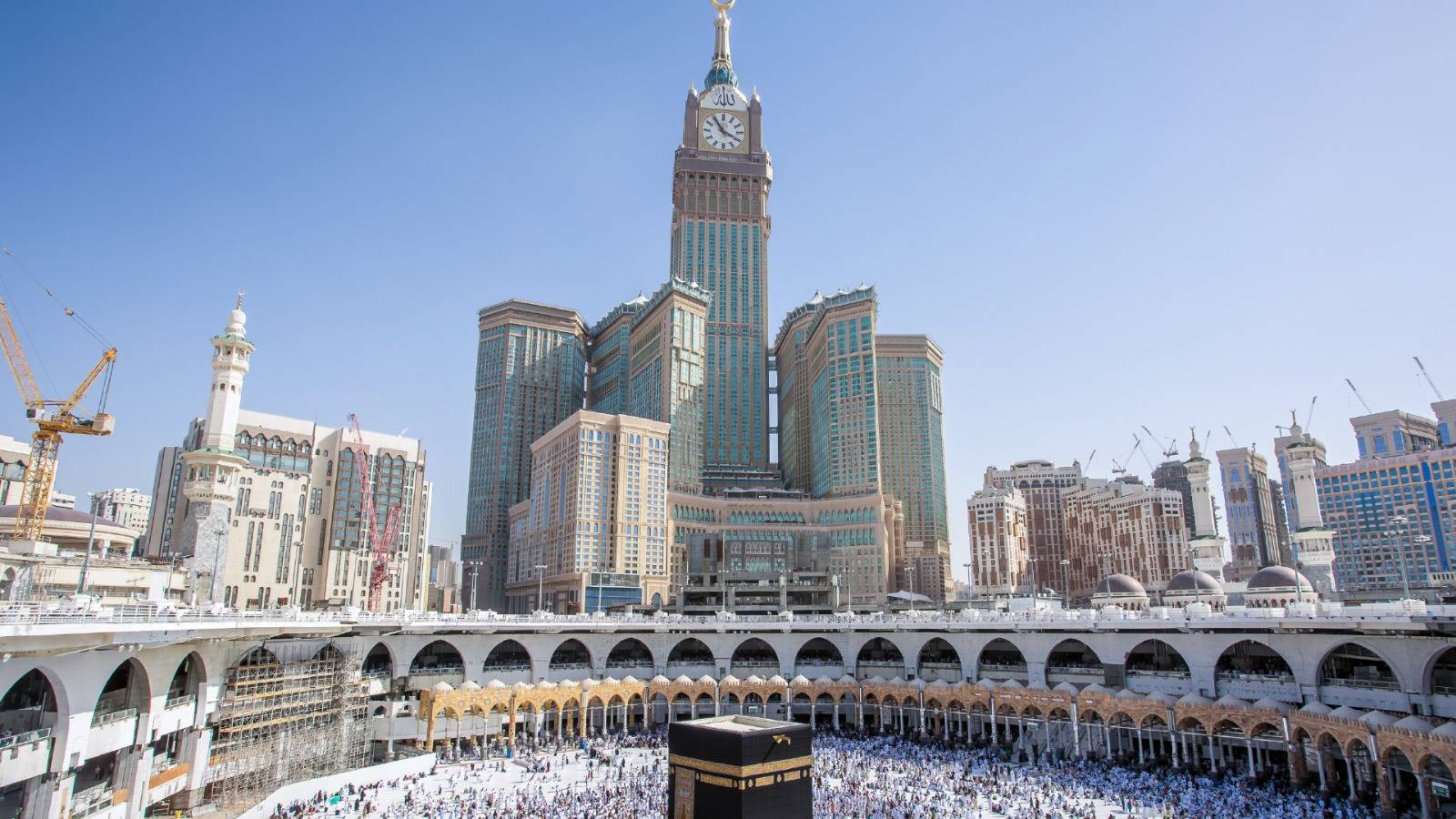
Saudi Arabia’s Ministry of Tourism has raised the readiness of Makkah’s hospitality sector to its highest level ahead of the holy month of Ramadan, stressing that serving pilgrims and visitors remains a top national priority.

Makkah is preparing to receive worshippers and visitors amid a marked expansion in hospitality capacity. The city now has more than 2,200 licensed accommodation facilities, reflecting growth of 35 percent over the past year. The number of licensed hotel rooms has exceeded 380,000, up 25 percent, while total domestic and inbound tourism spending is projected to surpass SAR 143 billion ($38.1 billion) in 2025.

The wider Makkah region recorded unprecedented performance indicators last year, both in visitor numbers and tourism spending, underscoring sustained growth and operational readiness.

Total domestic and international visitors exceeded 50 million, marking a 14 percent increase compared with 2024.

Tourism Minister Ahmed Al-Khateeb announced the figures during an annual inspection tour on Tuesday, stressing that the indicators reflect a major expansion in accommodation capacity and record growth in visitor numbers.

The tour included inspections of temporary lodging facilities designated for pilgrims, part of a proactive plan to increase capacity during peak seasons, alongside early preparations for the upcoming Hajj.

Vision 2030 targets surpassed

Official data has shown that Saudi Arabia has exceeded its Vision 2030 targets for the Umrah. The number of pilgrims arriving from abroad rose from 8.5 million in 2019 to more than 18 million in 2025, surpassing the original goal of 15 million by 2030.

A number of hotels surrounding the Grand Mosque in Makkah. (General Authority for Awqaf)

Service quality indicators improved as well, with pilgrim satisfaction reaching 94 percent, exceeding Vision 2030 benchmarks.

Workforce development kept pace with demand, as the number of licensed tour guides rose to more than 980, a 23 percent increase.

Masar Mall project

Al-Khateeb announced a joint financing agreement between the Tourism Development Fund and the Arab National Bank with Hamat Holding to support the Masar Mall project. The development carries a total cost of SAR 936 million (about $250 million).

The project is expected to become the largest shopping center in Makkah with the capacity to accommodate around 20 million visitors annually.

Its location near the Haramain High-Speed Railway station and a direct pedestrian link to the Grand Mosque are expected to strengthen the city’s commercial and tourism infrastructure.

Jeddah: Gateway to pilgrims

Meanwhile, Jeddah continues to consolidate its position as a complementary destination to Makkah and a primary gateway for pilgrims, while also expanding its role as a coastal tourism hub.

The city welcomed more than 13 million domestic and international visitors in 2025, a 10 percent increase from 2024. Tourism spending reached SAR 28 billion ($7.47 billion), up 6 percent year on year.

Jeddah’s hospitality sector also expanded, with more than 500 licensed facilities and over 33,000 licensed rooms.

The city is currently developing 46 tourism projects valued at SAR 21 billion ($5.6 billion) and expected to add more than 11,000 hotel rooms and further strengthen its tourism infrastructure and economic value.


ECB President Lagarde Reportedly Plans to Quit Before Macron's Term Ends

FILE PHOTO: European Central Bank (ECB) President Christine Lagarde addresses the press following the ECB's Governing Council meeting, at the ECB headquarters in Frankfurt, Germany, February 5, 2026. REUTERS/Jana Rodenbusch/File Photo
TT

ECB President Lagarde Reportedly Plans to Quit Before Macron's Term Ends

FILE PHOTO: European Central Bank (ECB) President Christine Lagarde addresses the press following the ECB's Governing Council meeting, at the ECB headquarters in Frankfurt, Germany, February 5, 2026. REUTERS/Jana Rodenbusch/File Photo

European Central Bank President Christine Lagarde plans to leave her job before next year's French presidential election to allow Emmanuel Macron to have an input into picking her successor, the Financial Times reported on Wednesday.

Lagarde's term is due to end in October 2027 but some fear that the far right may win the French presidential race ‌in the spring of ‌2027, complicating the selection for the ‌new ⁠leader of Europe's most ⁠important financial institution.

Citing a person familiar with the matter, the FT said Lagarde has not yet decided on the exact timing of her departure but was keen on Macron and German Chancellor Friedrich Merz to be the key deciders in who succeeds her. Macron cannot run again for a third term.

"President Lagarde is ⁠totally focused on her mission and has not ‌taken any decision regarding the end ‌of her term," Reuters quoted an ECB spokesperson as saying.

The FT report comes only ‌a week after Bank of France Governor Francois Villeroy de Galhau ‌said he would step down in June this year, more than a year before the end of his term, allowing Macron to name his replacement before the presidential election that the far-right could win.

While it ‌will be up to all leaders from the 21-nation euro zone to pick Lagarde's successor, ⁠past practice ⁠suggests that any successful candidate must have both German and French support to clinch the role.

There are no formal candidates for the job yet but several names have been floating among ECB circles as potential ECB presidents. The most prominent among these are former Dutch central bank chief Klaas Knot and Bank for International Settlements General Manager Pablo Hernandez de Cos.

Lagarde's non-renewable term at the ECB runs until October 31, 2027. Prior to heading the ECB, she was managing director of the International Monetary Fund from 2011 to 2019 and before that, the French finance minister.


UK Inflation Falls to 3.0% in January

Pedestrians cross Westminster Bridge in front of Parliament during the early morning hours in London, Tuesday, Feb. 10, 2026.(AP Photo/Kin Cheung)
TT

UK Inflation Falls to 3.0% in January

Pedestrians cross Westminster Bridge in front of Parliament during the early morning hours in London, Tuesday, Feb. 10, 2026.(AP Photo/Kin Cheung)

Britain's annual ‌rate of consumer price inflation fell to 3.0% in January from 3.4% in December, official figures showed on Wednesday.

A Reuters poll of economists had shown a median forecast of 3.0% in January and the Bank of England projected earlier this month that the headline measure of inflation would slow to ‌2.9%.

British inflation ‌has run higher than in ‌the ⁠United States and in ⁠the euro zone where it stood at 2.4% and 1.7% respectively in January.

But the BoE expects the pace of price rises to slow sharply to almost its 2% target in ⁠April as last year's rises ‌in utility costs and ‌other government-controlled tariffs fall out of ‌the annual comparison.

Investors expect the central bank ‌to cut its benchmark interest rate to 3.5% at its next meeting in March after a tight vote to keep borrowing costs ‌on hold in February although some policymakers remain worried about underlying ⁠inflation ⁠pressure.

Financial markets on Tuesday also priced a second quarter-point interest rate cut by the BoE by the end of in 2026.

ONS data last week painted a downbeat picture of Britain's economy at the end of 2025 with output barely growing. Figures released on Tuesday showed the labor market was still losing jobs although there were some signs of a stabilization.
