Aramco CEO Expects Demand Growth of 1.6-2 mln bpd in Second Half

A view shows el Feel oil field near Murzuq, Libya, July 6, 2017. (Reuters)
TT

Aramco CEO Expects Demand Growth of 1.6-2 mln bpd in Second Half

A view shows el Feel oil field near Murzuq, Libya, July 6, 2017. (Reuters)

Saudi Aramco Chief Executive Amin Nasser said on Tuesday he expected oil demand growth of between 1.6 and 2 million barrels per day (bpd) in the second half of this year, adding that fundamentals do not support the current drop in oil prices.

Nasser, who heads the world's most profitable oil company, said he expects global oil demand of 104.7 million bpd in 2024 and that some forecasts saw demand of more than 106 million bpd in the second half of the year.

Brent crude was trading at about $76.6 on Tuesday, its lowest since January. Traders said selling had been driven by expectations slower economic growth would reduce demand even as supply concerns mount because of tension in the Middle East.

"The market in my view is overreacting and the fundamentals do not support the drop in prices that we are witnessing today," Reuters quoted Nasser saying on an earnings call.

"The US is pointed (to) as a concern driving the current reaction that we are seeing in the market. Yet, the amount of finished gasoline supplies in the US, a proxy of demand, jumped to 9.4 million barrels a day in May, the highest since 2019."

He also said he expected demand in China to increase in the second half of the year to 17.5 million bpd.

"I would also add there seems to be continued upward revision of demand by various forecasters and agencies, which makes it difficult to make informed investment decisions as the revisions keep surprising to the upside," Nasser said.

Nasser also said he expected governments would replenish strategic crude inventories and that would further contribute to "healthy oil demand for the next few months". He did not specify which ones.


Saudi Arabia, France Discuss Enhancing Mining Sector Partnership

Saudi Minister of Industry and Mineral Resources Bandar Alkhorayef has met with France’s Interministerial Delegate for Strategic Minerals and Metals Supplies Benjamin Gallezot. SPA
TT

Saudi Arabia, France Discuss Enhancing Mining Sector Partnership

Saudi Minister of Industry and Mineral Resources Bandar Alkhorayef has met with France’s Interministerial Delegate for Strategic Minerals and Metals Supplies Benjamin Gallezot. SPA

Saudi Minister of Industry and Mineral Resources Bandar Alkhorayef has met with France’s Interministerial Delegate for Strategic Minerals and Metals Supplies Benjamin Gallezot to discuss strengthening the strategic partnership between the two countries in the mining and minerals sector.

The two sides affirmed the strength of bilateral relations and explored opportunities for cooperation in mineral exploration, mining investment, and the localization of mineral industries.

They also discussed ways to leverage advanced technologies and innovative solutions to improve sector efficiency and enhance sustainability, as well as the importance of integrating value chains for strategic minerals.

The meeting was held in Istanbul on the sidelines of the Critical Minerals Forum, organized on April 28 and 29 by the Organization for Economic Co-operation and Development (OECD).

The forum was attended by government and industry leaders, as well as international organizations, to discuss challenges and opportunities related to critical minerals supply chains.


Shehbaz Sharif: We Repaid $3.5 Billion in Debt Thanks to Saudi Arabia’s 'Pivotal' Support

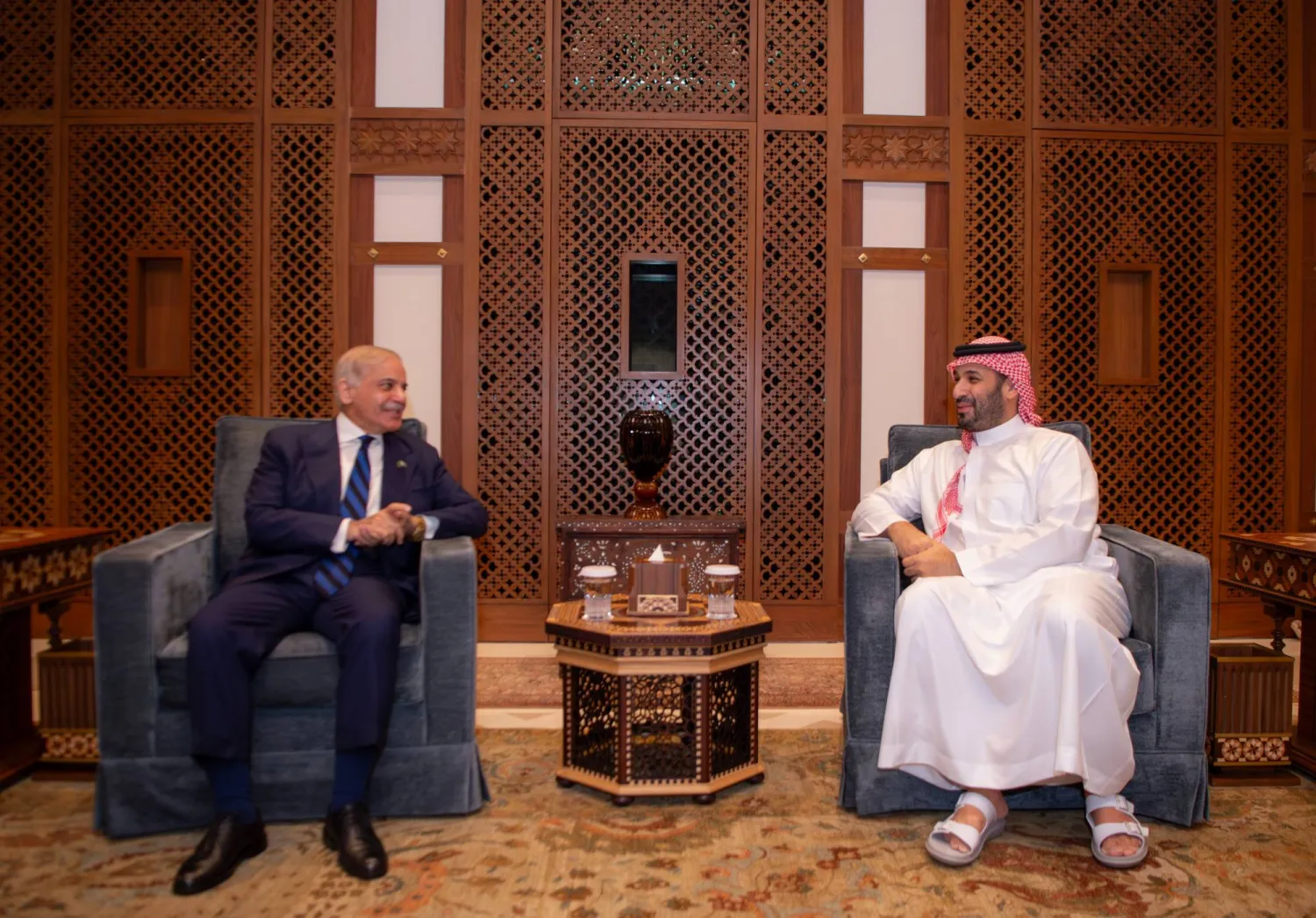
Saudi Crown Prince Mohammed bin Salman holding talks with Pakistan's Prime Minister Shehbaz Sharif in Jeddah on March 12, 2026 (SPA).
TT

Shehbaz Sharif: We Repaid $3.5 Billion in Debt Thanks to Saudi Arabia’s 'Pivotal' Support

Saudi Crown Prince Mohammed bin Salman holding talks with Pakistan's Prime Minister Shehbaz Sharif in Jeddah on March 12, 2026 (SPA).

Pakistan’s Prime Minister Shehbaz Sharif announced on Wednesday that his country had successfully repaid $3.5 billion in mandatory bilateral debt, affirming that this achievement came thanks to the “pivotal” support of the Custodian of the Two Holy Mosques, King Salman bin Abdulaziz, and Crown Prince Mohammed bin Salman.

He clarified that this repayment did not affect the stability of foreign exchange reserves; rather, it strengthened market confidence in Pakistan’s ability to meet its international obligations.

The Kingdom had announced the provision of substantial financial support to Pakistan, including the extension of the term of a previous $5 billion deposit and the provision of an additional $3 billion deposit, aimed at enhancing economic stability and addressing global changes.

On Friday, the State Bank of Pakistan announced that Islamabad had completed the repayment of $3.45 billion in deposits to the United Arab Emirates, settling a final tranche worth $1 billion. The bank had also announced that it had received the Saudi deposit worth $3 billion.

This came after the United Arab Emirates requested that Pakistan return the funds it had deposited in the State Bank of Pakistan in 2018 to bolster its foreign exchange reserves.

This qualitative support aims to enable the Pakistani economy to confront global economic changes and strengthen its financial resilience, in a way that positively reflects on the living conditions of the Pakistani people. It also reaffirms the Kingdom’s consistent and ongoing position of standing alongside Pakistan under all circumstances, embodying the sincere bonds of brotherhood between the leaderships and the peoples.

In an address before the cabinet, the Pakistani Prime Minister clarified the current financial situation, stating: “We have repaid our mandatory external debts (amounting to approximately $3.5 billion in bilateral loans). Our foreign exchange reserves are stable at their current level, and we have fulfilled our obligations and repaid our debts.”

These developments constitute a key pillar in Pakistan’s relationship with international institutions; the stability of liquid reserves at around $20.6 billion (including $15.1 billion held by the central bank) contributes to strengthening Islamabad’s negotiating position with the International Monetary Fund. Pakistan’s success in repaying its bilateral debts, alongside adherence to the requirements of the Fund’s financing program, is seen as a vote of international confidence in the Pakistani economy’s ability to meet its immediate and future financial commitments.

The central bank indicated that its success in managing the outflows required to repay these billions was achieved without causing any shock to the value of the local currency, as the Pakistani rupee remained stable thanks to supportive deposits and cautious monetary policies.

For his part, Sharif explained that this repayment did not come at the expense of monetary stability; rather, it resulted from a coordinated plan between the Ministry of Finance and the central bank to ensure that foreign exchange reserves remained at safe levels, which strengthens Pakistan’s position in its ongoing negotiations with international financial institutions.

Regarding the role played by the Kingdom in securing this financial passage, the Prime Minister expressed his country’s deep appreciation, saying: “We are extremely grateful to the Custodian of the Two Holy Mosques, King Salman bin Abdulaziz, and His Royal Highness Crown Prince Mohammed bin Salman; they played a pivotal role in this matter. I am confident that these major issues will also be resolved, and Pakistan’s peace efforts continue uninterrupted and without relent.”

Sharif noted that this Saudi support was not merely temporary financial assistance, but rather a reflection of the depth of historical ties, adding: “Just as we have strengthened mutual cooperation by removing obstacles at both the joint and institutional levels, positive results have emerged from this.”

It is worth noting that this new Saudi move is not unprecedented. In 2018, the Kingdom provided a $6 billion support package, which included a $3 billion deposit in the State Bank of Pakistan, in addition to deferred oil payment facilities of the same value.



New Shipping Service Connects Jeddah Islamic Port with China, Malaysia and Egypt

Jeddah Islamic Port (Mawani)
TT

New Shipping Service Connects Jeddah Islamic Port with China, Malaysia and Egypt

Jeddah Islamic Port (Mawani)

The Saudi Ports Authority (Mawani) has announced the addition of China United Lines’ new SGX shipping service to Jeddah Islamic Port, enhancing the Kingdom’s connectivity with global markets, improving supply chain efficiency, and supporting trade flows through the Red Sea- one of the world’s most important maritime routes.

The new shipping service connects Jeddah Islamic Port with the ports of Shanghai and Nansha in China, as well as ports in Malaysia and Egypt, with a capacity of up to 2,452 TEUs.

This initiative forms part of Mawani’s ongoing efforts to improve the Kingdom’s performance in global logistics indicators, strengthen national exports, and support the objectives of the National Transport and Logistics Strategy, which aims to position Saudi Arabia as a global logistics hub and a key link between three continents.