Fed's Goolsbee: Don't Want to Tighten Longer Than Necessary

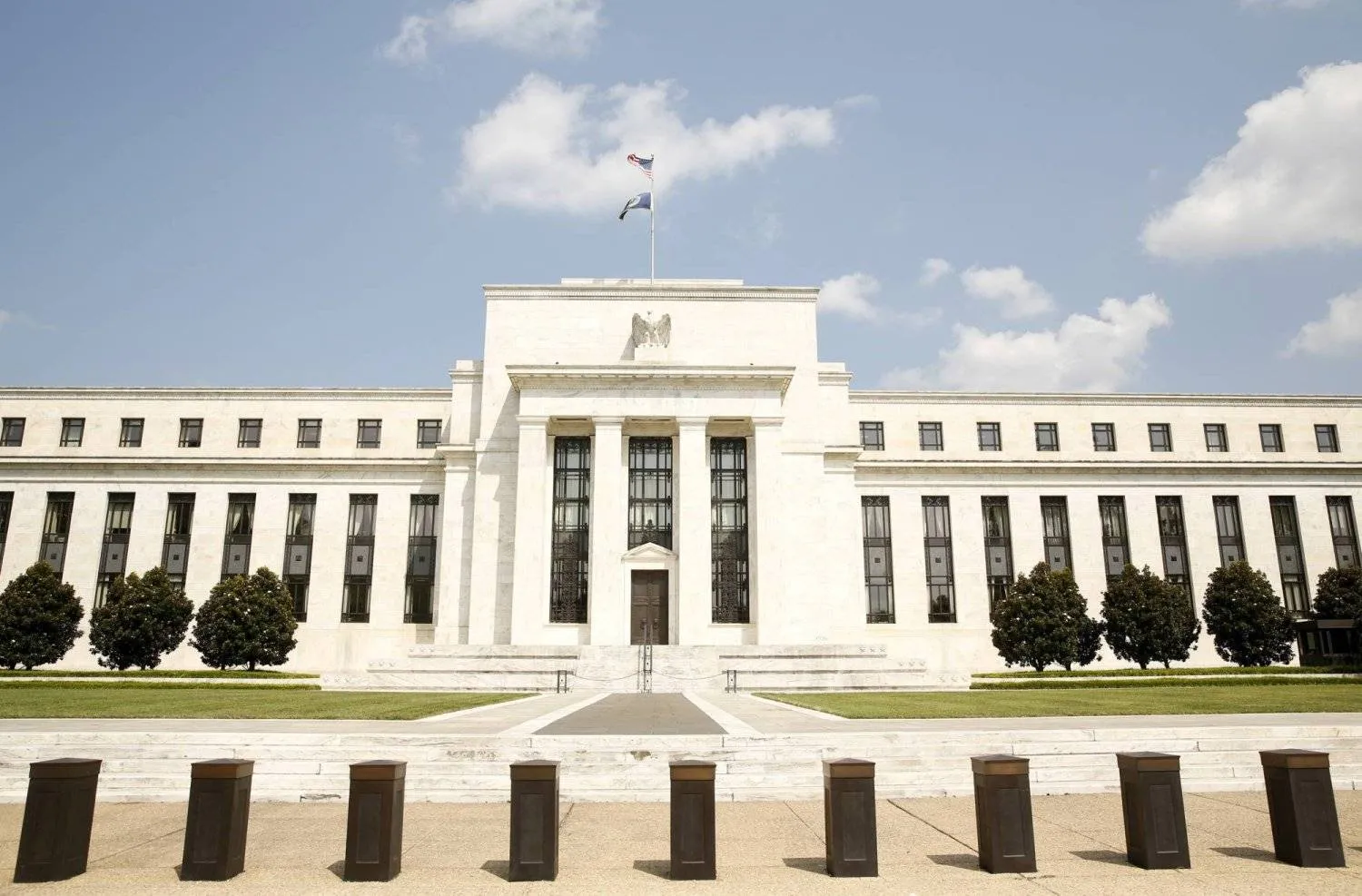
The exterior of the Marriner S. Eccles Federal Reserve Board Building is seen in Washington, D.C. (Reuters)
TT

Fed's Goolsbee: Don't Want to Tighten Longer Than Necessary

The exterior of the Marriner S. Eccles Federal Reserve Board Building is seen in Washington, D.C. (Reuters)

Federal Reserve Bank of Chicago President Austan Goolsbee said on Friday that the US economy is not showing signs of overheating, so central bank officials should be wary of keeping restrictive policy in place longer than necessary.

“You don't want to tighten any longer than you have to,” Goolsbee told National Public Radio in an interview. “And the reason you'd want to tighten is if you're afraid the economy is overheating, and this is not what an overheating economy looks like to me.”

Goolsbee declined to say whether he would press for an interest rate cut at the Fed's coming meeting on Sept. 17-18.

But his remarks were consistent with his recent comments that officials need to be increasingly attuned to signs like the rising unemployment rate and increases in credit card delinquencies that suggest the economy is slowing to a point where policy should not be as restrictive as it is now.

The Fed has held its policy rate in the current range of 5.25% to 5.50% since July 2023 after raising to that level at a breakneck pace over the prior 16 months to combat the worst outbreak of inflation since the 1980s.

Financial markets are now 100% priced for a rate cut next month, with the main debate being over what size - a quarter percentage point or a half point. Odds now favor the smaller cut, but a big signal on the Fed's next move is likely to come next Friday when Fed Chair Jerome Powell delivers a keynote address at the Kansas City Fed's annual economic symposium in Jackson Hole, Wyoming.


South Korea Says Close to Securing Oil Supplies from Kazakhstan

People walk by blooming cherry blossoms in Seoul, South Korea, April 2, 2026. REUTERS/Kim Hong-Ji
TT

South Korea Says Close to Securing Oil Supplies from Kazakhstan

People walk by blooming cherry blossoms in Seoul, South Korea, April 2, 2026. REUTERS/Kim Hong-Ji

South Korea is close to securing crude oil supplies from Kazakhstan, the industry minister said on Sunday, as the country looks for alternative energy sources amid the war in the Middle East.

"There has been quite (some) progress, so we should be able to announce specific ⁠amounts and details ⁠early next week," Industry Minister Kim Jung-kwan said in an interview with local broadcaster KBS, according to Reuters.

Earlier this month, presidential chief of staff Kang Hoon-sik travelled with Kim to ⁠Kazakhstan to secure supplies of crude oil and naphtha amid disruptions to shipping through the Strait of Hormuz.

"Kazakhstan might sound very far, but it actually takes about the same time with shipments from the US About 50 to 60 days," Kim said, adding that the recent visit to the ⁠central Asian ⁠country was aimed at diversifying oil supplies in the long run.

South Korea, which is almost entirely dependent on imports for its energy with 70% of oil purchases coming from the Middle East, also secured a pledge last month from the United Arab Emirates to supply 24 million barrels of crude oil.


From Boston to Denver, US Drivers Cut Back as Iran War Pushes Fuel Costs Higher

 A nozzle pumps diesel into the fuel tank of bus in Orange, Calif., Tuesday, April 7, 2026. (AP)
A nozzle pumps diesel into the fuel tank of bus in Orange, Calif., Tuesday, April 7, 2026. (AP)
TT

From Boston to Denver, US Drivers Cut Back as Iran War Pushes Fuel Costs Higher

 A nozzle pumps diesel into the fuel tank of bus in Orange, Calif., Tuesday, April 7, 2026. (AP)
A nozzle pumps diesel into the fuel tank of bus in Orange, Calif., Tuesday, April 7, 2026. (AP)

Boston resident Pat Ouedraogo has cut longer-distance trips, while aspiring law student Skyler Burke drives extra miles to avoid pricier gasoline pumps closer to home. In Houston, auto broker David Wright has switched from a gas-guzzling race car to an all-electric vehicle.

These struggles are being echoed by motorists across the United States, many of whom have grown increasingly wary of the Iran war as it drives fuel prices toward record highs.

Energy market experts have described the six-week-old war as the worst oil-supply disruption ever as major production facilities have been hit and a key shipping passage has effectively closed.

"It's a situation where you feel powerless about these prices," Ouedraogo said, while pumping a few gallons of gasoline into his Nissan SUV at a Shell station that was charging $4.99 a gallon.

Average US gasoline prices stood at $4.16 a gallon on Friday, while diesel averaged $5.67, the most that consumers have paid at the pumps ahead of the peak summer travel season since Russia's February 2022 invasion of Ukraine roiled global energy markets, data from GasBuddy showed.

Those prices translate into an estimated $10.4 ‌billion increase in US gasoline ‌and diesel spending this year compared with the same March 1-April 10 period last year, since ‌the ⁠war began, GasBuddy's Patrick ⁠De Haan said.

For Houston-based trucker Eddie Esquivel, the surge in diesel prices has translated into a near-doubling of his weekly expenditures to $1,600-$1,700 from $800-$900 before the war.

"These prices are hitting real hard. Diesel was $2-something a gallon. Now, it could hit $6," Esquivel said at a QuikTrip filling station in South Houston, Texas.

"You got truck payments, you got to buy tires, you got to do oil changes, and you got a family," Esquivel said. "This is killing us."

POLITICAL FALLOUT FROM PUMP PRICES

To be sure, consumers are paying dearly for fuel across the world, as Iran's blockade of the Strait of Hormuz has starved Asian and European markets of Middle Eastern oil supplies.

The United States is the world's largest fuel consumer, so pump prices hold a unique significance in American politics.

The searing economic ⁠pain felt by motorists due to the persistence of Russia's war in Ukraine had been a ‌major influence in their decision to elect Donald Trump as president in November 2024.

Now, just ‌months ahead of midterm US elections in November, Americans' approval of Trump has crashed to new lows as they square his campaign promises of lower energy costs ‌against the sharpest increase in consumer prices in nearly four years in March due to the record surge in fuel prices.

"I definitely won't ‌be voting for (the Republican) party or anyone affiliated with this president right now who is in office at all," Kari DyLong said while filling up her pickup truck at a service station outside of Denver.

To make matters worse, the elevated gasoline prices are expected to linger even after Trump eventually decides to end US military involvement in Iran, according to the US government's own admission.

Delegations from the United States and Iran are set to hold talks in Pakistan on Saturday aimed ‌at reaching a permanent ceasefire deal after a fragile two-week truce announced earlier this week.

However, even if such a deal is struck, oil and fuel prices are unlikely to return to their pre-war levels ⁠in quick order, analysts said earlier this ⁠week. US consumers will continue to pay the highest prices in years to fill up their vehicles or fly over the summer, they said.

"We still expect a lingering geopolitical risk premium to remain in the market," said Wei Ren Gan, analyst at consultancy Rystad.

"Rather than a rapid recovery to pre-war levels, prices are likely to soften gradually and could remain relatively higher than pre-war benchmarks."

About 2 million barrels per day of Middle Eastern refining capacity has been knocked out of service due to damage in the ongoing war, according to Macquarie analysts.

DEMAND DESTRUCTION

Signs of demand destruction due to the high gas prices have begun to show in US government data. Gasoline demand in the country in the week before Easter stood at just 8.6 million barrels a day, down 9% from last year's Easter demand.

Other indicators show the extent of hardships consumers are facing: pawn loan transactions have surged 9% as gas prices surpassed $4 a gallon, said Tim Jugmans, financial chief at pawn loan provider EZCORP.

For Denver resident DyLong, the cratering of demand has come in the form of cutting back on personal excursions over the weekends. She faces a 40-minute commute to get to her job as a sales manager for craft brewer Oskar Blues.

"I'm doing things way more at home and not venturing out because I'm having to spend a bigger portion of my paycheck now towards gas to get me to work," she said.


World Bank Chief: Middle East War to Cut Growth, Deliver Cascading Impact

FILE PHOTO: World Bank President Ajay Banga arrives for a signing ceremony with Thailand to host the 2026 International Monetary Fund and the World Bank annual meetings on the last day of this year's meeting, following last month's deadly earthquake, in Marrakech, Morocco, October 15, 2023. REUTERS/Susana Vera/File Photo
TT

World Bank Chief: Middle East War to Cut Growth, Deliver Cascading Impact

FILE PHOTO: World Bank President Ajay Banga arrives for a signing ceremony with Thailand to host the 2026 International Monetary Fund and the World Bank annual meetings on the last day of this year's meeting, following last month's deadly earthquake, in Marrakech, Morocco, October 15, 2023. REUTERS/Susana Vera/File Photo

The war in the Middle East will have a cascading impact on the global economy, even if a ceasefire announced by US President Donald Trump takes hold, World Bank President Ajay Banga told Reuters in an interview on Friday.

And the damage will be far deeper if the ceasefire fails and the conflict escalates, he said.

Banga on Tuesday said global growth could be lowered by 0.3 to 0.4 percentage point in a baseline scenario, with an early end to the war, and by as much as 1 percentage point if it endures. Inflation could increase by 200 to 300 basis points, with a much higher impact - of up to 0.9 percentage point - if the war continues, he said.

The World Bank's baseline estimate now projects growth in emerging markets and developing economies of 3.65% in 2026, compared to 4% in October, dropping as low as 2.6% in an adverse scenario with a longer-lasting war. ‌Inflation in those ‌countries was now forecast to hit 4.9% in 2026, up from the previous estimate of 3%. ‌The extreme ⁠scenario could see ⁠inflation rising as high as 6.7%, according to estimates viewed by Reuters.

The war, which has killed thousands of people across the Middle East, has sent the price of oil up by 50% while disrupting supplies of oil, gas, fertilizer, helium and other goods, as well as tourism and air travel.

The two-week ceasefire announced by Trump appears tenuous, with Israel and Iran continuing strikes. Iran said on Friday that blocked Iranian assets must be released and a ceasefire must take hold in Lebanon before US-Iran talks, scheduled for Saturday in Pakistan, can proceed. Trump said that US warships were being reloaded with ammunition in case the talks failed.

"The question really is, does this current peace and the negotiations that ⁠are going to be happening this weekend - will this lead to a lasting peace and ‌then a reopening of the Strait (of Hormuz)?" said Banga. "If it doesn't lead to ‌that, and if conflict were to break out again, would that have an even larger impact, or longer-term impact on energy infrastructure?"

Banga said the ‌world's largest development bank was already in discussions with some developing countries, including small island states with no natural energy resources, ‌about tapping funds from existing programs under "crisis response windows."

The World Bank's crisis toolkit allows countries to tap previously approved but not yet disbursed funds without additional board approvals, increasing flexibility.

But Banga said the bank was cautioning countries to avoid setting up energy subsidies that they could not afford, which would trigger even bigger problems in the future.

"I worry about making sure that they can come through this crisis, targeting what they need to do, but ‌not doing anything that further deteriorates that fiscal space," he said.

Many developing countries also have high debt levels and interest rates remain high, which constrains their ability to borrow money to ⁠fund measures to respond to ⁠the jump in energy costs and other goods caused by the war. The crisis has put a fresh spotlight on the need for countries to diversify energy supplies and boost self-sufficiency, Banga said. The World Bank last June ended a longstanding ban on funding nuclear energy projects as part of a push to meet rising electricity needs.

Nigeria, which had long faced problems, stood to benefit from a $20 billion investment made by the Dangote Group in refineries, which had actually increased output during the war, and was now supplying aviation fuel to neighboring countries.

"Nigeria should be breathing a sigh of relief. They've built up the ability to have energy security for themselves through that huge investment," he said. "It's actually a really good example of the right thing being done in terms of energy self-sufficiency for them, but also for their neighbors."

The World Bank is also working closely with Mozambique, another African country, to expand its energy production capabilities in both natural gas and hydropower.

The World Bank had many energy products in the pipeline, Banga said, noting that talks were under way with some countries looking to extend the life of their fleets of nuclear reactors, and others keen to move into nuclear power.

"If you don't get nuclear and hydro and geothermal going at scale, along with wind and solar, they will end up doing more with traditional fuels, and nobody really wants that," he said.