Oil Prices Flat as Investors Await US Inventory Data

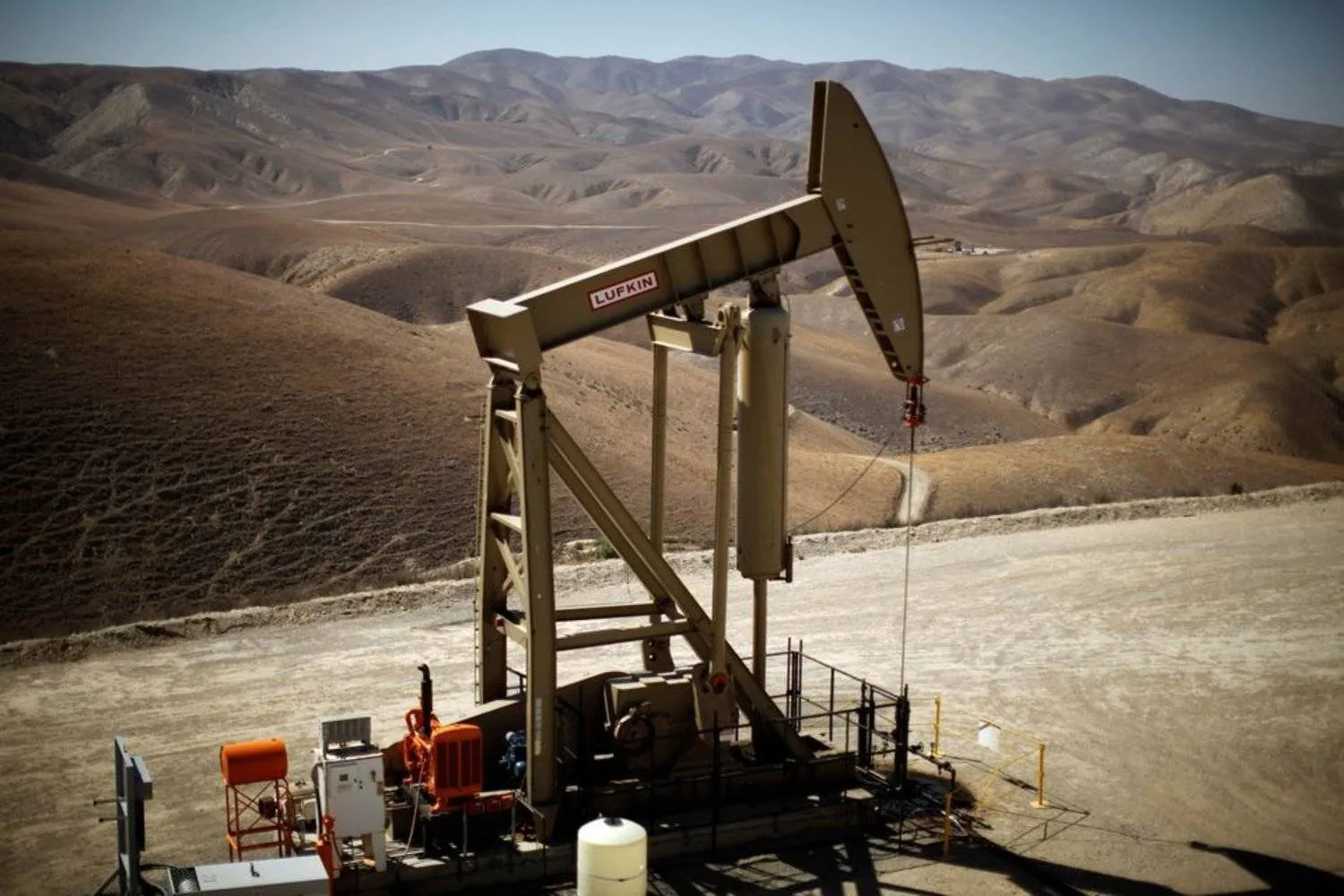
A pumpjack brings oil to the surface in the Monterey Shale, California, US April 29, 2013. REUTERS/Lucy Nicholson/File Photo
TT

Oil Prices Flat as Investors Await US Inventory Data

A pumpjack brings oil to the surface in the Monterey Shale, California, US April 29, 2013. REUTERS/Lucy Nicholson/File Photo

Oil prices traded flat on Thursday as investors eye developments in the Middle East and more details on China's stimulus plans, and await the release of official US oil inventory data.
Brent crude futures were down 4 cents to $74.18 a barrel by 0648 GMT, while US West Texas Intermediate crude futures were at $70.37 a barrel, down 2 cents.
Both benchmarks settled down on Wednesday, closing at their lowest levels since Oct. 2 for a second day in a row, said Reuters.
The benchmarks are down 6-7% so far this week after the Organization of the Petroleum Exporting Countries (OPEC) and the International Energy Agency cut demand forecasts for 2024 and 2025.
Prices have also fallen as risk premiums have cooled with fears having eased that a retaliatory attack by Israel on Iran could disrupt oil supplies, though uncertainty remains over conflict in the Middle East.
"We are now playing a waiting game for two things. Firstly, the China NPC (National People's Congress) standing committee to flesh out the details and the size of the fiscal stimulus package which I believe is coming," Tony Sycamore, IG market analyst in Sydney, said.
Investors are waiting for further details from Beijing on its broad plans announced on Oct. 12 to revive its ailing economy.
China said on Thursday it would expand a "white list" of housing projects eligible for financing and increase bank lending for such developments to 4 trillion yuan ($562 billion) as it aims to shore up its ailing property market.
Sycamore said Israel's response to Iran's recent attack was the second major focus for the market.
"It's coming, we know that but we don't know when," he said, adding that both factors created upside risks for crude oil prices.
In Iran, the authorities are working to control an oil spill off Kharg Island, the country's IRNA news agency reported on Wednesday.
"It appears to be unrelated to the Israel-Hamas war, but it drew attention to Iran's oil export facilities," ANZ analysts said in a note.
In the US, crude oil and fuel stocks fell last week, market sources said, citing American Petroleum Institute figures on Wednesday, against expectations of a build-up in crude stockpiles.
Crude stocks fell by 1.58 million barrels in the week ended Oct. 11, the sources said on condition of anonymity. Gasoline inventories fell by 5.93 million barrels, and distillate stocks fell by 2.67 million barrels, they said.
Ten analysts polled by Reuters had estimated on average that crude inventories rose by about 1.8 million barrels in the week to Oct. 11.
"Any signs of weak demand in EIA's weekly inventory report could put further downward pressure on oil prices," ANZ analysts said.
The Energy Information Administration, the statistical arm of the US Department of Energy, will release its data at 11 a.m. EDT (1500 GMT) on Thursday.
Also supporting oil prices, the European Central Bank is likely to lower interest rates again on Thursday, the first back-to-back rate cut in 13 years, as it shifts focus from cooling inflation in the euro zone to protecting economic growth.



European Development Bank Unveils 5 Bn Euros for War-hit Economies

A Lebanese man walks past destruction at the site of an Israeli airstrike the day before that targeted a building in Beirut on April 9, 2026. (Photo by Ibrahim AMRO / AFP)
TT

European Development Bank Unveils 5 Bn Euros for War-hit Economies

A Lebanese man walks past destruction at the site of an Israeli airstrike the day before that targeted a building in Beirut on April 9, 2026. (Photo by Ibrahim AMRO / AFP)

The European development bank said Thursday it was unlocking five billion euros ($5.9 bn) to help shore up economies hit by the Middle East war.

The European Bank for Reconstruction and Development (EBRD) said it will "deploy EUR5 billion in 2026 in economies impacted by Middle East conflict".

The funds would be focused on Iraq, Jordan, Lebanon, the West Bank and Gaza "and affected neighboring economies" including Egypt, Türkiye, Armenia and Azerbaijan, the bank said in a statement.

"The economic and social impact of the conflict is already being felt across many of the bank's economies in the form of disrupted trade routes, energy and commodity shocks, weakened investor confidence and broader costs to the population," it added.

Established in 1991 to help former Soviet bloc nations embrace free-market economies, the bank later extended its reach to the Middle East and Africa.

"In a time of rising uncertainty, we are stepping up where others may pull back," said EBRD president Odile Renaud Basso.

"We are here to support economies, clients and people in our countries of operation in tough times," she added.

The bank said "the volume of conflict response investment will be demand driven due to the fast-changing nature of the situation".

The funds will provide immediate relief "by supporting economic activity" and "fostering financial sector stabilization".

EBRD will aim to strengthen energy security and aid state-owned enterprises to "ensure the uninterrupted provision of essential goods and services".

On Thursday it had approved "a project to support Lebanon's retail chain," it said, adding it also aimed to safeguard access to jobs, finance and essential services.

Since starting operations in the southern and eastern Mediterranean in 2012, the EBRD has invested more than EUR26.5 billion in 489 projects in the region.

In Türkiye alone, the lender has committed more than 23 billion euros since 2009.


Saudia to Partially Resume Flights To, From Dubai, Abu Dhabi, and Amman on Saturday

One of Saudia’s aircraft (company website)
TT

Saudia to Partially Resume Flights To, From Dubai, Abu Dhabi, and Amman on Saturday

One of Saudia’s aircraft (company website)

Saudia announced on Thursday the partial resumption of its operations to and from Dubai, Abu Dhabi, and Amman starting Saturday, April 11.

In a post on its official account on the social media platform X, the airline said the resumption will be carried out through the operation of exceptional daily flights to and from those destinations.

Saudia advised passengers to check the status of their flights before heading to the airport, noting that further updates will be published through its official channels.


IMF Expects to Provide Vulnerable Economies Hit by Iran War Up to $50 bn

FILED - 24 October 2024, US, Washington: The logo of the International Monetary Fund (IMF) is pictured on the facade of the conference building on Pennsylvania Street. Photo: Soeren Stache/dpa
TT

IMF Expects to Provide Vulnerable Economies Hit by Iran War Up to $50 bn

FILED - 24 October 2024, US, Washington: The logo of the International Monetary Fund (IMF) is pictured on the facade of the conference building on Pennsylvania Street. Photo: Soeren Stache/dpa

The International Monetary Fund expects to have to provide up to $50 billion in immediate financial assistance to countries affected by the Middle East war, its managing director said on Thursday, with the crisis likely to have lasting economic effects.

"Given the spillovers of the Middle East war, we expect near-term demand for IMF balance-of-payments support to rise to somewhere between $20 billion and $50 billion, with the lower bound prevailing if the ceasefire holds," Kristalina Georgieva said, according to prepared remarks shared with AFP.

She added that food insecurity due to transport and supply chain disruptions caused by the war was expected to affect at least 45 million people.

"Even in a best case, there will be no neat and clean return to the status quo ante," she said, as a fragile ceasefire appeared to hold on Thursday.

The IMF will pare its global growth forecast for 2026 based on the impact of the crisis, with spiraling energy costs hitting some vulnerable economies harder than others.

Georgieva said that even in the Fund's "most hopeful scenario," infrastructure damage, supply disruptions and a loss of market confidence among other "scarring effects" meant growth would be less than expected.

She highlighted the "asymmetric" effects of the crisis, hitting low-income energy importers with limited fiscal space much harder than others.

"Spare a thought for the Pacific Island nations at the end of a long supply chain, wondering if fuel will still reach them in the wake of such a severe disruption," she said.