FII: Artificial Intelligence Represents Future of Global Economy

Saudi Finance Minister Mohammed Al-Jadaan speaks at one of the sessions of the second day of the conference. (SPA)
TT

FII: Artificial Intelligence Represents Future of Global Economy

Saudi Finance Minister Mohammed Al-Jadaan speaks at one of the sessions of the second day of the conference. (SPA)

Economic policymakers and decision-makers have identified key points for leveraging artificial intelligence to shape the future of investment and drive global economic growth.

These insights were discussed on Wednesday in dialogue sessions at the eighth annual Future Investment Initiative conference held in Riyadh. Sessions on the second day, attended by over 7,000 participants and 600 international speakers, also emphasized building bridges of understanding, uniting global communities to tackle challenges, and underscored the importance of a collaborative approach.

Saudi Finance Minister Mohammed Al-Jadaan announced that the Kingdom is one of the world’s most attractive regions for investors seeking to achieve their investment goals.

The minister stated that Saudi Arabia is deepening its commitment to Vision 2030 for economic transformation, revealing that the non-oil sector now represents 52% of the Kingdom’s economy, a result attributed to the vision’s objectives.

Speaking during an opening session on the second day of the Future Investment Initiative conference, Al-Jadaan expressed satisfaction with the progress made so far, underscoring that Saudi Arabia ranks among the most capable countries globally in meeting investor needs.

Al-Jadaan explained that the National Center for Performance Measurement, an independent government authority that monitors government performance, reported a few months ago that around 87% of the vision’s targets have either been achieved or are on track.

“We are focusing on the remaining 13% to bring them in line by prioritizing them accordingly,” he added.

He acknowledged that the Kingdom faces challenges in achieving Vision 2030 targets, particularly in human resources and execution capacity, and stated: “We aim to ensure we are unlocking further potential without overburdening the economy.”

Saudi Arabia is currently targeting a 40% female participation rate in the workforce by 2030, having already surpassed the original 30% target. Al-Jadaan highlighted that 45% of small and medium-sized enterprises are led by women.

He also noted that the country is working to align its economic plans with a private sector capable of complementing government efforts.

In one of the discussion sessions, Ashraf Al-Ghazawi, Saudi Aramco’s Executive Vice President, stated that the company produces the world’s lowest carbon-intensity oil. He noted that Aramco operates 17 cogeneration plants, contributing to a reduction of approximately 7 million tons of carbon emissions.

Additionally, Abdulrahman Al-Faqeeh, CEO of the Saudi Basic Industries Corporation (SABIC), revealed that the company successfully cut carbon emissions at its facilities by 12.5 percent by the end of last year compared to 2010.

Robert Wilt, CEO of the Saudi Arabian Mining Company (Ma’aden), highlighted the company’s accelerated efforts to shorten the copper extraction process.

He added: “We have made progress in reducing waste, water consumption, and carbon emissions.”


Lockheed Martin: Saudi Arabia Is Strategic Choice for Global Defense Hub

Lockheed Martin took part in the recent World Defense Show in Riyadh. (Asharq Al-Awsat)
TT

Lockheed Martin: Saudi Arabia Is Strategic Choice for Global Defense Hub

Lockheed Martin took part in the recent World Defense Show in Riyadh. (Asharq Al-Awsat)

Saudi Arabia’s push to localize half of its defense spending under Vision 2030 is drawing deeper commitments from US defense giant Lockheed Martin, which says it will expand local manufacturing, transfer advanced technologies, and further integrate the Kingdom into its global aerospace and defense supply chains.

Building Saudi partnerships

Steve Sheehy, vice president for international business development at Lockheed Martin’s aeronautics division, said the company is stepping up efforts to partner with both established and emerging Saudi aerospace firms.

Lockheed Martin is looking to build partnerships across maintenance, repair and overhaul, as well as component manufacturing and repair, particularly in advanced avionics, Sheehy told Asharq Al-Awsat.

Speaking after the company’s participation in the World Defense Show in Riyadh, he said Lockheed Martin is also targeting emerging fields such as additive manufacturing, from plastics to metals, and advanced composite materials.

The goal, he said, is twofold: plug gaps in the company’s global supply chain while transferring know-how and strengthening local capabilities in a mutually beneficial model.

Sheehy described the Saudi aerospace sector as established and growing. He also noted that it has a solid base in maintenance and manufacturing, as well as a clear shift toward advanced technologies, creating room for deeper collaboration between national firms and global industry leaders.

Alignment with Vision 2030

Retired Brigadier General Joseph Rank, chief executive of Lockheed Martin in Saudi Arabia and Africa, said the company’s strategy in the Kingdom is rooted in a long-term partnership aligned with Vision 2030, especially the target of localizing 50 percent of defense spending.

Lockheed Martin, he said, is focused on transferring knowledge and advanced technologies, developing local industrial capabilities and building an integrated defense ecosystem that positions Saudi Arabia firmly within global supply chains.

Rank said the company is working closely with government entities and national companies to strengthen local manufacturing, empower Saudi talent and establish a sustainable industrial base that supports innovation and creates high-quality jobs.

Lockheed Martin is advancing manufacturing and repair work on defense equipment, including components of the THAAD air defense system, missile launch platforms, and interceptor missile canisters, in cooperation with Saudi partners, Rank said.

The company has also opened a maintenance center in Riyadh for the Sniper Advanced Targeting Pod system, the first of its kind in the Middle East, to enhance maintenance and technical support capabilities.

Beyond hardware, Lockheed Martin is investing in transferring and localizing advanced technologies in air defense, command and control, and digital manufacturing. It is also supporting science, technology, engineering and mathematics programs and hands-on training in cooperation with national universities.

Broad local network

Rank said the company relies on a wide network of partners in the Kingdom. At the forefront are the General Authority for Military Industries, the main government partner in localization agreements, and Saudi Arabian Military Industries, a key manufacturing and technology transfer partner.

Other collaborators include the Advanced Electronics Company for advanced systems maintenance, the Middle East Propulsion Company and AIC Steel for producing THAAD components and platforms, and the National Company for Mechanical Systems for advanced manufacturing technologies.

Academic partnerships extend to King Abdullah University of Science and Technology, King Saud University, King Fahd University of Petroleum and Minerals, and Princess Nourah bint Abdulrahman University, supporting research and developing national talent.

Localizing aerospace manufacturing

Rank said localizing aerospace manufacturing is a strategic priority. Lockheed Martin has launched projects to produce interceptor missile launch platforms and canisters inside the Kingdom and awarded contracts for key components to Saudi companies, qualifying them to join its global supply network beyond the US.

The company is evaluating and qualifying hundreds of Saudi firms to produce defense equipment to international standards, focusing on technology transfer and building local expertise as a step toward manufacturing more integrated systems in the future.

Company officials said the approach goes beyond supplying systems. It centers on technology transfer, digital manufacturing, and command-and-control systems, laying the groundwork for the production of integrated systems in the Kingdom and strengthening Saudi Arabia’s position as a regional hub for aerospace and defense.


Türkiye TPAO, Shell Sign Deal to Carry out Exploration Work offshore Bulgaria

A Shell logo is seen at a gas station in Buenos Aires, Argentina, March 12, 2018. (Reuters)
TT

Türkiye TPAO, Shell Sign Deal to Carry out Exploration Work offshore Bulgaria

A Shell logo is seen at a gas station in Buenos Aires, Argentina, March 12, 2018. (Reuters)

Türkiye Petrolleri (TPAO) has signed a partnership agreement with Shell to carry out exploration work in Bulgaria's maritime zone, the Turkish energy ministry and British oil major said on Wednesday.

European Union member Bulgaria, which had been totally dependent on Russian gas until 2022, has been seeking to diversify its gas supplies and find cheaper sources, Reuters reported.

TPAO and Shell will jointly explore the Khan Tervel block, located near Türkiye's Sakarya gas field, and will hold a five-year licence in Bulgaria's exclusive economic zone, Minister Alparslan Bayraktar said.

Shell will continue as operator of the block, while TPAO will take a 33% interest in the licence, a Shell spokesperson said.

Since the start of this year, TPAO has signed energy cooperation agreements with ExxonMobil, Chevron and BP for possible exploration work in the Black Sea and the Mediterranean.

In April, Shell signed a contract with Bulgaria's government to allow the oil major to explore 4,000 square metres in the block.


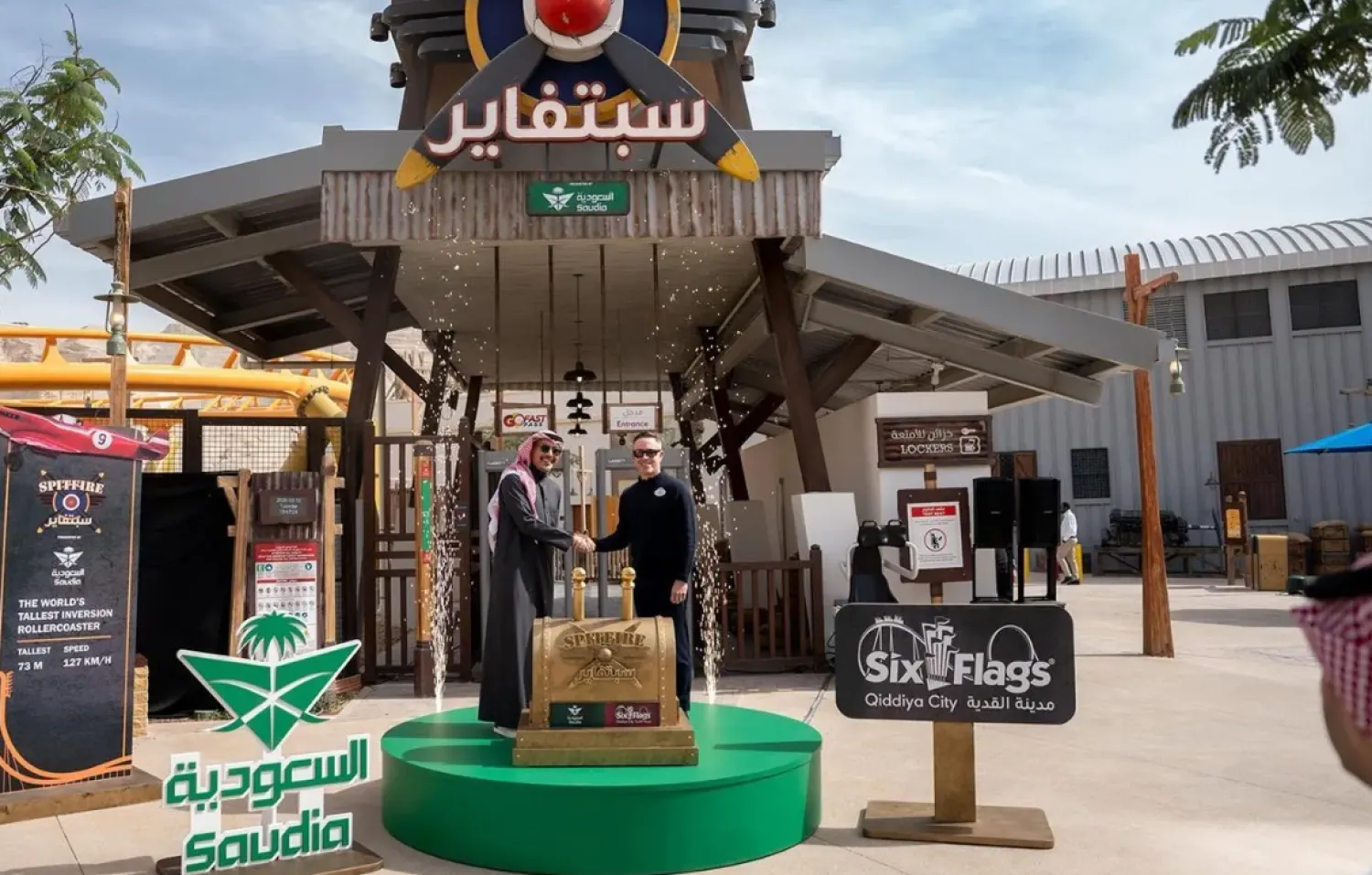
Saudia Signs Strategic Partnership Agreement with Six Flags and Aquarabia Qiddiya City

udia will develop special travel packages designed to enable visitors to experience world-class attractions - SPA
TT

Saudia Signs Strategic Partnership Agreement with Six Flags and Aquarabia Qiddiya City

udia will develop special travel packages designed to enable visitors to experience world-class attractions - SPA

Saudia Airlines has signed a five-year strategic partnership with Six Flags and Aquarabia Qiddiya City, becoming the official premier partner exclusively in the airline category.

As part of the partnership, Saudia will develop special travel packages designed to enable visitors to experience world-class attractions. The collaboration also brings the spirit of Six Flags and Aquarabia Qiddiya City to the skies through special aircraft branding across Saudia’s fleet, SPA reported. 

Chief Marketing Officer of Saudia Group Khaled Tash said in a press release: "Saudia is committed to supporting national development projects as part of its contribution to Vision 2030, aligned with our strategy to bring the world to the Kingdom. Partnerships of this scale with national partners play a key role in positioning Saudi Arabia as a leading global destination for entertainment and tourism."

Park President of Six Flags and Aquarabia Qiddiya City Brian Machamer added: "Our partnership with Saudia not only reflects a shared ambition to connect the Kingdom to the world through world-class entertainment experiences, but strengthens our ability to attract visitors from around the world and realize our vision of setting a new global benchmark for immersive, world-class theme park entertainment and reinforcing Saudi Arabia’s growing presence on the global tourism stage."

Six Flags Qiddiya City sets a new benchmark for exceptional entertainment regionally and globally. Spanning six iconic themed lands, the theme park takes visitors on an immersive journey across 28 rides and attractions designed to world-class standards. Beyond the scale and diversity of its offerings, Six Flags Qiddiya City stands out for pushing the boundaries of engineering and entertainment, featuring five exclusive, record-breaking rides that have redefined global benchmarks. Leading these innovations is Falcons Flight, the roller coaster that has captured global attention as the fastest, tallest, and longest in the world.

Aquarabia Qiddiya City delivers a distinctive aquatic entertainment experience, offering 22 rides and water attractions, along with a man-made river designed for both relaxation and family-friendly water fun. For guests seeking privacy and elevated comfort, Aquarabia features 91 luxury cabanas, positioning the destination as a fully integrated leisure offering that redefines water-based entertainment to the highest international standards.

Located in the Tuwaiq Mountains near Riyadh, Qiddiya City is an emerging destination bringing together entertainment, sports, and culture. Six Flags and Aquarabia Qiddiya City form part of its entertainment offering.