


Saudi Competition Authority Approves 116 Applications for Acquisition

Saudi Competition Authority Approves 116 Applications for Acquisition
TT

Saudi Competition Authority Approves 116 Applications for Acquisition

Saudi Competition Authority Approves 116 Applications for Acquisition

The Saudi General Authority for Competition (GAC) has initiated criminal proceedings against 24 establishments, processed 299 complaints, and approved investigations into 16 of them after detailed evaluation. The authority dismissed 252 complaints, while 31 cases remain under review.

Since the beginning of 2024, 16 establishments have submitted settlement requests to the authority. Additionally, GAC approved 147 economic concentration (mergers and acquisitions) requests during the first three quarters of the year, classified 74 as non-reportable, and is still reviewing 12 applications.

In an interview with Asharq Al-Awsat, Saad Al-Masoud, the GAC spokesperson, highlighted that settlement is a vital mechanism for ensuring sustainability by correcting violations of the Competition Law and its executive regulations. Such requests are accepted from establishments before criminal charges are initiated.

The Role of GAC

Al-Masoud explained that GAC oversees the implementation of the Competition Law, aimed at promoting fair competition, combating monopolistic practices, ensuring a wide array of high-quality, competitively priced goods and services, and encouraging innovation. The authority’s three main functions include safeguarding fair competition, enforcing regulations and monitoring markets.

The authority also evaluates economic concentration reports (mergers, acquisitions, and joint ventures), issuing necessary decisions. Since January, it approved 147 economic concentration applications, 74 deemed non-reportable, while 12 remain under review.

Economic Concentration Insights

According to Al-Masoud, acquisition requests represented the majority of approved applications, totaling 116 (79%). Joint ventures accounted for 27 applications (18%), with three additional dealership registration requests in the automotive sector (2%), and one merger application (1%).

Exemptions

The authority offers programs, including exemptions under specific conditions outlined in the Competition Law. Companies can request exemptions from Articles 5, 6, and 7 of the law if their actions improve market performance, enhance quality, or provide consumer benefits outweighing restrictions on competition. However, the exemption must not allow the exclusion of competitors from the market for any product, Al-Masoud remarked.

Monitoring and Investigations

The authority identifies potential violations through complaints from individuals, referrals from government entities, or proactive market studies. It investigates and reports findings to its board, which decides on appropriate actions. In 2023, GAC received 141 complaints, dismissing 98 due to reasons such as lack of jurisdiction, insufficient evidence, or no legal violation.

Settlements and Reconciliation Program

Settlement is a corrective mechanism offered to violating establishments before criminal proceedings. The GAC spokesperson said that in 2023, 36 settlement requests were submitted, while 16 were filed in 2024. GAC’s board approved their study, avoiding criminal prosecution for these entities.

The Reconciliation Program, another key tool, allows establishments to disclose anti-competitive agreements and receive immunity from penalties. Al-Masoud revealed that three establishments were granted immunity in 2023 and 2024.

Spreading Competition Awareness

The authority actively promotes fair competition by raising awareness and enhancing specialized knowledge. In 2024 alone, GAC organized 9 workshops with chambers of commerce across cities, 7 university engagements for educational outreach, 25 workshops with national committees, meetings with over 113 entrepreneurs and businesspeople.

Additionally, GAC participated in major exhibitions and conferences, speaking at four of them, to engage its target audience more effectively.

Enhancing Competition

GAC conducts sectoral studies to evaluate market structures and identify anti-competitive practices. These studies benchmark Saudi markets against international standards and best practices, using economic and legal analyses to address competition-related issues.

Al-Masoud said that in recent years, GAC has completed market studies to assess competition levels in Saudi Arabia, deriving lessons and recommendations aimed at fostering effective competition. These recommendations focus on implementing improvements to reduce the likelihood of anti-competitive behavior.
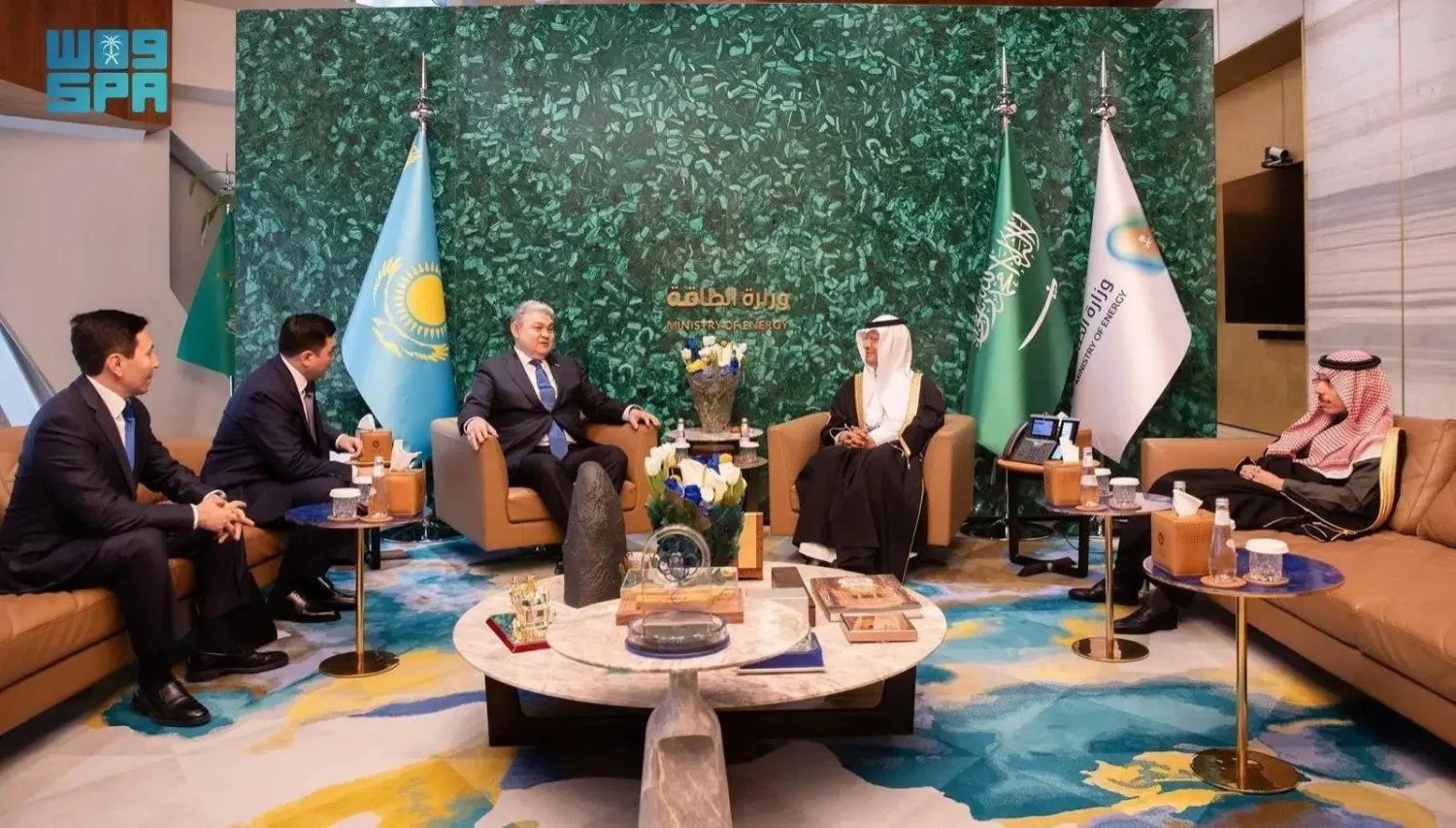



Saudi Arabia, Kazakhstan Agree to Establish Coordination Council

Saudi Minister of Energy Prince Abdulaziz bin Salman bin Abdulaziz receives Kazakhstan’s Foreign Minister Yermek Kosherbayev in Riyadh. (SPA)
TT

Saudi Arabia, Kazakhstan Agree to Establish Coordination Council

Saudi Minister of Energy Prince Abdulaziz bin Salman bin Abdulaziz receives Kazakhstan’s Foreign Minister Yermek Kosherbayev in Riyadh. (SPA)

Saudi Arabia and Kazakhstan agreed to establish a Saudi-Kazakh Coordination Council, reported the Saudi Press Agency on Tuesday.

Saudi Minister of Energy Prince Abdulaziz bin Salman bin Abdulaziz received in Riyadh Kazakhstan’s Foreign Minister Yermek Kosherbayev. Saudi FM Prince Faisal bin Farhan bin Abdullah and Minister of Energy of Kazakhstan Yerlan Akkenzhenov also attended the meeting.

The talks tackled the establishment of the coordination council, which will be chaired by the Saudi minister of energy and Kazakhstan’s foreign minister. The council reflects the two countries’ commitment to strengthening cooperation and expanding their bilateral partnership.

Prince Abdulaziz and Kosherbayev signed an agreement on the establishment of the council, which aims to boost coordination and consultation between the two countries and develop frameworks for cooperation across various sectors of mutual interest, elevating bilateral relations to broader levels.

Prince Abdulaziz and Kosherbayev discussed relations between their countries and ways to develop them further, especially in the energy field. They tackled opportunities for cooperation and investment in renewable energy and energy storage systems and discussed oil market developments.


Saudi-Qatari Partnership Paves Way for Logistics Corridors to Boost Regional Trade Efficiency 

The MoU was signed by Mawani President Eng. Suliman Almazroua and CEO of Qatar Ports Management Company Captain Abdullah Mohammed Al-Khanji. (QNA)
TT

Saudi-Qatari Partnership Paves Way for Logistics Corridors to Boost Regional Trade Efficiency 

The MoU was signed by Mawani President Eng. Suliman Almazroua and CEO of Qatar Ports Management Company Captain Abdullah Mohammed Al-Khanji. (QNA)

The Saudi Ports Authority (Mawani) and Qatar Ports Management Company signed on Tuesday a memorandum of understanding (MoU) aimed at boosting maritime and logistics cooperation between the two sides.

The agreement will contribute to the development of the ports sector, raising operational efficiency, and supporting regional and international trade flows.

The MoU was signed by Mawani President Eng. Suliman Almazroua and CEO of Qatar Ports Management Company Captain Abdullah Mohammed Al-Khanji. Qatari Ambassador to Saudi Arabia Bandar bin Mohammed Al Attiyah attended the signing ceremony.

The agreement reflects Saudi Arabia and Qatar’s commitment to building effective partnerships, exchanging expertise, establishing an organized framework for cooperation management, and developing joint investment opportunities in line with Saudi Vision 2030 and Qatar National Vision 2030.

The MoU outlines eight key areas of cooperation, including the exchange of best practices in port management and operations, and the study of opportunities for direct maritime and land connectivity between the ports of both countries to enhance trade flow efficiency.

It includes collaboration in logistics services, exploring the establishment of joint maritime corridors serving bilateral and regional trade, and assessing the feasibility of creating shared regional distribution centers.

In the fields of digital transformation and artificial intelligence, the two sides agreed to deepen cooperation on developing smart systems, data governance, and the unified maritime window, thereby boosting operational efficiency and keeping pace with technological advancements in the maritime sector.

The MoU places strong emphasis on maritime safety and environmental protection, including exchanging expertise in combating marine pollution and emergency response; developing joint maritime emergency plans; establishing an emergency communication line between the two countries; and cooperating to ensure compliance with international conventions, conduct joint exercises, and develop risk monitoring systems.

The cooperation also covers human capital development through joint training programs and field-exchange of expertise, as well as academic and research collaboration in maritime transport and logistics.

In terms of joint investment, both sides will study local and global investment opportunities in ports and related services and coordinate with the private sector to support these initiatives.

The MoU further includes cooperation in cruise tourism through enhanced maritime connectivity and joint promotion of Gulf cruise routes, as well as international and regional representation by coordinating positions in international maritime organizations and supporting joint initiatives, notably “Green Ports” and “Safe Sea Corridors.”

The agreement reflects the commitment of Mawani and Qatar Ports Management Company to advancing the ports sector and boosting its role as a key driver of trade and economic growth, contributing to Gulf integration and enhancing regional competitiveness in maritime and marine services.


Golden Halal Logo Launched at Makkah Halal Forum  

The Makkah Halal Forum 2026 was held from February 14 to 16. (SPA)
TT

Golden Halal Logo Launched at Makkah Halal Forum  

The Makkah Halal Forum 2026 was held from February 14 to 16. (SPA)

The Makkah Halal Forum 2026, which concluded on Monday, marked a pivotal milestone in the development of Saudi Arabia's halal industry, ushering in a new phase of structured institutional action.

This shift moves the sector beyond theoretical discourse toward a fully integrated implementation framework. It cements the Kingdom’s global leadership in halal and boosts the credibility of Saudi products in international markets.

The forum that began on February 14 witnessed the launch of a package of strategic enablers reflecting the maturity of the Saudi experience in the sector. Chief among them was the introduction of the Halal Academy as a specialized knowledge and training arm dedicated to building professional expertise and raising standards across the entire value chain.

The event also saw the unveiling of the Golden Halal logo, a high-level accreditation mark designed to provide global markets with a unified benchmark of trust, underscoring the Kingdom’s commitment to the highest standards of quality and compliance.

These initiatives signal a strategic shift that goes beyond the traditional concept of religious oversight. Instead, they frame halal as a comprehensive industrial and economic system that integrates Sharia compliance with high quality standards, advanced governance, and digital traceability. The approach is expected to boost the competitiveness of Saudi exports and facilitate their entry into global markets.

National success stories highlight the tangible impact of this transformation. CEO and founder of Roya Factory for Food Products Rasha Al Sanea noted that Saudi accreditation has evolved into a comprehensive quality certification that provides companies with a clear competitive edge abroad.

She noted that obtaining certification involves a rigorous process, including assessments of facility safety, manufacturing quality, and compliance with global standards ahead of final audits. These measures strengthen product reliability and boost readiness for international expansion.

The presence of international delegations and trade missions in Makkah on the sidelines of the forum helped accelerate expansion opportunities and open direct export channels to several markets, she added.

Pairing the Saudi Made logo with accredited halal marks, foremost among them the Golden Halal logo, enhances global consumer confidence and gives Saudi products a strong presence across diverse cultures and markets, she stressed.