Aramco, Gulf Cryo Cooperate in Testing Lower-carbon Hydrogen
The initiative will facilitate testing Aramco’s newly-developed technologies at pilot and pre-commercial scale. Photo: Aramco
Saudi Aramco has signed an agreement with Gulf Cryo, a regional leader of end-to-end industrial gases and decarbonization solutions in the MENAT region, to conduct testing of lower-carbon hydrogen and carbon capture & utilization technologies under Saudi Arabian climate conditions enabling future commercial deployment.
The agreement underscores Aramco’s desire to develop a lower carbon emission future through investing in research and technology development, to support business growth and meet global energy demand while reducing scope 1 and scope 2 GHG emissions to net-zero by 2050 from its wholly own operated assets.
The initiative will facilitate testing Aramco’s newly-developed technologies at pilot and pre-commercial scale. The testing and assessment will be conducted at Gulf Cryo's newly established Applications and Technologies Center (ATC) at King Salman Energy Park (SPARK), a press statement said Thursday.
Aramco’s senior vice president of Technology Oversight and Coordination (TOC), Ali A. Al-Meshari, said: “This collaboration is important in advancing our early stage technologies to the next phase of development, which will help create local ecosystem for accelerating technology deployment leveraging in-kingdom talent and infrastructure.”
As for Gulf Cryo Vice Chairman, Eng. Abdel Salam Al Mazro, he said that “the project will leverage the capabilities of our Center to deliver groundbreaking lower-carbon hydrogen and decarbonization solutions, tailored to the unique needs of Aramco.”
In addition to driving technological advancements in decarbonization, this collaboration supports Saudi Arabia’s strategy to enhance localization and build local capabilities. The facility is planned to be ready for commissioning by the end of 2025, the statement added.
Oil Rises on Middle East Supply Fears, US Inventory Drawdownshttps://english.aawsat.com/business/5331818-oil-rises-middle-east-supply-fears-us-inventory-drawdowns
A pumpjack operates after sunrise in Kern County, which has a long history of oil production, in California's 22nd Congressional District on October 16, 2026 near Bakersfield, California. (Getty Images/AFP)
Oil Rises on Middle East Supply Fears, US Inventory Drawdowns
A pumpjack operates after sunrise in Kern County, which has a long history of oil production, in California's 22nd Congressional District on October 16, 2026 near Bakersfield, California. (Getty Images/AFP)
Oil prices gained over $1 on Wednesday as escalating Middle East tensions fueled fears of supply disruptions, while falling US crude and product inventories lent support to the market.
Brent crude futures rose $1.59, or 1.5%, to $110.38 per barrel as of 0350 GMT. US West Texas Intermediate (WTI) crude gained $1.36, or 1.4%, to $99.18 per barrel.
Prices fell in the previous trading session after Iran's president discussed mediation efforts in a meeting with Pakistan's army chief in Tehran, though Brent hit a five-month high before easing.
"Oil prices have been having a bit of wild ride in the last couple of sessions," said Suvro Sarkar, head of energy research at DBS.
"We believe this is a mix of profit taking and optimistic hopes of a Qatar- or Pakistan-brokered deal, countered by the realization that any deal is still very distant and compounded further by inventory data from the American Petroleum Institute (API), which shows drawdowns continuing in the US for both crude and products."
Iran told Pakistan's army chief there would be no talks with Washington until its demands were met, Iranian media outlet Nournews reported on Tuesday, adding that a Qatari delegation had arrived in Tehran. There was no official confirmation of the reports.
Maritime security risks are also escalating. Shiptracker Kpler said on Monday that at least 18 vessel attacks were recorded over the past two weeks, while LSEG analysts warned Iran was targeting tankers well beyond the Strait of Hormuz, reaching into the Gulf of Oman and jeopardizing Gulf crude loadings and the ship-to-ship transfers supporting regional loadings.
The death toll from a Houthi attack on Yemeni government forces on Monday rose to 73 as fighting intensified.
In the US, two Energy Department officials said on Tuesday they were working with refiners around the world to boost fuel output as a diesel shortage has raised prices.
According to market sources citing API data, US crude stocks fell by 4.9 million barrels in the week ended October 16.
Gulf, UK Officials Press for Action on Free Trade Deal as Investment Opportunities Beckonhttps://english.aawsat.com/business/5331691-gulf-uk-officials-press-action-free-trade-deal-investment-opportunities-beckon
Gulf, UK Officials Press for Action on Free Trade Deal as Investment Opportunities Beckon
The UK-GCC Strategic Dialogue Forum was held in London on Tuesday. (UK-GCC Strategic Dialogue Forum)
Gulf and British officials on Tuesday called for swift action to translate a free trade agreement into tangible investments and economic gains after concluding negotiations, saying closer ties could help both sides navigate mounting challenges to global trade and supply chains.
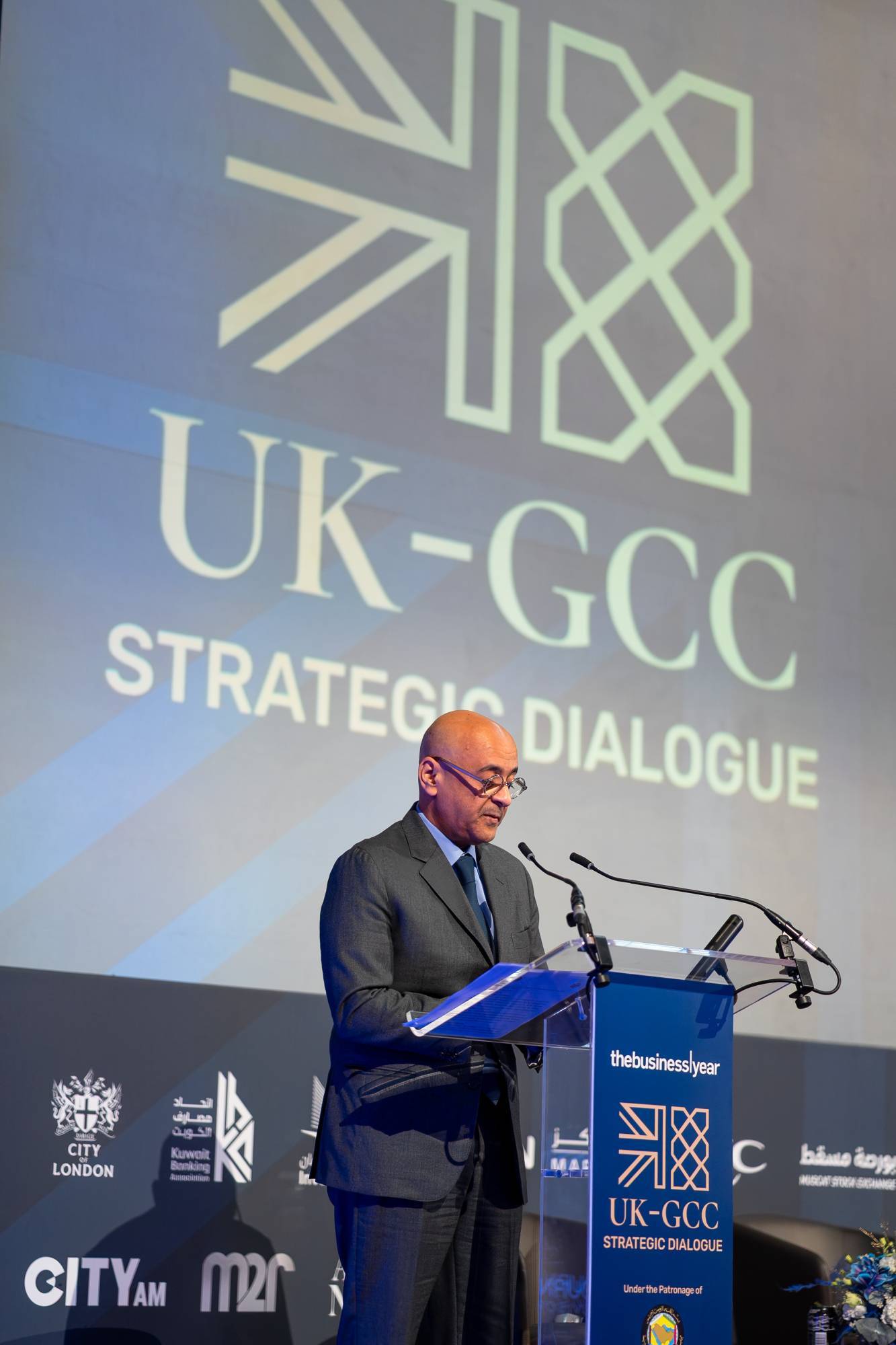
At the UK-GCC Strategic Dialogue Forum in London, GCC Secretary-General Jasem Mohamed Albudaiwi said the agreement's success would be measured by the joint projects, productive investments and economic opportunities it generates.
He urged business leaders and investors to move beyond the agreement itself and focus on implementation, investment and shared prosperity.
British Minister of State for Trade Anas Sarwar said Britain was working with its Gulf partners to bring the agreement to signing and implementation, but stressed that businesses need not wait for those formalities to expand cooperation.
He urged companies and investors to accelerate existing trade and investment partnerships rather than wait for the signing, legislative procedures and implementation to be completed.
Growing economic partnership
Trade between the GCC and Britain reached about $70 billion in 2025, making the six Gulf states collectively Britain's 10th-largest trading partner, Albudaiwi said.
The combined value of investment assets and liabilities between the two sides stood at around $643 billion in 2024.
Albudaiwi said the figures underscored the strength of Gulf-British economic relations and the scope for further expansion.
With a combined gross domestic product of about $2.4 trillion, the GCC ranks among the world's 10 largest economies, while its foreign trade exceeds $1.8 trillion, he added.
The conclusion of free trade negotiations marked a strategic step toward strengthening those ties by easing trade, encouraging investment and opening new opportunities for private businesses.
Under the agreement, tariffs are expected to be eliminated on more than 99% of GCC exports to Britain, potentially boosting non-oil exports, particularly aluminum, fertilizers and manufactured goods.
Albudaiwi said the deal would also strengthen the Gulf's position as a global logistics hub and help small and medium-sized enterprises expand their operations and access the British market.
But its significance extends beyond trade gains, he said. The agreement could lay the foundation for a long-term economic and investment partnership spanning advanced manufacturing, the digital economy, artificial intelligence, clean energy, sustainability, financial and investment services, education, food security and logistics.
Albudaiwi said cooperation in those sectors could shift Gulf-British relations beyond traditional trade toward deeper economic integration, driven by joint investments, technology and knowledge transfers, and stronger production capabilities.
Britain sees Gulf states as strategic economic allies
Sarwar said Britain regarded the GCC states as more than trading markets, describing them as strategic economic allies and friends.
He said choosing the Gulf for his first international visit outside Europe since taking office as trade minister reflected the importance Britain placed on the partnership, particularly amid uncertainty and mounting challenges.
Sarwar stressed the value of solidarity and friendship during difficult times, saying individuals, communities and countries needed to know they could rely on their partners.
He called for a mutually beneficial relationship built on stronger two-way investment and trade, with British companies expanding into Gulf markets and Gulf businesses increasing their presence in Britain.
Opportunities also extended beyond each other's markets to joint investments in third countries, an area Sarwar said offered considerable potential.
He identified aviation and related industries, financial and legal services, defense and security, artificial intelligence, energy, food industries, education and scientific research as sectors with scope for expanded cooperation.
In aviation, Sarwar highlighted Britain's expertise in aircraft manufacturing, engines and security systems, alongside efforts to attract more direct flights from the Gulf to Britain.
He also urged closer cooperation between Gulf and British educational and research institutions, combining Britain's academic and research expertise with Gulf capabilities in energy and investment.
Sarwar said the British prime minister had tasked him with making the United Kingdom the world's most connected economy.
Achieving that goal, he said, would require boosting exports and investment while ensuring the benefits of economic growth reached regions across Britain.
He added that Gulf investment was not confined to London or northern England but extended across different parts of the United Kingdom.
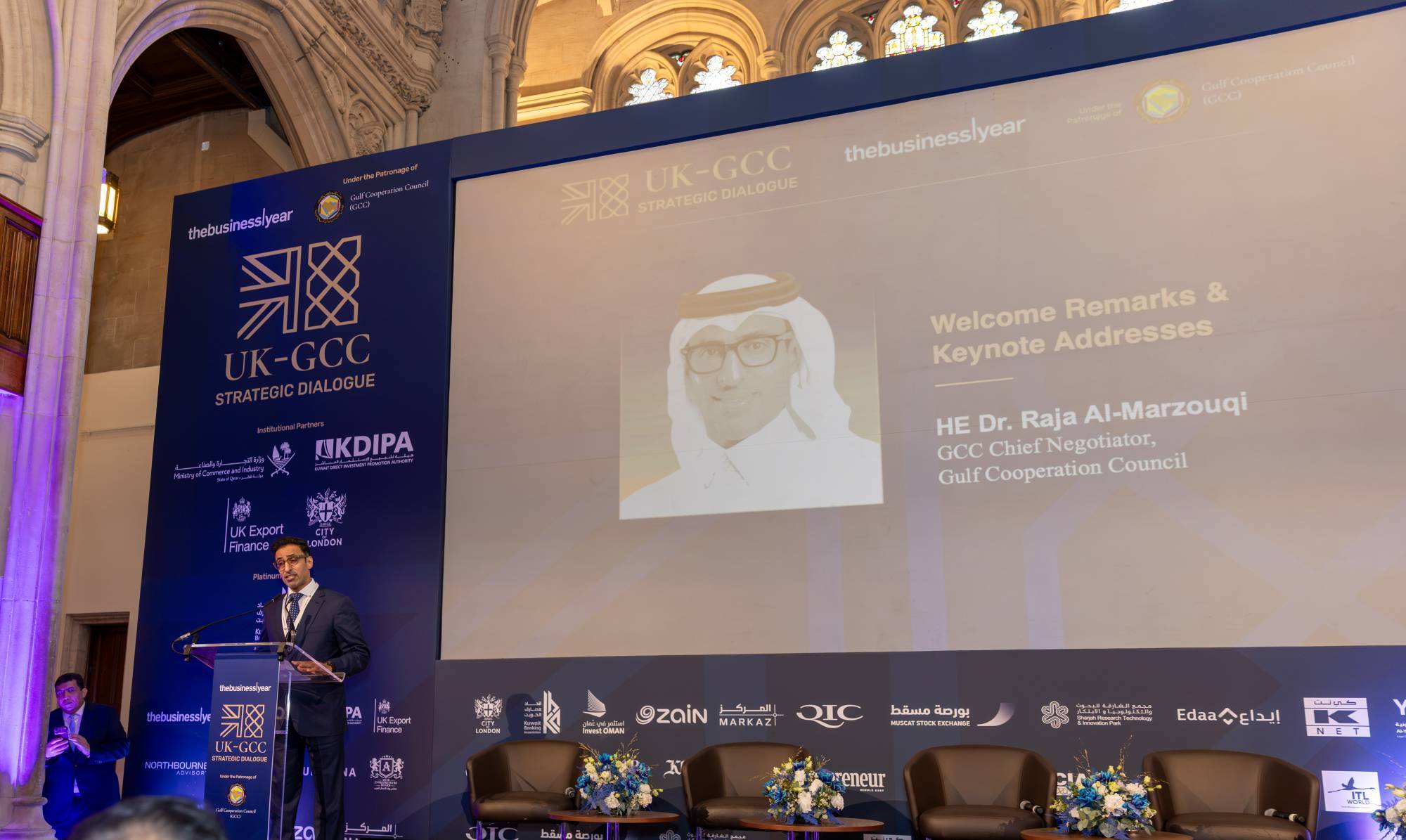
GCC chief negotiator and general coordinator for negotiations Raja Al-Marzouqi delivers his address at the forum. (UK-GCC Strategic Dialogue Forum)
More than 900 meetings over four years
GCC chief negotiator and general coordinator for negotiations Raja Al-Marzouqi said the two sides held more than 900 meetings over four years before reaching the wide-ranging agreement, adding that the negotiations were not easy.
He said the agreement sent a strong message to the international community about the resilience of trade and globalization at a time when the global economy faced challenges affecting the multilateral trading system.
Covering trade in goods and services, investment, rules of origin and digital trade, the agreement is expected to generate economic gains for both sides, according to economic assessments cited by Al-Marzouqi.
Britain's annual economic gains could reach approximately $4.7 billion, while the Gulf states are expected to benefit particularly from services, investment and improved productivity, he remarked.
Al-Marzouqi linked the agreement to the economic transformation underway across the GCC, where governments are seeking to move away from dependence on oil and public spending toward private sector-led growth.
That shift offered British businesses substantial opportunities to participate in projects and investments supporting Gulf economic diversification, he noted.
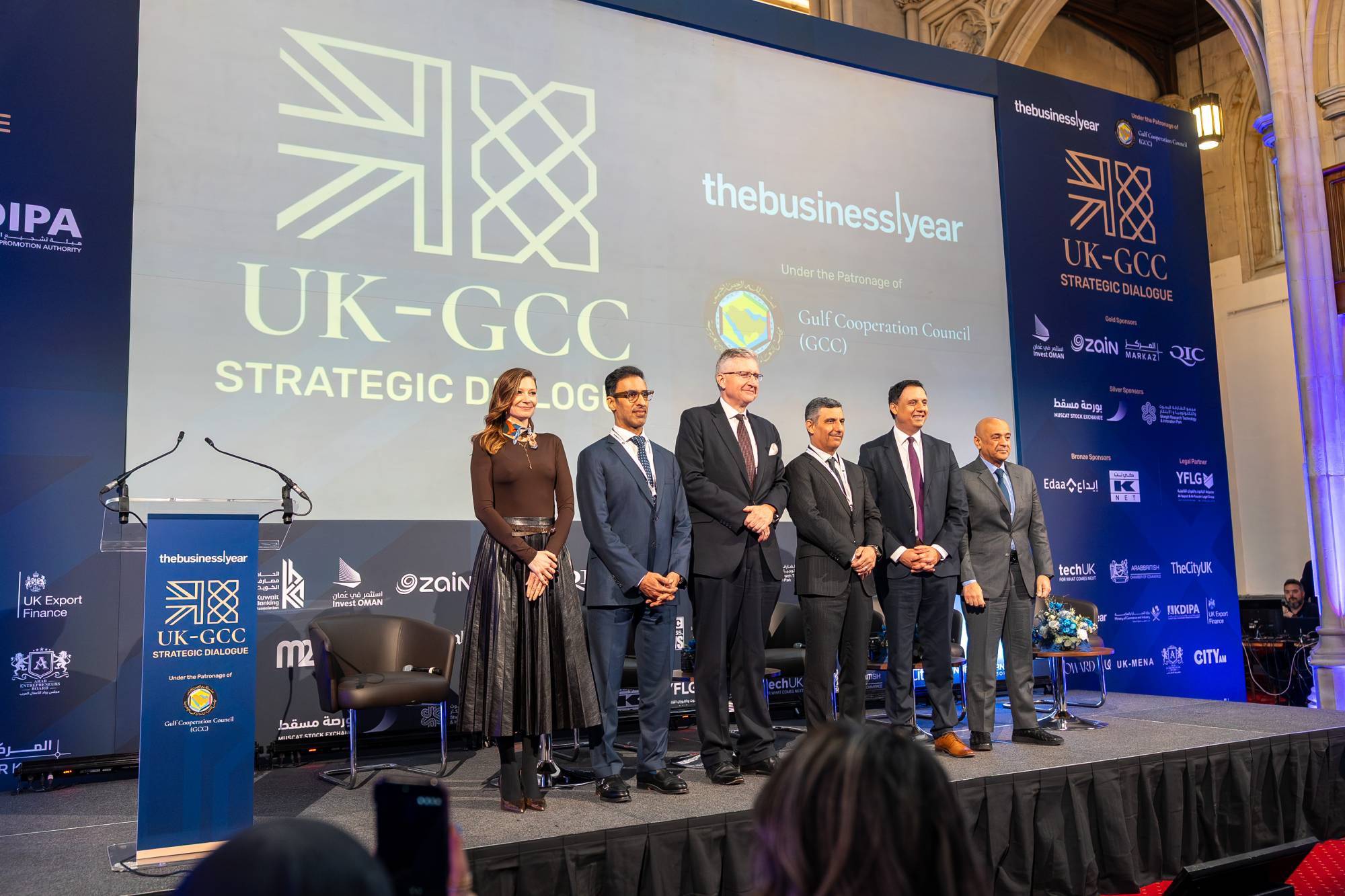
Gulf and British officials on Tuesday called for swift action to translate a free trade agreement into tangible investments at the UK-GCC Strategic Dialogue Forum in London. (UK-GCC Strategic Dialogue Forum)
From negotiations to results
Kuwait's Minister of State for Economic Affairs and Investment and Acting Minister of Commerce and Industry Abdulaziz Al-Marzooq said the next phase of Gulf-British relations should focus on deeper cooperation in trade, investment, technology, infrastructure, financial services and advanced industries.
He said the GCC offered Britain more than a market, given the Gulf states' established trade links with Asia and Africa.
Al-Marzooq urged both sides to move beyond dialogue and focus on implementation, turning available opportunities into projects, partnerships and measurable economic value.
He said the conclusion of free trade negotiations would give businesses greater certainty and the market access needed to turn investment intentions into action.
While participants agreed on the agreement's strategic importance, their remarks underscored that concluding negotiations was not the end of the process but the beginning of a new phase.
The focus now is on translating the agreement into tangible investments and projects while completing the formal procedures required for signing and implementation.
Saudi Stock Market Falls to Lowest Close Since April 2021https://english.aawsat.com/business/5331624-saudi-stock-market-falls-lowest-close-april-2021
Saudi Stock Market Falls to Lowest Close Since April 2021
A trader monitors stocks in Saudi Arabia (Reuters)
Saudi Arabia's benchmark Tadawul All Share Index (TASI) ended Tuesday's session down 1.7 percent, shedding 172 points to close at 9,952, its lowest closing level since April 2021, with total trading turnover reaching approximately SAR 3.8 billion.
The index fluctuated between an intraday low of 9,941 points and a high of 10,116 points. Since the beginning of the year, it has lost around 540 points, equivalent to 5.1 percent.
Several heavyweight stocks declined during the session, with Saudi Aramco falling 1 percent to SAR 25.48 and Al Rajhi Bank dropping by the same percentage to SAR 60.15.
Shares of Mobily, BSF and Yamama Cement fell between 1 and 3 percent, while Yansab dropped 7 percent.
SABIC Agri-Nutrients and Bank Albilad each declined 3 percent, closing at SAR 109.80 and SAR 21.47, respectively, following the release of their financial results for the third quarter of 2026.
Tihama led the session's decliners, falling 8 percent, while Azm topped the gainers with a 4 percent increase.
لم تشترك بعد
انشئ حساباً خاصاً بك لتحصل على أخبار مخصصة لك ولتتمتع بخاصية حفظ المقالات وتتلقى نشراتنا البريدية المتنوعة