



A crop grown in a small African village may never reach the market where it commands its true value. Between the farmer producing food and the investor seeking opportunities in agricultural supply chains lies a divide shaped by gaps in financing, technology, infrastructure and knowledge.
The International Fund for Agricultural Development (IFAD) wants to close that divide by turning small-scale producers from aid recipients into economic partners. That ambition is driving early discussions on closer cooperation between IFAD and Saudi Arabia, potentially linking agricultural investment to smallholder farmers in Africa and strengthening the role of financing and expertise in food systems.
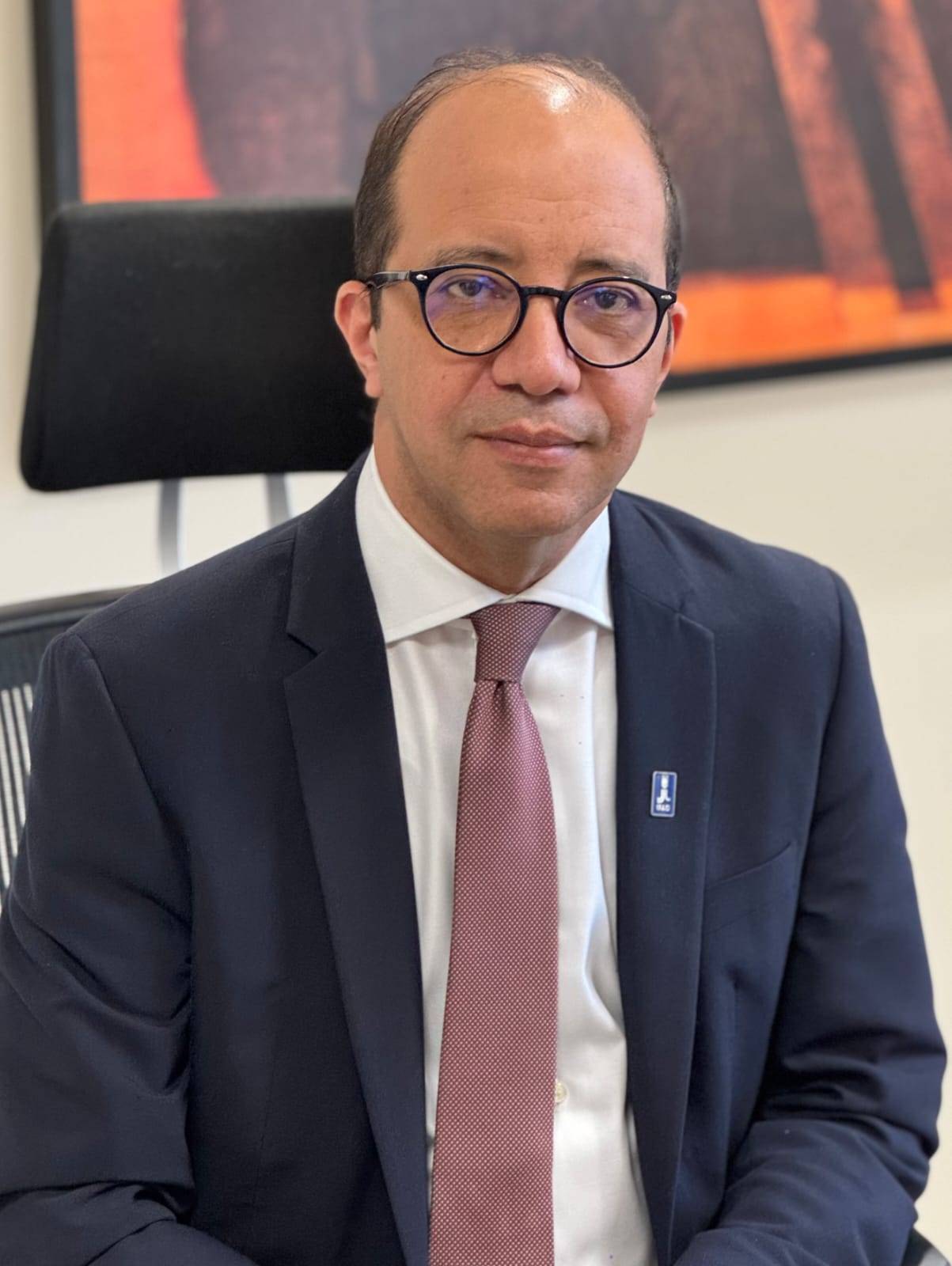
Naoufel Telahigue, IFAD's regional director for the Near East, North Africa, Europe and Central Asia, said the fund was seeking to deepen ties with Saudi Arabia and explore opportunities in agricultural investment and rural development, with a focus on connecting small-scale producers to markets.
Speaking to Asharq Al-Awsat on the sidelines of Cairo Water Week, Telahigue said discussions remained preliminary, centered on proposals and potential financing mechanisms.
An agreement has been signed with Saudi Arabia's Public Investment Fund (PIF), but no joint projects have been implemented, he said.
Bridging the gap between agreement and execution is where IFAD sees its role: providing technical expertise, strengthening value chains, organizing small-scale producers and connecting them to larger investments and markets.
The push comes as food security, water efficiency and agricultural innovation gain importance, aligning with Saudi Arabia's economic and development priorities.
Saudi Arabia: Beyond financing, toward market access
For IFAD, potential cooperation with Saudi Arabia is about more than money. It offers a chance to exchange expertise and build investment models that support rural development.
Telahigue said partnerships with donor countries, including Saudi Arabia, could combine knowledge-sharing, stronger agricultural value chains and tools such as contract farming to connect producers directly with markets.
The approach could give investors more organized, reliable supply chains while helping farmers secure financing, technology and buyers. But the proposed Saudi partnership remains an ambition rather than an operational joint investment program.
Turning it into reality, Telahigue said, would require financing, technical expertise and local institutions capable of organizing production. The objective is to ensure investment benefits reach farmers at the start of the food supply chain, rather than remaining concentrated in processing and trade.
The first mile: Where the real economic challenge begins
IFAD calls the point where small-scale producers operate the "first mile" of food systems. Long before crops reach factories, ports or supermarket shelves, farmers must make decisions that determine whether production will generate a viable income. They need water, seeds, energy and financing. Just as importantly, they need to know what they can sell, who will buy it and at what price.
Telahigue said the sharpest gaps lie at this first mile, where access to financing, technology, infrastructure and markets remains limited.
Closing them is central to IFAD's mission. With 180 member states, the fund operates both as an international financial institution and a specialized United Nations agency. Its goal is not simply to help farmers produce more, but to enable them to build viable, lasting businesses.
If farmers do not benefit financially from farming, it will not be sustainable, Telahigue stressed.
Egypt: Putting water efficiency to the test
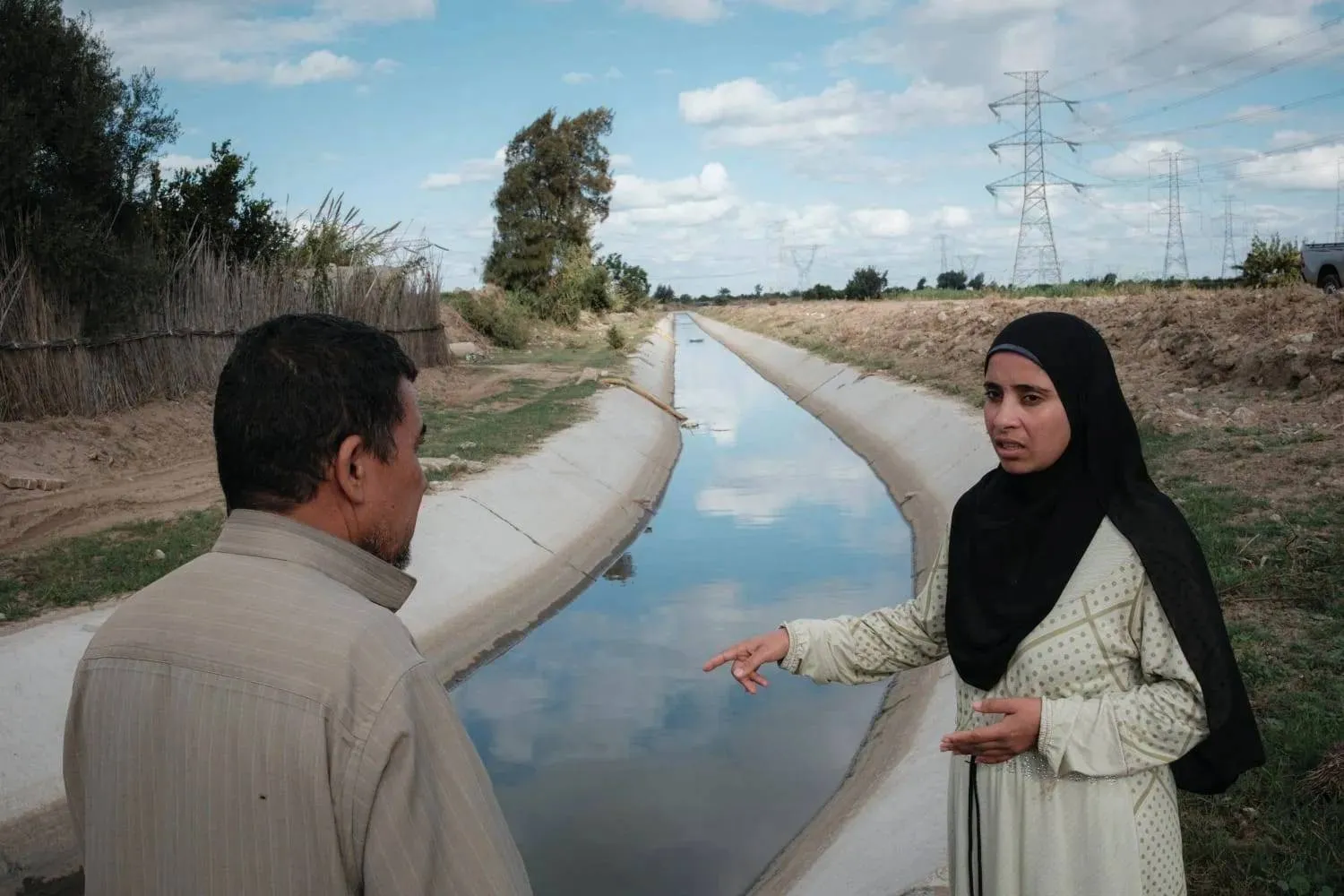
Along Egypt's Nile Valley, that approach is taking shape through investment in water management. In Beni Suef and Minya, the Climate-Resilient On-Farm Water Management in the Nile Valley project (CROWN) aims to support about 90,000 rural households and improve water management across 30,000 feddans of farmland.
IFAD is contributing $63 million to the project, while total investment stands at about 153 million euros, according to figures Telahigue cited during the interview.
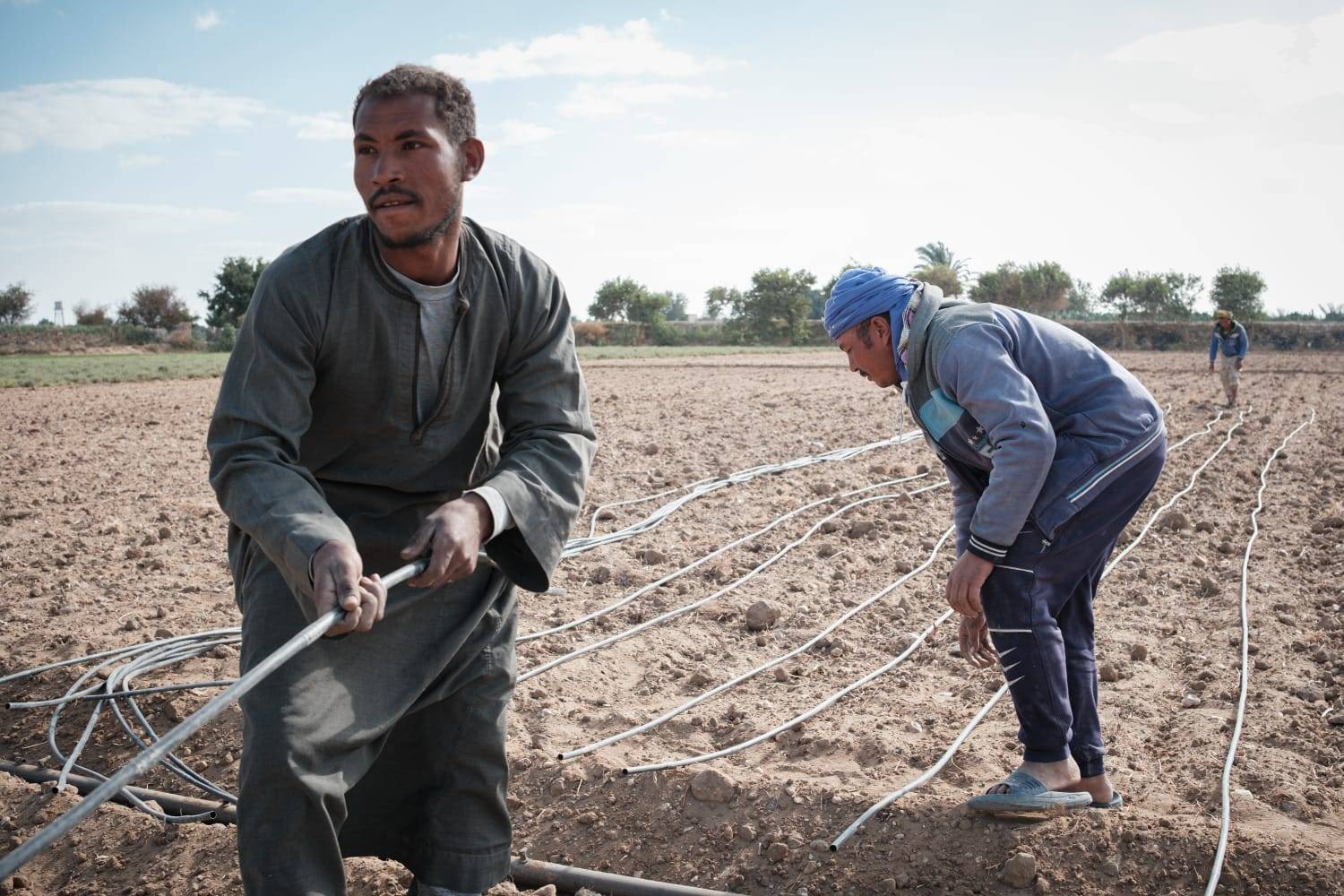
The project seeks to curb inefficient water use, raise agricultural productivity and incomes, and help farmers adapt to climate change. Work includes rehabilitating irrigation canals and distribution channels, improving water measurement and allocation, and upgrading irrigation systems through technologies including solar power and drip irrigation.
But infrastructure is only part of the equation. The project also aims to strengthen water user associations that will take responsibility for managing and maintaining irrigation systems after funding ends.
Telahigue said inadequate measurement of water consumption remained a challenge in some areas.
Without knowing how much water is being used, improving efficiency becomes harder. That makes investment in reliable data and local governance as important as investment in irrigation networks.
When projects end, what survives?
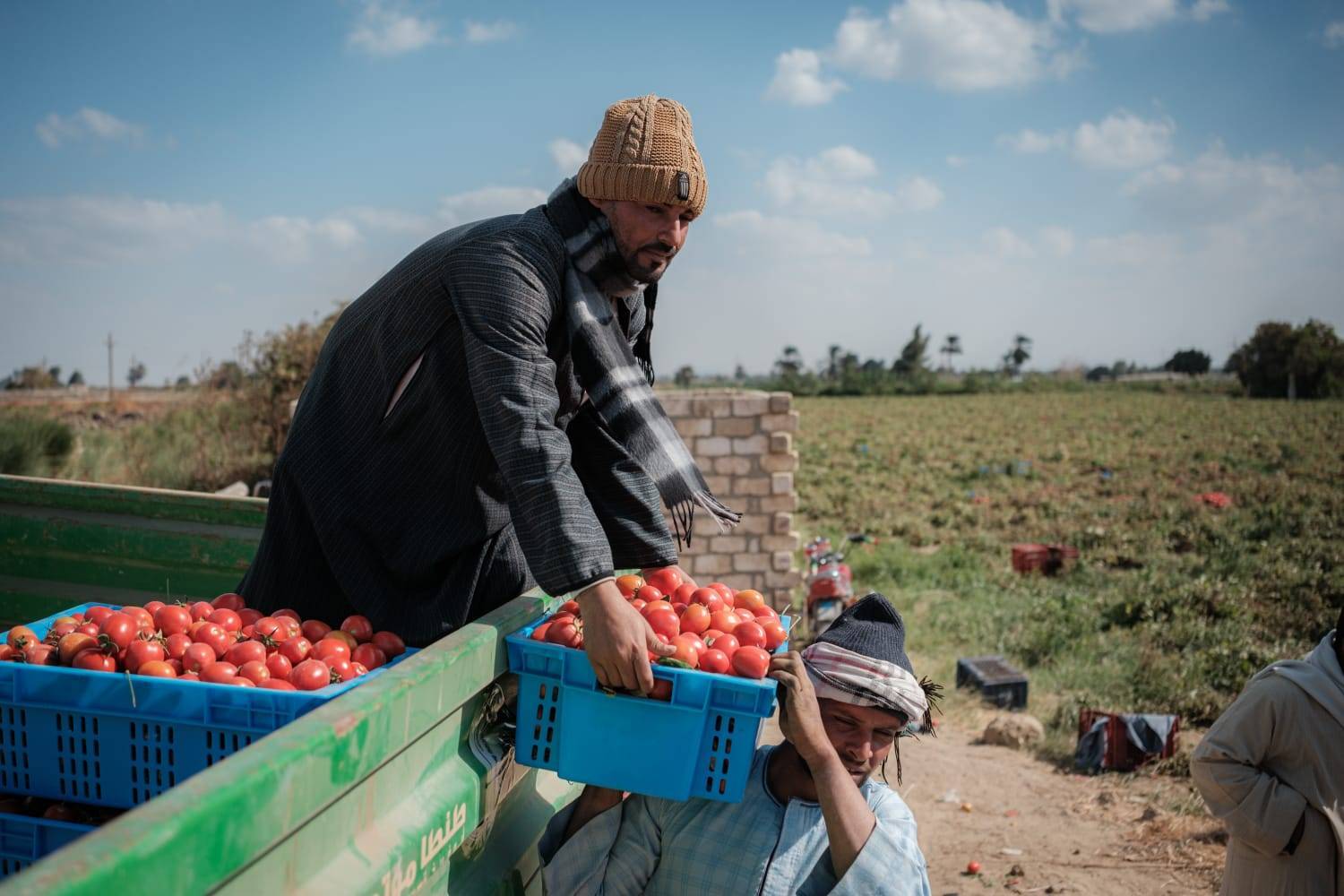
Another Egyptian initiative offers a test of whether agricultural development can outlast its funding. The Sustainable Agriculture Investments and Livelihoods Project (SAIL), nearing completion after more than a decade, has reached more than 40,000 rural households. It has strengthened 65 water user associations and provided more than 1,000 grants to women launching businesses.
The project has also supported farmer organizations, expanded access to rural financing and helped small-scale producers improve production and diversify their incomes.
But Telahigue said the true measure of success would come after the project ends. What matters is whether communities retain the institutions, skills and capacity to sustain what has been built.
A grant may help a rural woman start a business. Its lasting impact depends on whether that business survives and grows. Similarly, new irrigation infrastructure brings lasting economic value only if water user associations can operate and maintain it without permanent external support.
Egypt's deserts: More than 2,100 livelihood opportunities for women
In Egypt's desert communities, the challenge is not only producing more food but also protecting households against unpredictable conditions.
Through the Promoting Resilience in Desert Environments project (PRIDE), IFAD supports rainwater harvesting and land rehabilitation, with potential to expand innovative solutions such as small-scale desalination. The project has provided women with more than 2,100 livelihood support packages covering activities including livestock production and handicrafts.
The aim is to reduce dependence on a single source of income, so that a poor farming season or declining rainfall does not wipe out a household's livelihood.
Telahigue said countries facing similar climate pressures could benefit from exchanging such experiences.
He said IFAD was working with the Egyptian government to strengthen South-South cooperation, with a grant expected to support knowledge-sharing and the exchange of practical experience.
Sudan: Solar power keeps farms running through war
In Sudan, agricultural resilience faces an even harsher test.
Beyond drought and rising production costs, farmers must contend with war, displacement and economic disruption. Yet communities supported by the Sustainable Natural Resources and Livelihoods Program have continued farming despite the conflict.
Solar-powered irrigation has allowed farmers to cultivate their land as fuel prices climbed and diesel became harder to obtain.
In some project areas, local communities reported taking in internally displaced families seeking places where farming and basic economic activity remained possible.
Investments made before the war in renewable energy, natural resource management and local institutions have helped sustain livelihoods during the conflict.
For Telahigue, the lesson is clear: Resilience must be built before a crisis hits, not only after production collapses.
Yemen: Reclaiming land from destructive floods
In Yemen, seasonal floods have repeatedly stripped farmland of its topsoil, damaged agricultural land and undermined families' ability to produce food.
Through IFAD's Crisis Response Initiative, local communities have invested in soil and water conservation measures, including stone barriers to protect waterways and structures to rehabilitate watersheds. The work has reduced soil erosion, protected farmland and, in some locations, restored land previously lost to flooding.
For farmers, the impact goes beyond repairing environmental damage. It means recovering land that can once again produce food and income. The experience shows why agricultural investment in conflict-affected areas must also protect the natural resources on which local economies depend.
Sudan: Small savings open the door to credit
Access to formal banking can appear out of reach for smallholder farmers, especially in communities affected by conflict. Yet, closing that gap can begin with something as simple as collective savings.
In Sudan's Blue Nile state, the Livestock Marketing and Resilience Program supported women's savings and credit groups, including Al-Wifaq.
Members pooled their savings, borrowed within the group and then used those savings as collateral to secure financing from microfinance institutions. The arrangement helped women invest in livestock production and small businesses.
Syria: Building finance from the ground up
In Syria, the Integrated Livestock Development Project has expanded community-based financing mechanisms to reach more than 39,500 direct beneficiaries, 54% of them women. The mechanisms provided savings and microcredit services to rural households, particularly those headed by women.
The experiences in Sudan and Syria point to a shared lesson: Bridging the rural financing gap does not always begin with large banks. Sometimes it starts with trust, collective savings and the ability of communities to finance economic activity from within.
A $2 billion portfolio — and a far bigger financing challenge
IFAD's active portfolio across Telahigue’s region stands at about $2 billion, split roughly equally between the fund's own resources and co-financing.
Each dollar mobilized through donor contributions helps attract about six dollars in investment, he said. Yet the scale of demand, particularly for water infrastructure, still far exceeds available funding.
Asked how IFAD would spend an additional $1 billion, Telahigue said the largest share would likely go to infrastructure, with some directed toward credit lines to help producers expand their businesses and create jobs.
The precise priorities, however, would depend on individual governments' needs, whether water security, employment, productivity or food security.
Telahigue also stressed the role of public investment in attracting private capital. Investors are unlikely to enter areas without roads or reliable water supplies.
More crops, fewer resources: Can agriculture deliver both?
As climate pressures mount, increasing agricultural output is no longer enough to define success.
"If I increase production while depleting freshwater resources, what will I leave for the next generation?" Telahigue asked.
He called for agricultural systems capable of producing more with fewer resources, using efficient irrigation, drought- and salt-tolerant crops, and closer integration between crop and livestock production.
Artificial intelligence and early warning systems could also help predict crop risks and improve resource management, he said.
But technology cannot solve the problem alone. If small-scale producers cannot secure financing or reach markets, gains in productivity may not translate into sustainable livelihoods. That makes investment in knowledge, training and local organization just as important.
The final test: What remains after the money runs out?
As IFAD advances its 14th replenishment cycle, its priorities include stronger resilience to shocks, more jobs for young people and women, better market access, innovation and greater private-sector involvement.
From early discussions with Saudi Arabia to water management in Egypt, women's financing initiatives in Sudan and Syria, and farmland restoration in Yemen, the same question runs through IFAD's work. What happens after the investment is made?
Success is not simply a matter of delivering funding to rural communities. It depends on whether farmers can continue financing their businesses, local institutions can manage their resources, producers can reach markets and families can withstand the next crisis without losing their incomes.
Business as usual is no longer an option, Telahigue said.
In a region facing mounting pressures from water scarcity, food insecurity, energy challenges and conflict, the defining economic question is no longer how much food can be produced today. It is whether the communities that produce it can survive — and continue producing — tomorrow.


