EU, South American Trade Bloc Reach Giant Trade Deal

(L/R) Argentina's President Javier Milei, Uruguay's President Luis Lacalle Pou, European Commission President Ursula von der Leyen, Brazil's President Luiz Inacio Lula da Silva and Paraguay's President Santiago Pena pose for the family picture of the LXV Mercosur Summit in Montevideo on December 6, 2024. (Photo by Eitan ABRAMOVICH / AFP)
TT

EU, South American Trade Bloc Reach Giant Trade Deal

(L/R) Argentina's President Javier Milei, Uruguay's President Luis Lacalle Pou, European Commission President Ursula von der Leyen, Brazil's President Luiz Inacio Lula da Silva and Paraguay's President Santiago Pena pose for the family picture of the LXV Mercosur Summit in Montevideo on December 6, 2024. (Photo by Eitan ABRAMOVICH / AFP)

The European Union reached a blockbuster free trade agreement Friday with Brazil, Argentina and the three other South American nations in the Mercosur trade alliance, capping a quarter-century of on-off negotiations even as France vowed to derail the contentious accord.
Provided it is ratified, the accord would create one of the world's largest free trade zones, covering a market of 780 million people that represents nearly a quarter of global gross domestic product, The Associated Press reported.
The accord's proponents in Brussels say it would save businesses some $4.26 billion in duties each year, slashing red tape and removing tariffs on products like Italian wine, Argentine steak, Brazilian oranges and German Volkswagens.
Its critics in France, the Netherlands and other countries with big dairy and beef industries say the pact would subject local farmers to unfair competition and cause environmental damage.
From Uruguay, the host of the Mercosur summit, European Commission President Ursula von der Leyen hailed the deal as a “truly historic milestone" at a time when global protectionism is on the rise.
“I know that strong winds are blowing in the opposite direction, toward isolation and fragmentation, but this agreement is our clear response,” von der Leyen said, an apparent reference to US President-elect Donald Trump's vows to protect American workers and goods.
Under pressure from his country's powerful and vocal farming lobby, French President Emmanuel Macron said Friday the deal remained “unacceptable” as it stands and stressed that governments have not yet seen “the final outcome” of negotiations.
“The agreement has neither been signed nor ratified. This is not the end of the story,” Macron's office said, adding that France demands additional safeguards for farmers and commitments to sustainable development and health controls.
For France to block the deal, it would need the support of three or more other EU member states representing at least 35% of the bloc's population.
The French government, which has been rallying countries to oppose the pact, named Austria, Belgium, Italy, the Netherlands and Poland as other wary states that share French concerns about the deal.
To take effect, the pact must also be endorsed by the European Parliament.
In remarks aimed at her “fellow Europeans,” and perhaps in particular French skeptics, von der Leyen promised the accord would boost 60,000 businesses through lower tariffs, streamlined customs procedures and preferential access to raw materials otherwise supplied by China.
“This will create huge business opportunities,” von der Leyen said.
She then turned to address European farmers who fear that an influx of cheap food imports will jeopardize their livelihoods. South American countries do not have to adhere to the same standards for animal treatment and pesticide use.
“We have heard you, listened to your concerns, and we are acting on them,” von der Leyen said.
Outrage over environmental rules, rising costs and unregulated imports has unleashed massive farmers’ protests across the continent over the past year.
Leaders on both sides of the Atlantic who long have pushed for the deal praised the announcement Friday, welcoming the results as a boon for export industries.
It marks the first major trade agreement for Mercosur, which is comprised of Argentina, Brazil, Uruguay, Paraguay and, newly, Bolivia. The bloc had previously only managed to conclude free-trade deals with Egypt, Israel and Singapore.
“An important obstacle to the agreement has been overcome,” said Chancellor Olaf Scholz of Germany, where the nation's vaunted car industry is poised to profit.
From Spain, Prime Minister Pedro Sánchez called the agreement “an unprecedented economic bridge."
At the Mercosur summit in Uruguay’s capital of Montevideo, Brazil's President Luiz Inacio Lula da Silva praised “a modern and balanced text which recognizes Mercosur’s environmental credentials."
“We are securing new markets for our exports and strengthening investment flows,” he said.
The Brazilian Trade and Investment Promotion Agency said it expects the pact to boost the nation's Europe-bound exports by $7 billion.
Libertarian President Javier Milei of Argentina described the accord as aligning with his free market principles. Argentines are excited about selling more beef and agricultural products in the EU.
The deal is the product of 25 years of painstaking negotiations, dating back to a Mercosur summit in Rio de Janeiro in 1999. Talks collapsed over differences in economic priorities, regulatory standards and agricultural policies. The rise of protectionist tendencies also repeatedly upended hopes.
Momentum picked up in 2016, as former President Trump imposed harsh tariffs on Europe. At the same time, market-friendly governments came to power in South America's biggest economies, Brazil and Argentina, which had been closed for years.
In June 2019, negotiators announced a deal that included provisions for tariff reductions and commitments to environmental standards.
But it was never implemented. In Brazil, the region's economic powerhouse, right-wing former President Jair Bolsonaro in Brazil, presided over record levels of deforestation in the Amazon, prompting EU governments to demand tougher sustainability criteria. In Argentina, a new left-wing protectionist government opposed the deal.
But things picked up as the region's politics shifted again in 2023. Brazil's President Lula rode to power on pledges to rein in illegal logging, soothing concerns that the pact could accelerate deforestation. Argentina's Milei is working to open the nation's notoriously closed and crisis-stricken economy.
But if past EU trade agreements are any indication, ratification could take years.
"We celebrate it, but it's still far from reality,” Milei said of the accord.
In 2016, the EU and Canada signed a pact, known as the Comprehensive Economic and Trade Agreement, or CETA, but the approval process is still lumbering along.
Germany’s parliament only signed off on that pact two years ago, and the French Senate rejected it in March this year.
“Anyone with any memory is skeptical," said Brian Winter, a vice president of the New York-based Council of the Americas. “They have trotted out leaders and declared victory and celebrated, and yet there always seems to be a hitch.”



Saudi Arabia Unifies Competitiveness, Business Under Agile Governance

A beneficiary looks at a brochure for the Saudi Business Center (Asharq Al-Awsat)
TT

Saudi Arabia Unifies Competitiveness, Business Under Agile Governance

A beneficiary looks at a brochure for the Saudi Business Center (Asharq Al-Awsat)

Saudi Arabia is moving ahead with restructuring its institutional framework to keep pace with the speed of economic transformation after the Cabinet decided to merge the National Competitiveness Center and the Saudi Business Center under the umbrella of the Saudi Center for Competitiveness and Business.

The move reshapes the business environment, accelerates reforms and strengthens governance to support a more attractive economy.

Commerce Minister Dr. Majid Al-Qasabi said following the Cabinet decision that the merger represents a pivotal regulatory step reflecting a strategic direction toward enhancing institutional integration, improving the efficiency of monitoring business environment challenges and speeding up reforms to facilitate doing business.

The step supports private sector empowerment and contributes to boosting the Kingdom’s competitiveness.

According to several specialists, the decision is not merely a cosmetic change, but a unification of direction and intensification of efforts toward a single goal: a more efficient, faster and globally competitive investment environment.

They said the merger reshapes the business landscape and accelerates reforms in the Kingdom.

Unifying the track

The move comes as the Kingdom continues restructuring its institutions to match the pace of transformation, most recently by merging the two centers to serve entrepreneurs and foreign investors alike in terms of efficiency, speed and competitiveness.

Specialists told Asharq Al-Awsat that the step is distinctly strategic and reflects the Kingdom’s adoption of “agile governance.”

They said merging the National Competitiveness Center with the Saudi Business Center is not just a change of name, but a unification of direction and consolidation of efforts to serve one objective: a global investment environment.

Institutional integration

Shura Council member Fadl bin Saad Al-Buainain told Asharq Al-Awsat that there is a close link between competitiveness and business, noting that competitiveness outcomes ultimately serve economic activities through support, incentives, facilitation and addressing challenges.

Al-Buainain said the decision to merge the National Competitiveness Center and the Saudi Business Center under the name Saudi Center for Competitiveness and Business aims to enhance institutional integration by reorganizing and combining two independent entities.

He added that the step will improve the quality and alignment of outputs, help achieve competitiveness targets and support the business sector simultaneously.

It will also enhance work efficiency, enable direct identification of challenges without the need to refer them to another entity, and accelerate completion, which in itself is a strategic objective that strengthens institutional efficiency, boosts the Kingdom’s competitiveness and supports the business sector.

Corrective decisions

Al-Buainain described the merger as a healthy regulatory process that contributes to reducing costs, focusing efforts and ensuring high-quality outputs aligned with strategic targets.

He stressed that the move followed a considerable period of independent operation and performance measurement before the merger decision was taken based on administrative and executive considerations.

He added that continuous review is a key feature of government work, enabling corrective strategic decisions that achieve overall benefit.

The step could mark the beginning of merging other interrelated government entities across sectors and services, contributing to more dynamic operations, faster completion, higher-quality outputs and better handling of challenges.

Shared factors

Osama bin Ghanem Al-Obaidi, adviser and professor of international commercial law, told Asharq Al-Awsat that the decision comes at an ideal time to achieve the goals of Vision 2030 by unifying efforts, simplifying procedures and creating a more efficient and globally competitive business environment.

Al-Obaidi said several shared factors made the merger a logical step, most notably improving the business environment, supporting the private sector, working with government entities to develop regulations, linking with competitiveness indicators, supporting economic transformation and implementing reforms, as well as relying on studies and economic analysis.

He added that the core common factor was that both entities were working along nearly the same axis of raising the competitiveness of the Saudi economy and facilitating doing business, albeit from complementary angles, which explains their consolidation into a single entity.


IMF Says Syria Ended 2025 with a Small Budget Surplus

The International Monetary Fund logo is seen outside the headquarters building in Washington, US September 4, 2018. REUTERS/Yuri Gripas/File Photo
TT

IMF Says Syria Ended 2025 with a Small Budget Surplus

The International Monetary Fund logo is seen outside the headquarters building in Washington, US September 4, 2018. REUTERS/Yuri Gripas/File Photo

The International Monetary Fund said on Wednesday that the Syrian government ended 2025 with a small budget surplus and that its revenue projections were ambitious but feasible, as the agency's staff concluded a visit to Damascus.


"Syria’s economy continues to show signs of recovery, with activity increasing at an accelerating pace as consumer and investor sentiment continues to improve," the IMF said in its statement.


Oil Hovers Near Seven-month Highs Ahead of US-Iran Talks

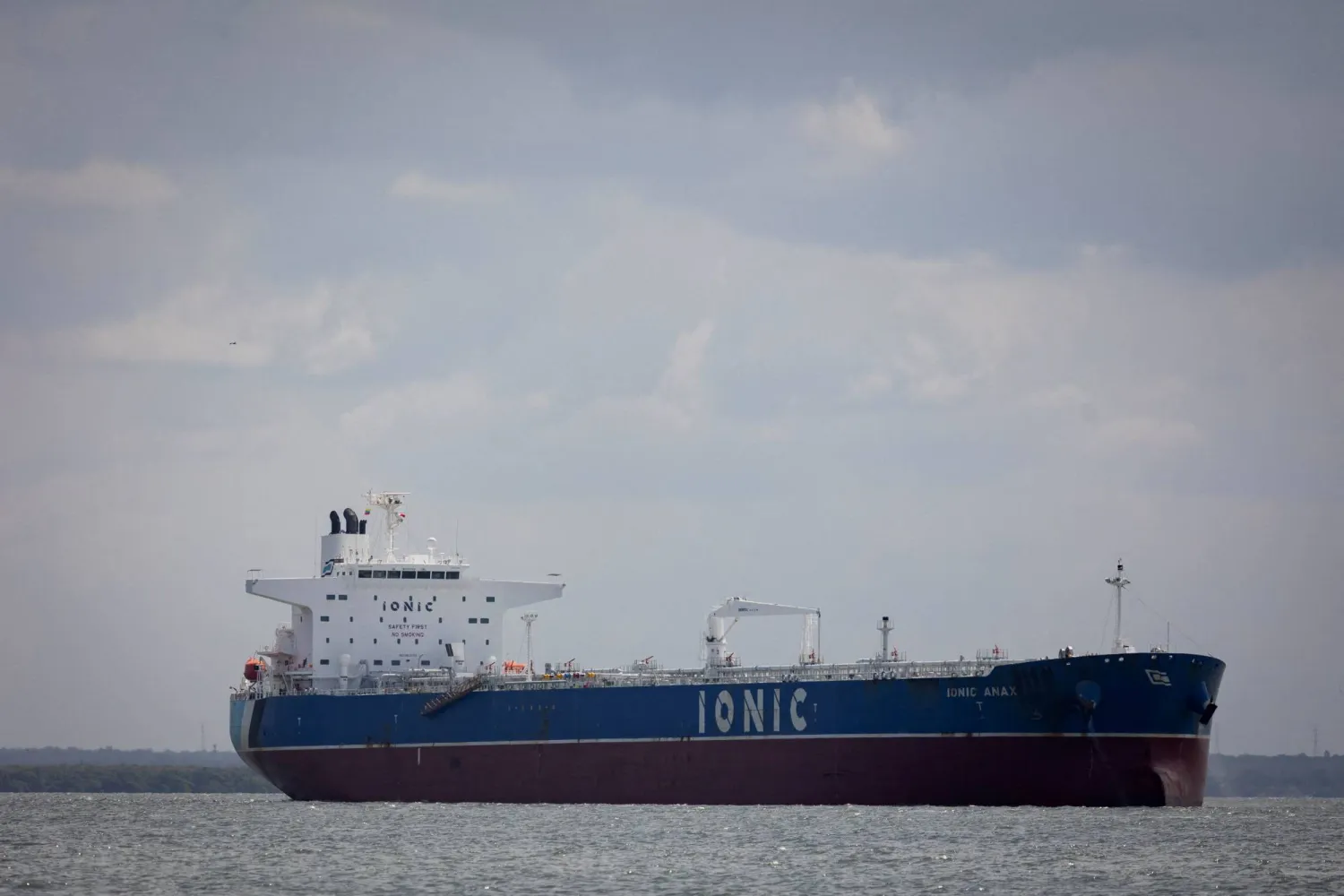
FILE PHOTO: Chevron-chartered Ionic Anax oil tanker sits anchored in Lake Maracaibo, near the Bajo Grande crude port operated by state oil company PDVSA, in Maracaibo, Venezuela, February 9, 2026. REUTERS/Marco Bello/File Photo
TT

Oil Hovers Near Seven-month Highs Ahead of US-Iran Talks

FILE PHOTO: Chevron-chartered Ionic Anax oil tanker sits anchored in Lake Maracaibo, near the Bajo Grande crude port operated by state oil company PDVSA, in Maracaibo, Venezuela, February 9, 2026. REUTERS/Marco Bello/File Photo

Oil prices edged higher on Wednesday, as investors weighed the threat of military conflict between the US and Iran that could disrupt supply and a big build in US crude inventories.

Brent futures were up 6 cents at $70.83 per barrel at 0957 GMT. WTI futures rose 4 cents to $65.67 per barrel.

Brent prices reached their highest since July 31 on Friday, while WTI hit its highest since August 4 on Monday, as the US positioned military ‌forces in ‌the Middle East to try to compel Iran to ‌negotiate ⁠an end to ⁠its nuclear and ballistic missile program.

An extended conflict could disrupt supplies from Iran, the third-biggest crude producer in the Organization of the Petroleum Exporting Countries, and other countries in the key Middle East producing region.

Supporting oil prices, US President Donald Trump briefly laid out his case for a possible attack on Iran in his State of the Union speech on Tuesday, saying he would ⁠not allow a country he described as the world's biggest ‌sponsor of terrorism to have a nuclear ‌weapon.

"This uncertainty means the market will continue to price in a large risk premium ‌and remain sensitive to any fresh developments," ING commodities strategists said on ‌Wednesday.

US envoys Steve Witkoff and Jared Kushner are due to meet an Iranian delegation for a third round of talks on Thursday in Geneva.

Iran's Foreign Minister Abbas Araqchi said on Tuesday that a deal with the US was "within reach, but ‌only if diplomacy is given priority.”

"Trump has warned that without a deal, there will be 'very bad consequences'. Whether (Iran's) concessions ⁠will meet ⁠the US's 'zero enrichment' red line remains to be seen," Tony Sycamore, IG market analyst, said in a note.

Amid the heightened tensions, Iran has accelerated talks to purchase Chinese anti-ship cruise missiles, according to Reuters sources, which could target the US naval forces that have assembled near the Iranian coast.

While geopolitical tensions have supported prices, the market is also contending with concerns of large inventory gains as global supply exceeds demand.

According to market sources, the American Petroleum Institute late on Tuesday reported a massive increase in US oil stockpiles of 11.43 million barrels in the week ended February 20.