


China's Xi Warns 'No Winners' in Trade War with US

A man rides a bicycle past a giant screen showing news footages of Chinese President Xi Jinping attending a Chinese Communist Party politburo meeting, in Beijing, China December 9, 2024. REUTERS/Tingshu Wang
TT

China's Xi Warns 'No Winners' in Trade War with US

A man rides a bicycle past a giant screen showing news footages of Chinese President Xi Jinping attending a Chinese Communist Party politburo meeting, in Beijing, China December 9, 2024. REUTERS/Tingshu Wang

Chinese President Xi Jinping warned Tuesday that there would be "no winners" in a trade war with the United States and vowed the country would hit its growth goals for the year.

Former US president Donald Trump -- who returns to the White House next month -- unleashed a grueling trade war with China during his first term in office, lambasting alleged intellectual property theft and other "unfair" practices.

He has pledged to impose even higher tariffs on China after taking office on January 20, as Beijing is grappling with a shaky post-pandemic economic recovery.

"Tariff wars, trade wars, and technology wars go against historical trends and economic rules, and there will be no winners," Xi said of China-US relations while meeting several heads of multilateral financial institutions in Beijing, according to state broadcaster CCTV.

"China is willing to maintain dialogue with the US government, expand cooperation, manage differences and promote the development of China-US relations in a stable, healthy and sustainable direction," AFP quoted Xi as saying.

Beijing is targeting annual growth this year of around five percent, despite sluggish domestic consumption, high unemployment and a prolonged crisis in the vast property sector.

Xi also said during Tuesday's meeting that China had "full confidence" in achieving its 2024 growth goal, state media reported.

His remarks came as official data showed the country's exports rose last month at a slower rate than expected while imports shrunk further, underscoring the challenges China is still facing.

The latest reading reinforced the need for more support a day after top officials pledged to bolster stuttering growth.

Overseas shipments this year have represented a rare bright spot in the Chinese economy, with domestic spending mired in a slump and persistent woes in the property sector spooking investors.

Exports jumped 6.7 percent on-year to $312.3 billion last month, China's General Administration of Customs said.

But the figure was much slower than the 8.7 percent anticipated by economists in a Bloomberg survey and well down from the 12.7 percent leap in October, which was the strongest in more than two years.

The data showed exports grew 5.4 percent on-year in January-November.

"China's exports were perhaps the biggest upside surprise for the economy in 2024," wrote Lynn Song, chief economist for Greater China at ING.

This is "one of the main reasons China is set to achieve its 'around five percent' growth target" for this year, he added.

Analysts have suggested the recent surge in shipments is because foreign buyers fearing another trade standoff were racing to beat any possible tariffs on Chinese goods by Trump.

"We could see some frontloading of exports in the coming few months but momentum is likely to soften after this is done, unless the outcome of tariff negotiations is surprisingly positive," wrote Song.

The 3.9 percent drop in imports last month extended a slide in the previous month -- and was much worse than the 0.9 percent rise forecast -- as domestic demand continues to be dampened by lacklustre consumer spending.

The readings come as investors closely watch signals from Chinese leaders, who are convening this week in Beijing for a series of key meetings on economic planning for the coming year.

The Politburo, China's top decision-making body, on Monday urged "vigorous" support for consumption and a loosening of monetary policy in 2025.

But observers are still waiting for the announcement of specific policies, particularly any measures to significantly bolster consumption.

Zhang Zhiwei, president and chief economist at Pinpoint Asset Management, said in a note that another key meeting on economic policy -- expected to take place in the coming days -- could "shed more light, particularly on the fiscal policy front.”
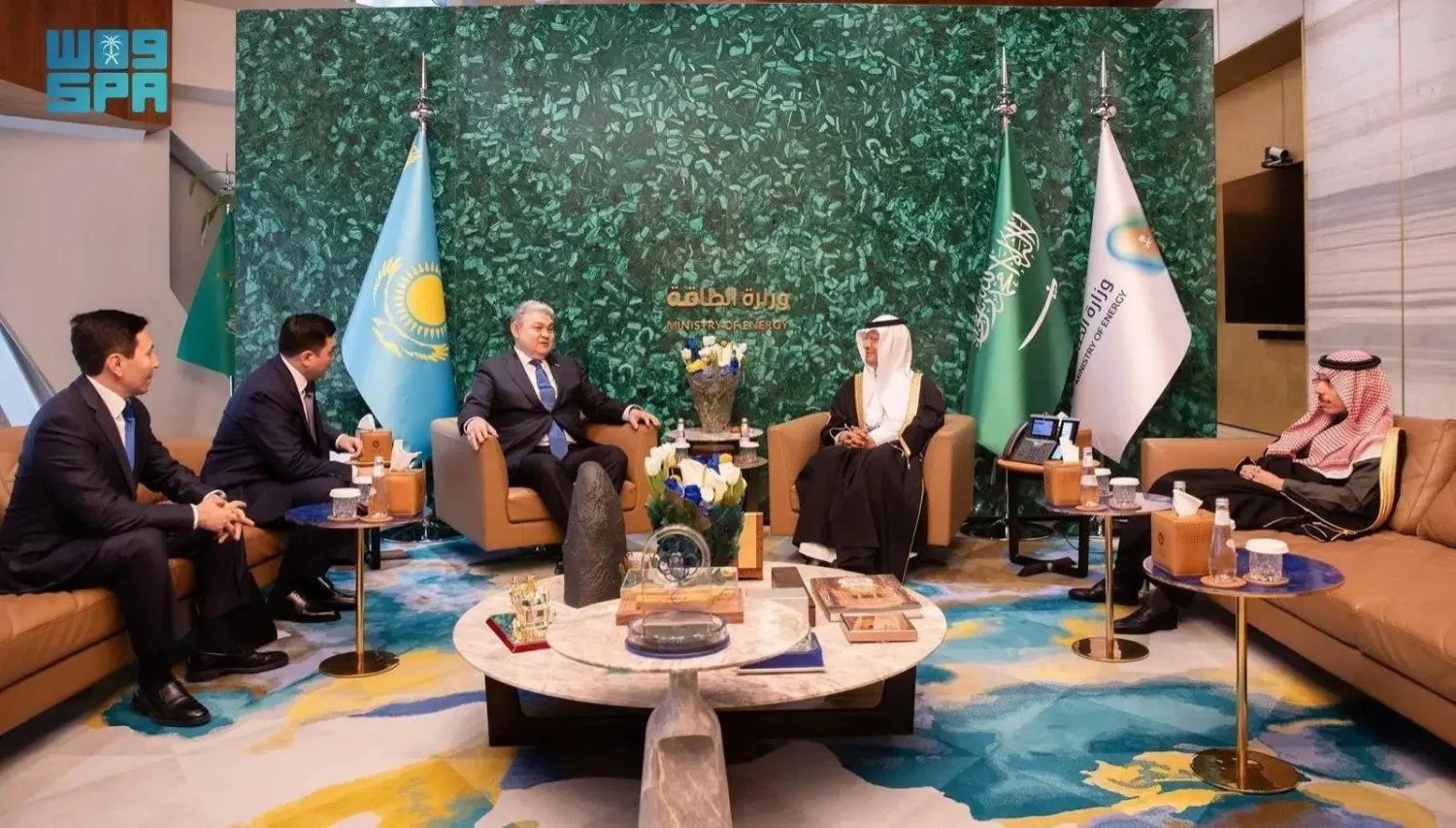



Saudi Arabia, Kazakhstan Agree to Establish Coordination Council

Saudi Minister of Energy Prince Abdulaziz bin Salman bin Abdulaziz receives Kazakhstan’s Foreign Minister Yermek Kosherbayev in Riyadh. (SPA)
TT

Saudi Arabia, Kazakhstan Agree to Establish Coordination Council

Saudi Minister of Energy Prince Abdulaziz bin Salman bin Abdulaziz receives Kazakhstan’s Foreign Minister Yermek Kosherbayev in Riyadh. (SPA)

Saudi Arabia and Kazakhstan agreed to establish a Saudi-Kazakh Coordination Council, reported the Saudi Press Agency on Tuesday.

Saudi Minister of Energy Prince Abdulaziz bin Salman bin Abdulaziz received in Riyadh Kazakhstan’s Foreign Minister Yermek Kosherbayev. Saudi FM Prince Faisal bin Farhan bin Abdullah and Minister of Energy of Kazakhstan Yerlan Akkenzhenov also attended the meeting.

The talks tackled the establishment of the coordination council, which will be chaired by the Saudi minister of energy and Kazakhstan’s foreign minister. The council reflects the two countries’ commitment to strengthening cooperation and expanding their bilateral partnership.

Prince Abdulaziz and Kosherbayev signed an agreement on the establishment of the council, which aims to boost coordination and consultation between the two countries and develop frameworks for cooperation across various sectors of mutual interest, elevating bilateral relations to broader levels.

Prince Abdulaziz and Kosherbayev discussed relations between their countries and ways to develop them further, especially in the energy field. They tackled opportunities for cooperation and investment in renewable energy and energy storage systems and discussed oil market developments.


Saudi-Qatari Partnership Paves Way for Logistics Corridors to Boost Regional Trade Efficiency 

The MoU was signed by Mawani President Eng. Suliman Almazroua and CEO of Qatar Ports Management Company Captain Abdullah Mohammed Al-Khanji. (QNA)
TT

Saudi-Qatari Partnership Paves Way for Logistics Corridors to Boost Regional Trade Efficiency 

The MoU was signed by Mawani President Eng. Suliman Almazroua and CEO of Qatar Ports Management Company Captain Abdullah Mohammed Al-Khanji. (QNA)

The Saudi Ports Authority (Mawani) and Qatar Ports Management Company signed on Tuesday a memorandum of understanding (MoU) aimed at boosting maritime and logistics cooperation between the two sides.

The agreement will contribute to the development of the ports sector, raising operational efficiency, and supporting regional and international trade flows.

The MoU was signed by Mawani President Eng. Suliman Almazroua and CEO of Qatar Ports Management Company Captain Abdullah Mohammed Al-Khanji. Qatari Ambassador to Saudi Arabia Bandar bin Mohammed Al Attiyah attended the signing ceremony.

The agreement reflects Saudi Arabia and Qatar’s commitment to building effective partnerships, exchanging expertise, establishing an organized framework for cooperation management, and developing joint investment opportunities in line with Saudi Vision 2030 and Qatar National Vision 2030.

The MoU outlines eight key areas of cooperation, including the exchange of best practices in port management and operations, and the study of opportunities for direct maritime and land connectivity between the ports of both countries to enhance trade flow efficiency.

It includes collaboration in logistics services, exploring the establishment of joint maritime corridors serving bilateral and regional trade, and assessing the feasibility of creating shared regional distribution centers.

In the fields of digital transformation and artificial intelligence, the two sides agreed to deepen cooperation on developing smart systems, data governance, and the unified maritime window, thereby boosting operational efficiency and keeping pace with technological advancements in the maritime sector.

The MoU places strong emphasis on maritime safety and environmental protection, including exchanging expertise in combating marine pollution and emergency response; developing joint maritime emergency plans; establishing an emergency communication line between the two countries; and cooperating to ensure compliance with international conventions, conduct joint exercises, and develop risk monitoring systems.

The cooperation also covers human capital development through joint training programs and field-exchange of expertise, as well as academic and research collaboration in maritime transport and logistics.

In terms of joint investment, both sides will study local and global investment opportunities in ports and related services and coordinate with the private sector to support these initiatives.

The MoU further includes cooperation in cruise tourism through enhanced maritime connectivity and joint promotion of Gulf cruise routes, as well as international and regional representation by coordinating positions in international maritime organizations and supporting joint initiatives, notably “Green Ports” and “Safe Sea Corridors.”

The agreement reflects the commitment of Mawani and Qatar Ports Management Company to advancing the ports sector and boosting its role as a key driver of trade and economic growth, contributing to Gulf integration and enhancing regional competitiveness in maritime and marine services.


Golden Halal Logo Launched at Makkah Halal Forum  

The Makkah Halal Forum 2026 was held from February 14 to 16. (SPA)
TT

Golden Halal Logo Launched at Makkah Halal Forum  

The Makkah Halal Forum 2026 was held from February 14 to 16. (SPA)

The Makkah Halal Forum 2026, which concluded on Monday, marked a pivotal milestone in the development of Saudi Arabia's halal industry, ushering in a new phase of structured institutional action.

This shift moves the sector beyond theoretical discourse toward a fully integrated implementation framework. It cements the Kingdom’s global leadership in halal and boosts the credibility of Saudi products in international markets.

The forum that began on February 14 witnessed the launch of a package of strategic enablers reflecting the maturity of the Saudi experience in the sector. Chief among them was the introduction of the Halal Academy as a specialized knowledge and training arm dedicated to building professional expertise and raising standards across the entire value chain.

The event also saw the unveiling of the Golden Halal logo, a high-level accreditation mark designed to provide global markets with a unified benchmark of trust, underscoring the Kingdom’s commitment to the highest standards of quality and compliance.

These initiatives signal a strategic shift that goes beyond the traditional concept of religious oversight. Instead, they frame halal as a comprehensive industrial and economic system that integrates Sharia compliance with high quality standards, advanced governance, and digital traceability. The approach is expected to boost the competitiveness of Saudi exports and facilitate their entry into global markets.

National success stories highlight the tangible impact of this transformation. CEO and founder of Roya Factory for Food Products Rasha Al Sanea noted that Saudi accreditation has evolved into a comprehensive quality certification that provides companies with a clear competitive edge abroad.

She noted that obtaining certification involves a rigorous process, including assessments of facility safety, manufacturing quality, and compliance with global standards ahead of final audits. These measures strengthen product reliability and boost readiness for international expansion.

The presence of international delegations and trade missions in Makkah on the sidelines of the forum helped accelerate expansion opportunities and open direct export channels to several markets, she added.

Pairing the Saudi Made logo with accredited halal marks, foremost among them the Golden Halal logo, enhances global consumer confidence and gives Saudi products a strong presence across diverse cultures and markets, she stressed.