


Saudi Arabia Raises $12 Billion in International Bonds Amid Strong Demand

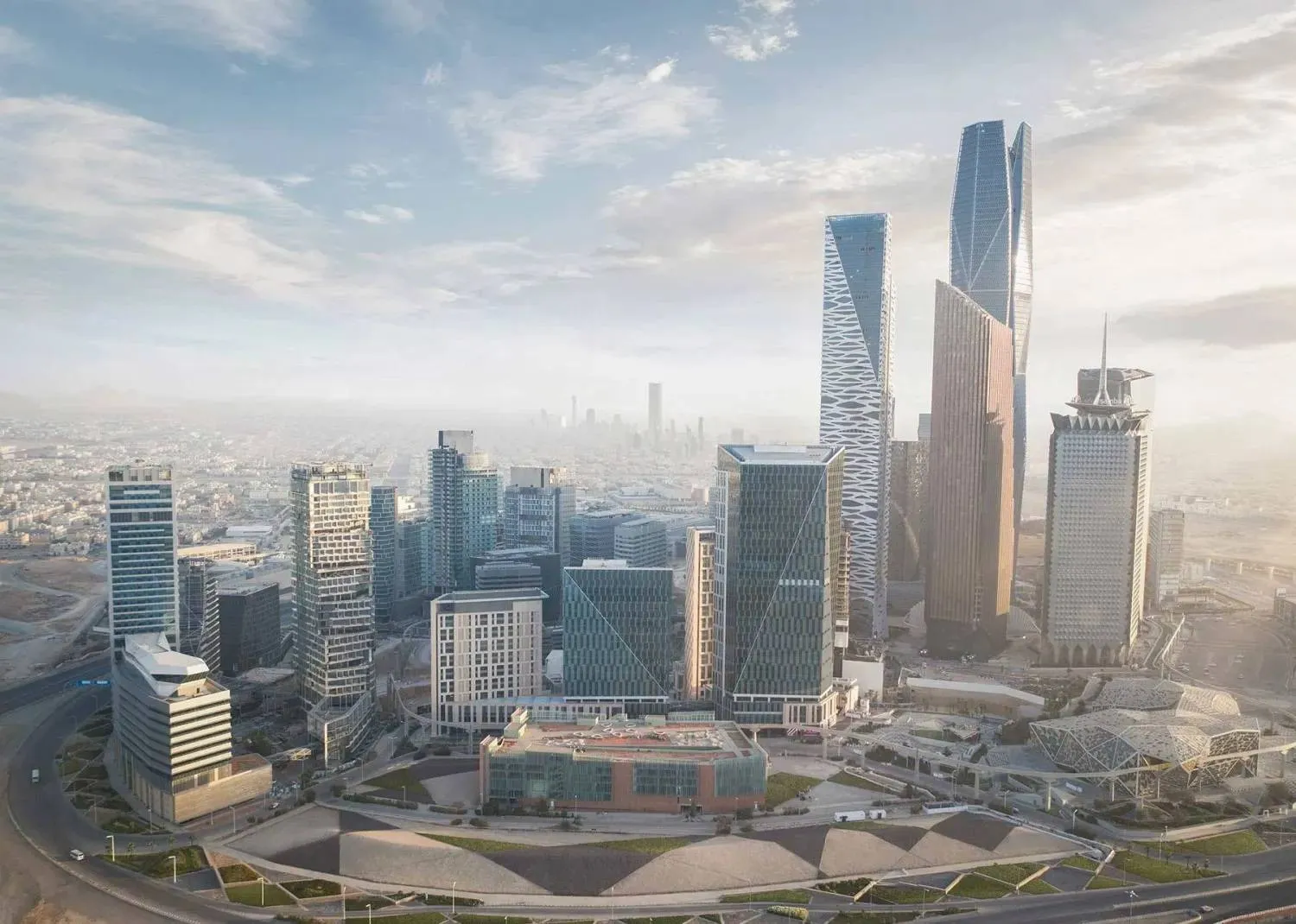
Skyscrapers are seen in King Abdullah Financial District in the Saudi capital, Riyadh. (Reuters).
TT

Saudi Arabia Raises $12 Billion in International Bonds Amid Strong Demand

Skyscrapers are seen in King Abdullah Financial District in the Saudi capital, Riyadh. (Reuters).

Saudi Arabia has raised $12 billion from global debt markets in its first international bond issuance of the year, attracting bids worth nearly $37 billion. This demonstrates strong investor appetite for Saudi debt instruments.

The issuance comes just two days after the approval of the 2025 annual borrowing plan by Minister of Finance Mohammed Al-Jadaan. The plan estimates financing needs for the fiscal year at SAR 139 billion ($37 billion). The funds will be used to cover the projected SAR 101 billion ($26.8 billion) budget deficit for 2025, as well as repay SAR 38 billion ($10 billion) in principal debt obligations due this year.

The National Debt Management Center (NDMC) announced on Tuesday that the issuance includes three tranches: $5 billion in three-year bonds, $3 billion in six-year bonds, and $4 billion in ten-year bonds. Total demand for the bonds reached $37 billion, exceeding the issuance size by three times and reflecting robust investor interest.

The NDMC emphasized that this issuance aligns with its strategy to broaden the investor base and efficiently meet Saudi Arabia’s financing needs in global debt markets.

According to IFR, a fixed-income news service, the initial price guidance for the three-year bonds was set at 120 basis points above US Treasury yields. The six-year and ten-year bonds were priced at 130 and 140 basis points above the same benchmark, respectively.

Strong demand allowed Saudi Arabia to lower yields on the shorter-term bonds, further demonstrating investor confidence. Economists noted that the pricing above US Treasuries is attractive in the current market, showcasing trust in Saudi Arabia’s economic stability and financial strategies.

International confidence

Economic experts view this successful bond issuance as a testament to international confidence in Saudi Arabia’s robust economy and financial reforms. Dr. Mohammed Al-Qahtani, an economics professor at King Faisal University, said the move underscores Saudi Arabia’s commitment to diversifying financing tools both domestically and internationally. He added that the funds would support Vision 2030 projects, reduce pressure on domestic resources, and attract strong international investor interest.

The issuance strengthens Saudi Arabia’s ability to meet financial needs, expand its investor base, and establish a global financing network, he said, noting that it also facilitates entry into new markets, enabling the Kingdom to accelerate infrastructure projects and capital expenditures.

Dr. Ihsan Buhulaiga, founder of Joatha Business Development Consultants, described the 2025 budget as expansionary, aimed at meeting the financing needs of economic diversification programs. He stressed that the budget deficit is an “optional” one, reflecting a deliberate choice to prioritize Vision 2030 initiatives over immediate fiscal balance.

Buhulaiga explained that the Kingdom’s approach balances two options: limiting spending to available revenues, which would avoid deficits but delay Vision 2030 initiatives, or borrowing strategically to fund Vision 2030 goals. He said that the annual budget is just a component of the larger vision, which requires sustained funding until 2030.

He continued that Saudi Arabia’s fiscal space and creditworthiness allow it to borrow internationally at competitive rates, explaining that this flexibility ensures financial sustainability without compromising stability, even during challenges like the COVID-19 pandemic.

Saudi Arabia’s debt portfolio remains balanced, with two-thirds of its debt domestic and one-third external. As of Q3 2024, public debt stood at approximately SAR 1.2 trillion, below the 30% GDP ceiling. According to the Ministry of Finance, the budget deficit is expected to persist through 2027 but remain below 3% of GDP.

Buhulaiga highlighted the importance of capital expenditure, which reached SAR 186 billion in 2023 and is projected to rise to SAR 198 billion in 2024, a 6.5% increase.

He emphasized the government’s pivotal role in economic diversification, supported by investments from the Public Investment Fund (PIF), the National Development Fund, and its subsidiaries, including the Infrastructure Fund.

The PIF recently announced a $7 billion Murabaha credit facility, facilitated by Citigroup, Goldman Sachs International, and JPMorgan. Meanwhile, the NDMC arranged a $2.5 billion revolving credit facility earlier in January, compliant with Islamic principles, to address budgetary needs.

In November, Moody’s upgraded Saudi Arabia’s credit rating to Aa3, aligning with Fitch’s A+ rating, both with a stable outlook. S&P Global assigns the Kingdom an AA-1 rating with a positive outlook, reflecting a high ability to meet financial obligations with low credit risk.

The IMF estimates Saudi Arabia’s public debt-to-GDP ratio at 26.2% in 2024, describing it as low and sustainable. This is projected to rise to 35% by 2029 as foreign borrowing continues to play a key role in financing deficits.



Mawani Signs 3 MoUs with Global Shipping Lines to Support Saudi Exports

Mawani Signs 3 MoUs with Global Shipping Lines to Support Saudi Exports
TT

Mawani Signs 3 MoUs with Global Shipping Lines to Support Saudi Exports

Mawani Signs 3 MoUs with Global Shipping Lines to Support Saudi Exports

The Saudi Ports Authority (Mawani) signed on Tuesday three memoranda of understanding (MoUs) with major international shipping lines: MSC, Maersk, and CMA CGM.

The agreements were signed on the sidelines of the Made in Saudi Expo 2025 and in partnership with the Saudi Export Development Authority (Saudi Exports).

The memoranda aim to support national exports and Saudi exporters by boosting access to global markets through an integrated logistics services ecosystem that connects the Kingdom’s ports with international destinations via leading global shipping lines.

The initiative provides exporters with broader opportunities for expansion and growth, while reinforcing international confidence in the quality of Saudi products by ensuring fast, efficient, and reliable delivery.

The MoUs establish a strategic framework for cooperation among the signatories to deliver innovative and integrated logistics solutions, facilitate the export of Saudi products, and boost the availability of empty containers at the Kingdom’s ports to ensure sufficient inventory levels that meet exporters’ needs.

They aim to expand joint initiatives that contribute to increasing Saudi exports in line with the goals of Saudi Vision 2030. This includes organizing workshops, conferences, and exhibitions to raise awareness, bolster exporters’ capabilities, measure satisfaction with logistics services, and promote national exports globally.

The MoUs seek to improve Saudi exporters’ access to new markets by providing advanced and efficient logistics solutions through Jeddah Islamic Port, King Abdulaziz Port in Dammam, and Jubail Commercial Port, alongside efforts to further automate port operations.


Saudi Arabia, Syria Discuss Industrial Investment Partnerships

Saudi Minister of Industry and Mineral Resources Bandar Alkhorayef during Tuesday's meeting. (SPA)
TT

Saudi Arabia, Syria Discuss Industrial Investment Partnerships

Saudi Minister of Industry and Mineral Resources Bandar Alkhorayef during Tuesday's meeting. (SPA)

Saudi Minister of Industry and Mineral Resources Bandar Alkhorayef held talks in Riyadh on Tuesday with Syrian Minister of Economy and Industry Nedal Al-Shaar on ways to strengthen economic relations and develop industrial investment partnerships between their countries.

Alkhorayef praised Syria’s participation as Guest of Honor in the third edition of the Made in Saudi Expo, noting that this reflects the depth of fraternal relations and the shared economic ties between the two countries.

The officials discussed aspects of industrial cooperation and the opportunities for Syria to benefit from the Kingdom’s expertise and successful experience in developing its industrial sector.

They addressed prominent export opportunities that can support trade growth, strengthen industrial and economic integration between Saudi Arabia and Syria, and advance their developmental goals and shared interests.

Separately, Alkhorayef revealed that the Kingdom’s non-oil exports reached SAR307 billion in the first half of this year, marking the highest semiannual growth on record. 

He made the announcement during his participation in a dialogue session with Al-Shaar on the sidelines of the Made in Saudi Expo 2025. 

Alkhorayef explained that Saudi Vision 2030, through its initiatives, has driven record performance and sustained growth in non-oil exports over the past few years by unlocking national industrial capabilities, boosting the quality of Saudi products, and expanding their access to global markets. 

He highlighted opportunities for cooperation between Saudi Arabia and Syria in developing industrial cities, enabling Damascus to benefit from the Kingdom’s successful experience in export development and local content support, thereby contributing to its economic growth. 

Alkhorayef underlined the level of efficiency, skill, and craftsmanship demonstrated by Syrian investors in the Kingdom’s industrial sector, hoping that the industrial sector would become a key pillar of Syria’s economic advancement. 

He also addressed trade development between the two countries, noting that Saudi non-oil exports to Syria totaled SAR1.2 billion in the first nine months of 2025. 


Saudi Inflation Slows to Nine-Month Low in November

 People enjoy sitting outdoors as the summer heat eases in Riyadh (AFP). 
 People enjoy sitting outdoors as the summer heat eases in Riyadh (AFP). 
TT

Saudi Inflation Slows to Nine-Month Low in November

 People enjoy sitting outdoors as the summer heat eases in Riyadh (AFP). 
 People enjoy sitting outdoors as the summer heat eases in Riyadh (AFP). 

Saudi Arabia’s annual inflation rate slowed to 1.9 percent in November 2025, its lowest level in nine months, down from 2.2 percent in October, driven by easing housing costs and lower prices for food and beverages.

On a monthly basis, inflation remained broadly stable, edging up 0.1 percent compared with October.

According to data released on Monday by the Saudi General Authority for Statistics (GASTAT), the housing, water, electricity, gas and other fuels category rose 4.3 percent year on year in November, down from 4.5 percent in October. Within that category, actual housing rents increased 5.4 percent, slowing from 5.7 percent a month earlier.

Prices in the food and beverages category rose 1.3 percent, reflecting a 1.6 percent increase in the prices of fresh, chilled and frozen meat. The transport category climbed 1.5 percent, driven by a 6.4 percent rise in passenger transport services.

The personal care, social protection and miscellaneous goods and services category recorded the largest annual increase, up 6.6 percent, supported by a 19.9 percent surge in prices of other personal products, influenced by a 21.6 percent rise in jewelry and watch prices.

Prices for insurance and financial services increased 5.1 percent, led by an 8.4 percent rise in insurance costs. The recreation, sports and culture category rose 1.3 percent, reflecting a 2.1 percent increase in holiday package prices.

In contrast, prices for furniture, household equipment and routine household maintenance declined 0.3 percent. The restaurants and accommodation services category also fell 0.5 percent, as accommodation service prices decreased 2.3 percent.

GASTAT noted that the Consumer Price Index (CPI) measures changes in prices paid by consumers for a fixed basket of 582 items, while the Wholesale Price Index (WPI) tracks price movements of goods at the pre-retail stage for a fixed basket of 343 items.