



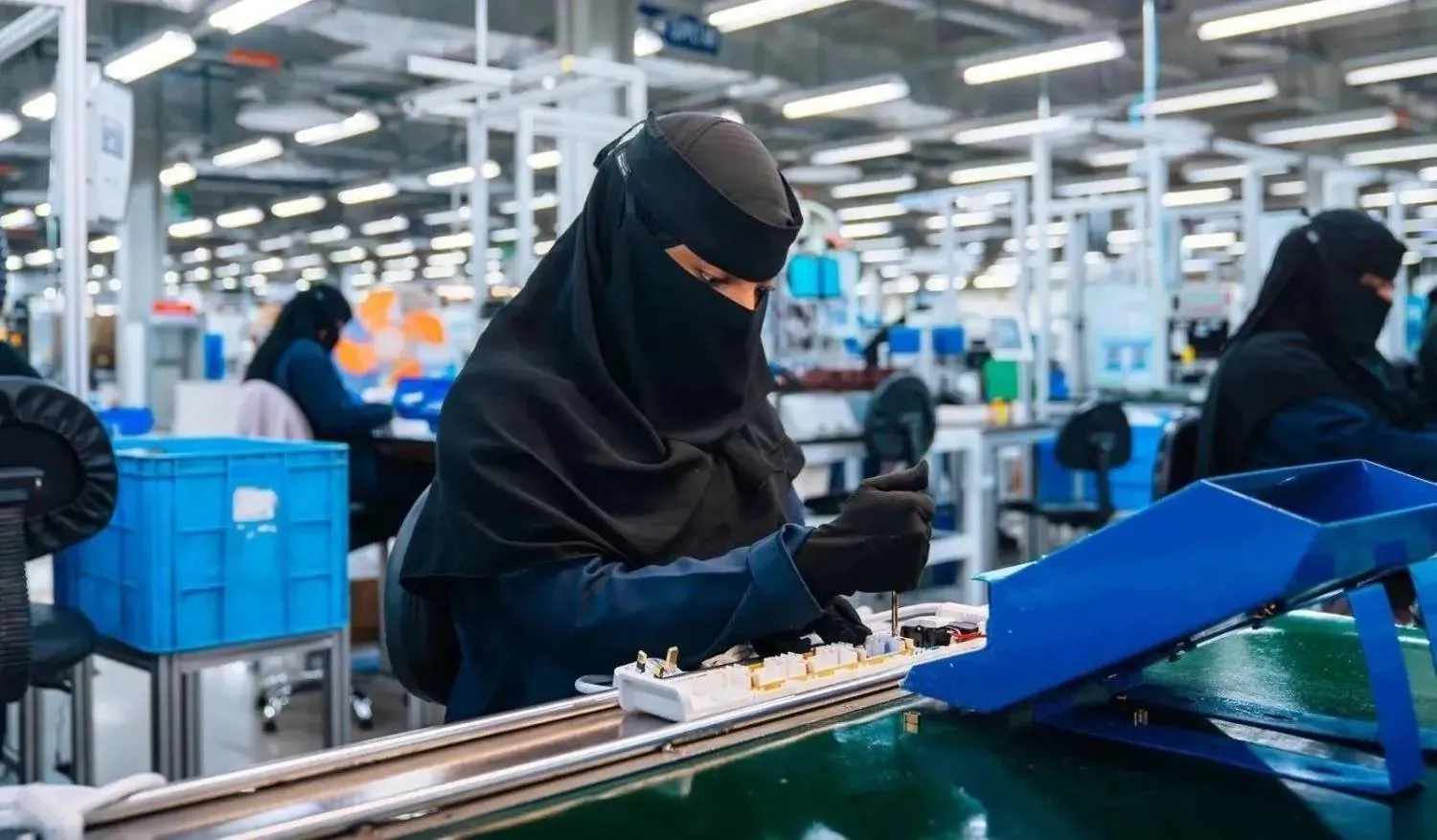

Saudi Arabia’s non-oil private sector has expanded at its fastest pace in 10 years, driven by record-high demand and an increase in new orders at the sharpest rate since June 2011. This growth has encouraged business expansion and inventory buildup.
The Riyad Bank Purchasing Managers’ Index (PMI) climbed from 58.4 in December to 60.5 in January, marking its highest level since September 2014.
Experts told Asharq Al-Awsat that Saudi Arabia’s non-oil sector reflects the strength of industrial activity and expect continued expansion in government spending. They highlighted that the Kingdom’s business environment is increasingly attractive to investors, positioning it as a major commercial hub.
Economic expert Dr. Mohammed Makni explained that the PMI surge signifies rapid non-oil sector growth, which has been accelerating over the past four years. He expects government spending on non-oil activities to continue expanding for at least three more years, aligning with Saudi Arabia’s 2025 budget and Vision 2030 goals.
Makni noted that credit rating agencies and international financial institutions, including the IMF and World Bank, forecast Saudi Arabia’s non-oil sector to grow by at least 4% annually over the next three years, while local projections estimate growth closer to 6%.
Additionally, the Public Investment Fund (PIF) has committed SAR 150 billion ($40 billion) to private sector investment between 2021 and 2025, further accelerating expansion.
Economic analyst Ahmed Al-Jubair emphasized that Saudi Arabia’s economy is shifting away from oil dependence, with the non-oil private sector becoming a key driver of growth. He noted that the Kingdom’s mega projects provide extensive opportunities for private businesses, making Saudi Arabia a top destination for investment and business expansion.
The PMI report indicates growing business confidence, with expectations for future activity reaching a 10-month high. Businesses reported the fastest rise in new orders since June 2011, leading to a strong increase in commercial activity and inventory levels.
While the business environment has improved, companies are facing rising production costs, mainly due to higher material prices linked to geopolitical tensions.
The Saudi labor market also showed significant improvement, with higher employment levels reflecting growing demand.
According to Riyad Bank Chief Economist Naif Al-Ghaith, the PMI surge underscores the resilience of Saudi Arabia’s non-oil private sector, supported by rising new orders and strong business output.
Al-Ghaith highlighted that production activity reached an 18-month high, with 30% of businesses reporting increased operations—a direct result of government-led economic diversification efforts.
He also pointed out that 45% of companies experienced sales growth, driven by economic expansion and large-scale infrastructure projects. Additionally, higher export orders—particularly from Gulf Cooperation Council (GCC) countries—boosted domestic demand.


