Saudi Arabia Assumes WTO General Council Presidency for 2025–2026

The General Council of the World Trade Organization (WTO) unanimously appointed Permanent Representative of Saudi Arabia to the WTO Saqer bin Abdullah Al-Moqbel as its president for the 2025–2026 term. (SPA)
TT

Saudi Arabia Assumes WTO General Council Presidency for 2025–2026

The General Council of the World Trade Organization (WTO) unanimously appointed Permanent Representative of Saudi Arabia to the WTO Saqer bin Abdullah Al-Moqbel as its president for the 2025–2026 term. (SPA)

The General Council of the World Trade Organization (WTO) has unanimously appointed Permanent Representative of Saudi Arabia to the WTO Saqer bin Abdullah Al-Moqbel as its president for the 2025–2026 term. In a historic milestone, Al-Moqbel becomes the first Arab and Middle Eastern delegate to assume this position, reported the Saudi Press Agency on Wednesday.

The WTO General Council, which convenes throughout the year, oversees the organization’s operations between ministerial conferences, held biennially. As the highest decision-making body at the level of heads of missions, the council plays a crucial role in shaping global trade policies.

During Saudi Arabia's presidency, the General Council is set to address several key issues, including preparations for the 14th Ministerial Conference, scheduled to be held in Cameroon in March 2026.

The agenda will also focus on essential WTO reforms, particularly the dispute settlement mechanism; advancing negotiations on the second phase of the Fisheries Subsidy Agreement; and addressing agriculture, food security, and development concerns.

Other priorities include integrating multilateral agreements, such as the Investment Facilitation for Development Agreement and the E-Commerce Agreement, into the WTO framework.

Commenting on the appointment, Al-Moqbel emphasized that Saudi Arabia’s leadership in the WTO General Council reflects its growing role in the international economic landscape, leveraging its global economic influence to strengthen multilateral trade cooperation.


OPEC+ Decides on Fourth Oil Quota Hike Since Hormuz Closure

Vessels are anchored in the Strait of Hormuz as seen from Musandam, Oman, June 3, 2026. (Reuters)
TT

OPEC+ Decides on Fourth Oil Quota Hike Since Hormuz Closure

Vessels are anchored in the Strait of Hormuz as seen from Musandam, Oman, June 3, 2026. (Reuters)

OPEC+ agreed on Sunday a fourth increase in its oil output targets in as many months, even though the US war with Iran is still preventing several of the group's members from pumping more.

The war has cut oil flows via the Strait of Hormuz, creating the world's biggest-ever supply crisis as key OPEC+ members including Saudi Arabia have been unable to supply customers in full since the end of February.

Seven core members of OPEC+, which ‌groups ⁠OPEC and allied producers ⁠including Russia, have increased their output quotas from April to June by almost 600,000 barrels per day.

In reality, the group's production has collapsed due to export cuts by Gulf members, averaging 33.19 million bpd in April compared with 42.77 million in February, according to OPEC figures.

On Sunday, the seven members decided to increase targets by 188,000 bpd from July, OPEC said in a statement.

This is the same as the June hike, which was adjusted down from monthly increases ⁠of 206,000 bpd in May and April to take into ‌account the United Arab Emirates’ exit. The UAE left OPEC after almost 60 years.

On Friday, oil prices fell to around $93 a barrel as traders gained confidence that renewed conflict between the US and Iran was growing less likely. Prices were close to $72 before the war began.

The seven countries are ‌increasing production as part of the gradual unwinding of a 1.65 million bpd production cut that the group, which at the time ⁠included UAE, agreed ⁠in 2023.

The seven of 21 OPEC+ members who met on Sunday are Saudi Arabia, Iraq, Kuwait, Algeria, Kazakhstan, Russia, and Oman. In recent years, only the seven plus the UAE when it was a member have been involved in the group's output policy decisions.


China’s Central Bank Extends Gold Buying Spree for 19th Month in May

Gold items are displayed at a jewellery shop in downtown Kuwait City on June 6, 2026. (AFP)
TT

China’s Central Bank Extends Gold Buying Spree for 19th Month in May

Gold items are displayed at a jewellery shop in downtown Kuwait City on June 6, 2026. (AFP)

China's central bank increased up its gold reserves for a 19th month in May, data from the People's Bank of China showed on Sunday.

The country's gold reserves rose to 74.96 million ‌fine troy ‌ounces by the ‌end ⁠of May, versus the ⁠previous month's 74.64 million ounces

China's gold reserves were valued at $340.75 billion by the end of last month, down ⁠from $344.17 billion the ‌month prior, ‌according to the PBOC data.

Spot gold prices logged ‌a third straight month of decline in May as peace talks between the United ‌States and Iran failing to yield results.

Inflation ⁠risks ⁠following rising oil prices kept the "higher-for-longer" interest rate theme alive, with the dollar remaining elevated.

Gold continued to decline in June and was most recently traded at near $4,330 an ounce.


What is Expected from Today's OPEC+ Major Producers Meeting?

A view shows the logo of the Organization of the Petroleum Exporting Countries (OPEC) outside its headquarters in Vienna, Austria, May 28, 2024. REUTERS/Leonhard Foeger/File Phot
TT

What is Expected from Today's OPEC+ Major Producers Meeting?

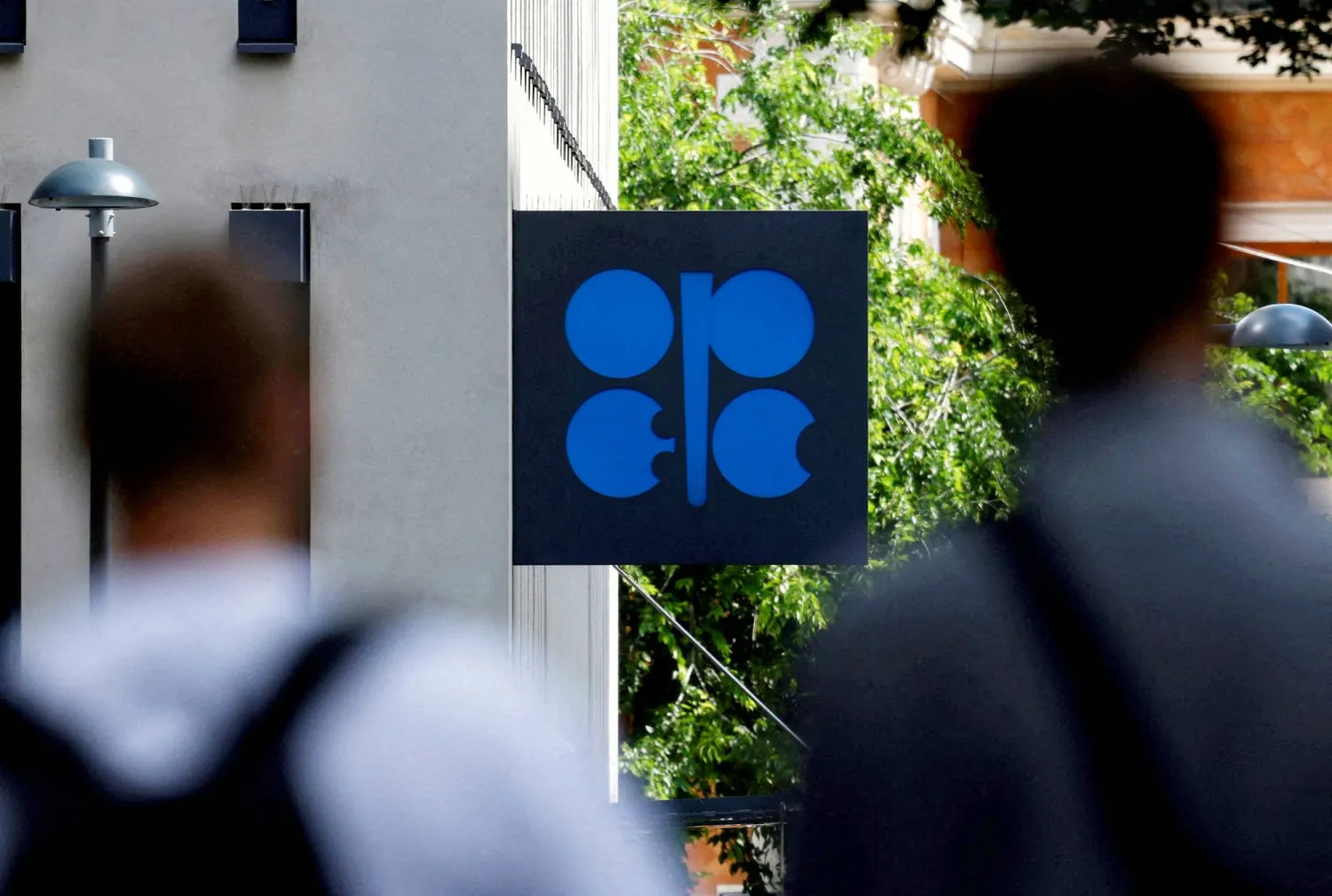
A view shows the logo of the Organization of the Petroleum Exporting Countries (OPEC) outside its headquarters in Vienna, Austria, May 28, 2024. REUTERS/Leonhard Foeger/File Phot

All eyes turn Sunday to a series of intensive and simultaneous ministerial meetings of the Organization of the Petroleum Exporting Countries (OPEC) and the OPEC+ alliance. These meetings are taking place under exceptional circumstances in global energy markets, as producers strive through these multiple platforms to lay out the foundations for a new phase of balance and strategic certainty.

Three consecutive meetings will be held today, reflecting the precise institutional nature of managing this phase. It begins with the OPEC Administrative Conference, followed by the 66th meeting of the Joint Ministerial Monitoring Committee (JMMC), responsible for monitoring compliance levels, ensuring alignment, and approving current compensation plans, culminating in the 41st ministerial meeting of the broader OPEC+ alliance—a meeting the global investment community is eagerly anticipating.

This coordinated effort is driven by positive momentum and close coordination, epitomized by the important meeting that brought together Saudi Energy Minister, Prince Abdulaziz bin Salman, with Russian Deputy Prime Minister Alexander Novak on the sidelines of the St. Petersburg International Economic Forum a few days ago.

The meeting reflected great optimism about the alliance's ability to lead the market with a flexible vision, with discussions focusing on the following positive points:

* Securing Energy Supplies: The Saudi affirmation that the world today needs "every molecule of energy" possible, reflecting the Kingdom's and the alliance's commitment to their role as a safety valve for the global economy.

* Flexibility and Readiness: OPEC+'s high ability to adapt and confront emergent geopolitical and logistical changes, while precisely revising future demand forecasts to ensure investment sustainability.

* Preparing for the Future: Coordination between the two poles aims to prepare a solid ground for the smooth and gradual return of supply flows once temporary logistical factors in the region subside.

Expectations and Targets

Instead of focusing on transient fluctuations, observers expect today's meeting to affirm collective commitment and reaffirm full solidarity among the seven major alliance countries – Saudi Arabia, Russia, Iraq, Kuwait, Kazakhstan, Algeria, and Oman – to ensure long-term market stability through the approval of flexible production policies. Sources told Reuters that production targets are expected to increase by approximately 188,000 barrels per day for next July, reflecting a cautious and measured approach that allows for quick and gradual intervention options based on daily market data.

Fitch

This flexible move aligns with the in-depth analysis presented by Fitch Ratings in its latest reports. The agency affirmed that the current closure of the Strait of Hormuz represents "a temporary and transient logistical shock" and in no way indicates a structural or permanent shift in global oil market trends.

The agency maintained its strategic view that global supplies will collectively exceed demand throughout 2026, based on the absence of any severe damage to oil infrastructure in the region, and the exceptional ability to achieve a rapid and intensive recovery of production in the Middle East once the strait is expected to reopen by the end of next July – assuming an actual closure period of approximately five months.

According to Fitch's base scenario, the average Brent crude price will hover around $87 per barrel throughout 2026, noting that the absence of production capacity due to the temporary logistical disruption will reduce supplies by approximately 2.9 million barrels per day compared to 2025.

However, the agency anticipates a sharp market rebound towards a surplus starting in September, with the surplus (oil glut) reaching approximately 4 million barrels per day in the last quarter of 2026, supported by strong growth from non-OPEC producers. This will exert downward pressure on prices, restoring the market to its natural equilibrium.

Fitch concludes that this dynamic lends significant effectiveness to OPEC+ plans, as the alliance possesses the ability to exceed previous quotas and pump additional quantities to ensure demand is met and prevent any structural shortages, solidifying the alliance's role as a strategic institution that transforms geopolitical challenges into real opportunities to support energy security, global economic growth, and sustainability.