


Trump Tariffs Sow Fears of Trade Wars, Recession and a $2,300 iPhone

FILE PHOTO: US President Donald Trump delivers remarks on tariffs in the Rose Garden at the White House in Washington, DC, US, April 2, 2025. REUTERS/Carlos Barria/File Photo
TT

Trump Tariffs Sow Fears of Trade Wars, Recession and a $2,300 iPhone

FILE PHOTO: US President Donald Trump delivers remarks on tariffs in the Rose Garden at the White House in Washington, DC, US, April 2, 2025. REUTERS/Carlos Barria/File Photo

Countries around the world threatened to wage a trade war with the United States as President Donald Trump's sweeping tariffs fed expectations for a global downturn and sharp price hikes for swathes of goods in the world's biggest consumer market.

The penalties announced by Trump on Wednesday triggered a plunge in world financial markets and drew condemnation from other leaders reckoning with the end of a decades-long era of trade liberalization.

In Japan, one of United States' top trading partners, Prime Minister Shigeru Ishiba said that the tariffs had created a "national crisis" as a plunge in banking shares on Friday set Tokyo's stock market on course for its worst week in years.

Investment bank JP Morgan said it now sees a 60% chance of the global economy entering recession by year end, up from 40% previously.

But there were conflicting messages from the White House about whether the tariffs were meant to be permanent or were a tactic to win concessions, with Trump saying they "give us great power to negotiate."

The US tariffs would amount to the highest trade barriers in more than a century: a 10% baseline tariff on all imports and higher targeted duties on dozens of countries.

That could jack up the price for US shoppers of everything from cannabis to running shoes to Apple's iPhone. A high-end iPhone could cost nearly $2,300 if Apple passes the costs on to consumers, based on projections from Rosenblatt Securities.

Businesses raced to adjust. Automaker Stellantis said it would temporarily lay off US workers and close plants in Canada and Mexico, while General Motors said it would increase US production.

Canadian Prime Minister Mark Carney said the United States had abandoned its historic role as a champion of international economic cooperation.

"The global economy is fundamentally different today than it was yesterday," he said as he announced several countermeasures.

Elsewhere, China vowed retaliation for Trump's 54% tariffs on imports from the world's No. 2 economy, as did the European Union, which faces a 20% duty.

French President Emmanuel Macron called for European countries to suspend investment in the United States.

Other trading partners, including Japan, South Korea, Mexico and India, said they would hold off on any retaliation for now as they seek concessions. Britain's foreign minister said it was working to strike an economic deal with the United States.

But Washington's allies and rivals alike warned of a devastating blow to global trade.

The tariffs "clearly represent a significant risk to the global outlook at a time of sluggish growth," said IMF Managing Director Kristalina Georgieva, calling on Washington to work to resolve trade tensions with its partners and reduce uncertainty.

US Commerce Secretary Howard Lutnick and senior trade adviser Peter Navarro both told cable news programs on Thursday the president would not back off, and that the tariff increases were not a negotiation.

Trump then appeared to contradict them, telling reporters, "The tariffs give us great power to negotiate. Always have. I used it very well in the first administration, as you saw, but now we're taking it to a whole new level."

Stocks suffered a global meltdown, the US dollar crumbled and oil prices were set for their worst week in months as analysts warned the tariffs could dent demand, upend supply chains and hurt corporate profits.

The Dow fell nearly 4%, its biggest one-day percentage loss since June 2020. The S&P 500 lost nearly 5% and the tech-heavy Nasdaq declined nearly 6%, its worst day in percentage terms since the pandemic era of March 2020.

American companies with significant overseas production took a hit. Nike shares lost 14% and Apple fell 9%.

The pain for markets continued into Friday, with Japan's Nikkei set for its biggest weekly drop in five years in a rout led by stocks in Japanese banks, some of the biggest lenders in the world by assets.

Japanese bond yields, meanwhile, fell sharply as investors bet the Bank of Japan may be forced to rethink its plans to raise interest rates.

Trump says the "reciprocal" tariffs are a response to barriers put on US goods, while administration officials said the tariffs would create manufacturing jobs at home and open up export markets abroad, although they cautioned it would take time to see results.

Vice President JD Vance in an interview with Newsmax faulted critics for taking a short-term view.

"That's fundamentally what this is about, the national security of manufacturing and making the things that we need, from steel to pharmaceuticals," Vance said.

Since returning to the White House in January, Trump's on-again, off-again tariff threats have rattled consumer and business confidence. Trump could step back again, as the reciprocal tariffs are not due to take effect until April 9.

"The tariff plan does not appear to be well thought-out. Trade negotiations are a highly technical discipline, and in our view these proposals do not offer a serious basis for negotiations with any country," said James Lucier, founding partner at Capital Alpha.

Economists say the tariffs could reignite inflation, raise the risk of a US recession and boost costs for the average US family by thousands of dollars.

Analysts said the tariffs could also alienate allies in Asia and undercut strategic efforts to contain China.

Trump has slapped a 24% tariff on Japan and a 25% tariff on South Korea, both home to major US military bases. He also hit Taiwan with a 32% tariff as the island faces increased military pressure from China.

Canada and Mexico, the largest US trading partners, were not hit with targeted tariffs on Wednesday, but they already face 25% tariffs on many goods and now face a separate set of tariffs on auto imports.



Egypt, Qatar's Al Mana Holding Sign $200 Million Sustainable Aviation Fuel Deal

A worker fills an Airbus jet with aviation fuel at Fuhlsbuettel airport in Hamburg, March 14, 2012. REUTERS/Fabian Bimmer/File Photo
TT

Egypt, Qatar's Al Mana Holding Sign $200 Million Sustainable Aviation Fuel Deal

A worker fills an Airbus jet with aviation fuel at Fuhlsbuettel airport in Hamburg, March 14, 2012. REUTERS/Fabian Bimmer/File Photo

Egypt signed a contract with Qatar's Al Mana Holding for a first-phase investment of $200 million to produce sustainable aviation fuel from used cooking oil in the Suez Canal Economic Zone at Ain Sokhna, Egypt's cabinet said on Sunday.

The project will be developed in three phases and will span 100,000 square metres in the Integrated Sokhna Zone on Egypt's Red Sea coast. The first phase will have an estimated annual production capacity of 200,000 tonnes, Reuters quoted the cabinet as saying in a statement.

The deal marks the first Qatari industrial investment in the Suez Canal Economic Zone, Egypt said.

Prime Minister Mostafa Madbouly said the project "reflects the positive momentum in relations between Cairo and Doha, driven by the shared political will to advance bilateral cooperation through joint investments and increased trade."

Last month, the real estate arm of Qatar's sovereign wealth fund said it would invest $29.7 billion to develop a luxury real estate and tourism project on Egypt's Mediterranean coast.


Saudi Arabia Prepares to Allow Foreign Property Ownership in January

Riyadh, Saudi Arabia (Reuters)
TT

Saudi Arabia Prepares to Allow Foreign Property Ownership in January

Riyadh, Saudi Arabia (Reuters)

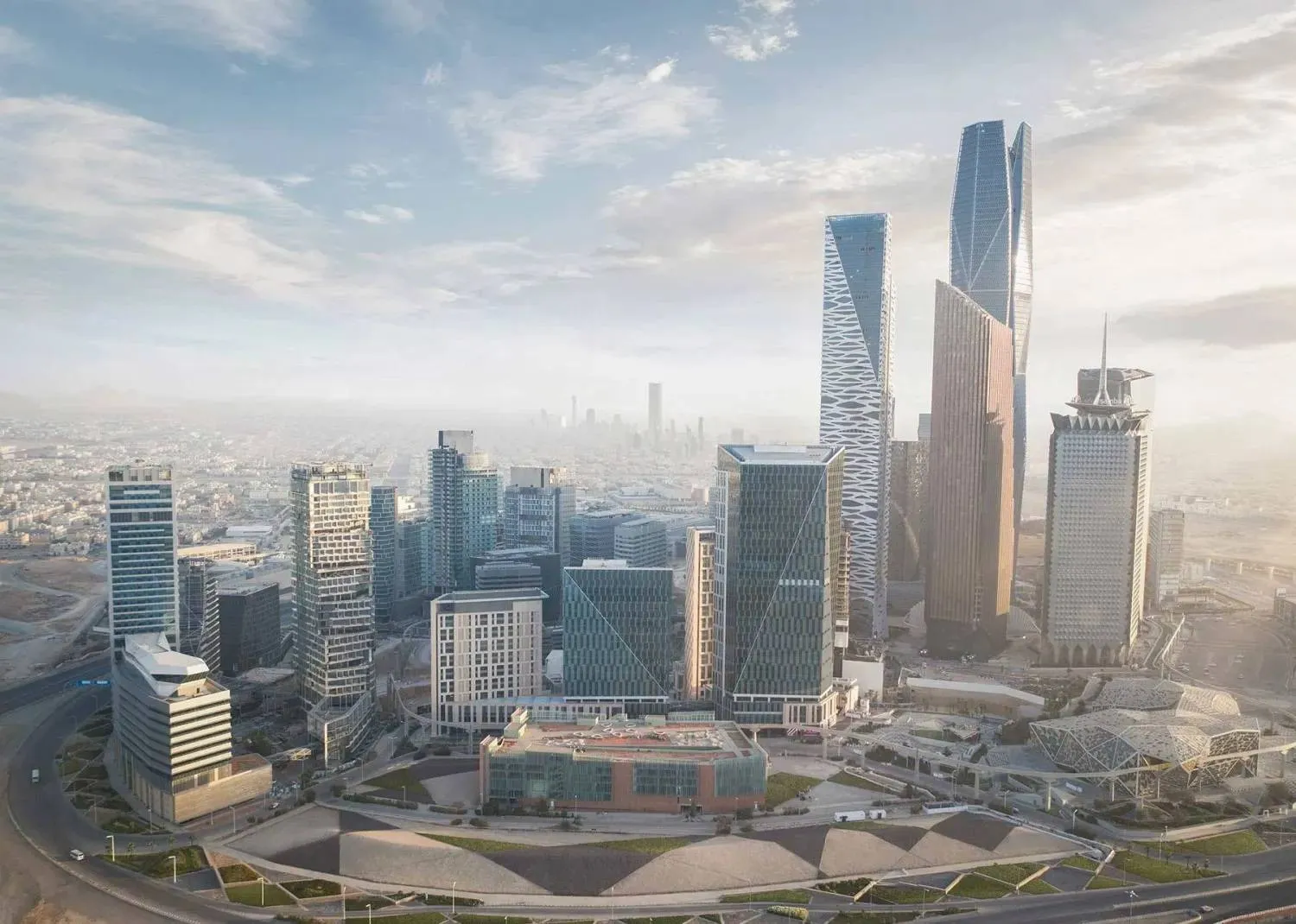
Saudi Arabia is preparing to enter a new phase of economic openness in the real estate sector, with the updated law regulating property ownership by non-Saudis set to take effect in January.

The law, approved by the Saudi cabinet in July, is a strategic step to regulate real estate ownership by non-Saudis, both individuals and entities. Its main objective is to boost the real estate sector’s contribution to gross domestic product and diversify national income sources away from oil, in line with Vision 2030 goals.

The General Authority for Real Estate, the body responsible for implementation, is currently drafting the executive regulations and defining the geographic scope of areas where foreigners will be allowed to own and invest in property. These details are expected to be announced before the law comes into force.

The new legislation also aims to retain global talent by enabling long term residency and improving urban and housing quality.

Scope of ownership

Saudi Minister of Municipalities and Housing Majed Al-Hogail said in a televised interview last week that the system allowing foreigners to own residential property would be implemented next month across all Saudi cities, except for four, Makkah, Madinah, Jeddah and Riyadh.

In those cities, ownership will be permitted in specific designated areas. Resident expatriates will be allowed to own one residential unit.

In contrast, the system offers broader flexibility in other economic sectors, with foreign ownership open across all Saudi cities without exception in the commercial, industrial and agricultural sectors.

Fahd bin Suleiman, executive director of non-Saudi property ownership at the authority, said in November that areas designated for foreign ownership in Riyadh, Jeddah and the holy cities of Makkah and Madinah were still under review and would be announced “very soon” alongside the executive regulations governing the new rules.

He said those areas would be “very wide” and include what are known as mega projects, with foreign ownership ratios expected to range between 70 percent and 90 percent.

Bin Suleiman added that buyers would be required to be Muslim to purchase property in the two holy cities, but would otherwise face limited restrictions.

“In general, there are no major conditions, and we do not want to impose constraints. When comparing the current law with the updated one, the difference will be clear,” he said.

Market expectations

Commenting on the imminent implementation of the updated system, several real estate experts told Asharq Al-Awsat that the law would generate additional demand for ready built housing units and increase liquidity in the property market.

They said it would also encourage international companies to establish headquarters and projects in the Kingdom, supporting economic activity and laying the foundation for a more stable and growing real estate sector.

They expect the positive impact to be most evident in Riyadh, Jeddah, Makkah, Taif and Madinah, as well as cities near tourist destinations, with initial effects emerging in the third and fourth quarters of 2026 and extending into 2027.

Real estate expert and marketer Saqr Al-Zahrani said the system’s implementation would mark a turning point for the Saudi property market by expanding the base of market participants and prompting many expatriates to move from renting to ownership, particularly in permitted cities.

This shift, he said, would create additional demand for ready built units and planned residential communities, boosting sales activity and market liquidity.

Raising property quality

Al-Zahrani added that opening commercial, industrial and agricultural ownership to foreigners across all cities would give international companies stronger incentives to establish operations in Saudi Arabia, supporting economic growth and long term real estate sector stability.

He said one of the first expected changes would be an improvement in property quality, as developers move toward higher specifications and better planning to meet the needs of a broader buyer base.

The market is also likely to see an increase in organized supply, driven by the entry of local and international investors and developers targeting new demand.

The updated system, he said, would support price stability, as ownership by expatriates and foreigners tends to be long term, reducing short term speculation.

It would also enhance transparency and governance through accompanying legal and regulatory controls, while creating wider opportunities for the financing sector to develop tailored products for expatriates and foreigners, boosting lending activity and liquidity.

Al-Zahrani said the announcement of the system’s implementation would trigger immediate inquiries and interest, but the real impact on transaction volumes would emerge gradually, with initial signs expected in the second quarter of 2026, as the first deals are completed.

Clear indicators such as higher trading volumes, faster project delivery and increased foreign investor participation are likely to materialize in the third and fourth quarters, once the market has absorbed the executive regulations and begun to interact with them in a stable manner.

He said the first year of implementation would be a transition period, with the strongest effects becoming evident in the second half of 2026 and beyond.

Varying impact by geography

Real estate expert Ahmed Al Faqih said the system’s impact would vary by location, with the strongest positive effects expected in the Makkah region and its cities, including Jeddah and Taif, as well as Madinah. Riyadh, he said, would also play a prominent role in attracting non-Saudi capital for both ownership and investment.

Al Faqih said capital targeting tourism investment would likely focus on cities near tourist areas, such as Taif, Abha and Jazan, as well as Tabuk due to its proximity to the Neom project.

He expects the first year of implementation to serve as a testing and evaluation phase, with the system’s impact becoming more evident in 2027. He said the law would support key Vision 2030 objectives, including income diversification and reducing reliance on oil, while creating hundreds of thousands of job opportunities for Saudi men and women.

System incentives

The updated law aims to regulate real estate ownership by non-Saudis in line with Vision 2030, attract foreign direct investment into the Saudi property market and increase the sector’s contribution to the economy.

It also seeks to retain global talent by enabling long term settlement, raise the contribution of non-oil sectors, support sustainable economic growth and improve urban living standards.

Under the law, non-Saudis are permitted to own property or acquire rights within geographic areas designated by the cabinet, based on a proposal from the Real Estate General Authority and approval by the Council of Economic and Development Affairs. This includes specifying eligible rights, maximum ownership ratios and related controls.

The law also allows a non-Saudi resident natural person to own one residential property outside the designated geographic scope, excluding Makkah and Madinah. Ownership in those two cities requires the buyer to be Muslim.

Non listed companies partly owned by non-Saudis are permitted to own property within the designated areas, including Makkah and Madinah, provided they are established under Saudi company law. They may also own property outside those areas for operational purposes or employee housing, as defined by the regulations.

Listed companies, investment funds and special purpose entities are allowed to own property across the Kingdom, including Makkah and Madinah, in accordance with rules issued by the Capital Market Authority in coordination with the real estate authority and other relevant bodies.

The law stipulates that its application does not affect rights granted under other systems, such as the Premium Residency Program or Gulf Cooperation Council agreements, and that foreign ownership does not confer any additional privileges beyond legal rights.

It also introduces a fee of up to 5 percent of the property transaction value for non-Saudi ownership, with details to be set out in the executive regulations.

Violations may result in fines or warnings, while providing misleading information can lead to fines of up to 10 million riyals and, in some cases, court ordered sale of the violating property.


China Urges Stronger Coordination Between Business, Finance Systems to Spur Consumption

People walk past a second hand market for luxury cars in Beijing, Tuesday, Nov. 25, 2025. (AP Photo/Andy Wong)
TT

China Urges Stronger Coordination Between Business, Finance Systems to Spur Consumption

People walk past a second hand market for luxury cars in Beijing, Tuesday, Nov. 25, 2025. (AP Photo/Andy Wong)

China's commerce ministry and financial regulators have urged local authorities to promote stronger coordination between business and financial systems to boost consumption, a joint statement showed on Sunday.

Local commerce departments are encouraged to tap existing funding channels for consumption-boosting campaigns and work with financial institutions to unlock spending potential, the Ministry of Commerce, People's Bank of China and National Financial Regulatory Administration said in a joint statement.

Regions with resources are encouraged to use digital yuan smart-contract "red packets" to improve policy efficiency.

The trio also called for measures such as financing guarantees, interest subsidies and risk compensation to strengthen policy synergy and guide more credit into key consumption sectors.

In other economic news, Chinese demand for foreign luxury cars is waning as customers opt for more affordable Chinese brand models, often sold at big discounts, catering to their taste for fancy electronics and comfort.

That is bad news for European carmakers like Porsche, Aston Martin, Mercedes-Benz and BMW that have long dominated the upper reaches of the world's largest auto market.

A prolonged property downturn in China has left many consumers with little appetite for big purchases.

Meanwhile, the well-to-do are becoming increasingly shy about publicly displaying their wealth, said Paul Gong, UBS head of China Automotive Industry Research.

Many car buyers have been swayed by a 20,000 yuan ($2,830) trade-in subsidy offered by the Chinese government for purchasing electric and plug-in hybrid vehicles. People tended to purchase cheaper, entry-level cars where the discount will count more and those cars are mostly Chinese made, Gong said.

“Slowing economic growth is one key driver behind weaker demand for premium cars,” said Claire Yuan, director of corporate ratings for China autos at S&P Global Ratings, referring to a segment that typically counts car brands such as Mercedes-Benz and BMW.

The market share of premium car sales in China, usually priced above 300,000 yuan ($42,400), more than doubled between 2017 and 2023 to about 15% of total sales, S&P said.

That trend is now reversing. The share of premium cars sales fell to 14% in 2024 and to 13% in the first nine months of 2025, S&P said.