
Trump’s Tariff Push Is a Race against Time, and Potential Voter Backlash

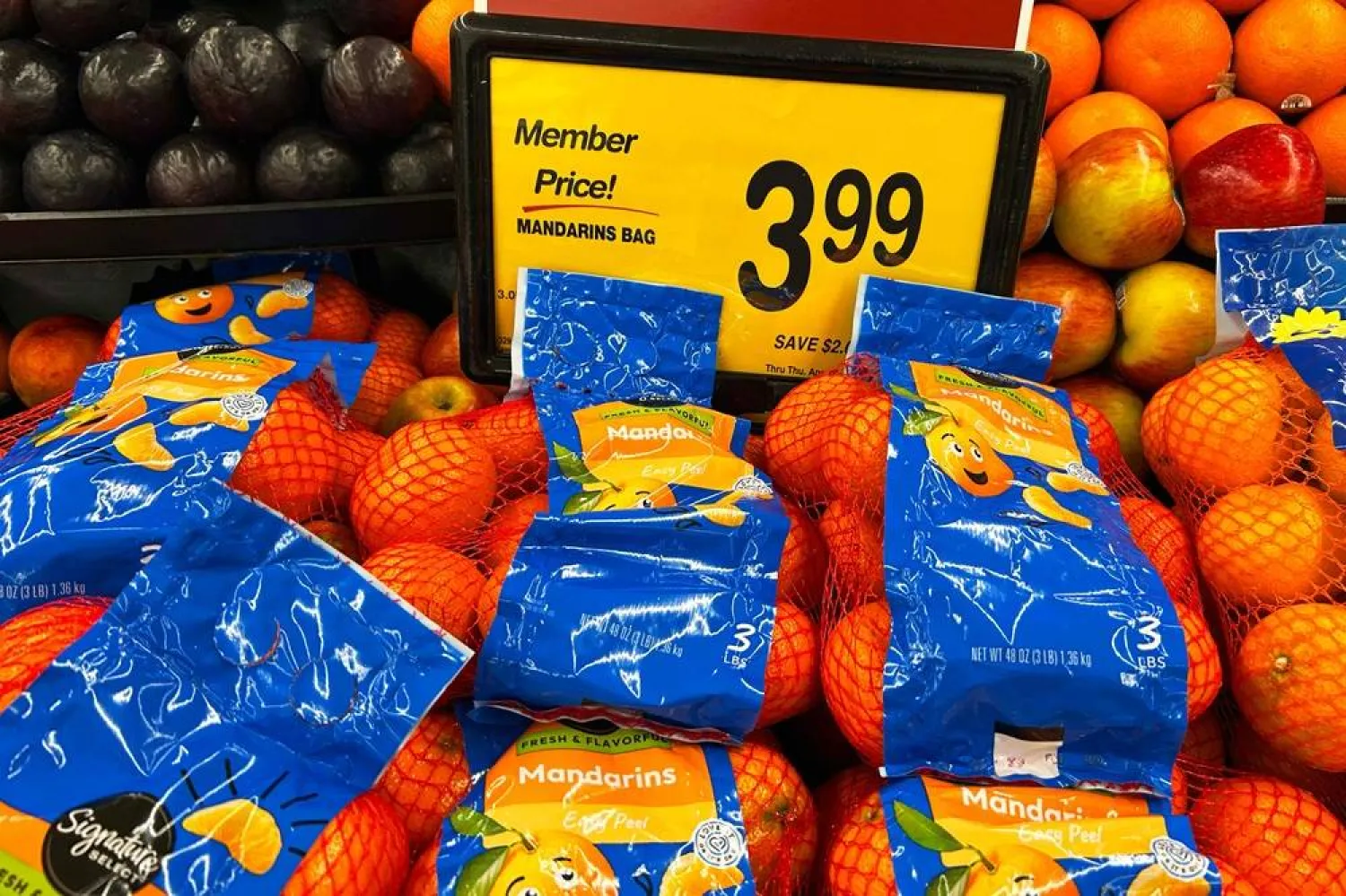
Oranges are sold at a store in Annapolis, Maryland, on April 4, 2025. (AFP)
TT

Trump’s Tariff Push Is a Race against Time, and Potential Voter Backlash

Oranges are sold at a store in Annapolis, Maryland, on April 4, 2025. (AFP)

President Donald Trump's expansive new tariffs reverse a decades-long global trend of lower trade barriers and are likely, economists say, to raise prices for Americans by thousands of dollars each year while sharply slowing the US economy.

The White House is gambling that other countries will also suffer enough pain that they will open up their economies to more American exports, leading to negotiations that would reduce the tariffs imposed Wednesday.

Or, the White House hopes, companies will reverse their moves toward global supply chains and bring more production to the United States to avoid higher import taxes.

How will Americans react? But a key question for the Trump administration will be how Americans react to the tariffs. If prices rise noticeably and jobs are lost, voters could turn against the duties and make it harder to keep them in place for the time needed to encourage companies to return to the US.

The Yale Budget Lab estimates the Trump administration's tariffs would cost the average household $3,800 in higher prices this year. That includes the 10% universal tariff plus much higher tariffs on about 60 countries announced Wednesday, as well as previous import taxes on steel, aluminum and cars. Inflation could top 4% this year, from 2.8% currently, while the economy may barely grow, according to estimates by Nationwide Financial.

Investors turned thumbs-down on the new duties Thursday, with the S&P 500 index dropping 4.8% at the close of trading, its worst day since the pandemic. The Dow Jones Industrial Average plunged more than 1,600 points.

Still, Trump was upbeat Thursday when asked about the stock market drop.

"I think it’s going very well," he said. "We have an operation, like when a patient gets operated on and it’s a big thing. I said this would exactly be the way it is."

The average US tariff could rise to nearly 25% when the tariffs are fully implemented April 9, economists estimate, higher than in more than a century, and higher than the 1930 Smoot-Hawley tariffs that are widely blamed for worsening the Great Depression.

"The president just announced the de facto separation of the US economy from the global economy," said Mary Lovely, senior fellow at the Peterson Institute for International Economics. "The stage is set for higher prices and slower growth over the long term."

Commerce Secretary Howard Lutnick argued the policies will help open markets overseas for US exports.

"I expect most countries to start to really examine their trade policy towards the United States of America, and stop picking on us," he said on CNBC Thursday. "This is the reordering of fair trade."

Bob Lehmann, 73, who stopped by a Best Buy in Portland, Oregon, Wednesday opposed the tariffs. "They’re going to raise prices and cause people to pay more for daily living," he said.

Mathew Hall, a 64-year-old paint contractor, called the tariffs a "great idea" and said potential price increases in the short term were worth it.

"I believe in the long term, it’s going to be good," he said, adding that he felt the US had been taken advantage of.

But a former trade official from Trump’s first term, speaking on condition of anonymity to talk candidly about the impact, suggested that Americans, including those who voted for Trump, may have difficulty accepting the stiff duties.

Americans "have never faced tariffs like this," the former official said Thursday. "The downstream impact on clothing and shoe stores, it’s going to be pretty significant. So we’ll have to see how the Trump voters view this ... and how long their support for these policies goes."

On Thursday, automaker Stellantis, which owns the Jeep, Citroen and Ram brands, said it would temporarily halt production at plants in Canada and Mexico in response to Trump's 25% tax on imported cars. The reduced output means the company is temporarily laying off 900 workers at plants in Michigan and Indiana.

Some exporters overseas may cut their prices to offset some of the tariffs, and US retailers could eat some of the cost as well. But most economists expect much of the tariffs to bring higher prices.

The tariffs will hit many Asian countries hard, with duties on Vietnamese imports rising to 46% and on Indonesia to 32%. Tariffs on some Chinese imports will be as high as 79%. Those three countries are the top sources of US shoe imports, with Nike making about half its shoes last year and one-third of its clothes in Vietnam.

The Yale Budget Lab estimates all Trump’s tariffs this year will push clothing prices 17% higher.

On Thursday, the Home Furnishings Association, which represents more than 13,000 US furniture stores, predicted the tariffs will increase prices between 10% and 46%. Vietnam and China are the top furniture exporters to the US.

It said manufacturers in Asia are offsetting some of the costs by discounting their products and lowering ocean freight rates, but that won't be enough to avoid price hikes. Even domestically made furniture often relies on imported components.

"While many in the industry support the long-term goal of reshoring manufacturing, the reality is that it will take at least a decade to scale domestic production," Home Furnishings Association CEO Shannon Williams said in a statement. "Permitting, training a skilled workforce and managing the higher costs of US manufacturing are significant hurdles."

At Gethsemane Garden Center in Chicago, there are Canadian-grown tulip, daffodil and hyacinth bulbs, though only about 5% of center plants are imported. Thousands of lemon cypress trees from Canada are sold year-round and Canadian mums are sold in the fall.

Regas Chefas, whose family has owned Gethsemane for decades, says all the tariffs won't be passed onto customers.

"We’re going to absorb some of the increase. The growers will absorb some of the increases and then the customers will pay a little bit higher price," he said.

The Consumer Brands Association, which represents Coca-Cola, General Mills, Nestle, Tyson and Del Monte as well as Procter & Gamble and Colgate-Palmolive, said its companies already make the majority of their goods in the US.

But there are critical ingredients and inputs — like wood pulp for toilet paper — that are imported because of scarce domestic availability. Cinnamon is harvested from trees that can’t survive in the US. Domestic production of coffee and cocoa is also limited.

"We encourage President Trump and his trade advisers to fine-tune their approach and exempt key ingredients and inputs in order to protect manufacturing jobs and prevent unnecessary inflation at the grocery store," said Tom Madrecki, the association’s vice president of supply chain resiliency.

Outside a Tractor Supply south of Denver, two family members on opposite sides of the political spectrum debated the tariffs.

Chris Theisen, a 62-year-old Republican, said: "I feel a good change coming on, I feel it’s going to be hard, but you don’t go to the gym and walk away and say, ’God, I feel great."

Nayen Shakya, a Democrat and Theisen’s great nephew, said higher prices are already a hardship. At the restaurant where he works, menu prices have been raised to account for higher ingredient costs.

"It’s really easy sometimes to say some things in a vague way that everyone can agree with that is definitely more complex under the surface," said Shakya. "The burden of the increased prices is already going to the consumer."

Listening to his nephew, Theisen added: "I understand this side of it, too."

"I ain’t got no crystal ball. I hope it works out good."


China Passes Revised Foreign Trade Law to Bolster Trade War Capabilities

Containers are seen at the port in Shanghai, China, Oct. 13, 2025. (AFP)
TT

China Passes Revised Foreign Trade Law to Bolster Trade War Capabilities

Containers are seen at the port in Shanghai, China, Oct. 13, 2025. (AFP)

China on Saturday passed revisions to a key piece of legislation aimed at strengthening Beijing's ability to wage trade war, curb outbound shipments from strategic minerals, and further open its $19 trillion economy.

The latest revision to the Foreign Trade Law, approved by China's top legislative body, will take effect on March 1, 2026, state news agency Xinhua reported on Saturday.

The world's second-largest economy is overhauling its trade-related legal frameworks partly to convince members of a major trans-Pacific trade bloc created to counter China's growing influence that the manufacturing powerhouse ‌deserves a seat at ‌the table, as Beijing seeks to reduce ‌its ⁠reliance on the US.

Adopted ‌in 1994 and revised three times since China joined the World Trade Organization in 2001, most recently in 2022, the Foreign Trade Law empowers policymakers to hit back against trading partners that seek to curb its exports and to adopt mechanisms such as "negative lists" to open restricted sectors to foreign firms.

The revision also adds a provision that foreign trade should "serve national economic and social development" and help build China ⁠into a "strong trading nation", Xinhua said.

It further "expands and improves" the legal toolkit for countering external challenges, according ‌to the report.

The revision focuses on areas such ‍as digital and green trade, along ‍with intellectual property provisions, key improvements China needs to make to meet the ‍standards of the Comprehensive and Progressive Agreement for Trans-Pacific Partnership, rather than the trade defense tools the 2020 revamp honed in on following four years of tariff war with the first Trump administration.

Beijing is also sharpening the wording of its powers in anticipation of potential lawsuits from private firms, which are becoming increasingly prominent in China, according to trade diplomats.

"Ministries have become more concerned about private sector criticism," ⁠said one Western trade diplomat with decades' of experience working with China. "China is a rule-of-law country, so the government can stop a company's shipment, but it needs a reason."

"It's not totally lawless here. Better to have everything written out in black and white," they added, requesting anonymity, as they were not authorized to speak with media.

China's private exporting firms attracted global attention in November after the French government moved to suspend the Chinese e-commerce platform Shein.

The Chinese government increasingly could also find itself at odds with private enterprise when seeking to carry out sweeping bans, ‌such as Beijing's prohibition of all Japanese seafood imports, as Asia's top two economies continue to feud over Taiwan, trade diplomats say.


Lebanese Cabinet Approves Draft Law on Financial Crisis Losses

A photograph released by the Lebanese Government Press Office on December 26, 2025, show Prime Minister Nawaf Salam speaking during a press conference after a cabinet session in Beirut on December 26, 2025. (Photo by Handout / Lebanese Government Press Office / AFP)
TT

Lebanese Cabinet Approves Draft Law on Financial Crisis Losses

A photograph released by the Lebanese Government Press Office on December 26, 2025, show Prime Minister Nawaf Salam speaking during a press conference after a cabinet session in Beirut on December 26, 2025. (Photo by Handout / Lebanese Government Press Office / AFP)

Lebanon's government on Friday approved a draft law to distribute financial losses from the 2019 economic crisis that deprived many Lebanese of their deposits despite strong opposition to the legislation from political parties, depositors and banking officials.

The draft law will be submitted to the country's divided parliament for approval before it can become effective.

The legislation, known as the "financial gap" law, is part of a series of reform measures required by the International Monetary Fund (IMF) in order to access funding from the lender.

The cabinet passed the draft bill with 13 ministers in favor and nine against. It stipulates that each of the state, the central bank, commercial banks and depositors will share the losses accrued as a result of the financial crisis.

Prime Minister Nawaf Salam defended the bill, saying it "is not ideal... and may not meet everyone's aspirations" but is "a realistic and fair step on the path to restoring rights, stopping the collapse... and healing the banking sector.”

According to government estimates, the losses resulting from the financial crisis amounted to about $70 billion, a figure that is expected to have increased over the six years that the crisis was left unaddressed.

Depositors who have less than $100,000 in the banks, and who constitute 85 percent of total accounts, will be able to recover them in full over a period of four years, Salam said.

Larger depositors will be able to obtain $100,000 while the remaining part of their funds will be compensated through tradable bonds, which will be backed by the assets of the central bank.

The central bank's portfolio includes approximately $50 billion, according to Salam.

The premier told journalists that the bill includes "accountability and oversight for the first time.”

"Everyone who transferred their money before the financial collapse in 2019 by exploiting their position or influence... and everyone who benefited from excessive profits or bonuses will be held accountable and required to pay compensation of up to 30 percent of these amounts," he said.

Responding to objections from banking officials, who claim components of the bill place a major burden on the banks, Salam said the law "also aims to revive the banking sector by assessing bank assets and recapitalizing them.”

The IMF, which closely monitored the drafting of the bill, previously insisted on the need to "restore the viability of the banking sector consistent with international standards" and protect small depositors.

Parliament passed a banking secrecy reform law in April, followed by a banking sector restructuring law in June, one of several key pieces of legislation aimed at reforming the financial system.

However, observers believe it is unlikely that parliament will pass the current bill before the next legislative elections in May.

Financial reforms in Lebanon have been repeatedly derailed by political and private interests over the last six years, but Salam and Lebanese President Joseph Aoun have pledged to prioritize them.


Türkiye Says Russia Gave It $9 Billion in New Financing for Akkuyu Nuclear Plant

Türkiye’s Energy Minister Alparslan Bayraktar talks during a meeting in Ankara, Türkiye, September 14, 2023. (Reuters)
TT

Türkiye Says Russia Gave It $9 Billion in New Financing for Akkuyu Nuclear Plant

Türkiye’s Energy Minister Alparslan Bayraktar talks during a meeting in Ankara, Türkiye, September 14, 2023. (Reuters)

Türkiye's energy minister said Russia had provided new financing worth $9 billion for the Akkuyu nuclear power plant being built by ​Moscow's state nuclear energy company Rosatom, adding Ankara expected the power plant to be operational in 2026.

Rosatom is building Türkiye's first nuclear power station at Akkuyu in the Mediterranean province of Mersin per a 2010 accord worth $20 billion. The plant was expected ‌to be operational ‌this year, but has been ‌delayed.

"This (financing) ⁠will ​most ‌likely be used in 2026-2027. There will be at least $4-5 billion from there for 2026 in terms of foreign financing," Alparslan Bayraktar told some local reporters at a briefing in Istanbul, according to a readout from his ministry.

He said ⁠Türkiye was in talks with South Korea, China, Russia, and ‌the United States on ‍nuclear projects in ‍the Sinop province and Thrace region, and added ‍Ankara wanted to receive "the most competitive offer".

Bayraktar said Türkiye wanted to generate nuclear power at home and aimed to provide clear figures on targets.