


Oil Prices Extend Gains on Concerns of Potential US-Iran Conflict

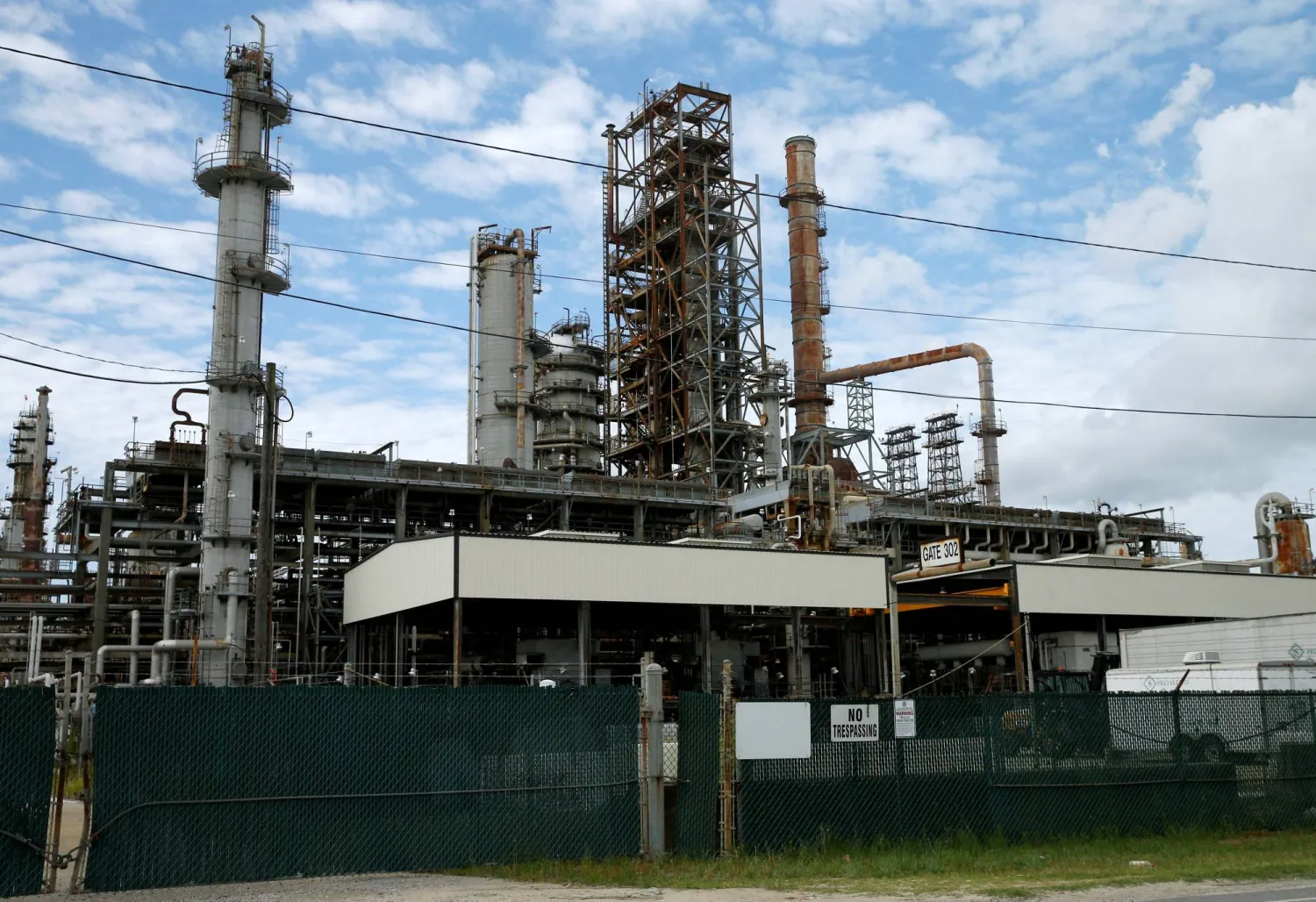
FILE PHOTO: The Phillips 66 Lake Charles Refinery is pictured in West Lake, Louisiana, US, June 12, 2018. REUTERS/Jonathan Bachman/File Photo
TT

Oil Prices Extend Gains on Concerns of Potential US-Iran Conflict

FILE PHOTO: The Phillips 66 Lake Charles Refinery is pictured in West Lake, Louisiana, US, June 12, 2018. REUTERS/Jonathan Bachman/File Photo

Oil prices rose on Thursday as the US and Iran attempted to ease a standoff in talks over Tehran's nuclear program while both sides heightened military activity in the key oil-producing region.

Brent futures climbed 23 cents, or 0.3% to $70.58 a barrel by 0735 GMT, while US West Texas Intermediate (WTI) crude gained 25 cents, or 0.4%, to trade at $65.44 a barrel.

Both benchmarks settled more than 4% higher on Wednesday, posting their highest settlements since January 30, as traders priced in the risk of supply disruptions in the event of ‌a conflict.

"Oil prices are ‌rallying as the market becomes increasingly concerned over the potential ‌for ⁠imminent US action ⁠against Iran," said ING analysts in a Thursday note.

Iranian state media reported the country had shut down the Strait of Hormuz for a few hours on Tuesday, without making clear whether the waterway had fully reopened. About 20% ⁠of the world's oil supply passes through the waterway.

"Tensions between Washington ‌and Tehran remain high, but the prevailing view ‌is that full-scale armed conflict is unlikely, prompting a wait-and-see approach," said Hiroyuki Kikukawa, chief strategist of ‌Nissan Securities Investment, a unit of Nissan Securities.

"US President Donald Trump does not ‌want a sharp rise in crude prices, and even if military action occurs, it would likely be limited to short-term air strikes," Kikukawa added.

A degree of progress was made during Iran talks in Geneva this week but distance remained on some issues, the White House said on Wednesday, ‌adding that it expected Tehran to come back with more details in a couple of weeks.

Iran issued a notice to ⁠airmen (NOTAM) that ⁠it plans rocket launches in areas across its south on Thursday from 0330 GMT to 1330 GMT, according to the US Federal Aviation Administration website.

At the same time, the US has deployed warships near Iran, with US Vice President JD Vance saying Washington was weighing whether to continue diplomatic engagement with Tehran or pursue "another option".

Meanwhile, two days of peace talks in Geneva between Ukraine and Russia ended on Wednesday without a breakthrough, with Ukrainian President Volodymyr Zelenskiy accusing Moscow of stalling US-mediated efforts to end the four-year-old war.

US crude and gasoline and distillate inventories fell last week, market sources said, citing American Petroleum Institute figures on Wednesday, contrary to expectations in a Reuters poll that crude stocks would rise by 2.1 million barrels in the week to February 13.

Official US oil inventory reports from the Energy Information Administration are due on Thursday.



JMMC Holds 65th Meeting via Videoconference, Discusses Energy Security and Market Stability

General view of Saudi Aramco's Ras Tanura oil refinery and oil terminal in Saudi Arabia May 21, 2018. REUTERS/Ahmed Jadallah
TT

JMMC Holds 65th Meeting via Videoconference, Discusses Energy Security and Market Stability

General view of Saudi Aramco's Ras Tanura oil refinery and oil terminal in Saudi Arabia May 21, 2018. REUTERS/Ahmed Jadallah

The Joint Ministerial Monitoring Committee (JMMC), comprising Saudi Arabia, Russia, Iraq, UAE, Kuwait, Kazakhstan, Nigeria, Algeria and Venezuela holds its 65th Meeting via videoconference.

The JMMC reviewed current market conditions and emphasized the essential role of the Declaration of Cooperation (DoC) in supporting the stability of global energy markets, according to SPA.

In this context, the committee highlighted the critical importance of safeguarding international maritime routes to ensure the uninterrupted flow of energy.

It also expressed concern regarding attacks on energy infrastructure, noting that restoring damaged energy assets to full capacity is both costly and takes a long time, thereby affecting overall supply availability.

Accordingly, the committee stressed that any actions undermining energy supply security, whether through attacks on infrastructure or disruption of international maritime routes, increase market volatility and weaken the collective efforts under the DoC to support market stability for the benefit of producers, consumers, and the global economy.

In this regard, the committee commended the DoC countries that took the initiative to ensure the continued availability of supplies, particularly through the use of alternative export routes, which have contributed to reducing market volatility.

The JMMC will continue to closely monitor market conditions and retains the authority to convene additional meetings or request an OPEC and non-OPEC Ministerial Meeting, as established at the 38th ONOMM held on December 5 2024.

The next meeting of the JMMC (66th) is scheduled for June 7, 2026.


Saudi Market Edges Higher on Insurance and Basic Materials Support

An investor monitors stock prices on a screen at the Saudi stock market in Riyadh (AFP)
TT

Saudi Market Edges Higher on Insurance and Basic Materials Support

An investor monitors stock prices on a screen at the Saudi stock market in Riyadh (AFP)

Saudi Arabia’s benchmark Tadawul All Share Index (TASI) edged up 0.03 percent to 11,272 points on Sunday, supported by insurance and basic materials stocks. Total traded value reached SAR 4.27 billion ($1.1 billion).

Shares of Petro Rabigh and The National Shipping Company of Saudi Arabia (Bahri) rose 1 percent and 1.5 percent to SAR 10.9 and SAR 32.6, respectively.

Saudi Arabian Amiantit Co. (Amiantit) led gainers, rising 10 percent to SAR 15.63. In the materials sector, SABIC and Maaden advanced 0.84 percent and 0.46 percent to SAR 60.05 and SAR 65.7, respectively.

In insurance, The Company for Cooperative Insurance (Tawuniya) and Bupa Arabia climbed 1 percent and 2 percent to SAR 127.3 and SAR 174.1, respectively. Almarai rose 1.2 percent to SAR 44.48 after reporting its Q1 2029 results.

On the downside, Saudi Aramco—the index heavyweight—declined 0.22 percent to SAR 27.54.

ACWA Power fell about 1 percent to SAR 168 after announcing last week a temporary curtailment of power output at two of its solar projects. Emaar The Economic City (Emaar EC) was the biggest decliner, falling 7.6 percent to SAR 10.88.


Saudi Airports Serve as Safety Valve for Regional Air Traffic as ‘Hormuz Fallout’ Hits Global Aviation

King Khalid International Airport in Riyadh (SPA)
TT

Saudi Airports Serve as Safety Valve for Regional Air Traffic as ‘Hormuz Fallout’ Hits Global Aviation

King Khalid International Airport in Riyadh (SPA)

Conflicts in the region are no longer confined to the geography of battlefields; their fallout has reached one of the world’s most vital and sensitive industries: aviation. Today, travelers and airlines alike face a harsh reality driven by record surges in jet fuel prices and a steep spike in insurance costs, pressures that have pushed ticket prices higher, threatening a severe economic squeeze that could derail global tourism plans and reshape travel patterns long taken for granted.

The surge in aviation costs cannot be separated from the turmoil in global energy markets. The link between crude oil and jet fuel prices peaked in early April 2026. As market confidence wavered amid US military threats, crude prices jumped to record levels due to the direct risk to supplies through the Strait of Hormuz, setting off an immediate spike in jet fuel prices. Given that jet fuel is among the most valuable refined products from a barrel of oil, these unprecedented crude levels pushed aviation fuel to nearly double its 2025 levels.

Compound pressures and a tourism slowdown

In remarks to Asharq Al-Awsat, aviation and airport management expert AlMotaz Al-Mirah said the current tensions, in an industry already operating on thin margins, are quickly reflected in both pricing and demand across the tourism sector.

“The rise in ticket prices today is not driven by a single factor,” he said, “but by a combination of pressures: higher fuel consumption, longer routes, elevated insurance costs, and reduced operational efficiency.”

The World Travel & Tourism Council confirmed that “the escalating conflict in Iran is already impacting travel and tourism across the Middle East by no less than $600 million per day in international visitor spending, as disruptions to air travel, traveler confidence, and regional connectivity weigh on demand.”

According to council data released in March, the Middle East plays a critical role in global travel, accounting for 5 percent of international arrivals and 14 percent of global transit traffic. Any disruption reverberates worldwide, affecting airports, airlines, hotels, car rental firms, and cruise lines.

The family travel bill

On leisure travel, Al-Mirah said fare increases have ranged from 15 percent to 70 percent across many routes- higher still on long-haul flights.

“A ticket that used to cost $500 now ranges between $800 and $1,000,” he noted, “meaning an increase of up to $2,000 for a family of four.” This is forcing many travelers to delay trips or opt for closer destinations, reshaping demand across regional markets.

He detailed the price surge since the crisis began in late February: jet fuel rose from around $85–90 per barrel to between $150 and $200. This has driven the cost per flight hour for long-haul aircraft from an average of $10,000 to more than $18,000 in some cases. A flight carrying 180 passengers could see total additional costs of about $15,000, forcing airlines to add roughly $80 per ticket just to break even.

Globally, Brazil’s Petrobras raised jet fuel prices by about 55 percent in early April, while the Philippines warned that some aircraft could be grounded due to fuel shortages, and Taiwanese carriers are preparing to increase international fuel surcharges by 157 percent.

Longer routes, heavier maintenance burdens

Al-Mirah explained that longer flight times to avoid unstable airspace carry steep financial costs, with each additional hour adding between $5,000 and $7,500. Route changes extending flight durations by one to two hours have increased fuel consumption by up to 30 percent. More time in the air also accelerates engine wear.

The strain goes beyond fuel. Increased flight hours speed up the deterioration of engines and components, bringing forward maintenance schedules and raising annual servicing costs- ultimately reducing fleet efficiency.

Airlines are also grappling with sharply higher war-risk insurance premiums. While such costs typically account for no more than 1 percent of total operating expenses, they have surged by between 50 percent and 500 percent in the current crisis, according to a March 2026 report by Lockton.

This buildup of fuel and insurance costs threatens to turn profitable routes into loss-making ones, potentially forcing cash-strapped or low-cost carriers to suspend some routes temporarily to preserve financial stability.

An aircraft from Riyadh Air at Le Bourget Airport (Reuters)

Saudi airports support regional air traffic

Amid these complexities, Saudi Arabia’s General Authority of Civil Aviation has deployed its capabilities to activate regional support protocols. Gulf airlines have shifted logistical operations to Saudi airports to keep regional air traffic safe and moving.

The authority announced that the Kingdom received more than 120 flights from neighboring countries’ carriers between February 28 and March 16, including Qatar Airways, Iraqi Airways, Kuwait Airways, Jazeera Airways, and Gulf Air.
