


Oil Edges up on Potential US Tariff Exemptions on Cars, Pick-up in China Crude Imports 

A general view of oil tanks located near the Teltowkanal canal in Berlin, Germany, 10 April 2025. (EPA)
TT

Oil Edges up on Potential US Tariff Exemptions on Cars, Pick-up in China Crude Imports 

A general view of oil tanks located near the Teltowkanal canal in Berlin, Germany, 10 April 2025. (EPA)

Oil prices inched higher on Tuesday, supported by new tariff exemptions floated by US President Donald Trump and a rebound in China crude oil imports in anticipation of tighter Iranian supply.

Brent crude futures gained 12 cents, or 0.2%, to $65 per barrel by 0350 GMT, while US West Texas Intermediate crude was up 13 cents, or 0.2%, to $61.66.

"Trump granted exemptions on electronic tariffs and signaled an auto tariff relief, both of which are seen as setbacks from the previously announced import levies, hence, providing some relief to risk assets, including oil," said independent market analyst Tina Teng.

"However, the rally in stocks and growth-sentiment commodities is skeptical, as his policy is unpredictable."

In the latest development in Trump's whipsawing trade war, he said he was considering a modification to the 25% tariffs imposed on foreign auto and auto parts imports from Mexico, Canada and other places.

The vacillating US trade policies have created uncertainty for global oil markets and pushed OPEC on Monday to lower its demand outlook for the first time since December.

The Trump administration had announced on Friday that it would grant exclusions from tariffs on smartphones, computers and some other electronic goods, most of which are imported from China. That drove both oil benchmarks to settle up slightly higher on Monday.

On Sunday, Trump said he would announce the tariff rate on imported semiconductors over the next week and a Monday Federal Register filing showed the administration had begun an investigation into imports of semiconductors on April 1.

"The market is digesting fast-moving policy developments on the tariff front, while balancing them with nuclear talks between the US and Iran," said ING analysts in a Tuesday note.

"Clearly, the market is more focused on tariffs and what they mean for oil demand."

US Energy Secretary Chris Wright said on Friday the United States could stop Iranian oil exports as part of Trump's plan to pressure Tehran over its nuclear program.

Also supporting prices were data on Monday showing that China's crude oil imports in March were up nearly 5% from a year earlier, as arrivals of Iranian oil surged in anticipation of tighter US sanctions enforcement.



Oil Slips, Stocks Rise as Report Says Trump Willing to End War

The squeeze on supply has pushed oil and gas prices ever higher, with drastic knock-on effects for supply chains in countless industries. Brandon Bell / GETTY IMAGES NORTH AMERICA/AFP
TT

Oil Slips, Stocks Rise as Report Says Trump Willing to End War

The squeeze on supply has pushed oil and gas prices ever higher, with drastic knock-on effects for supply chains in countless industries. Brandon Bell / GETTY IMAGES NORTH AMERICA/AFP

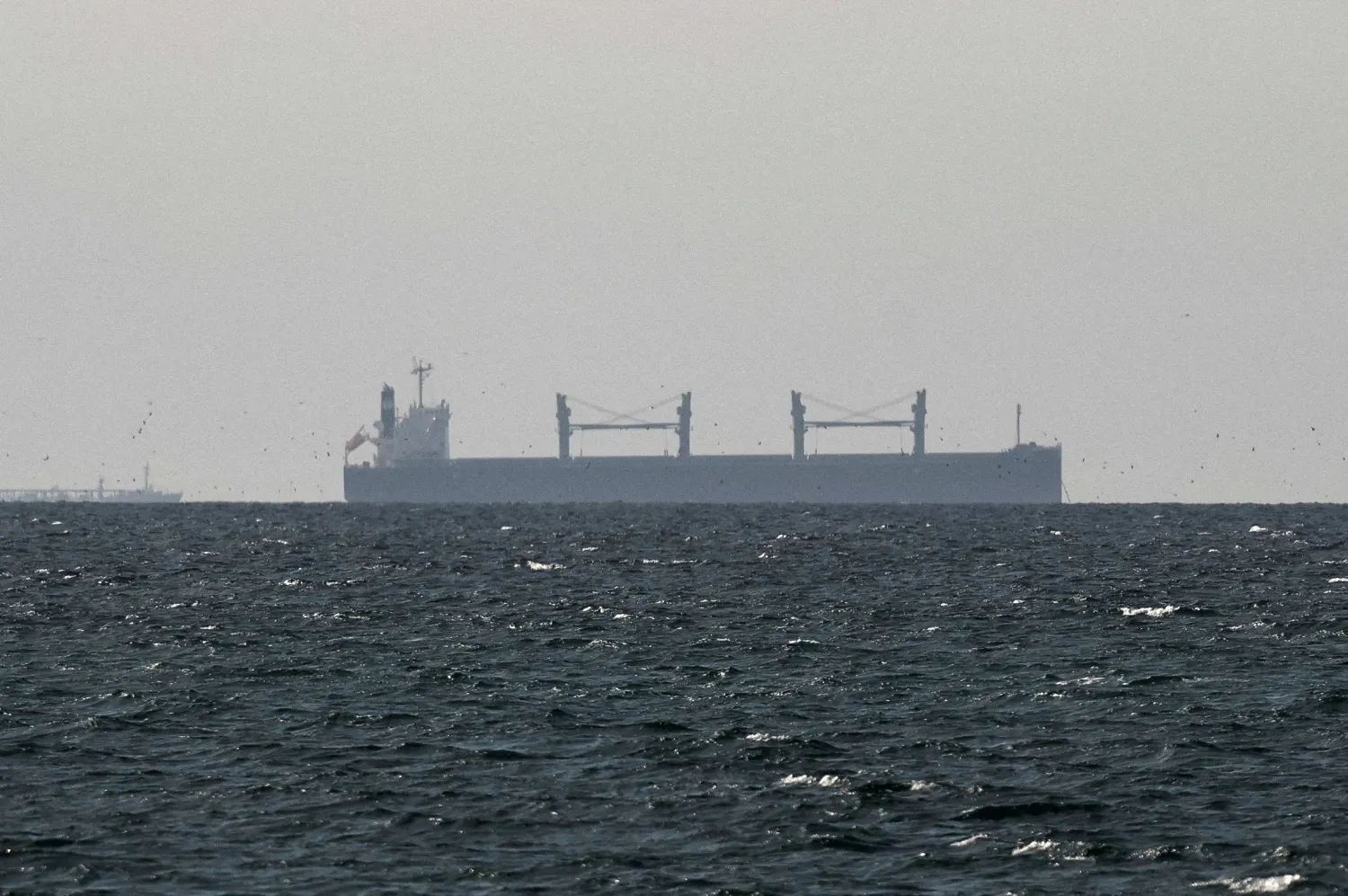
Oil prices sank and most stocks rose Tuesday, following a report that indicated Donald Trump was willing to end the Iran war even if the key Strait of Hormuz remained closed.

But investors remain wary as the Wall Street Journal story came on the same day the US president threatened to destroy Iran's key oil export hub and desalination plants unless it accepts a deal, while also suggesting diplomacy was making headway, said AFP.

The news comes as governments around the world scramble to implement measures to ease the burden of surging fuel prices while also looking to conserve energy, with one-fifth of global crude and gas passing through the waterway.

The Journal, citing administration officials, said Trump and his aides had come to the conclusion that a mission to reopen the waterway would extend the length of the mission past his four- to six-week timeline.

It added that he had decided to focus on battering Iran's missiles and navy, before looking to pressure Iran diplomatically to reopen the Strait.

Both main oil contracts fell Tuesday, though West Texas Intermediate and Brent were still sitting well above $100 a barrel.

And most equity markets rose. Hong Kong, Shanghai, Sydney, Singapore, Wellington and Jakarta were all up, while Tokyo fluctuated.

Seoul, Taipei and Manila fell.

However, Trump also threatened Monday to destroy Kharg Island, through which most of Iran's crude passes, if a peace deal is not reached.

He warned US forces would destroy "all of their Electric Generating Plants, Oil Wells and Kharg Island (and possibly all desalinization plants!)."

Destroying civilian infrastructure could constitute a war crime, experts say.

Iran has previously threatened to retaliate by targeting energy infrastructure and desalination plants in its Arab neighbors that host the US military, fanning fears of a wider conflict.

But Trump also said officials were speaking to a "more reasonable regime" in Tehran, which has denied any talks and accused the president of lying about negotiations as cover while preparing a ground invasion.

US Secretary of State Marco Rubio voiced hope for working with elements within Iran's government.

Market experts warned that any US ground operation or wider Iranian retaliation could send oil prices to levels not seen since July 2008, when Brent hit almost $150 a barrel.

'De-escalation and re-escalation'

In a sign Iran was determined to keep control of Hormuz, state media reported Monday that a parliamentary commission had approved plans to impose tolls on vessels transiting it.

With Trump flipping between hope for talks and threats, analysts said investors were having to walk a tightrope.

"The market continues to be headline-driven as the Trump Administration has delivered a variety of messages surrounding de-escalation and re-escalation of the war in Iran," Wolfe Research's Chris Senyek said.

With the war now in its fifth week, governments are moving to shore up their economies.

Economy ministers and central bankers from the G7 club of rich countries met in Paris to discuss the war's effects, with many countries introducing energy-saving measures or cutting fuel taxes to help consumers.

Norway said it will temporarily cut diesel and petrol taxes and Bangladesh ordered civil servants to switch off lights and turn down air conditioning to save power.

Sri Lanka announced a nearly 40 percent increase in electricity prices from Wednesday as it battles an energy shortage. Colombo has raised fuel prices three times this month, increasing them by more than a third, and has imposed a four-day working week in a bid to save energy.

"From here, the burden shifts from military outcomes to economic endurance. The question is no longer how high oil spikes, but how long elevated energy costs bleed into growth, margins, and consumption," said SPI Asset Management's Stephen Innes.

Federal Reserve boss Jerome Powell also provided a little support, saying Monday the bank could look past energy shocks because they "have tended to come and go pretty quickly" but monetary policy changes take time to flow through the economy.

While the spike in energy prices threatens to send inflation soaring again, he added that officials "feel like our policy is in a good place for us to wait and see how that turns out" and "inflation expectations do appear to be well-anchored beyond the short term".


IMF: Iran War 'Shock' is Dimming Outlook for Many Economies

FILE PHOTO: International Monetary Fund (IMF) logo is seen outside the headquarters building in Washington, US, September 4, 2018. REUTERS/Yuri Gripas/File Photo
TT

IMF: Iran War 'Shock' is Dimming Outlook for Many Economies

FILE PHOTO: International Monetary Fund (IMF) logo is seen outside the headquarters building in Washington, US, September 4, 2018. REUTERS/Yuri Gripas/File Photo

The war in the Middle East has caused serious disruption to the economies of frontline countries, and is dimming the outlook for many economies that had just started to recover from previous crises, the International Monetary Fund warned on Monday.

In a blog published by the global lender's top economists, the IMF said the war launched by US and Israeli strikes against Iran on February 28 was causing a global, but asymmetric shock and leading to tighter financial conditions.

Iran's closure of the Strait of Hormuz and damage to regional infrastructure had caused the largest disruption to the global oil market in history, given that 25%-30% of global oil and 20% of liquefied natural gas normally passed through the narrow waterway, according to ⁠the International Energy ⁠Agency.

The war's impact would depend on how long it lasts, how far it spreads and how much damage it inflicts on infrastructure and supply chains, the IMF said, urging countries to carefully calibrate any measures to manage the shock.

The IMF was also supporting member countries with policy advice and financial assistance, where needed and in coordination with the international community, the fund said.

The IMF statement came as finance ⁠leaders from the Group of Seven economic powers said they were ready to take "all necessary measures" to safeguard energy market stability and limit broader economic spillovers from recent volatility.

The International Energy Agency's 32 members agreed earlier this month to release a record 400 million barrels of oil from strategic stockpiles to combat a spike in global crude prices.

The IMF blog said low-income countries were at particular risk of food insecurity, given higher food and fertilizer prices, and might need more external support at a time when many advanced economies were scaling back their international assistance.

"Although the war could shape the global economy in different ways, all roads lead to higher prices and slower growth," the economists wrote, according to Reuters. They noted that ⁠large energy importers ⁠in Asia and Europe were bearing the brunt of higher fuel and input prices, while countries in Africa and Asia were finding it hard to access the supplies they need, even at inflated prices.

A long conflict and the associated uncertainty and geopolitical risk could keep energy expensive and strain countries that rely on imports, tensions could linger and inflation could prove hard to tame, they said.

The IMF said it will release a fuller assessment in its World Economic Outlook, to be published on April 14, during the IMF and World Bank spring meetings in Washington.

If elevated energy and food prices persist, they will fuel inflation worldwide, the authors wrote, noting that sustained oil-price spikes have historically tended to push inflation higher and growth lower.

The war could also fuel expectations that inflation will remain higher for longer, which could translate into higher wages and prices, making it harder to contain the shock without a sharper slowdown, they said.


Exxon and QatarEnergy's Joint Venture Golden Pass Produces 1st LNG at New Texas Facility

Storage tanks at the Golden Pass LNG project (X)
TT

Exxon and QatarEnergy's Joint Venture Golden Pass Produces 1st LNG at New Texas Facility

Storage tanks at the Golden Pass LNG project (X)

Golden Pass LNG, a joint venture between QatarEnergy and Exxon Mobil, has produced its first liquefied natural gas at its new facility in Texas, the company said on Monday, a major step toward bringing one of the largest US export projects online.

The plant is expected to export its first cargo in the second quarter, Exxon said on Monday.

Global gas supplies have been squeezed as the war in the Middle East disrupted output in Qatar, one of the world’s biggest LNG suppliers.

“Today, ⁠we began producing ⁠LNG at our terminal in Sabine Pass, marking the completion of a significant effort to construct, commission, and start up the first LNG train,” Alex Savva, president and CEO of Golden Pass, said in a statement.

Once fully operational, Golden Pass will be able to produce 18 million metric tons per annum.

"Golden Pass LNG will strengthen US energy production and reinforce the nation’s role as a reliable ⁠supplier to global markets, enhancing energy security and helping meet worldwide demand," Exxon said.

QatarEnergy holds a 70% stake in the project and Exxon owns 30%. Train 1, the initial production unit, will add 6 mtpa of new LNG capacity. Based on equity ownership, QatarEnergy will receive just over 4 mtpa while Exxon will receive just under 2 mtpa, the company said.

This milestone reflects an unwavering commitment to safety and continued progress toward full operations, Exxon said.

QatarEnergy, the world’s second-largest LNG exporter, said on March 24 it will have to declare force majeure on its production, citing the conflict in the Middle East. It said ⁠it has shut ⁠in facilities accounting for roughly 20% of global LNG supply.

Damage to those plants could leave the company without about 17% of its current output for up to five years, it said.

The $10 billion Golden Pass project has faced delays and cost overruns since construction began in 2019, including the bankruptcy of its original lead contractor. Golden Pass said first LNG production sets the stage for the terminal to deliver its first cargo from Sabine Pass, Texas.

The plant will be able to sustain liquefaction operations and meet its commercial and strategic targets, the company added. Supply disruptions from Qatar have driven Asian LNG prices sharply higher and prompted some countries to turn to coal or restrict energy exports as they contend with the shortages.