Wright to Asharq Al-Awsat: Diversification, Investment Can Go Hand in Hand

US Energy Secretary during the press conference at the Saudi Energy Ministry (Reuters)
TT

Wright to Asharq Al-Awsat: Diversification, Investment Can Go Hand in Hand

US Energy Secretary during the press conference at the Saudi Energy Ministry (Reuters)

Amid growing global economic uncertainty driven by trade tariffs and their impact on oil prices, US Energy Secretary Chris Wright visited the Middle East this week, delivering a pointed message: energy abundance is essential for economic growth.
Wright stressed the importance of increasing supply to meet rising global demand, and urged Washington’s allies in the region to play a stronger role in stabilizing energy markets by boosting output.
Wright’s four-day visit to Saudi Arabia followed earlier stops in the United Arab Emirates and preceded his current visit to Qatar, part of a broader regional tour. His trip comes ahead of a planned visit to Saudi Arabia by US President Donald Trump in May.
During his meetings in the kingdom, particularly with Saudi Energy Minister Prince Abdulaziz bin Salman, Wright discussed prospects for strengthening bilateral cooperation across various segments of the energy sector.
During his visit, Wright announced a forthcoming agreement between the United States and Saudi Arabia covering a wide range of energy-related fields. The deal, expected to be signed at a later date, will focus on the development of energy resources and infrastructure, including mining, civil nuclear technology, and power generation.
Wright’s tour also included stops at King Abdullah University of Science and Technology (KAUST), the headquarters of state oil giant Saudi Aramco in Dhahran, King Fahd University of Petroleum and Minerals, and the King Abdullah Petroleum Studies and Research Center (KAPSARC).
Wright said the United States and Saudi Arabia share a unified vision to deliver more affordable energy at a time when global demand is expected to surge.
Speaking to Asharq Al-Awsat ahead of his stop in Qatar, Wright said Washington welcomes global producers who are working with the US administration to cut costs by increasing energy output, while maintaining market stability and security.
Wright dismissed concerns that Trump’s push to lower oil prices could undermine Gulf countries’ economic diversification strategies or discourage investment.
He said the United States has strong ties with Gulf Cooperation Council (GCC) states and that the message to partners in the Middle East is clear: energy abundance and economic growth are closely linked.
He added that President Trump’s commitment to lowering energy costs for Americans goes hand in hand with expanding investment relations with Gulf allies.
Wright stressed that the US is not asking partners to choose between diversification and investment.
Instead, the administration promotes energy diversification—calling for more innovation, more projects, and more opportunities for mutually beneficial growth. He said countries in the region are not seen only as energy producers, but as strategic partners in shaping the energy systems of the future.
Wright’s comments come as Gulf states deepen their economic engagement with Washington. Saudi Crown Prince Mohammed bin Salman told President Trump in a recent phone call that Riyadh plans to expand trade and investment ties with the US by as much as $600 billion over the next four years, with potential for further increases if new opportunities arise. The UAE has also pledged around $1.4 trillion in investments over the next decade.
Wright said the US is highly encouraged by recent investment announcements from both the UAE and Saudi Arabia, as well as earlier Qatari commitments made during Trump’s first term, which are now producing results.
He said whether it involves AI infrastructure, liquefied natural gas, or nuclear innovation, the United States remains the most attractive and reliable destination for foreign investment.
He noted that the Trump administration is fostering a regulatory environment that encourages growth and innovation while offering competitive returns. He welcomed the capital, expertise, and long-term vision of US partners in building a secure and prosperous global energy future.
Wright also addressed US efforts to ensure stable global oil supplies amid sanctions on major producers like Iran, Venezuela, and Russia.
He said the scale of growing energy demand is clear when considering both the energy-intensive development of artificial intelligence and the reality that only one billion of the world’s eight billion people currently enjoy access to energy-rich lifestyles.
He said Trump is pursuing an energy expansion agenda focused on improving global living standards.
The US, Wright said, is already playing its part, producing record volumes of oil and natural gas. He urged Middle East allies to help meet rising demand, diversify sources of supply, and continue delivering reliable, affordable energy to global markets.
Wright, accompanied by Saudi Energy Minister Prince Abdulaziz bin Salman, visited Dammam Well No. 1—the first oil well drilled in Saudi Arabia in 1935 by the Arabian American Oil Company, later known as Saudi Aramco.
The site marked the launch of the kingdom’s oil industry and a turning point in its economic transformation.
Reflecting on his visit to Dammam Well No. 1, Wright told Asharq Al-Awsat that Saudi-US energy cooperation began 90 years ago, when the first oil well in Saudi Arabia was drilled by a predecessor to Chevron in partnership with the Saudi government.
He recalled how, after spending large sums and drilling seven dry wells, the company was on the verge of abandoning exploration in the kingdom. But Max Steineke, a bold American geologist, refused to give up—he drilled deeper and struck oil, changing the course of Saudi history, benefiting both nations, and reshaping the path of global economic prosperity.
Wright said the visit reinforced his confidence that the US-Saudi relationship remains vibrant today. Working together, he added, the United States aims to achieve prosperity at home and promote peace across the globe.



Saudia Signs Strategic Partnership Agreement with Six Flags and Aquarabia Qiddiya City

udia will develop special travel packages designed to enable visitors to experience world-class attractions - SPA
TT

Saudia Signs Strategic Partnership Agreement with Six Flags and Aquarabia Qiddiya City

udia will develop special travel packages designed to enable visitors to experience world-class attractions - SPA

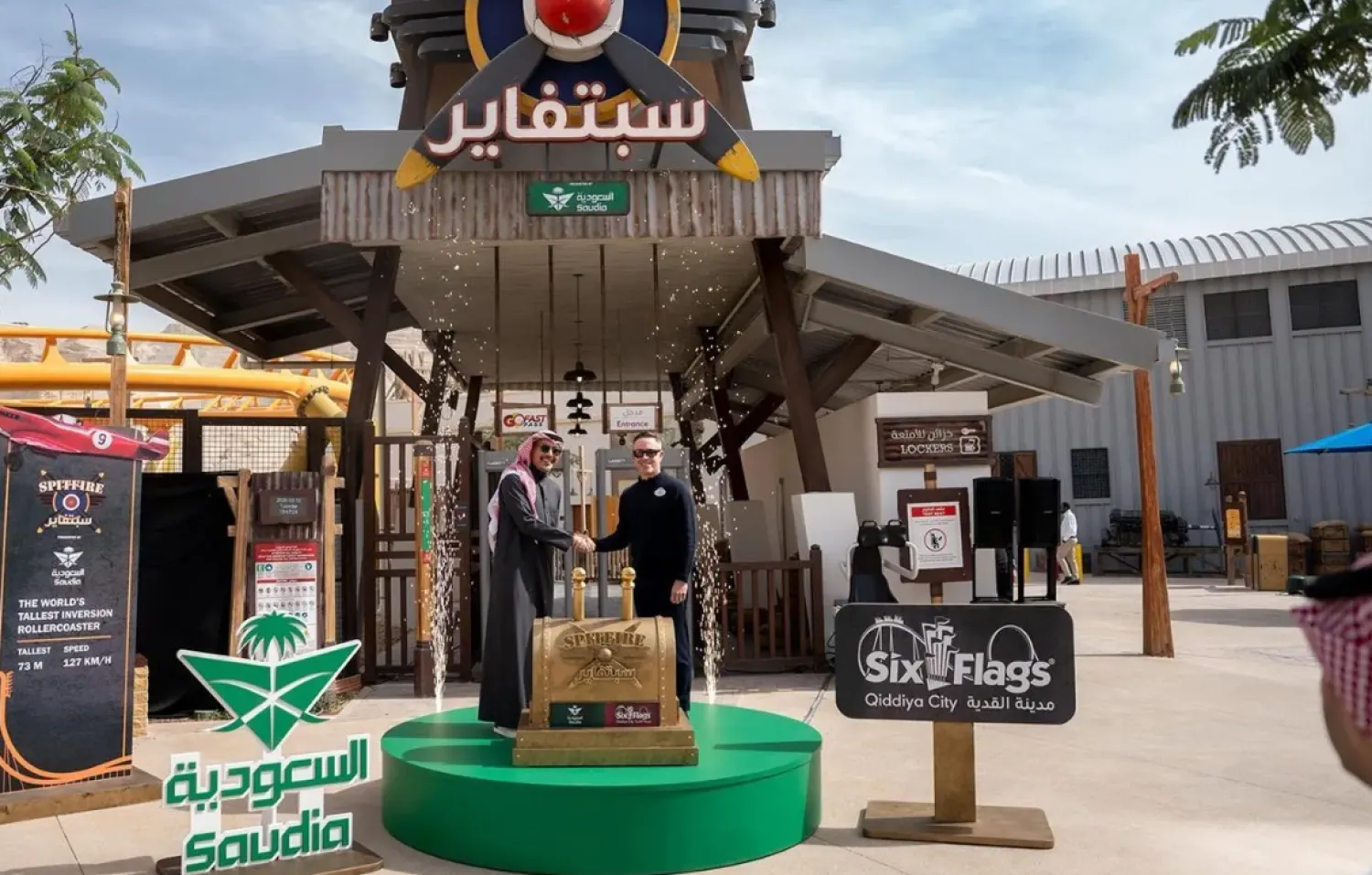
Saudia Airlines has signed a five-year strategic partnership with Six Flags and Aquarabia Qiddiya City, becoming the official premier partner exclusively in the airline category.

As part of the partnership, Saudia will develop special travel packages designed to enable visitors to experience world-class attractions. The collaboration also brings the spirit of Six Flags and Aquarabia Qiddiya City to the skies through special aircraft branding across Saudia’s fleet, SPA reported. 

Chief Marketing Officer of Saudia Group Khaled Tash said in a press release: "Saudia is committed to supporting national development projects as part of its contribution to Vision 2030, aligned with our strategy to bring the world to the Kingdom. Partnerships of this scale with national partners play a key role in positioning Saudi Arabia as a leading global destination for entertainment and tourism."

Park President of Six Flags and Aquarabia Qiddiya City Brian Machamer added: "Our partnership with Saudia not only reflects a shared ambition to connect the Kingdom to the world through world-class entertainment experiences, but strengthens our ability to attract visitors from around the world and realize our vision of setting a new global benchmark for immersive, world-class theme park entertainment and reinforcing Saudi Arabia’s growing presence on the global tourism stage."

Six Flags Qiddiya City sets a new benchmark for exceptional entertainment regionally and globally. Spanning six iconic themed lands, the theme park takes visitors on an immersive journey across 28 rides and attractions designed to world-class standards. Beyond the scale and diversity of its offerings, Six Flags Qiddiya City stands out for pushing the boundaries of engineering and entertainment, featuring five exclusive, record-breaking rides that have redefined global benchmarks. Leading these innovations is Falcons Flight, the roller coaster that has captured global attention as the fastest, tallest, and longest in the world.

Aquarabia Qiddiya City delivers a distinctive aquatic entertainment experience, offering 22 rides and water attractions, along with a man-made river designed for both relaxation and family-friendly water fun. For guests seeking privacy and elevated comfort, Aquarabia features 91 luxury cabanas, positioning the destination as a fully integrated leisure offering that redefines water-based entertainment to the highest international standards.

Located in the Tuwaiq Mountains near Riyadh, Qiddiya City is an emerging destination bringing together entertainment, sports, and culture. Six Flags and Aquarabia Qiddiya City form part of its entertainment offering.


Moody’s Establishes Regional HQ in Riyadh, Deepening Presence in Region

(FILES) Signage for Moody's Corporation is displayed at their headquarters at 7 World Trade Center on March 18, 2025 in New York City. (Photo by ANGELA WEISS / AFP)
TT

Moody’s Establishes Regional HQ in Riyadh, Deepening Presence in Region

(FILES) Signage for Moody's Corporation is displayed at their headquarters at 7 World Trade Center on March 18, 2025 in New York City. (Photo by ANGELA WEISS / AFP)

Moody’s Corporation announced that it has established its regional headquarters in Riyadh, reflecting ongoing commitment to support the development of the Kingdom’s capital markets and economy.

“This investment aligns to the Kingdom's Vision 2030 initiative and underscores its dynamism and growth,” Moody’s said in a statement this week.

The new regional headquarters marks an expansion of Moody’s presence in Saudi Arabia, where the company first opened an office in 2018, and reflects its longstanding commitment to the Middle East.

“The headquarters will strengthen Moody’s engagement with Saudi institutions and enable broader access to Moody’s decision grade data, analytics and insights,” said the statement.

“Our decision to establish a regional headquarters in Riyadh reflects our confidence in Saudi Arabia’s strong economic momentum, as well as our commitment to helping domestic and international investors unlock opportunities with our expertise and insights,” said President and Chief Executive Officer of Moody’s Rob Fauber.

“We are well positioned to provide the analytical capabilities and market intelligence that investors and institutions need to navigate evolving markets across the Middle East,” the statement quoted him as saying.

Mahmoud Totonji will lead the regional headquarters as General Manager.


Saudi Arabia Launches First Endowment Fund for Environmental, Water and Agricultural Sustainability

The launch of the Namaa Endowment Fund (Asharq Al-Awsat)
TT

Saudi Arabia Launches First Endowment Fund for Environmental, Water and Agricultural Sustainability

The launch of the Namaa Endowment Fund (Asharq Al-Awsat)

Saudi Arabia has launched its first endowment fund dedicated to advancing environmental, water and agricultural sustainability, reinforcing efforts to strengthen the Kingdom’s non-profit sector and long-term development.

Minister of Environment, Water and Agriculture Eng. Abdulrahman Al-Fadhli on Tuesday inaugurated the Namaa Endowment Fund at the ministry’s headquarters, in the presence of senior officials and stakeholders.

The fund is designed to support economic and social development goals, address community needs, increase the non-profit sector’s contribution to GDP, and promote sustainable management of environmental, water and agricultural resources.

Al-Fadhli said the fund represents a new model of institutional endowment work and a practical mechanism to expand developmental impact while ensuring the sustainability of non-profit initiatives.

Developed in partnership with the General Authority for Awqaf, the fund aims to build assets commensurate with its ambitions, enabling higher returns and a wider impact over the long term.

It will pursue carefully structured investments that balance financial performance with developmental outcomes, with the potential to own or benefit from real estate assets that can be used by non-profit organizations.

Encouraging Private-Sector Participation

Al-Fadhli added that the ministry, in cooperation with the General Authority for Awqaf, the Capital Market Authority and AlAhli Capital, will support the fund and encourage contributions from the private sector, business leaders and the wider public.

Contributions will be made through a licensed digital platform under strict financial governance. He called on all segments of society to contribute in support of sustainable development across the environment, water and agriculture sectors.

Namaa will finance endowment initiatives within the ministry’s ecosystem, including the non-profit institutions Reef, Morooj and Saqaya. Its focus areas include water provision and conservation, afforestation, biodiversity protection, vegetation cover, the circular economy, sustainable agriculture and irrigation, and reducing food loss and waste.

Emad Alkharashi, Governor of the General Authority for Awqaf, announced an initial contribution of SAR100 million, describing it as a foundation for a sustainable endowment model.

He said the fund combines the legacy of endowments with modern investment practices to protect natural resources, strengthen food security and ensure lasting developmental impact.

Alkharashi added that the partnership with the ministry maximizes results and positions the fund as a model for directing endowments toward high-impact, long-term priorities through a transparent, well-governed institutional framework.