


Saudi Arabia Launches First Endowment Fund for Environmental, Water and Agricultural Sustainability

The launch of the Namaa Endowment Fund (Asharq Al-Awsat)
TT

Saudi Arabia Launches First Endowment Fund for Environmental, Water and Agricultural Sustainability

The launch of the Namaa Endowment Fund (Asharq Al-Awsat)

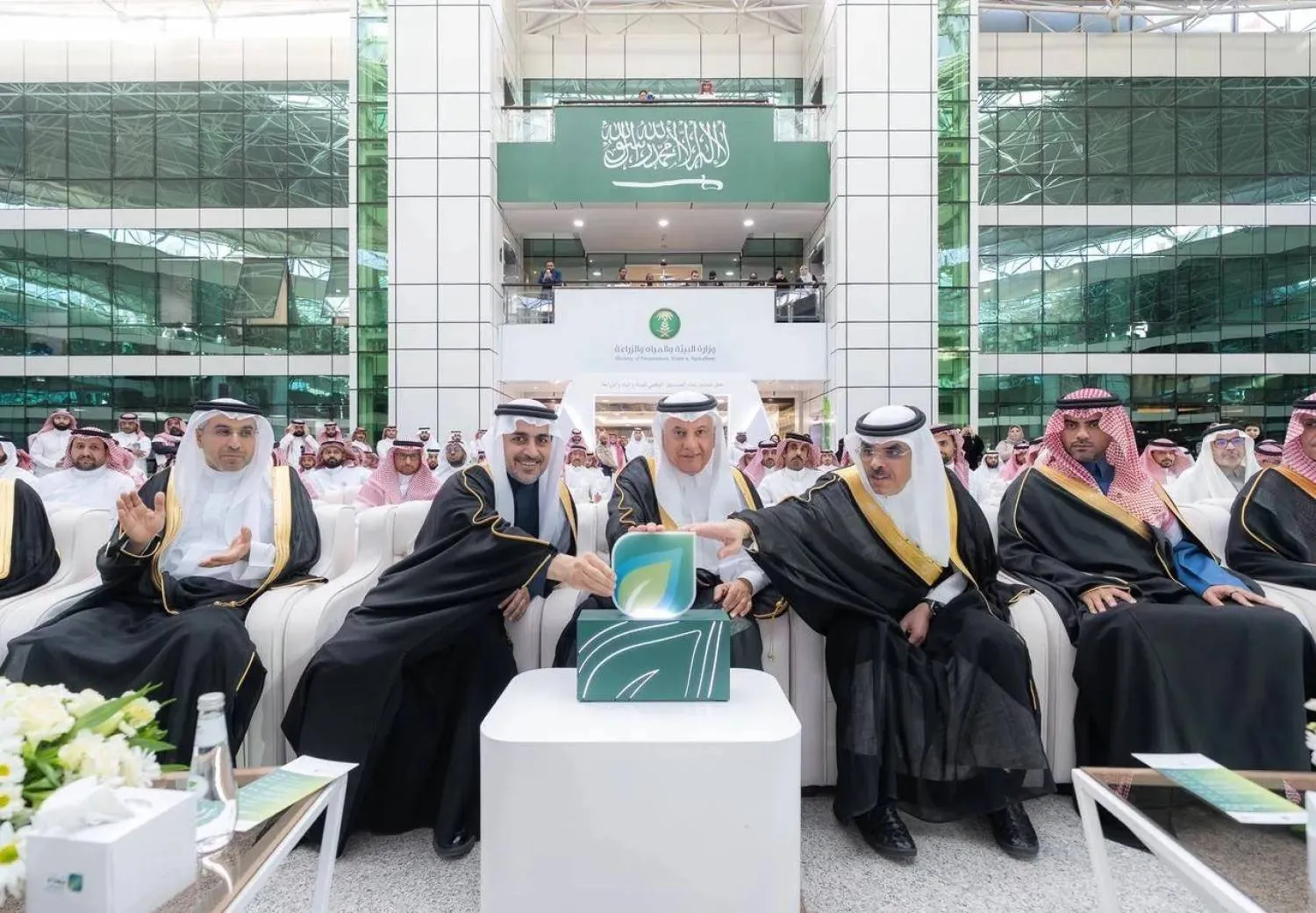
Saudi Arabia has launched its first endowment fund dedicated to advancing environmental, water and agricultural sustainability, reinforcing efforts to strengthen the Kingdom’s non-profit sector and long-term development.

Minister of Environment, Water and Agriculture Eng. Abdulrahman Al-Fadhli on Tuesday inaugurated the Namaa Endowment Fund at the ministry’s headquarters, in the presence of senior officials and stakeholders.

The fund is designed to support economic and social development goals, address community needs, increase the non-profit sector’s contribution to GDP, and promote sustainable management of environmental, water and agricultural resources.

Al-Fadhli said the fund represents a new model of institutional endowment work and a practical mechanism to expand developmental impact while ensuring the sustainability of non-profit initiatives.

Developed in partnership with the General Authority for Awqaf, the fund aims to build assets commensurate with its ambitions, enabling higher returns and a wider impact over the long term.

It will pursue carefully structured investments that balance financial performance with developmental outcomes, with the potential to own or benefit from real estate assets that can be used by non-profit organizations.

Encouraging Private-Sector Participation

Al-Fadhli added that the ministry, in cooperation with the General Authority for Awqaf, the Capital Market Authority and AlAhli Capital, will support the fund and encourage contributions from the private sector, business leaders and the wider public.

Contributions will be made through a licensed digital platform under strict financial governance. He called on all segments of society to contribute in support of sustainable development across the environment, water and agriculture sectors.

Namaa will finance endowment initiatives within the ministry’s ecosystem, including the non-profit institutions Reef, Morooj and Saqaya. Its focus areas include water provision and conservation, afforestation, biodiversity protection, vegetation cover, the circular economy, sustainable agriculture and irrigation, and reducing food loss and waste.

Emad Alkharashi, Governor of the General Authority for Awqaf, announced an initial contribution of SAR100 million, describing it as a foundation for a sustainable endowment model.

He said the fund combines the legacy of endowments with modern investment practices to protect natural resources, strengthen food security and ensure lasting developmental impact.

Alkharashi added that the partnership with the ministry maximizes results and positions the fund as a model for directing endowments toward high-impact, long-term priorities through a transparent, well-governed institutional framework.



Iraq Studies Alternative Options for Oil Exports

Floating oil export loading platforms at the Basra Oil Port, Iraq, March 12, 2026. REUTERS/Mohammed Aty
TT

Iraq Studies Alternative Options for Oil Exports

Floating oil export loading platforms at the Basra Oil Port, Iraq, March 12, 2026. REUTERS/Mohammed Aty

Iraq is studying alternative measures to export crude oil after disruptions to the process amid the US-Israeli war against Iran. At the same time, the country intends to continue producing crude oil at a level of 1.4 million barrels per day.

Iraqi Oil Minister Hayyan Abdul Ghani told the official television channel Al-Iraqiya News that oil exports account for 90 percent of Iraq’s revenues, and that the ministry has decided to continue producing crude oil at 1.4 million barrels per day.

He emphasized that the production and supply of petroleum products to meet domestic demand have not stopped.

He added that refineries are operating at full design capacity to cover local needs, and that sufficient quantities of liquefied gas are available to fully meet domestic needs.

Regarding exports, he explained that the export process has stopped in the south, prompting the government to search for possible alternatives to export crude oil. He revealed that an agreement is close to being signed to export oil through the Turkish Ceyhan pipeline.

Abdul Ghani added that the ministry has prepared a comprehensive plan to manage the current phase, particularly after the new circumstances in the Strait of Hormuz, noting that a plan has been activated to transport 200,000 barrels per day by tanker trucks through Türkiye, Syria, and Jordan.

In a separate context, the oil minister denied that tankers targeted in Iraqi waters belonged to Iraq, explaining that they were not Iraqi vessels and were carrying naphtha.

Iraq recently lost its entire oil export capacity of 3.35 million barrels per day after Iran closed the Strait of Hormuz following escalating conflict in the region.

Iraq relies on crude oil sales for about 95 percent of its revenues to meet the needs of the country’s annual federal budget. This means that the country would face a critical situation if the conflict in the Gulf region and the Strait of Hormuz continues.


Gold Set for Weekly Drop as Oil Price Surge Weighs on Rate-cut Hopes

FILE PHOTO: A goldsmith weighs gold jewelry inside a showroom in Ahmedabad, India, July 31, 2025. REUTERS/Amit Dave/File Photo
TT

Gold Set for Weekly Drop as Oil Price Surge Weighs on Rate-cut Hopes

FILE PHOTO: A goldsmith weighs gold jewelry inside a showroom in Ahmedabad, India, July 31, 2025. REUTERS/Amit Dave/File Photo

Gold prices were on track for a second consecutive weekly drop, despite edging up on Friday, as surging energy prices due to the Middle East war dimmed prospects for near-term US interest rate cuts.

Spot gold was up 0.3% at $5,095.55 per ounce, as of 0633 GMT on Friday. US gold futures for April delivery fell 0.1% to $5,100.20.

The US 10-year Treasury yields eased, increasing the appeal of the non-yielding bullion. Bullion, however, has ‌lost more ‌than 1% so far this week. Since the war ‌started ⁠on February 28, ⁠it has dropped over 3% so far.

Fears of inflation and questions about the Federal Reserve's ability to cut interest rates if high oil prices persist are somewhat counteracting gold's appeal, said Tim Waterer, KCM Trade chief market analyst.

"Given the ongoing uncertainty about the duration and scope of the conflict in the Middle East, I expect gold to remain on the ⁠radar for investors as a safety play." Heightening geopolitical ‌tensions, Iran's Supreme Leader Mojtaba Khamenei said ‌on Thursday that Tehran will keep the strategic Strait of Hormuz closed as ‌leverage against the US and Israel, which has stoked concerns about ‌global energy supply and risk assets.

Oil prices rose above $100 a barrel, as attacks on oil tankers in the Gulf and warnings from Iran shattered prospects of quick de-escalation in the Middle East conflict. As oil prices surged, US President Donald ‌Trump again demanded Fed Chair Jerome Powell cut interest rates.

Traders, however, expect the Fed to keep rates ⁠steady in the current ⁠3.5%-3.75% range at the end of its two-day meeting on March 18, according to CME Group's FedWatch tool. While recent inflation data suggest price growth is under control, the war and the resulting spike in crude prices have yet to filter through the data.

Investors are awaiting the release of the delayed January Personal Consumption Expenditures Index, expected on Friday. Gold discounts in India widened this week to their deepest point in nearly a decade as demand stayed subdued and some traders steered clear of paying import duties, while the escalating Middle East war boosted safe-haven demand in China.

Spot silver was down 1% at $82.91 per ounce. Spot platinum lost 1% to $2,111.45 and palladium fell 1% to $1,603.


Iran War and Rising Fuel Costs Could Boost Panama Canal Traffic, Administrator Says

A cargo ship sails under Las Americas bridge through the Panama Canal, in Panama City, Thursday, March 12, 2026. (AP)
TT

Iran War and Rising Fuel Costs Could Boost Panama Canal Traffic, Administrator Says

A cargo ship sails under Las Americas bridge through the Panama Canal, in Panama City, Thursday, March 12, 2026. (AP)

Panama Canal Administrator Ricaurte Vásquez said Thursday that the conflict in the Middle East and rising fuel costs could ultimately benefit the interoceanic waterway as global shippers adjust routes.

In an interview with The Associated Press, Vásquez said that higher energy, fuel and navigation costs could make the Panama Canal a more attractive option for commercial traffic.

“When costs increase, in general when the price of marine fuel rises, the Panama Canal becomes a more attractive route,” Vásquez said.

Oil prices have risen amid the war in the Middle East, which has led to the temporary closure of the Strait of Hormuz by Iran in response to US and Israeli attacks. About one-fifth of the world’s oil passes through the waterway at the mouth of the Gulf.

If higher energy costs persist, routing cargo through Panama can cut voyages by between three and 15 days, depending on the route, while reducing fuel consumption, he said.

Vásquez said higher fuel costs are expected to affect container ships, bulk carriers and tankers transporting liquefied natural gas. If Middle Eastern supplies are disrupted, shipments may be replaced by other sources, including the United States, which could redirect some LNG cargo from Europe to Asia via Panama.

Gerardo Bósquez, an executive with the Panama Maritime Chamber, said a prolonged conflict could reshape global trade routes, with gas transport among the segments likely to benefit.

Vásquez cautioned that any changes will not be immediate and will depend on how long cargo operators expect the conflict and instability in the Gulf last.