US Solar Tariffs Could Drive Asia Transition Boom

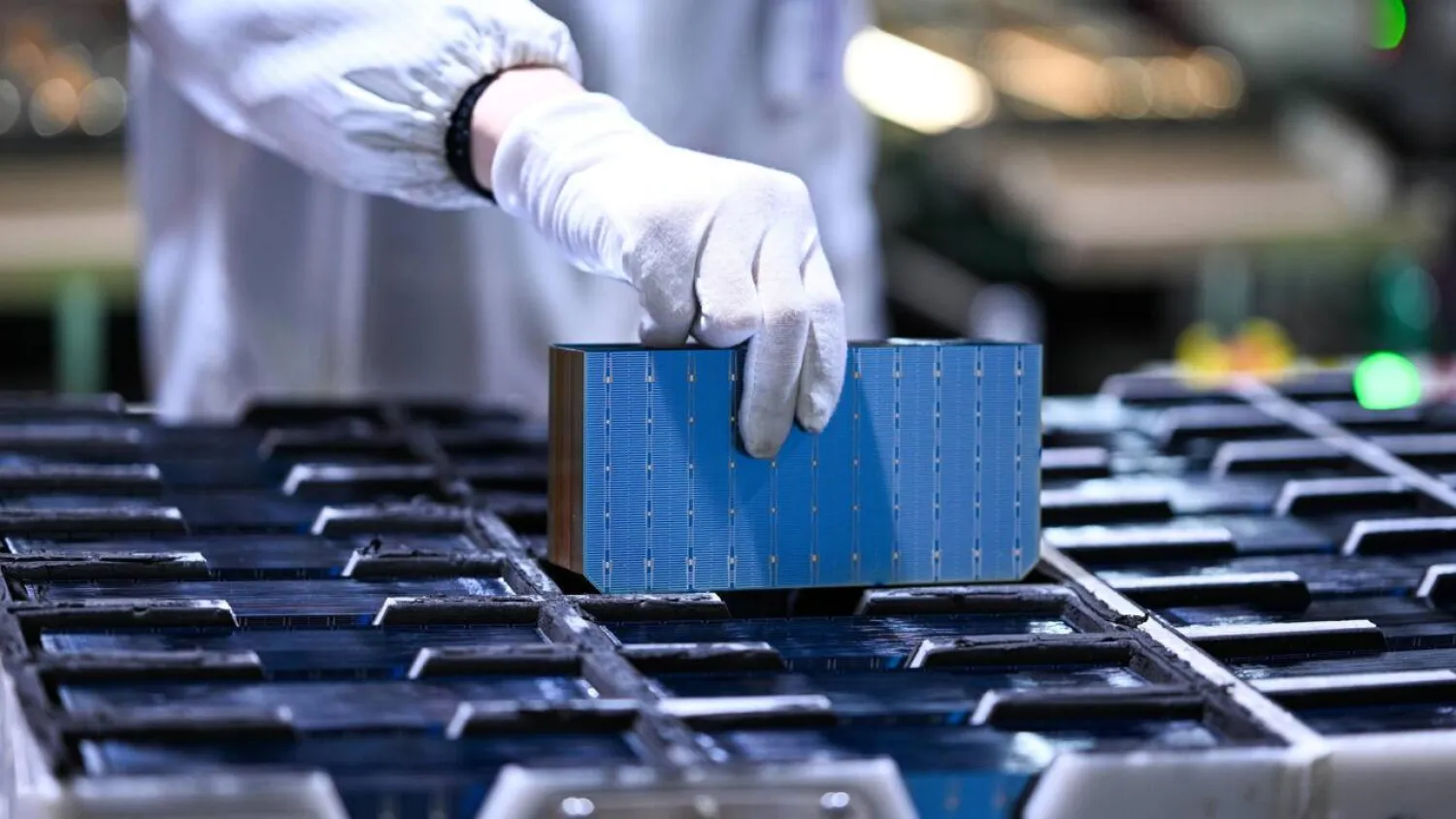
Massive new tarrifs could hit solar panels made in Southeast Asia from June. (AFP)
TT

US Solar Tariffs Could Drive Asia Transition Boom

Massive new tarrifs could hit solar panels made in Southeast Asia from June. (AFP)

Massive planned US duties on solar panels made in Southeast Asia could be a chance for the region to ramp up its own long-stalled energy transition, experts say.
Earlier this month, Washington announced plans for hefty duties on solar panels made in Cambodia, Vietnam, Thailand and Malaysia.
The levies follow an investigation, launched before US President Donald Trump took office, into "unfair practices" in the countries, particularly by Chinese-headquartered firms, AFP said.
If approved next month, they will pile upon tariffs already imposed by the Trump administration, including blanket 10-percent levies for most countries, and 145 percent on Chinese-made goods.
For the US market, the consequences are likely to be severe. China makes eight out of every 10 solar panels globally, and controls 80 percent of every stage of the manufacturing process.
The new tariffs "will practically make solar exports to US impossible commercially", said Putra Adhiguna, managing director at the Energy Shift Institute think tank.
Southeast Asia accounted for nearly 80 percent of US solar panel imports in 2024.
And while investment in solar production has ramped up in the United States in recent years, the market still relies heavily on imported components.
For Chinese manufacturers, already dealing with a saturated domestic market, the raft of tariffs is potentially very bad news.
Many shifted operations to Southeast Asia hoping to avoid punitive measures imposed by Washington and the European Union as they try to protect and nurture domestic solar industries.
The proposed new duties range from around 40 percent for some Malaysian exports to an eye-watering 3,521 percent for some Cambodia-based manufacturers.
- Tariffs 'accelerate' transition -
But there may be a silver lining for the region, explained Ben McCarron, managing director at Asia Research & Engagement.
"The tariffs and trade war are likely to accelerate the energy transition in Southeast Asia," he said.
China will "supercharge efforts" in regional markets and push for policy and implementation plans to "enable fast adoption of green energy across the region", driven by its exporters.
Analysts have long warned that countries in the region are moving too slowly to transition from planet-warming fossil fuels like coal.
"At the current pace, it (Southeast Asia) risks missing out on the opportunities provided by the declining costs of wind and solar, now cheaper than fossil fuels," said energy think tank Ember in a report last year.
For example, Malaysia relied on fossil fuels for over 80 percent of its electricity generation last year.
It aims to generate 24 percent from renewables by 2030, a target that has been criticized as out of step with global climate goals.
The tariff regime represents a double opportunity for the region, explained Muyi Yang, senior energy analyst at Ember.
So far, the local solar industry has been "largely opportunistic, focused on leveraging domestic resources or labor advantages for export gains", he told AFP.
Cut off from the US market, it could instead focus on local energy transitions, speeding green energy uptake locally and driving a new market that "could serve as a natural hedge against external volatility".
Still, replacing the US market will not be easy, given its size and the relatively nascent state of renewables in the region.
"Success hinges on turning this export-led momentum into a homegrown cleantech revolution," said Yang.
"Clearance prices" may be attractive to some, but countries in the region and beyond may also be cautious about a flood of solar, said Adhiguna.
Major markets like Indonesia and India already have measures in place intended to favor domestic solar production.
"Many will hesitate to import massively, prioritizing trade balance and aims to create local green jobs," he said.



Iran's Currency Sinks to a New Record Low

FILE PHOTO: People walk past a sign at a currency exchange as the value of the Iranian Rial drops, in Tehran, Iran, October 5, 2025. Majid Asgaripour/WANA (West Asia News Agency) via REUTERS
TT

Iran's Currency Sinks to a New Record Low

FILE PHOTO: People walk past a sign at a currency exchange as the value of the Iranian Rial drops, in Tehran, Iran, October 5, 2025. Majid Asgaripour/WANA (West Asia News Agency) via REUTERS

Iran's currency slipped to the lowest level in its history on Monday, nearing 1,250,000 rial to the US dollar on the open rate market, various outlets including the semi-official Tasnim news agency reported.

The Iranian rial stood around 55,000 to the US dollar in 2018, when US sanctions were reimposed by the first Trump administration to force Tehran to the negotiating table by limiting its oil exports and access to foreign currency.

Iranian media blamed the government's recent economic liberalization policies for adding pressure to the open rate market, Reuters.

The open rate market is where ordinary Iranians buy foreign currency, whereas businesses typically use state-regulated rates.

However, the government's recent decision to allow importers to tap into the open market to import essential goods has added pressure on the market and increased the dollar's price, semi-official Fars news agency said.

Iran's economy is at risk of recession, with the World Bank forecasting an economic shrinkage of 1.7% in 2025 and 2.8% in 2026. The risk is compounded by rising inflation, with Iran's Statistical Center announcing monthly inflation of 48.6% in October, the highest in 40 months. Despite inflationary pressures, Iran said last month it would increase fuel prices in December under certain conditions, primarily impacting drivers using more than 100 liters per month.


Gold Rises on Fed Rate Cut Expectations, Weaker Dollar

A one-ounce gold bar is displayed at Witter Coins on October 07 2025 in San Francisco. (AFP)
TT

Gold Rises on Fed Rate Cut Expectations, Weaker Dollar

A one-ounce gold bar is displayed at Witter Coins on October 07 2025 in San Francisco. (AFP)

Gold prices rose on Monday, driven by growing expectations of a US interest rate cut that pressured the dollar, ahead of a Federal Reserve policy meeting this week.

Spot gold rose 0.3% to $4,209.43 per ounce by 0851 GMT. US gold futures for December delivery fell 0.1% to $4,239.40 per ounce.

The dollar index edged lower, hovering near the one-month low reached on December 4, making dollar-priced gold more affordable for overseas buyers.

"Gold is benefiting from a weaker U.S. dollar and market participants expecting the Fed to cut interest rates this week," said UBS analyst Giovanni Staunovo.

Data last week showed that US consumer spending grew moderately in September. That reflected a slowdown in economic momentum amid rising costs and weakness in the labor market as private payrolls saw their steepest decline in over two-and-a-half years in November.

According to CME's FedWatch tool, markets are pricing in an 87% probability of a 25-basis-point rate cut at the Fed's December 9-10 policy meeting, following the release of weak economic data and dovish remarks from several Fed officials.

Lower interest rates typically bolster demand for non-yielding assets like gold.

"We still look for more rate cuts next year, which should push gold to $4,500/oz next year," added Staunovo.

Silver was up 0.3% at $58.43 per ounce, after hitting a record high of $59.32 on Friday.

"Silver is benefiting from the same factor as gold. Additionally the expectation of improving industrial demand as a result of monetary and fiscal stimulus helped silver to outperform gold in recent weeks," Staunovo said.

The white metal has doubled in price this year, driven by supply deficits and its designation as a critical mineral by the US.

Elsewhere, platinum gained 0.6% to $1,650.90 and palladium rose 1% to $1,471.26.


Saudi Arabia’s Mawani, ARASCO to Establish Logistics Center at King Abdulaziz Port

Saudi Arabia’s Mawani, ARASCO to Establish Logistics Center at King Abdulaziz Port
TT

Saudi Arabia’s Mawani, ARASCO to Establish Logistics Center at King Abdulaziz Port

Saudi Arabia’s Mawani, ARASCO to Establish Logistics Center at King Abdulaziz Port

The Saudi Ports Authority (Mawani) signed a contract with Arabian Agricultural Services Company (ARASCO) to establish a logistics center for storage and distribution at King Abdulaziz Port in Dammam, reported the Saudi Press Agency on Monday.

Valued at SAR200 million, the center will span 40,000 square meters and aims to bolster food security in the Kingdom while increasing port capacity.

The move aligns with the objectives of the National Transport and Logistics Strategy to solidify the Kingdom's position as a global logistics hub.

The contract further strengthens Mawani’s ongoing efforts to boost the efficiency of national supply chains and optimize operations at King Abdulaziz Port.

The investment is designed to bolster King Abdulaziz Port's capabilities in grain unloading and storage by constructing warehouses capable of handling up to 100,000 metric tons.