


IEA Agrees to Record Release of Emergency Oil Reserves in an Effort to Calm Surging Prices

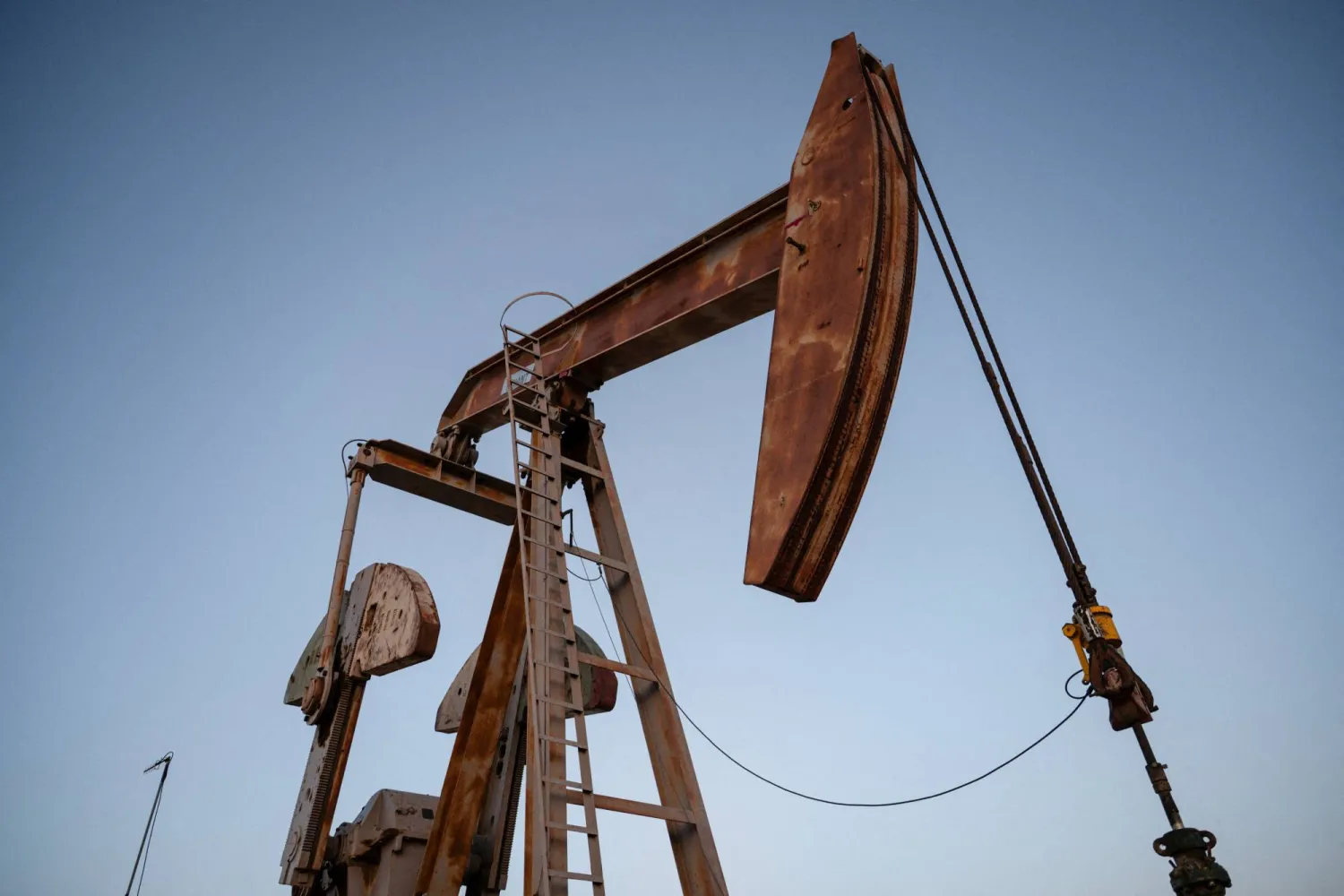
FILE PHOTO: A pump jack operates outside of Midland, Texas, US June 11, 2025. REUTERS/Eli Hartman/File Photo
TT

IEA Agrees to Record Release of Emergency Oil Reserves in an Effort to Calm Surging Prices

FILE PHOTO: A pump jack operates outside of Midland, Texas, US June 11, 2025. REUTERS/Eli Hartman/File Photo

The International Energy Agency agreed Wednesday to release the largest volume of emergency oil reserves in its history, in a bid to counter the effects on energy markets of the war in the Middle East.

The Paris-based organization said it will make 400 million barrels of oil available from its members’ emergency reserves. It’s a larger stock than the 182.7 million barrels that were released in 2022 by the IEA's 32 member countries in response to Russia’s full-scale invasion of Ukraine.

“Without sufficient routes to market and with no more available storage, Middle East oil producers have started to reduce production," IEA executive director Fatih Birol said. "And we have seen further attacks and damage to energy and energy-related infrastructure. Refinery operations have also been disrupted, with major implications for jet fuel and diesel supplies in particular.”

IEA member countries currently hold over 1.2 billion barrels of public emergency oil stocks, with a further 600 million barrels of industry stocks held under government obligation.

In response to US and Israeli strikes, Iran has attacked commercial ships across the Persian Gulf, escalating a campaign of squeezing the oil-rich region as global energy concerns mount.

Iran has effectively stopped cargo traffic in the narrow Strait of Hormuz through which about a fifth of all oil is shipped from the Persian Gulf toward the Indian Ocean. It has also targeted oil fields and refineries in Gulf Arab nations, aiming at generating enough global economic pain to pressure the United States and Israel to end their strikes.

Germany and Austria said earlier Wednesday they would release parts of their oil reserves following an IEA request for members to release the record 400 million barrels to help temper energy price spikes due to the Iran war. Japan also said it will release some of its reserves starting Monday.

Group of Seven energy ministers met Tuesday at IEA headquarters in Paris to look at ways to bring down prices. Birol said afterward that they discussed all available options, including making IEA emergency oil stocks available to the market.

The IEA reserves were established in 1974 following the Arab oil embargo.

“This is a major action aiming to alleviate the immediate impacts of the disruption in markets,” Birol added. "But, to be clear, the most important thing for a return to stable flows of oil and gas is the resumption of transit through the Strait of Hormuz.”

The G7 is comprised of the leading industrialized nations of Canada, the United States, France, Italy, Japan, Germany and Britain. Austria is not a member. The group's leaders were set to hold a meeting via videoconference later Wednesday to discuss energy issues.

The German economy ministry, Katherina Reiche, said the IEA asked Germany to release 2.64 million tons of its oil reserves. It was not immediately clear how much Austria was releasing.

She said it would take a couple of days before the delivery of the first quantities.

“Germany stands behind the IEA’s most important principle of mutual solidarity," Reiche said.

The G7 energy ministers announced Tuesday that they supported in principle “the implementation of proactive measures to address the situation, including the use of strategic reserves.”

According to the IEA, export volumes of crude and refined products are currently at less than 10% of prewar levels.

Austrian Economy Minister Wolfgang Hattmannsdorfer said his country was releasing part of the emergency oil reserve and extending the national strategic gas reserve, adding: “One thing is clear: in a crisis, there must be no crisis winners at the expense of commuters and businesses.”

The German government also said it will introduce a measure to allow gas stations in Germany to raise fuel prices no more than once a day. The federal government wants to introduce this as quickly as possible, Reiche said.

In Austria, starting Monday, price increases at gas stations will be allowed only three times a week, the country’s economy minister said.



TotalEnergies: Strong Trading, High Oil Prices Will Boost Q1 Earnings

(FILES) This illustrative photograph shows screens displaying the logo of the French company TotalEnergies, listed on the CAC 40, the main stock market index of the Paris Stock Exchange, in Toulouse on March 31, 2026. (Photo by Lionel BONAVENTURE / AFP)
TT

TotalEnergies: Strong Trading, High Oil Prices Will Boost Q1 Earnings

(FILES) This illustrative photograph shows screens displaying the logo of the French company TotalEnergies, listed on the CAC 40, the main stock market index of the Paris Stock Exchange, in Toulouse on March 31, 2026. (Photo by Lionel BONAVENTURE / AFP)

TotalEnergies expects a significant increase in first-quarter earnings from a strong trading performance, as well as in its upstream production and oil sales due to higher prices caused by the war in Iran, even as the conflict shut down 15% of the French group's overall production, it said on Thursday.

The group's margin on refining fuel in Europe during the quarter stood at $11.40 per barrel, up 192% from $3.90 a ⁠year earlier, and flat ⁠compared to the fourth-quarter 2025 margin of $11.40, it said in an earnings outlook.

It is due to report first-quarter earnings on April 29.

Benchmark Brent crude futures climbed to multi-year highs near $120 a barrel after US-Israeli strikes on Iran began in late February, followed by Tehran’s closure of the Strait of Hormuz and its attacks on Gulf neighbors.

Despite losing output of about 100,000 barrels of oil-equivalent per day in the Middle East, additional production in other geographies helped keep overall production flat compared to the fourth quarter of 2025.

That led to a significant rise in first-quarter upstream income due to oil price gains, Total said, while downstream results also increased due to refineries running above 90% and "strong performance from crude oil and petroleum product trading activities in March."

According to Reuters, Total said strong trading around market volatility also significantly boosted its liquefied natural gas earnings.

British rivals BP and Shell have said the oil price volatility caused by the ⁠war significantly boosted ⁠their trading profits.

US peers Chevron and Exxon said higher prices boosted their upstream earnings, but hit their downstream business due to financial hedging transactions undertaken around cargoes that could not be delivered due to the Strait of Hormuz's closure.

Total's Integrated Power results are expected to be around $500 million, roughly flat compared to a year ago.

Marketing and Services will also be in line with results a year ago.

The company expects a working capital build of $5 billion for the quarter — about $2.5-3 billion of which Total attributed to the seasonality of the business, with the remainder related to the impact of oil and product price rises on Total's inventories.

Shares of TotalEnergies SE were down 0.8% at 76.04 euros at 0702 GMT, paring losses after falling as much as 3.2%.


Spain's Repsol Reportedly Wins Back Control of Venezuelan Oil Operations

FILE PHOTO: Logo of the Spanish oil company Repsol at a gas station in Vecindario, on the island of Gran Canaria, Spain, January 9, 2026. REUTERS/Borja Suarez/File Photo
TT

Spain's Repsol Reportedly Wins Back Control of Venezuelan Oil Operations

FILE PHOTO: Logo of the Spanish oil company Repsol at a gas station in Vecindario, on the island of Gran Canaria, Spain, January 9, 2026. REUTERS/Borja Suarez/File Photo

Spanish energy group Repsol is poised to take back operational control of its Venezuelan oil assets and boost production following a deal signed with the South American government, the Financial Times reported on Thursday.

Repsol is expected to announce the agreement as early as Thursday, FT added, citing a person familiar with ⁠the matter.

The agreement ⁠will include plans to triple production from its Venezuelan oil operations within three years and establish a "guaranteed" payment system that will avoid previous pitfalls under which the capital city ⁠of Caracas failed to pay up, according to the report.

Reuters could not immediately verify the report. Repsol did not immediately respond to Reuters' request for a comment.

Venezuela holds one of the largest oil reserves in the world but has dilapidated energy infrastructure.

In 2023, Repsol reached an agreement with Venezuela to continue operating its ⁠facilities ⁠there. The deal later lapsed after US President Donald Trump revoked licenses granted to Repsol and other Western companies to operate in the country.

After the US captured President Nicolas Maduro in January, Washington eased sanctions on Venezuela's energy sector, issuing general licenses that allow global energy companies to operate oil and gas projects in the OPEC member.


China's Economy Beats Forecasts, but War Darkens Outlook

China's exports have helped support the economy but there are concerns about the impact on trade from the Middle East crisis. CN-STR/AFP
TT

China's Economy Beats Forecasts, but War Darkens Outlook

China's exports have helped support the economy but there are concerns about the impact on trade from the Middle East crisis. CN-STR/AFP

China's economy expanded more than expected in the first three months of the year, with official data Thursday indicating resilience in the face of a Middle East crisis that threatens to hit global growth.

The figures came despite a surge in world energy prices caused by the US-Israel war on Iran, which has stymied shipping through the crucial Strait of Hormuz, through which a fifth of the world's oil and natural gas passes.

Analysts say China's diversified energy supply shields it from immediate shocks, though a potential global downturn caused by the war could weaken demand for its exports, which have been propping up the country's economy.

Gross domestic product in the world's second-largest economy expanded 5.0 percent year-on-year in January-March, according to the National Bureau of Statistics (NBS).

The reading was slightly higher than an AFP forecast of 4.8 percent based on a survey of economists.

During the first quarter, China's economy "achieved a strong start to the year, further demonstrating its resilience and vitality", the NBS said in a statement announcing the data.

The reading came days after the International Monetary Fund cut its 2026 global growth projection, warning that the world economy could be "thrown off course" by the Middle East war.

It also reduced its forecast for China to 4.4 percent growth, from a previous estimate of 4.5 percent.

"The global economy is facing this next test of resilience as signs of unevenness lie beneath the surface," it said, noting that China's "domestic activity -- especially in the housing sector -- lags behind exports".

Beijing has set a 2026 target of 4.5-5.0 percent growth -- the lowest in decades.

A years-long crisis in the property sector and a persistent slump in domestic spending have left leaders reliant on exports to meet growth targets.

- Trade headwinds -

Outbound shipments have boomed, exemplified by the country's whopping $1.2 trillion trade surplus last year.

But data this week showed export growth slowed sharply in March, indicating that war in the Middle East was already taking a toll.

Thursday's NBS data also showed retail sales grew 1.7 percent on-year in March, well short of a Bloomberg forecast of 2.4 percent.

Industrial production rose 5.7 percent, the NBS said, beating a Bloomberg estimate of 5.3 percent but well down from the 6.3 percent seen in January and February combined.

The first-quarter acceleration in growth was fueled by exports, Zichun Huang of Capital Economics wrote in a note.

"We think growth will soften a bit over the rest of the year," she said.

"While the Chinese economy is holding up well, it is becoming ever more dependent on external demand," she said, noting that the Iran war "is likely to add to this trend".

A major international trade fair kicked off this week in Guangzhou -- a metropolis in China's southern manufacturing heartland -- where attendees told AFP the war is impacting their business.

Chinese exporters and Middle Eastern buyers at the opening day of the Canton Fair on Wednesday gloomily told AFP the Iran war had pummeled orders and led to price hikes.

Wang Jun, the deputy head of China's customs administration, this week acknowledged "many uncertainties and instabilities in the external environment".

"The impact of international geopolitical conflicts on global industrial and supply chains is still evolving in a complex manner," he said.