

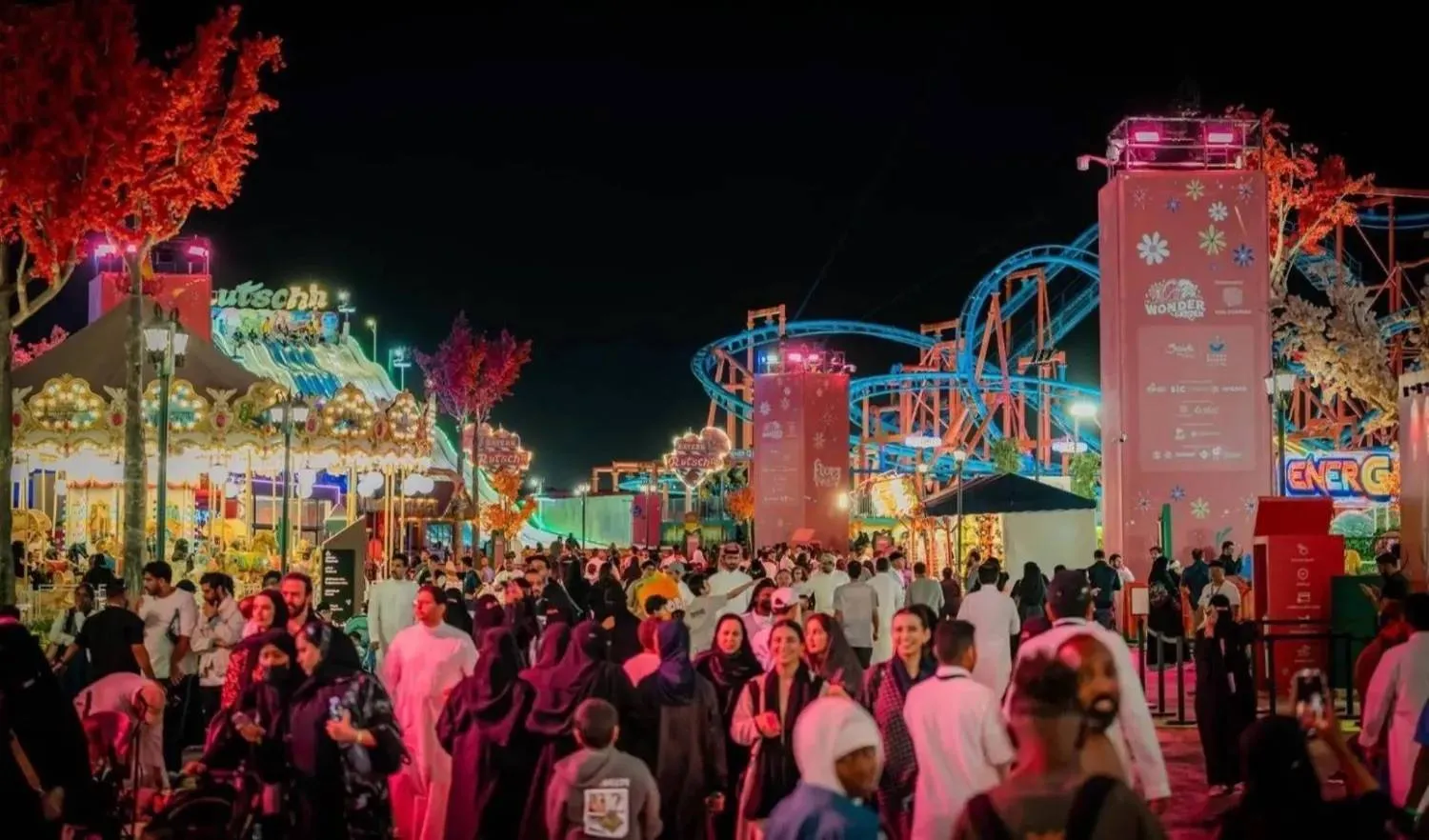

Saudi Arabia Eyes Tourism as Key Economic Pillar by 2030

A glimpse of visitors at the “Riyadh Season” events (SP
TT

Saudi Arabia Eyes Tourism as Key Economic Pillar by 2030

A glimpse of visitors at the “Riyadh Season” events (SP

Saudi Arabia is positioning its tourism sector to rival oil as a cornerstone of the national economy by 2030, targeting a 10% contribution to GDP. This ambitious goal is part of the Kingdom’s broader Vision 2030 plan to diversify income sources and reduce reliance on hydrocarbons.

To achieve this goal, Saudi Arabia is developing a comprehensive tourism ecosystem. This includes mega-projects like NEOM, Qiddiya, and the Red Sea, alongside nationwide infrastructure upgrades spanning major cities, villages, and remote areas. These efforts are already bearing fruit: the Kingdom surpassed 100 million visitors well ahead of schedule, prompting an upward revision of its target to 150 million tourists by the end of the decade.

Tourism revenues have surged, growing more than 148% in 2024 compared to 2019. The sector’s contribution to GDP has doubled to 5%, also generating thousands of new jobs and reinforcing Saudi Arabia’s presence on the global tourism map.

Speaking at the Saudi-US Investment Forum in Riyadh, Minister of Tourism Ahmed Al-Khateeb highlighted the Kingdom’s rapid progress in establishing tourism as a foundational economic sector. He credited sweeping reforms, a pro-investment regulatory framework, and a robust national tourism strategy for the industry’s momentum.

The transformation includes major legislative and operational milestones: the rollout of a new tourism law, streamlined e-visa procedures, the establishment of training programs for Saudi talent, and the introduction of tech-driven visitor experiences. These initiatives aim to enhance both competitiveness and sustainability.

Industry experts say Saudi Arabia’s geographic, climatic, and cultural diversity gives it a strong edge. From the mountains of Asir and the historic sites of AlUla to the beaches of the Red Sea, the Kingdom offers varied attractions catering to a broad range of travelers.

Nasser Al-Ghailan, a tourism investor and partner in Amla Tourism Group, said these natural advantages have been transformed into strategic assets. He pointed to infrastructure improvements, expanded airport capacity, and new airline routes connecting the Kingdom to the region and the world.

“Combining modern infrastructure with digital innovation and high service quality has made Saudi Arabia a rising player on the global tourism stage,” he said, noting growing interest from investors.

In the Asir region, Abdullah bin Ahmed, Vice President of the Tourist Guide Club, emphasized the importance of community engagement and local workforce development. He sees tour guides as cultural ambassadors who can convey the richness of Saudi heritage to international audiences.

“People are the heart of the tourism experience. Empowering them is key to long-term success,” he said.

According to the UN World Tourism Organization, Saudi Arabia led the G20 in tourism growth in 2024, with a 69% rise in international arrivals compared to 2019.

With strategic investments and a clear vision, Saudi Arabia is on track to become a premier global destination, delivering unique travel experiences while maintaining a delicate balance between economic growth, cultural preservation, and environmental sustainability.



Airbus Says Middle East Regional Aircraft to More Than Double by 2044

Airbus logo is seen in this illustration taken, March 10, 2025. REUTERS/Dado Ruvic/Illustration
TT

Airbus Says Middle East Regional Aircraft to More Than Double by 2044

Airbus logo is seen in this illustration taken, March 10, 2025. REUTERS/Dado Ruvic/Illustration

Airbus expects the Middle East's regional aircraft fleet to more than double to 3,700 planes by 2044, an official said on Sunday.

The European planemaker expects passenger traffic in the Middle East to grow at a compound annual rate of 4.4% over the next two decades, Airbus Head of Marketing in Africa and the Middle East Grainne van den Berg told a press conference.

Airbus also expects the services market in the region to double to $29.9 billion by the end of 2044, van den Berg added, Reuters reported.

The forecast came ahead of the Dubai Airshow, the largest Middle East aviation event taking place on November 17-21.

Airbus, which is among the planemakers taking part as it vies for orders with its main competitor Boeing, predicts widebody aircraft will make up 42% of total demand in the region by 2044, representing the highest share globally.

"The Middle East is transforming global aviation, and the forecast fleet expansion is truly significant, particularly when it comes to widebodies," said Airbus President in Africa and Middle East Gabriel Semelas.

"This region is becoming the long-haul hub now and into the future," Semelas added.


Gulf Leadership in Artificial Intelligence Spurs Lebanon’s Private Sector

Lebanon ranks 82nd globally in the 2024 Government AI Readiness Index (Lebanon AI Conference)
TT

Gulf Leadership in Artificial Intelligence Spurs Lebanon’s Private Sector

Lebanon ranks 82nd globally in the 2024 Government AI Readiness Index (Lebanon AI Conference)

Lebanon is joining the global artificial-intelligence wave, albeit with limited resources and mostly private initiatives, at a time when Gulf states are leading the region in deploying AI to boost national economies.

Expectations point to long-term, exceptional growth in this promising sector, which is attracting sizable investments aimed at modernizing societies and enhancing performance across both productive sectors and public services.

In remarks to Asharq Al-Awsat, AI specialist Hilda Maalouf noted that Gulf governments and private industries are moving in tandem to integrate AI across their systems.

She highlighted the region’s strong readiness, supported by major government-backed investments in advanced technologies and fast-expanding data-center infrastructure, particularly in Saudi Arabia and the UAE.

Lebanon, by contrast, faces deep structural hurdles, especially in the public sector. Still, Maalouf, an Oxford-certified AI expert, told Asharq Al-Awsat that the country retains a dynamic private sector and high-caliber talent striving to stay competitive in IT and AI, despite crippling power outages and a weak internet network that has stalled the rollout of 5G.

According to Omar Hallak, partner and head of the public-sector practice at global data and AI consultancy Artefact, the Gulf’s ambitious national strategies have put it far ahead of other regional countries.

Readiness rankings confirm this: the UAE ranks 13th globally in the 2024 Government AI Readiness Index, followed by Saudi Arabia (22nd) and Qatar (32nd). Lebanon stands at 82nd worldwide.

These disparities, Hallak explained, reflect the widening gap between Gulf economies -now reaping the rewards of sustained tech investment - and countries like Lebanon, whose digital infrastructure and economic crises continue to hinder progress. Despite strong local talent and emerging startups, Lebanon’s AI transition remains slow due to limited government support and weak investment.

Gulf states have forged strategic partnerships with global tech giants such as Microsoft and OpenAI, attracting major cloud-computing providers to build advanced infrastructure.

Their remaining challenge is a shortage in national technical skills, where Lebanon, ironically, excels. Yet Lebanon continues to lose talent to migration while lacking the infrastructure to retain it.

Most Gulf strategies now focus on attracting global experts in data science and AI, in addition to training local citizens. Saudi Arabia aims to train 20,000 specialists by 2030, while leading universities, including King Saud University and the Mohamed bin Zayed University of Artificial Intelligence, are expanding AI programs.

Economically, AI is expected to add $260 billion to Gulf economies by 2030, with Saudi Arabia alone projected to gain $135 billion (12.4% of GDP) and the UAE about $96 billion (13.6%). The World Economic Forum reports that Gulf economic prospects already outpace global averages, driven by technological transformation.

According to analysts, AI adoption will enhance productivity, reduce bureaucracy and corruption, and stimulate public–private partnerships. Gulf states are particularly well-positioned in finance, energy, health care, and education. In Lebanon, AI’s most promising impact lies in service-based sectors such as tourism, transport, finance, education, and health.

Hallak added that sectors rich in data, including public services, finance, energy, manufacturing, and telecommunications, will be the primary drivers of AI adoption across the region, especially in economies where energy and natural resources remain central to growth.


Hyundai Motor Announces $86 Bln Investment in South Korea after US Trade Deal

FILED - 10 January 2017, US, Detroit: A Hyundai logo is seen at the North American International Auto Show (NAIAS) in Detroit, Michigan. Photo: Uli Deck/dpa
TT

Hyundai Motor Announces $86 Bln Investment in South Korea after US Trade Deal

FILED - 10 January 2017, US, Detroit: A Hyundai logo is seen at the North American International Auto Show (NAIAS) in Detroit, Michigan. Photo: Uli Deck/dpa

Hyundai Motor Group will invest 125.2 trillion won ($86.47 billion) in South Korea from 2026 to 2030, the automaker said on Sunday after Seoul finalized a trade deal reducing US tariffs on South Korean autos to 15% from 25%.

That compares with investments by Hyundai Motor and its group affiliate Kia Corp of 89.1 trillion won from 2021 to 2025, according to the group.

South Korean President Lee Jae Myung met with Hyundai Motor Group Chairman Euisun Chung and other business leaders on Sunday, two days after details were released on the trade deal, which includes South Korea's promise to invest $350 billion in US strategic sectors.

"We are well aware of concerns about exports declining and domestic production shrinking due to US tariffs of 15%," Chung said after the meeting, Reuters reported.

"We will diversify export markets, increase exports from domestic factories and more than double auto exports through new electric-vehicle factories by 2030," Chung said, adding that the group will also provide support to auto parts makers hit by President Donald Trump's tariffs.

Of Hyundai's domestic investments, 50.5 trillion won ($35 billion) will be in AI and other future business opportunities, 48.4 trillion won in research and development, and 36.2 trillion won on optimizing production facilities and building a skyscraper, the group said.