


UK Wage Growth Slows to Weakest in 5 Years

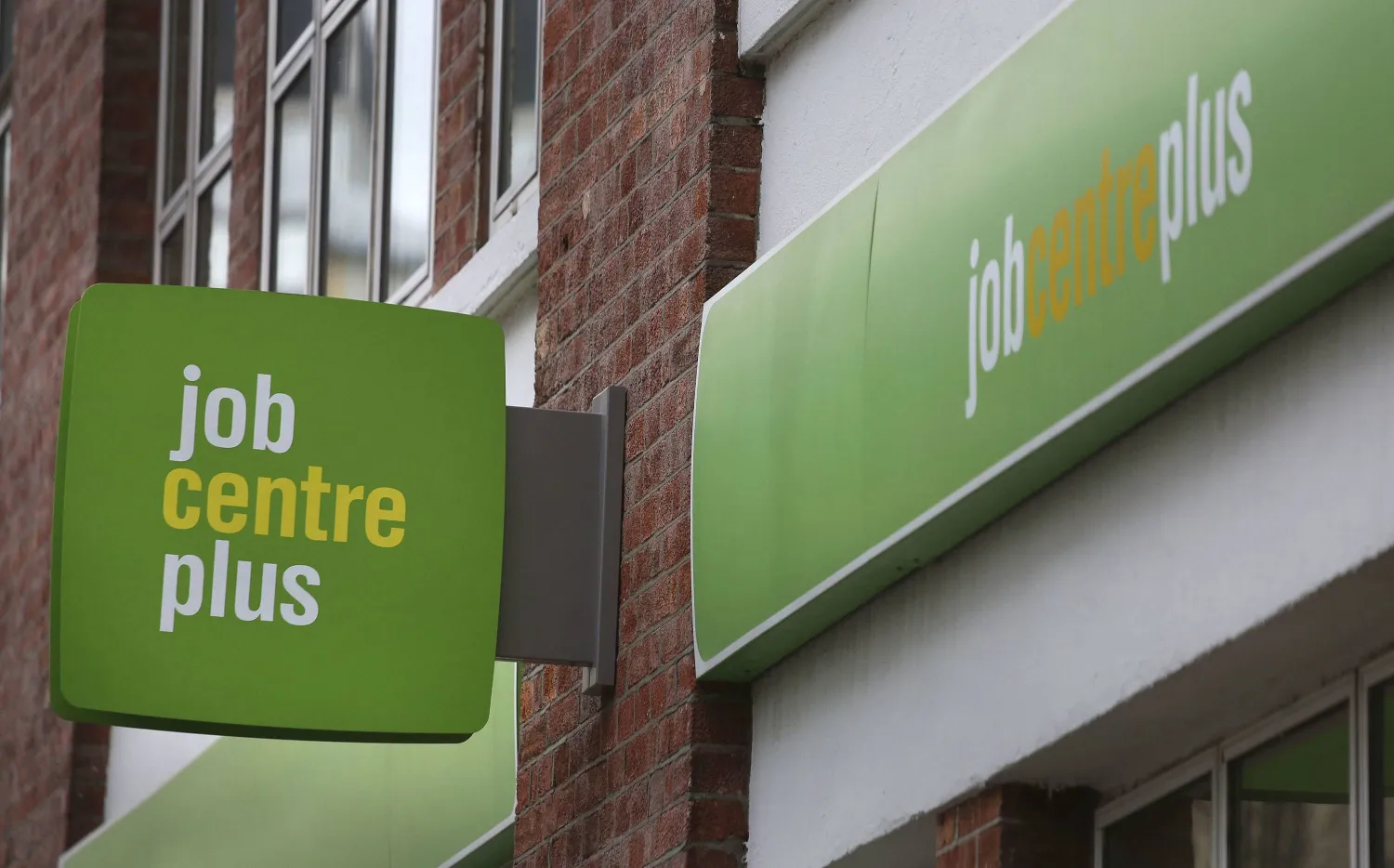
FILED - 17 February 2016, United Kingdom, London: A Job Centre Plus is pictured in this file photo from February 17, 2016. Photo: Philip Toscano/PA Wire/dpa
TT

UK Wage Growth Slows to Weakest in 5 Years

FILED - 17 February 2016, United Kingdom, London: A Job Centre Plus is pictured in this file photo from February 17, 2016. Photo: Philip Toscano/PA Wire/dpa

British wages rose at their slowest pace since late 2020 in the three months to January, according to official data which also suggested a weakening in employment might have bottomed out before the start of the war in the Middle East.

The figures would normally boost bets on the Bank of England cutting interest rates. But the central bank is widely expected to signal at 1200 GMT that it is waiting to see the impact of the war on Britain's economy before deciding its next move.

Yael Selfin, chief economist at KPMG UK, said Thursday's data would not change the BoE Monetary Policy Committee's immediate views.

"Priorities have shifted, with MPC members set to turn their attention to the new upside risks to the inflation outlook," she said. "This could see interest rates staying higher for longer, raising the prospect of a more pronounced loosening in the labor market over the coming months."

Last ⁠week ONS data ⁠showed zero growth in Britain's economy in January, but a surge in oil prices means an expected fall in inflation back towards its 2% target in April may prove more fleeting than the BoE had hoped.

The Office for National Statistics said regular earnings, which exclude bonuses, rose by 3.8% in the November-to-January period, the smallest increase since the three months to November 2020 and down from 4.1% in the final quarter of 2025.

Economists polled by Reuters had mostly expected regular pay growth of 4.0%. Total pay growth, which includes bonuses, showed a similar trend, slowing to 3.9%.

The ONS data also ⁠showed Britain's unemployment rate - which is calculated from a survey that the ONS is still overhauling - held at 5.2%, its highest since the COVID-19 pandemic period but below a median forecast in the Reuters poll for a rise to 5.3%.

Unemployment for 16-24 year olds - a key focus of government concern - edged down to 16.0% from an 11-year high of 16.1% in the final quarter of 2025.

Separate, more timely tax office data, also released on Thursday, showed the number of people in payrolled employment rose by a provisional estimate of 20,000 people between January and February.

In January, payrolls rose by a revised estimate of 6,000 compared with a provisional estimate of a fall of 11,000.

The latest data and revisions make it the first time that there have been three consecutive monthly rises in payrolled employment since May 2024.

"Today's labor market data will make for some positive reading. After nearly a year of disappointment, signs of stabilization are emerging," Sanjay Raja, ⁠chief UK economist at Deutsche ⁠Bank, said.

Until this month, the BoE had been trying to gauge whether lingering inflation heat in the labor market or a weakening of hiring in recent months posed the bigger risk to the economy.

But new inflation pressures have emerged, caused by the jump in energy prices after the start of the war in the Middle East.

The BoE is expected to keep borrowing costs on hold on Thursday at the end of the MPC's March meeting which, until recently, had been expected to result in a quarter-point rate cut.

The ONS data showed private sector annual regular wage growth - a measure of inflation heat closely watched by the BoE - slowed to 3.3% in the three months to January from 3.4% in the three months to December, also its weakest since late 2020.

Last month, the BoE said pay growth needed to be around 3.25% to keep inflation at its 2% target.

Deutsche Bank's Raja said the figures showed wage growth was slowing by slightly more than the BoE had forecast, offering some relief from the worries about a new energy price shock coming from the US-Israeli war on Iran.

"This, we think, can allow the MPC to remain cool-headed as we brace for another inflation wave - at least for now," he said.



IMF Says it's Updating Assessment of US Economy to Reflect Impact of Iran War

An American Flag on the US Capitol Building is seen in Washington, US, August 31, 2023. REUTERS/Kevin Wurm/File Photo
TT

IMF Says it's Updating Assessment of US Economy to Reflect Impact of Iran War

An American Flag on the US Capitol Building is seen in Washington, US, August 31, 2023. REUTERS/Kevin Wurm/File Photo

The International Monetary Fund on Thursday said it is updating a recently completed review of the US economy to reflect the impact of the Iran war, Reuters reported.

IMF spokeswoman Julie Kozack said the updated assessment would be considered by the IMF's board in coming weeks and then published.


Czech Central Bank Keeping Options open as Iran War Clouds Rate Prospects

People leave the Czech National Bank building in central Prague December 9, 2011. REUTERS/Petr Josek/File Photo
TT

Czech Central Bank Keeping Options open as Iran War Clouds Rate Prospects

People leave the Czech National Bank building in central Prague December 9, 2011. REUTERS/Petr Josek/File Photo

The Czech National Bank (CNB) held interest rates steady as expected on Thursday and said it was keeping options open as it monitors the economic fallout from the conflict in the Middle East.

Since the United States and Israel launched strikes on Iran on February 28, oil prices have jumped above $100 a barrel, raising global risks of higher inflation and an economic hit.

Czech central bank policymakers voted unanimously to keep the main rate steady at 3.50% on Thursday, in line with forecasts from all 17 analysts in a Reuters poll last week.

The poll's median forecast saw interest rates remaining on hold for the rest of the year, although money markets have priced in chances of a hike. Governor Ales Michl said after the decision that the conditions for fighting inflation are now better than during the previous energy and inflation shock following Russia's invasion of Ukraine in 2022, as policy is now tighter and rates are higher than inflation.

He added that inflation expectations remain anchored, and it was important to keep them low.

"We are acting restrictively in the economy," he said. "On the other hand, we are monitoring the situation, we are keeping all options open."

The Czech crown was a touch weaker after the bank's decision but largely steady on the day, at 24.49 to the euro, and around its lowest levels since September after this month's declines.

INFLATION STILL SEEN STAYING LOW

The central bank had discussed a possible rate cut at its last meeting in February, before the Iran war. It last cut rates in May 2025 as part of a 350-basis-point easing cycle.

Inflation in the Czech Republic has fallen below the bank's 2% target, hitting a headline rate of 1.4% year-on-year in February with help from a government measure to ease energy bills. That provides a cushion to potential shock from higher oil prices, and Michl said inflation should stay below 2% this year, according to updated forecasts partly incorporating higher oil prices, even though core inflation should remain elevated in the quarters ahead.

The central bank will be looking at the secondary impacts of a higher oil price to see if it soaks through to other segments.


King Khalid International Airport Wins World’s Most Improved Airport at Skytrax Awards 2026

The recognition was announced during the Skytrax World Airport Awards ceremony, London - SPA
TT

King Khalid International Airport Wins World’s Most Improved Airport at Skytrax Awards 2026

The recognition was announced during the Skytrax World Airport Awards ceremony, London - SPA

King Khalid International Airport, managed and operated by Riyadh Airports Company, has achieved global recognition after being named “World’s Most Improved Airport” among more than 560 airports worldwide in 2026. It also received the award for Best Airport in the 30–40 million passengers category, ranked 14th on the list of the world’s best airports, and placed second for Best Airport Staff in the Middle East.

The recognition was announced during the Skytrax World Airport Awards ceremony, held in London on March 18, as part of the Passenger Terminal Expo “PTE World 2026,” with the participation of leading aviation industry figures and experts from around the world, SPA reported.

The achievement reflects the significant progress the airport has made across various areas, driven by a series of development initiatives that have enhanced the passenger experience and elevated service quality in line with the highest international standards, resulting in a qualitative leap in operational efficiency and performance.

This milestone underscores the Kingdom’s accelerating transformation across multiple sectors, including aviation, which continues to grow in line with the objectives of Saudi Vision 2030, aimed at positioning the Kingdom as a global logistics hub and a key center for domestic and international travel.

CEO of Riyadh Airports Company Ayman AboAbah said the achievements reflect the company’s firm commitment to advancing operational services and airport infrastructure.

Meanwhile, Skytrax CEO Edward Plaisted said the recognition reflects the scale of development achieved at King Khalid International Airport, noting that travelers are experiencing clear improvements across all stages of their journey.

He added that the airport’s rise to 14th place in the list of the world’s top 100 airports underscores the strength and impact of these developments, the efficiency of the upgrade plans, and their success in enhancing passenger experience, reinforcing its position as a key regional travel hub, and embodying the scale of its exceptional transformation.