


Britain Vows to Toughen Its Trade Defenses Under New Strategy

Shadow Secretary of State for Work and Pensions Jonathan Reynolds speaks during Britain's Labour Party annual conference, in Brighton, Britain, September 27, 2021. (Reuters)
TT

Britain Vows to Toughen Its Trade Defenses Under New Strategy

Shadow Secretary of State for Work and Pensions Jonathan Reynolds speaks during Britain's Labour Party annual conference, in Brighton, Britain, September 27, 2021. (Reuters)

Britain said it would toughen up its trade defenses to better protect industries amid a turbulent global outlook of trade wars and tariffs that has shaped its new trade strategy to be published on Thursday.

Britain is set to partially implement a deal to remove some of US President Donald Trump's tariffs, but acknowledged that its trade remedies system needed to be more "agile, assertive, and accountable to guard British businesses against global turbulence".

"The UK is an open trading nation, but we must reconcile this with a new geopolitical reality and work in our own national interest," Business and Trade Secretary Jonathan Reynolds said.

"Our trade strategy will sharpen our trade defense so we can ensure British businesses are protected from harm."

As part of the strategy, the government will reform the Trade Remedies Authority.

UK Steel has said that the TRA's current powers, under which it proposed to cap how much of certain kinds of steel could be imported, needed to be more robust, and welcomed the trade strategy as a "critical turning point".

Britain is aiming to remove US tariffs on steel imports under their agreement, although the implementation of the deal has not been finalized.

The government has stepped in to take control of British Steel, and other industries are also seeking support, with AB Foods extending its deadline for deciding the fate of its Vivergo bioethanol plant to Thursday in the hope of a support package.

The trade strategy is Britain's first since it has had an independent trade policy after leaving the European Union.

The previous Conservative government hailed the opportunities of Brexit as it pursued several free trade agreements.

While the Labor government, which came to power a year ago, has concluded free trade agreement talks with India and is making progress on another with the Gulf Cooperation Council, it said the new strategy would focus on quicker and more practical deals than the previous government did.



Türkiye Says its Mideast Oil Dependence Manageable at 10% Amid War

16 March 2026, Türkiye, Istanbul: Oil tankers and cargo ships transit the Bosphorus Strait in Istanbul. Photo: Tolga Ildun/ZUMA Press Wire/dpa
TT

Türkiye Says its Mideast Oil Dependence Manageable at 10% Amid War

16 March 2026, Türkiye, Istanbul: Oil tankers and cargo ships transit the Bosphorus Strait in Istanbul. Photo: Tolga Ildun/ZUMA Press Wire/dpa

Türkiye's dependence on Middle East oil is at a "manageable" level of 10% of overall supplies and there are no supply problems at the moment despite the Iran ⁠war, Energy Minister ⁠Alparslan Bayraktar said on Wednesday.

Speaking on a state-run Anadolu Agency program, he said the ⁠war had caused a crisis in global energy security and supply, adding that Türkiye, a big energy importer that neighbors Iran, had taken protective diversification steps.

Bayraktar ⁠said ⁠that there had been no gas-supply cuts from Iran yet but added it was a possibility.


UK Inflation Holds at 3% in February Ahead of Likely Iran War Jump

Fruit is displayed for sale inside a supermarket in London (Reuters)
TT

UK Inflation Holds at 3% in February Ahead of Likely Iran War Jump

Fruit is displayed for sale inside a supermarket in London (Reuters)

British consumer price inflation held at an annual rate of 3.0% in February, unchanged from January's rate, official figures showed on Wednesday, ahead of a likely upward lurch as war in the Middle East pushes up prices.

Economists polled by Reuters had expected inflation to remain at 3.0%, its lowest level since March 2025.

Before the US-Israeli attack on Iran at the end of February, the Bank of England had forecast that inflation would fall to close to its 2% target in April, when changes to regulated household energy bills and other prices take effect.

But last week the BoE sharply increased its inflation forecast, predicting it would rise towards 3.5% ⁠by the middle ⁠of the year.

A survey published on Tuesday showed inflation expectations among the British public surged, adding to the BoE's challenge.

While most households' energy tariffs are currently capped, new prices are due to take effect in July and manufacturers have already reported the sharpest jump in costs since 1992, which may soon be passed on to consumers.

Financial markets on Tuesday were betting on nearly ⁠three quarter-point interest rate rises by the BoE this year, though many economists think the central bank will keep rates on hold due to the headwinds to growth from higher energy costs.

Governor Andrew Bailey last week advised people against making any firm bets that the BoE would raise rates.

Wednesday's data showed services price inflation - which the BoE watches closely as a gauge of longer-term inflation pressures - fell to 4.2% in February from 4.4% in January, its lowest since March 2022 and just below economists' expected reading of 4.3%.

The decline reflected reduced inflation for restaurants, cafes and ⁠tickets for concerts ⁠and other cultural events.

However, core inflation, which excludes more volatile food, energy, alcohol and tobacco prices, rose slightly to 3.2% from 3.1%, where it had been expected to hold.

British inflation is the highest among major advanced economies and the country's reliance on natural gas for electricity generation and heating makes it vulnerable to price shocks.

Prime Minister Keir Starmer's government has introduced measures to limit rises in the cost of living, although finance minister Rachel Reeves said on Tuesday any household energy subsidies this year would be more narrowly targeted than during the last gas price surge in 2022.

British inflation rose to its highest since 1981 in October 2022 at 11.1% and over the past five years has rarely been near its 2% target.


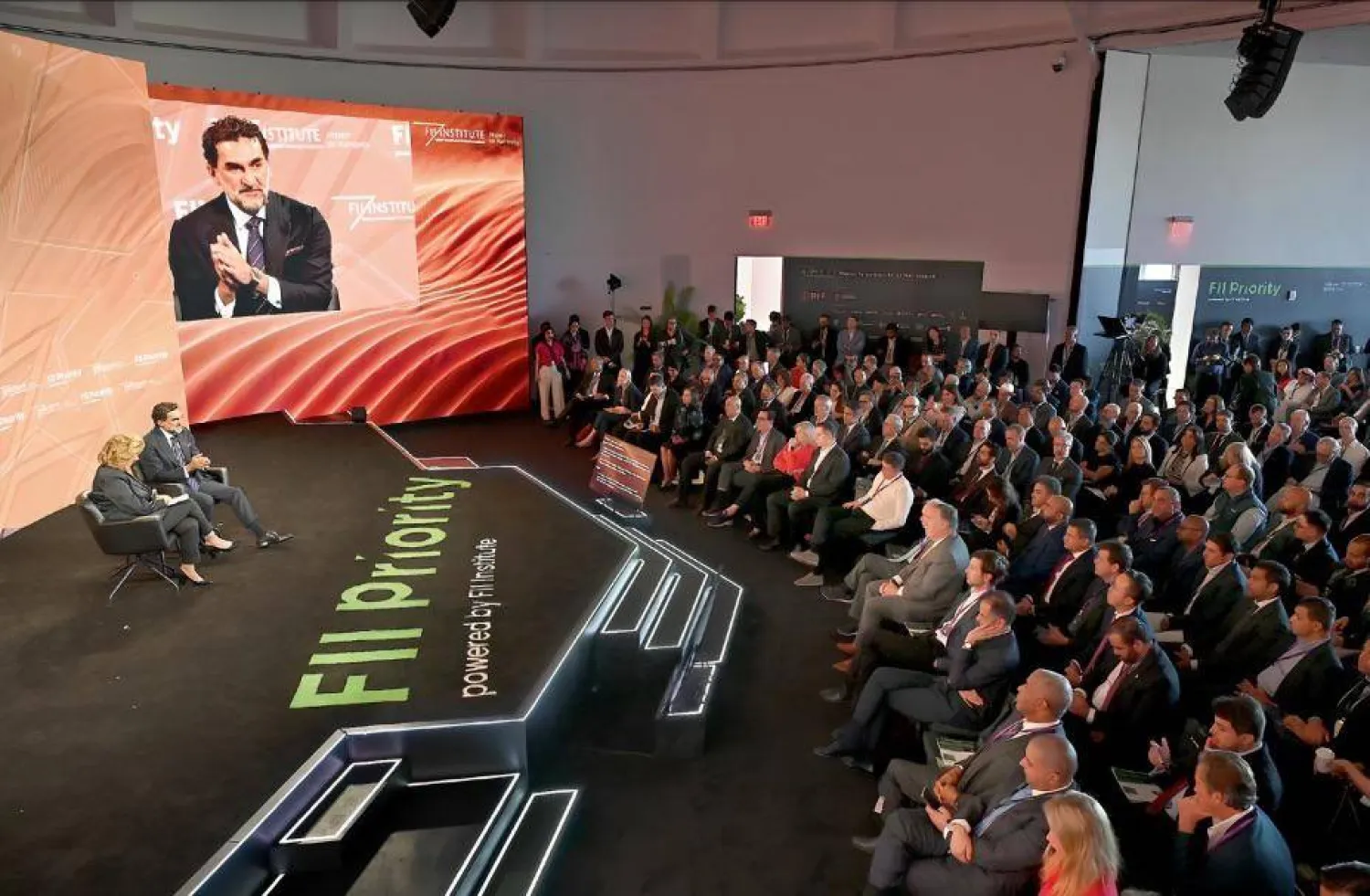
Miami Hosts FII Summit on Wednesday, Eyes Role of Capital in Global Shifts

PIF Governor Yasir Al-Rumayyan during a previous FII summit in Miami. (Asharq Al-Awsat)
TT

Miami Hosts FII Summit on Wednesday, Eyes Role of Capital in Global Shifts

PIF Governor Yasir Al-Rumayyan during a previous FII summit in Miami. (Asharq Al-Awsat)

Miami will host the fourth FII PRIORITY summit from March 25 to 27 under the theme “Capital in Motion,” as global economic and geopolitical shifts accelerate and investments and ideas move faster across borders and sectors.

More than 1,500 business leaders, policymakers and investors from the United States, Latin America, the Middle East, Europe, Asia and Africa will gather to rethink global capital flows and advance sustainable, inclusive growth.

The Future Investment Initiative Institute said the summit comes “at a moment when capital is being reallocated, repriced and reimagined,” adding that understanding and shaping these shifts responsibly is what brings this global community together.

The summit opens with a special forum titled “The New LATAM Order,” featuring sessions on the macroeconomic outlook for the Americas and discussions on who stands to gain from the emerging economic system and how capital is flowing through the region’s digital economy.

The focus reflects Latin America’s rising role in the global economy, with sessions examining investment in infrastructure and digital transformation, including whether the region’s infrastructure can become a global platform and where capital is heading in the digital economy.

Participants include Princess Reema bint Bandar Al Saud, Saudi Arabia’s ambassador to the United States, Yasir Al-Rumayyan, governor of the Saudi Public Investment Fund, Saudi Finance Minister Mohammed Al-Jadaan and Tourism Minister Ahmed Al-Khateeb.

International executives include Ripple CEO Brad Garlinghouse, Mary Erdoes of JPMorgan and Nelson Griggs of Nasdaq.

Sessions will also examine investment ties and economic relations, including the resilience of US-Gulf investment partnerships and the future structure of US-Latin American agreements as economic alliances evolve.

Technology will take center stage, with discussions on artificial intelligence and the digital economy, including where returns on AI investment are emerging and how infrastructure for the AI economy is being built, alongside debates on whether governments are leading or following in the AI race.

The agenda also covers energy and resources, including how energy deals could reshape power and profitability, the race for critical minerals, and aviation and tourism, with sessions on competitiveness and investment in travel infrastructure.

Emerging sectors will feature prominently, including the creator economy, gaming and the role of sports and culture in generating returns, reflecting the growing weight of the creative economy.

Broader themes include the global economic outlook, the flow of power and capital and how to address a $3 trillion exit crisis, alongside closed sessions for decision-makers to set investment priorities.

US President Donald Trump will deliver the closing address on March 27 as the guest of honor, underscoring the summit’s role as a platform linking politics, economics, and investment.

The event also reinforces Miami’s position as a strategic bridge between North and South America and a hub for redirecting global capital flows, while setting the stage for the 10th Future Investment Initiative in Riyadh later this year.