


China Exports Beat Forecasts in June after US Tariff Truce

A container ship arrives at the port in Lianyungang, in China's eastern Jiangsu province on July 14, 2025. (Photo by AFP)
TT

China Exports Beat Forecasts in June after US Tariff Truce

A container ship arrives at the port in Lianyungang, in China's eastern Jiangsu province on July 14, 2025. (Photo by AFP)

China's exports rose more than expected in June, official data showed Monday, after Washington and Beijing agreed a tentative deal to lower swingeing tariffs on each other.

Data from the General Administration of Customs said exports climbed 5.8 percent year-on-year, topping the five percent forecast in a Bloomberg survey of economists, said AFP.

Imports rose 1.1 percent, topping the 0.3 percent gain predicted and marking the first growth this year.

China's exports reached record highs in 2024 -- a lifeline to its slowing economy as pressures elsewhere mounted.

Beijing's efforts to sustain growth have been hit by a bruising trade war with the United States, driven by President Donald Trump's sweeping tariffs, though the two de-escalated their spat with a framework for a deal at talks in London last month.

Monday's customs figures showed Chinese exports to the United States surged 32.4 percent in June, having fallen the month before, according to an AFP calculation based on official data.

"Growth in export values rebounded somewhat last month, helped by the US-China trade truce," Zichuan Huang, China economist at Capital Economics, said.

"But tariffs are likely to remain high and Chinese manufacturers face growing constraints on their ability to rapidly expand global market share by slashing prices," Huang said.

"We therefore expect export growth to slow over the coming quarters, weighing on economic growth," she added.

Customs official Wang Lingjun told a news conference on Monday that Beijing hoped "the US will continue to work together with China towards the same direction", state broadcaster CCTV reported.

The tariff truce was "hard won", Wang said.

"There is no way out through blackmail and coercion. Dialogue and cooperation are the right path," he added.

Stuttering growth

Analysts say China's economy is expected to have expanded more than five percent in the second quarter thanks to its strong exports. Official figures are due to be released on Tuesday.

But they also warn Trump's trade war could cause a sharp slowdown in the final six months of the year.

Beijing is targeting an overall expansion of around five percent this year -- the same as last year but a figure considered ambitious by many experts.

First-quarter growth came in at 5.4 percent, beating forecasts and putting the economy on a positive trajectory.

Beijing has struggled to sustain growth since the pandemic as it battles a prolonged debt crisis in the property sector, chronically low consumption and high youth unemployment.

Data released last week showed that consumer prices edged up in June, barely snapping a four-month deflationary dip, but factory gate prices dropped at their fastest clip in nearly two years.

Many economists argue that China needs to shift towards a growth model propelled more by domestic consumption than the traditional key drivers of infrastructure investment, manufacturing and exports.

Beijing has introduced a slew of measures since last year in a bid to boost spending, including a consumer goods trade-in subsidy scheme that briefly lifted retail activity.


Iraq State Oil Firm Reaffirms Deal Obliging Oil Companies in Kurdistan to Hand over Output

A handout picture released by Iraq's Prime Minister's Media Office on January 2, 2025, shows a partial view of the oil refinery of Baiji north of Baghdad, during the inauguration ceremony of the fourth and fifth units. (Iraqi Prime Minister's Media Office / AFP)
TT

Iraq State Oil Firm Reaffirms Deal Obliging Oil Companies in Kurdistan to Hand over Output

A handout picture released by Iraq's Prime Minister's Media Office on January 2, 2025, shows a partial view of the oil refinery of Baiji north of Baghdad, during the inauguration ceremony of the fourth and fifth units. (Iraqi Prime Minister's Media Office / AFP)

Iraq's state oil company, SOMO, reiterated on Sunday its commitment to its oil export deal with the Kurdish regional government ‌which obliges ‌global ‌oil companies ⁠operating in ‌the region to hand over their production of crude oil to the company.

SOMO ⁠made the remarks ‌in response to ‍a ‍Reuters report published ‍in September which quoted Norway's DNO as saying it had no immediate plans to ship ⁠oil through the Iraq-Türkiye pipeline which restarted after a more than two-year halt following a deal between Baghdad and the Kurdish ‌regional government.


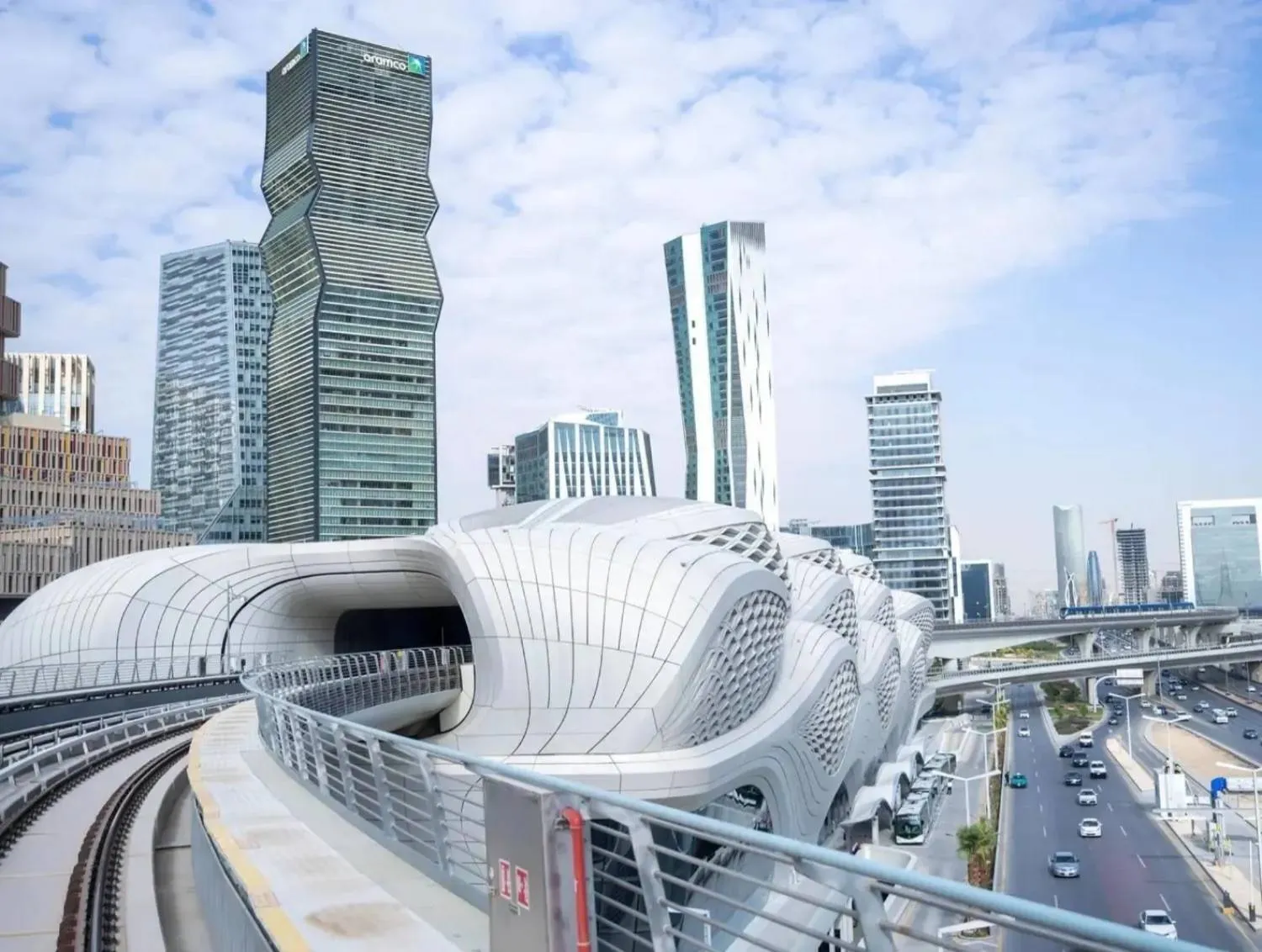
How 2025 Decisions Redrew the Future of Riyadh’s Real Estate Market

Construction is seen at a real estate project in Riyadh. (SPA)
TT

How 2025 Decisions Redrew the Future of Riyadh’s Real Estate Market

Construction is seen at a real estate project in Riyadh. (SPA)

The Saudi capital underwent an unprecedented structural shift in its real estate market in 2025, driven by a forward-looking agenda led by Prince Mohammed bin Salman, Crown Prince and Prime Minister. Far from incremental regulation, the year’s measures amounted to a deep corrective overhaul aimed at dismantling long-standing distortions, breaking land hoarding, expanding affordable housing supply, and firmly rebalancing landlord-tenant relations.

Together, the decisions ended years of speculation fueled by artificial scarcity and pushed the market toward maturity, one grounded in real demand, fair pricing, and transparency.

Observers dubbed 2025 a “white revolution” for Saudi real estate. The reforms severed the link between property and short-term speculation, restoring housing as a sustainable residential and investment product. Below is a detailed outline of the most significant of these historic decisions:

1- Unlocking land, boosting supply

In March, authorities lifted restrictions on sale, subdivision, development permits, and planning approvals for 81 million square meters north of Riyadh. A similar decision in October freed another 33.24 million square meters to the west.

The Royal Commission for Riyadh City was also mandated to deliver 10,000 - 40,000 fully serviced plots annually at subsidized prices capped at SAR 1,500 per square meter, curbing price manipulation and offering real alternatives for citizens.

2- Rent controls and contractual fairness

To stabilize households and businesses, the government froze annual rent increases for residential and commercial leases in Riyadh for five years starting in September. Enforced through the upgraded “Ejar” platform, the move halted arbitrary hikes while aligning growth with residents’ quality of life.

3- Tougher fees

An improved White Land Tax took effect in August, extending beyond vacant plots to include unoccupied built properties. Annual fees rose to as much as 10% of land value for parcels of 5,000 square meters or more within urban limits, raising the cost of land hoarding and incentivizing prompt development.

4- Investment openness and digital governance

A revised foreign ownership regime allowed non-Saudis - individuals and companies - to own property in designated zones under strict criteria, injecting international liquidity. Transparency was reinforced by the launch of the “Real Estate Balance” platform, providing real-time price indicators based on actual transactions and curbing phantom pricing.

5- Quality and urban standards

Policy shifted from quantity to quality with mandatory application of the Saudi Building Code and sustainability standards for all new developments, ensuring long-term operational value and preventing low-quality sprawl.

Structural shift

Sector specialists told Asharq Al-Awsat the measures represent a qualitative leap in market management, moving Riyadh from a scarcity and speculation-led cycle to a balanced market governed by genuine demand, efficient land use, disciplined contracts, and transparent indicators.

Khaled Al-Mobid, CEO of Menassat Realty Co., said the reforms were timely and corrective after years of rapid price escalation. He noted early positives: slowing price growth, a return to realistic negotiations, increased supply in some districts, and better-quality offerings focused on intrinsic value rather than quick appreciation.

Abdullah Al-Moussa, a real estate expert and broker, described the steps as addressing root causes, not symptoms.

He observed a behavioral shift, especially in northern Riyadh, from “hold and wait” to reassessment, alongside calmer price momentum, renewed interest in actual development, and clearer rental dynamics.

Saqr Al-Zahrani, another market expert, told Asharq Al-Awsat that the reforms tackled structural imbalances by breaking artificial scarcity created by undeveloped land banks.

Opening vast tracts north and west and introducing market-wide indicators restored “organized abundance,” aligning prices with real demand and purchasing power without heavy-handed intervention, he remarked.

He added that recent months have seen weaker demand for raw land and stalled auctions, contrasted with rising interest in off-plan sales and partnerships with developers.

Banks, too, have reprioritized toward projects with operational viability, lifting overall supply quality despite a temporary slowdown in some transactions.

Consumers, meanwhile, are showing greater patience and interest in self-build options, signaling a maturing market awareness.

Outlook

Experts expect the effects to continue through 2027, delivering broad price stability with limited corrections in overheated locations rather than sharp declines.

Homeownership, especially among young buyers, is projected to rise as capital shifts from land speculation to long-term development.

The 2025 decisions were not short-term fixes but the launch of a new social and economic trajectory for Riyadh’s property market, redefining real estate as a housing service and value-adding investment, not a speculative vessel.

As Riyadh advances toward becoming one of the world’s ten largest city economies, its real estate reset offers a model for aligning regulation with quality of life, transparency, and sustainable growth.


Deal to Export Oil from Kurdish Region to Continue with No Issues, Kurdish Rudaw Reports

A staff at an oilfield holds the flag of Kurdistan. (X)
TT

Deal to Export Oil from Kurdish Region to Continue with No Issues, Kurdish Rudaw Reports

A staff at an oilfield holds the flag of Kurdistan. (X)

Kurdistan broadcaster Rudaw quoted the ​vice president of Iraq's state oil company SOMO as saying ‌on Saturday that ‌the ‌oil ⁠export ​deal ‌between Baghdad and Erbil is set to be renewed with ⁠out issues, Reuters reported.

In September, ‌Iraq restarted ‍the ‍export of ‍oil from its Kurdish region to Türkiye after ​an interruption of more ⁠than two years following a deal between Baghdad and the Kurdish regional government.