Saudi-French ties are entering a new phase that extends beyond traditional energy cooperation, with Paris seeking a deeper role in the major development projects underpinning Saudi Arabia’s Vision 2030.
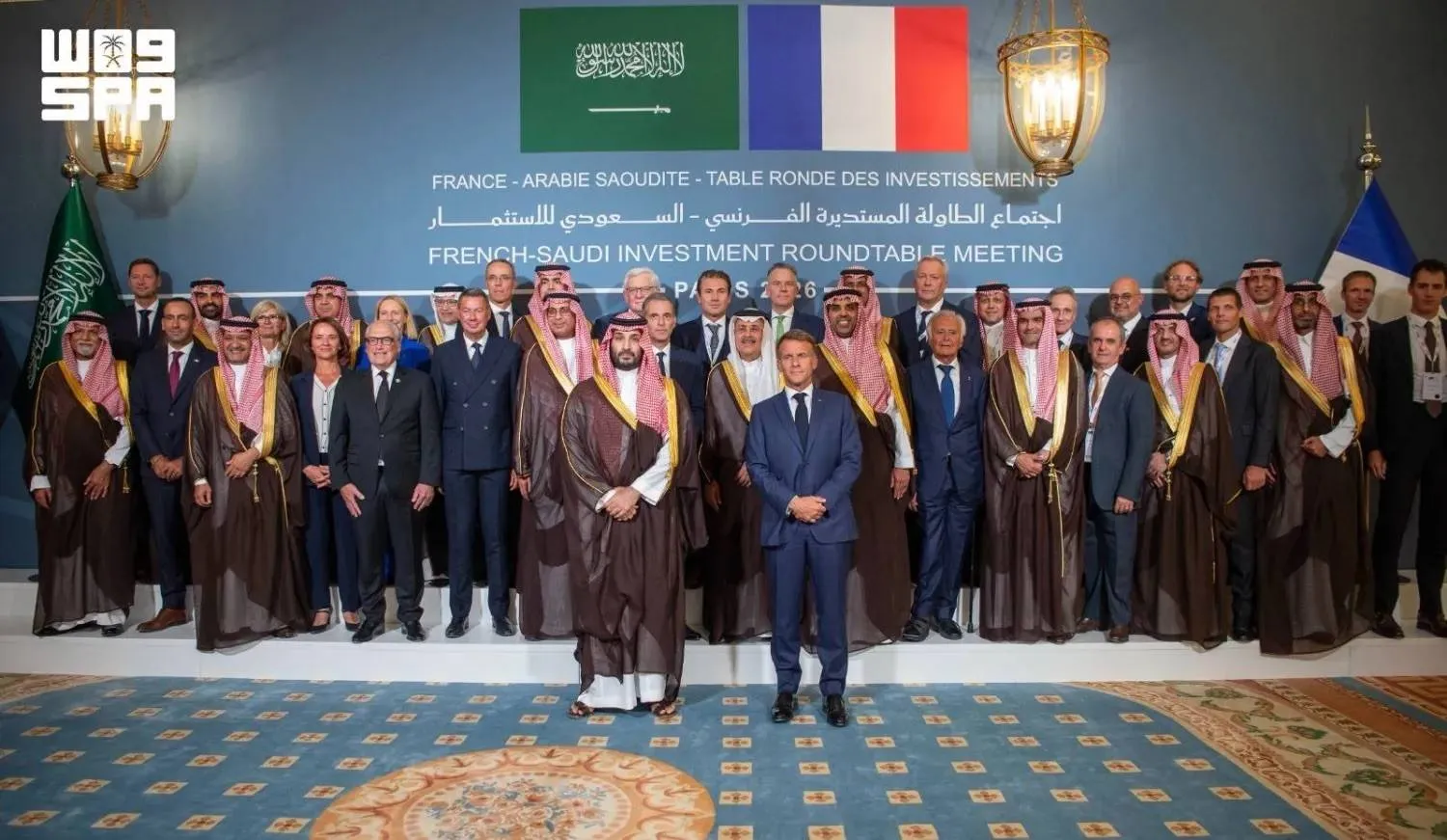
During the visit by Prince Mohammed bin Salman, Saudi Crown Prince and Prime Minister, to Paris, the two countries signed more than 21 agreements and memorandums of understanding backed by credit lines and financing facilities worth billions of dollars.
They cover infrastructure, transportation, healthcare, electricity, aviation, tourism, entertainment, artificial intelligence, and research and development.
The deals signal a French push to embed its companies more deeply in Saudi project value chains rather than simply supplying goods, using financing and credit guarantees to broaden their involvement.
Financing major projects
A key component is a $5 billion credit line to finance contracts carried out by French companies, alongside facilities of up to $3 billion to support electricity projects.
The Saudi Finance Ministry and Bpifrance Assurance Export issued a joint statement on completing operational arrangements for a credit line to finance and refinance existing and future contracts undertaken by French companies in the Kingdom, particularly in infrastructure, urban development, transportation and healthcare.
Saudi Arabia’s National Development Fund also reached an understanding with French public investment bank Bpifrance to explore joint financing and investment opportunities, exchange expertise in development finance, and strengthen institutional and human capabilities.
Energy and technology
Saudi Aramco procurement agreements worth $3.7 billion mark another significant expansion of French involvement in the energy sector, particularly drilling and pipes.
The package also includes cooperation between Aramco Digital and Dassault Systèmes on artificial intelligence, highlighting a shift toward using technology to boost efficiency and productivity.
In aviation, the Saudi Export-Import Bank, Saudia Group and Crédit Agricole signed a three-way memorandum to arrange financing for the group’s acquisition of new Airbus aircraft, combining French financing with Saudi credit support to facilitate the national carrier’s expansion.
France is also seeking a greater role in Saudi Arabia’s growing tourism, entertainment and cultural sectors. Qiddiya Investment Company and the French government agreed to explore the development of a mixed-use, entertainment-focused destination in France, potentially worth about €6 billion over its development period.
The Saudi-French partnership on AlUla was meanwhile extended until 2030, encompassing archaeology, heritage and culture.
The two sides agreed to broaden healthcare cooperation, covering public health, health security, healthcare governance, quality of care, digital health, AI, research and development, innovation, clinical trials and pharmaceuticals.
Saudi Arabia’s National Institute of Health separately reached an understanding with French pharmaceutical group Sanofi to support research, innovation, clinical studies and the development of promising treatments.
Broader investment partnership
Shura Council member and economic adviser Fadl bin Saad Al-Buainain told Asharq Al-Awsat that the Crown Prince’s visit came as the region faced geopolitical challenges and the global economy grappled with shifts affecting energy security and supply chains.
He described the focus on economic cooperation as evidence of a clear strategic approach aligned with Saudi interests, while the credit facilities underscored France’s drive to build a sustainable investment partnership.
The arrangements would help Saudi Arabia advance development projects and the Kingdom’s Vision 2030 while generating returns for French companies, he added.
“The agreements are no longer linked to selling products or oil, but are increasingly tied to economic development, infrastructure, tourism and entertainment, artificial intelligence, research and other important sectors,” Al-Buainain underlined, adding that they would create value and strengthen local content.
He singled out cooperation on AlUla and Qiddiya for their potential impact on culture, tourism and entertainment, sectors Riyadh is seeking to expand as contributors to gross domestic product.
Al-Buainain added that Saudi Arabia was no longer simply seeking economic partnerships, but had become a market that countries were increasingly eager to engage with.
France’s push for closer ties with Riyadh through projects supporting Vision 2030 reflected that shift, he noted.
Commercial law professor and adviser Osama bin Ghanem Al-Obaidy told Asharq Al-Awsat the agreements highlighted the depth of bilateral economic ties, with France ranking as the Kingdom’s fourth-largest investor.
More than 650 French companies operate in Saudi Arabia across transportation and logistics, energy, telecommunications, industry, healthcare, technology, mining, aviation and aerospace, culture and entertainment, digital infrastructure and AI.
Al-Obaidy said the latest deals would reinforce strategic ties and help transform the partnership into a more diverse and sustainable portfolio of projects.