


Fair Competition: A Pillar for Consumers and Driver of Saudi Arabia’s Economic Growth

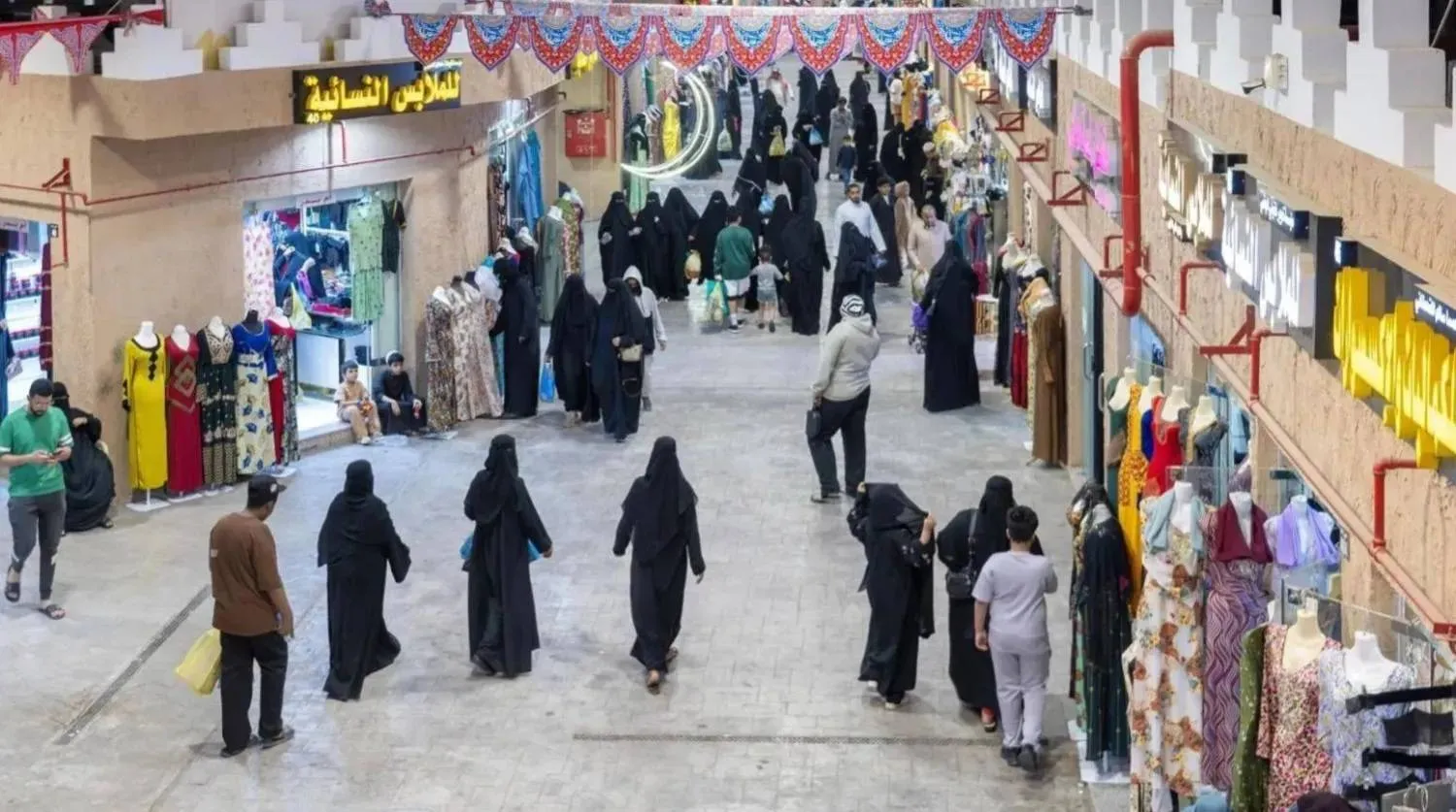
People shop at a market in Riyadh, Saudi Arabia. (SPA)
TT

Fair Competition: A Pillar for Consumers and Driver of Saudi Arabia’s Economic Growth

People shop at a market in Riyadh, Saudi Arabia. (SPA)

Fair competition is emerging as a cornerstone of Saudi Arabia’s economic transformation, serving not only as a market principle but as a vital engine for national growth and innovation. By fostering an environment of healthy rivalry, companies are compelled to improve product quality, lower prices, and enhance consumer experience, all of which benefit the Saudi consumer and economy alike.

This competitive landscape encourages domestic investment, attracts foreign capital, and stimulates research and development, thereby reinforcing economic sustainability. But experts emphasize that fair competition is only as effective as the policies and regulatory frameworks enforcing it.

Financial and economic advisor Dr. Hussein Al-Attas told Asharq Al-Awsat that fair competition acts as a key market regulator, limiting companies’ ability to monopolize prices.

“Freedom to compete naturally pushes prices closer to real production costs,” he explained, “reducing excessive profit margins and expanding consumer choice.”

Al-Attas stressed that quality is now central to market success. “Consumers are increasingly discerning, comparing prices, quality, and service,” he said, adding that companies failing to meet evolving standards in production, packaging, or after-sales support quickly lose market share.

He described this environment as creating “positive pressure” on firms to maintain high quality to retain customer loyalty, making excellence not just a goal, but a survival strategy.

Government policies, Al-Attas noted, can either foster or distort competition. While support for startups and tax incentives can spur fair competition, imbalanced subsidies may unfairly favor specific companies, undermining market fairness.

Incentives should be based on transparent criteria aligned with public interest, he stressed.

Regulatory bodies like the General Authority for Competition play a vital role, he said. They monitor monopolistic behavior, investigate complaints, regulate mergers, and promote business awareness around fair play.

For his part, Economist and King Faisal University academic Dr. Mohammed bin Duliem Al-Qahtany echoed this view, calling fair competition not only an economic tool but a “social guarantee for equity” and a key driver of investor confidence.

He highlighted Saudi Arabia’s strides in making its economy among the most competitive and sustainable regionally and globally. “A competitive market forces rational pricing and deters exploitation,” he told Asharq Al-Awsat.

Al-Qahtany cited the rise of Saudi e-commerce as a success story, noting how competition has led to innovations like facial recognition payment and AI-powered consumer analytics, improving both service and efficiency.

He pointed to sectors such as food and beverage, where consumer awareness and competition have elevated standards in hygiene and packaging.

Government initiatives like the Saudi Made program, he said, exemplify balanced support that boosts national industry competitiveness and promotes small business growth.

A robust and transparent competition framework is essential for maintaining a fair market, protecting consumers, and solidifying investor trust in Saudi Arabia’s economic future, he stated.


HUMAIN, Mistral Collaborate to Advance Sovereign AI in Saudi Arabia and Regionally

Guests at the booth of Saudi AI company HUMAIN during the Future Investment Initiative conference in Riyadh (Company photo)
TT

HUMAIN, Mistral Collaborate to Advance Sovereign AI in Saudi Arabia and Regionally

Guests at the booth of Saudi AI company HUMAIN during the Future Investment Initiative conference in Riyadh (Company photo)

Saudi Arabia’s HUMAIN and French Artificial Intelligence company Mistral have announced a strategic collaboration spanning AI infrastructure, advanced model development, and the deployment of AI solutions in Saudi Arabia and across the region.

“Together, the companies will pursue the development and localization of advanced AI models, with initial areas of focus including cybersecurity and voice,” HUMAIN said in a statement on Monday.

“The companies also plan to develop frontier models that perform strongly in Arabic language to help support the broader region. This represents a collaboration in the hundreds of millions of Euros.”

“As part of the collaboration, Mistral will explore using HUMAIN's data center infrastructure to support growing local compute needs,” said the statement.

It added that the two companies also plan to develop a joint go-to-market strategy in the Kingdom focused on bringing advanced AI solutions to regulated industries.

CEO of HUMAIN Tareq Amin said on X that “the collaboration spans AI infrastructure, advanced model development and AI solutions, including plans to develop and localize frontier models with strong Arabic-language capabilities.”

According to the HUMAIN statement, “the collaboration is designed to meet growing demand for sovereign AI: AI that keeps data, intelligence, compute, and operations under the customer's control.”

“That means data can remain within customer-defined boundaries, models can be adapted and owned on open weights, training and inference can run on infrastructure and in jurisdictions the customer chooses, and AI systems can be deployed, governed, observed, and improved over time without ceding control of the learning loop to an external platform.”

The statement stressed its importance in financial services, manufacturing, telecommunications, cybersecurity, and the public sector.


Oil Steadies as Investors Weigh Impact of Latest US Sanctions on Iran

 Tankers anchor near Venezuelan state oil company PDVSA's Jose terminal while waiting to load and discharge, in Puerto La Cruz, Venezuela August 9, 2026. (Reuters)
Tankers anchor near Venezuelan state oil company PDVSA's Jose terminal while waiting to load and discharge, in Puerto La Cruz, Venezuela August 9, 2026. (Reuters)
TT

Oil Steadies as Investors Weigh Impact of Latest US Sanctions on Iran

 Tankers anchor near Venezuelan state oil company PDVSA's Jose terminal while waiting to load and discharge, in Puerto La Cruz, Venezuela August 9, 2026. (Reuters)
Tankers anchor near Venezuelan state oil company PDVSA's Jose terminal while waiting to load and discharge, in Puerto La Cruz, Venezuela August 9, 2026. (Reuters)

Oil prices recovered ground on Tuesday after settling down more than 2% in the previous session, with investors assessing the impact of the latest US sanctions against Iran.

Brent crude futures rose 27 cents, or 0.3%, to $92.44 a barrel by 0330 GMT, while US West Texas Intermediate crude was up 37 cents, or 0.4%, at $85.38.

Both contracts settled lower on Monday, with US crude oil falling to a one-week low on profit taking after prices rallied over the previous two weeks.

"The market seems largely unfazed by Washington's push for tighter economic pressure ‌on Iran, with ‌traders treating the US effort to nudge partners away from Iranian ‌trade ⁠as marginal rather than ⁠market moving," said ING commodity strategists in a note on Tuesday.

US Treasury Secretary Scott Bessent on Monday unveiled an expansion of sanctions to cut off Iran's economic lifeline, to force an end to the war between them, telling countries they would need to sever their business ties or risk being cut out of the dollar-based financial system.

However, he declined to identify the countries that would be targeted or reveal when those penalties would take effect, saying ⁠he would instead provide them time to comply with ‌the new directive.

While US Defense Secretary Pete Hegseth said ‌on Monday the US would not rule out using military force against Iran, the country is turning ‌towards more economic coercion, which analysts said removed concerns about threats to Middle ‌Eastern oil supply because of the war.

"Markets appear to be pricing economic pressure as a lower-risk path for physical supply than kinetic action, which is why the initial reaction was for oil to move lower rather than spike higher," said Tim Waterer, chief market analyst at KCM.

However, he warned, "Iran still ‌retains the ability to respond by disrupting shipping, which continues to keep a residual premium in the oil price."

Iran is still maintaining it should have control over the key Strait of Hormuz, which before the war started in February typically carried cargoes equal to about 20% of global oil use. On Monday, it named 45 tankers that had broken its rules on crossing the strait and threatened action against them, including confiscating their cargoes.

The supply disruptions as a result of the US-Israeli war on Iran that started on February 28 have caused countries to draw down their commercial and strategic reserves.

On Monday, the Department of Energy reported stocks of crude oil in the US Strategic Petroleum Reserve fell by about 3.7 million barrels to 289.7 million barrels last week, the lowest since November 1982.


Gold Steadies after Hitting over 3-month Peak, US Inflation Data Looms

A saleswoman adjusts gold jewelry displayed for sale in a shop in Lianyungang City, eastern Jiangsu Province, China (AFP)
TT

Gold Steadies after Hitting over 3-month Peak, US Inflation Data Looms

A saleswoman adjusts gold jewelry displayed for sale in a shop in Lianyungang City, eastern Jiangsu Province, China (AFP)

Gold held steady after hitting its highest in more than three months on Tuesday, as investor focus shifted to upcoming US inflation data and a speech later this week by Federal Reserve Chair Kevin Warsh.

Spot gold steadied at $4,645.67 per ounce by 0651 GMT, after scaling its highest since May 14 earlier. US gold futures rose 0.1% to $4,702.00.

"Looking ahead, we expect dips in gold to be well-supported from ⁠buyers looking for ⁠gold to make its way towards the next upside resistance at $4,900/$5,000," IG market analyst Tony Sycamore said.

Prices rose sharply last week after the US Treasury Department said it would double the size of liquidity support buyback operations for longer-dated notes and bonds. The announcement spurred currency debasement fears.

"These US ⁠dollar debasement fears should see gold be well-supported in the coming weeks, as the Fed has not been sending a clear signal it is ready to fight higher inflation," TD Securities said in a note.

"However, it's too early for the metal to surge to our $5,350/oz target, given the risk rates on the short term may eventually rise as crude grinds higher."

While gold is widely regarded as an inflation hedge, elevated rates can curb its appeal as it is a ⁠non-yielding asset.

Fed Chairman ⁠Warsh's debut speech at the annual Jackson Hole conference this week has taken on added weight as traders and analysts look for guidance about the recent jump in bond yields and for reassurance of his independence from the Trump administration.

The US Personal Consumption Expenditures report, the Fed's preferred inflation gauge, is due on Wednesday.

On the geopolitical front, Iran promised to retaliate against expanded US economic sanctions that Washington said would cut off Tehran's economic lifeline.

Among other metals, spot silver fell 0.7% to $68.43 per ounce, platinum lost 1.1% to $1,854.67 and palladium slipped 1.4% to $1,338.15.
