

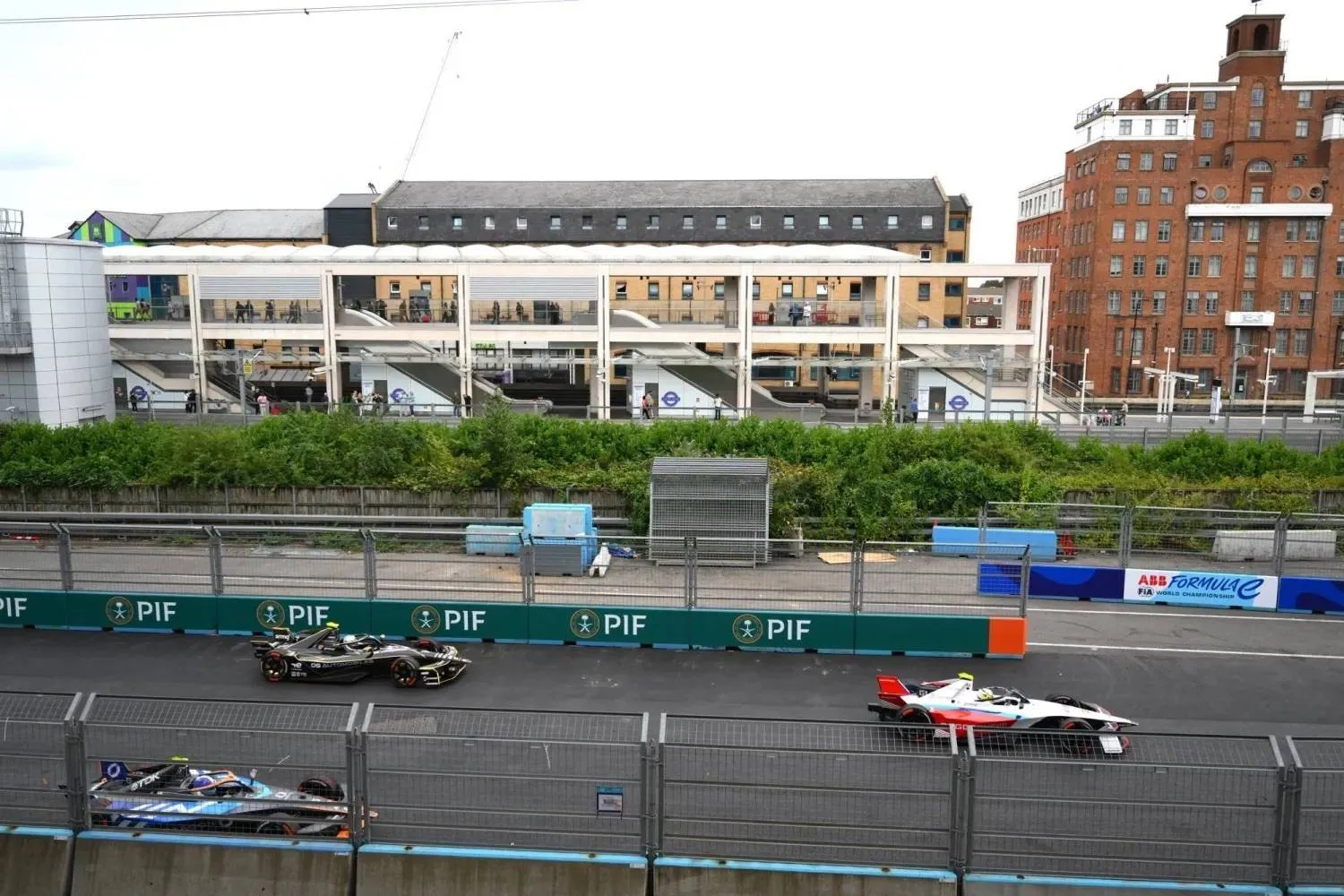

Formula E: Partnership with Saudi Arabia Is a Global Model for Advancing Sustainable Transport

Formula E races serve as a means for testing new technologies in electric cars. (Asharq Al-Awsat)
TT

Formula E: Partnership with Saudi Arabia Is a Global Model for Advancing Sustainable Transport

Formula E races serve as a means for testing new technologies in electric cars. (Asharq Al-Awsat)

Formula E’s partnership with Saudi Arabia and the Kingdom’s Public Investment Fund (PIF) is emerging as a global benchmark for redefining the future of sustainable transport and clean energy, aligned with the ambitions of Saudi Vision 2030.

Julia Pallé, Vice President of Sustainability at Formula E, said that the collaboration with the Kingdom stems from a shared vision, highlighting that both Saudi Arabia and the PIF aim to be agents of change.

One of the earliest joint initiatives was the launch of a fully female racing test in Saudi Arabia, soon after the country lifted its driving ban on women. This move reflected a mutual commitment to challenge existing norms and explore new opportunities.

Tracing the origins of Formula E, Pallé explained that the championship was launched eleven years ago with two main objectives: advancing electric vehicle (EV) technology and reshaping public perception. At the time, electric cars had limited range and options, with the Nissan Leaf being one of the few available models.

Thanks to the advancements spurred by Formula E, battery capacity has increased by over 200 percent. In the early seasons, drivers needed two cars to complete a race due to battery limitations, something that is no longer the case today.

Formula E has become a vital testing ground for automotive manufacturers to develop broader EV technologies, she said. Simultaneously, by hosting races in urban centers, the championship has helped integrate electric mobility into modern life, aligning it with contemporary and sustainable lifestyles.

Pallé noted that the partnership with PIF has extended Formula E’s presence in the Kingdom and opened the door to broader ambitions. Through initiatives like “Driving Force,” aimed at students, the collaboration is nurturing a new generation of changemakers by equipping them with knowledge in green skills, sustainability, and social impact.

She explained that in just one season, the initiative reached over 50,000 students, with plans to double that number in the upcoming season.

Another initiative, “Change. Accelerated. Live,” explores the broader narrative of how the PIF is contributing to a more sustainable and equitable future through sports, she told Asharq Al-Awsat.

Formula E does not view its growth as a contradiction to sustainability, but rather as an opportunity to accelerate innovation. The organization follows a technological roadmap that anticipates consumer challenges over the next five to ten years and works proactively to address them.

A recent example is a project launched in Jeddah, showcasing cutting-edge ultra-fast charging technology. The initiative aims to build confidence in electric mobility by highlighting real, existing solutions to infrastructure challenges.

Pallé pointed to tangible examples of race-to-road technology transfers. Nissan, for instance, enhanced battery performance by 200 percent based on lessons learned from the racetrack. Jaguar also implemented improvements from its I-PACE eTROPHY racing series into its consumer vehicles, resulting in a 10 percent increase in battery life for drivers worldwide.

On whether Formula E aims to compete with or replace Formula 1, Pallé made clear that the two are not rivals. She noted that Formula E offers a completely different experience, targeting a younger and more family-oriented audience. It was designed as a sport of the future, more accessible, more sustainable, and deeply aligned with environmental principles.



Saudi Industry Ministry Signs MoUs to Advance Manufacturing Empowerment

The agreements were signed during the "Industrial Transformation Saudi Arabia 2025” Exhibition. SPA
TT

Saudi Industry Ministry Signs MoUs to Advance Manufacturing Empowerment

The agreements were signed during the "Industrial Transformation Saudi Arabia 2025” Exhibition. SPA

The Ministry of Industry and Mineral Resources has signed a number of memoranda of understanding (MoUs) with leading local and international companies to advance advanced manufacturing, support local content, and strengthen national supply chains, enhancing the regional and global competitiveness of Saudi industry.

The agreements were signed during the "Industrial Transformation Saudi Arabia 2025” Exhibition, organized by the ministry in partnership with Deutsche Messe and Riyadh Exhibitions Company Ltd.

The ministry signed two memoranda to provide innovative financing solutions for industrial establishments, strengthen national supply chains, and support local content.

Additionally, the ministry's National Center for Advanced Manufacturing and Production signed several memoranda of understanding with local and international industrial and advisory companies to support the path of advanced manufacturing, develop supply chains, enhance technological innovation, and boost the competitiveness of national factories, in line with the National Industrial Strategy and Saudi Vision 2030.

These strategic partnerships are part of the ministry's ongoing efforts to develop the Kingdom's industrial ecosystem, enable manufacturers to access the latest industrial solutions, support supply chain development, and stimulate innovation, contributing to the building of a sustainable industrial sector that competes regionally and globally.


China Says Working on Streamlining Rare Earth Export Licenses

FILE PHOTO: Workers transport soil containing rare earth elements for export at a port in Lianyungang, Jiangsu province, China October 31, 2010. REUTERS/Stringer/File Photo
TT

China Says Working on Streamlining Rare Earth Export Licenses

FILE PHOTO: Workers transport soil containing rare earth elements for export at a port in Lianyungang, Jiangsu province, China October 31, 2010. REUTERS/Stringer/File Photo

China said on Thursday it is working on streamlining rare earth export licenses - a key promised outcome after a meeting between US President Donald Trump and his counterpart Xi Jinping.

"The government is actively adapting," Commerce Ministry spokesman He Yadong told reporters at a weekly briefing, adding that authorities "were aligning themselves with general license mechanisms".

Reuters reported on Tuesday that at least three Chinese rare earth magnet makers had secured licenses enabling them to accelerate exports to some customers.

He did not say if new licenses had been issued.

China began designing the new rare earth licensing regime following a late October meeting between Trump and Xi that eased trade tensions between the two countries.


Saudi Aramco's Jafurah Gas Plant Begins Output with 450 Million Cubic Feet Per Day

The resources at Jafurah are now estimated at 229 trillion standard cu ft of gas and 75 billion barrels of condensates. (Saudi Aramco)
TT

Saudi Aramco's Jafurah Gas Plant Begins Output with 450 Million Cubic Feet Per Day

The resources at Jafurah are now estimated at 229 trillion standard cu ft of gas and 75 billion barrels of condensates. (Saudi Aramco)

The first phase of oil giant Aramco's Jafurah gas plant is complete and production has begun with a capacity of 450 million cubic feet per day, the Saudi finance ministry said on Tuesday.

The finance ministry, in its 2026 budget statement, listed the milestone as an achievement reached in 2025.

Jafurah's gas output will be used for domestic power generation, freeing up crude for export that is currently used for power in the kingdom.

Aramco has said its unconventional gas program at peak production is expected to generate electricity equivalent to displacing 500,000 barrels per day of oil.

The $100 billion Jafurah project, estimated to contain 229 trillion standard cubic feet of raw gas, is central to Aramco's ambitions to become a major global player in natural gas and boost its gas production capacity.

Aramco's gas production was 12.6 billion cubic feet per day at the end of September, up from 12 bcfd a year earlier.

Aramco last month said it was boosting its gas growth target to 80% above 2021 levels from a previous targeted growth of 60%.

In its 2021 annual report, Aramco said it reached a single-day record gas output at the time of 10.8 bcfd.

Aramco CEO Amin Nasser, who has called Jafurah a crown jewel in the company's portfolio, said during an earnings call last month the first phase was on track for completion by the end of this year.