


Saudi Banking Sector Posts Highest Quarterly Profits in Its History

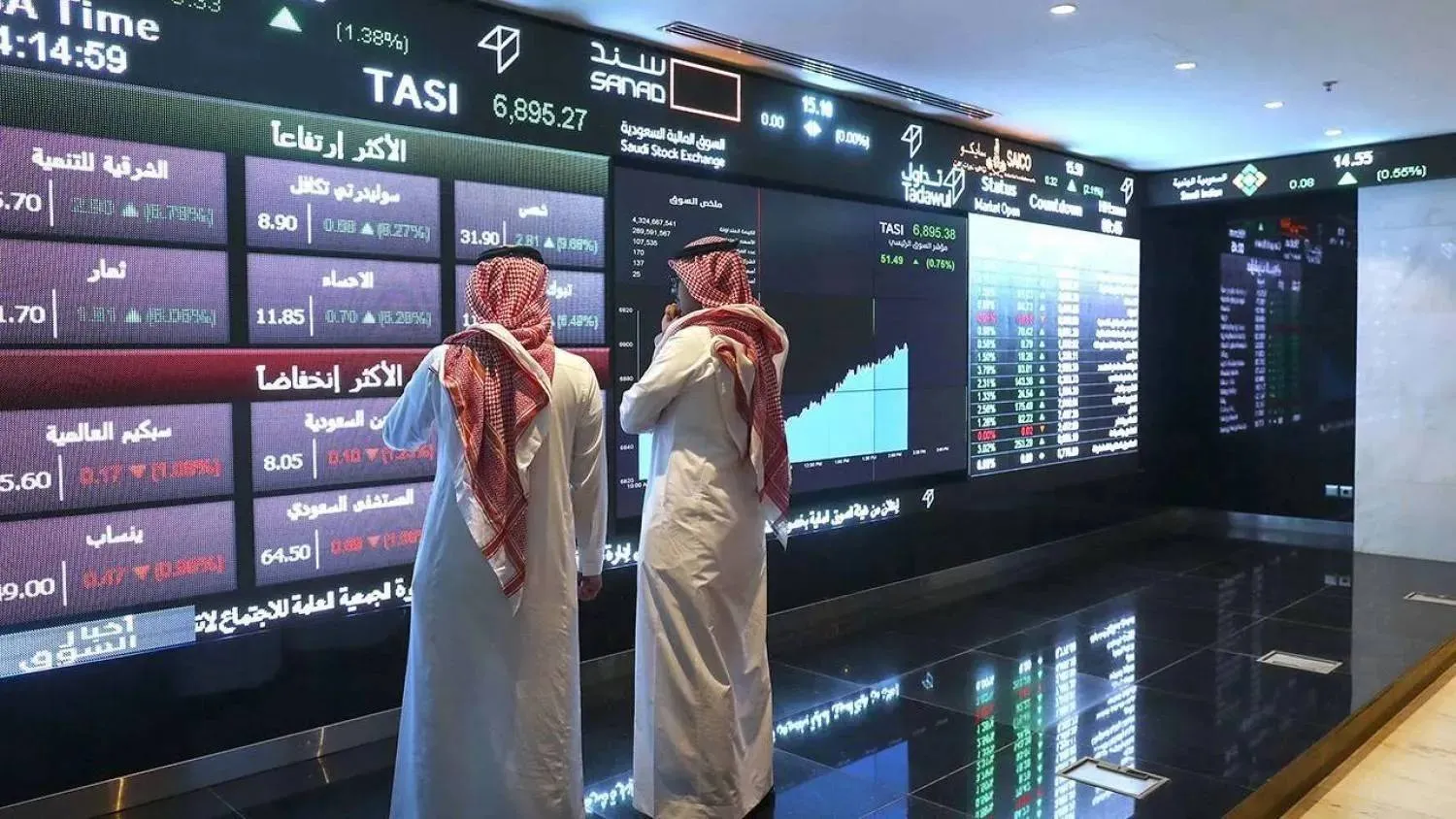
Investors monitor stock prices on the Saudi Tadawul screen. (Reuters)
TT

Saudi Banking Sector Posts Highest Quarterly Profits in Its History

Investors monitor stock prices on the Saudi Tadawul screen. (Reuters)

Saudi Arabia’s banking sector has achieved record-breaking quarterly earnings, reporting its highest-ever profits during the second quarter of 2025. According to financial disclosures, profits surged by 17.65% year-on-year, increasing by SAR 3.54 billion ($944 million) to reach SAR 22.98 billion ($6.13 billion), compared to SAR 19.54 billion ($5.21 billion) in the same period of 2024.

This exceptional performance was driven by all ten listed banks on the Saudi stock exchange, highlighting the continued strength and resilience of the Kingdom’s financial sector. The banks include the Saudi National Bank (SNB), Al Rajhi Bank, Riyad Bank, SAB (Saudi Awwal Bank), Banque Saudi Fransi, Arab National Bank, Alinma Bank, Bank Albilad, Saudi Investment Bank, and Bank AlJazira.

Al Rajhi Bank led the sector in both net profit and growth, posting earnings of SAR 6.15 billion riyals, an impressive 30.9% increase compared to the same quarter last year. Close behind was Saudi National Bank, which reported profits just over SAR 6.14 billion, marking a growth rate of 17.3%. Riyad Bank came third with SAR 2.59 billion in profits, reflecting an 11.1% increase.

In its Article IV consultation report published in June, the International Monetary Fund affirmed the Saudi banking sector’s resilience, citing its strong capitalization and profitability despite rising financing costs. Similarly, financial advisory firm Alvarez & Marsal noted the sector’s robust credit growth, cost-efficiency, and financial flexibility.

Hamad Al-Olayan, CEO of investment firm Villa Capital, emphasized that the Saudi banking sector’s performance merits deeper analysis.

He highlighted the sector’s consistent growth over the past 15 years, driven by capital increases, expanded lending, and strategic expansion.

Al-Olayan also noted that the sector has become the most attractive in the Saudi financial market for both local and international investors, dominating equity fund holdings due to its stable returns and strong fundamentals.

The banking sector has played a key role in maintaining the stability of the Saudi stock market index, especially as other sectors such as petrochemicals and cement, have struggled and dragged down overall market sentiment, he added.

Without the performance of Al Rajhi Bank’s stock, he said, the market index would likely be hovering between 9,300 and 9,500 points.

Looking ahead, Al-Olayan expects banks to lead the next phase of market growth, especially if interest rates begin to decline and economic clarity improves. He projected that the banking sector could drive the stock market index toward the 14,000-point mark.

He also stressed the sector’s vital role in financing projects across all scales, noting that many banks have already increased their capital and lending activity in response to growing demand.

Al-Olayan predicted that both Al Rajhi and SNB may announce capital increases and generous dividends by the end of the year, further boosting investor confidence.


IEA: Not Discussing 2nd Release of Strategic Oil Reserves

Strategic oil reserve tanks in Texas (Reuters)
TT

IEA: Not Discussing 2nd Release of Strategic Oil Reserves

Strategic oil reserve tanks in Texas (Reuters)

The International Energy Agency is not discussing a second release of strategic oil reserves at this time, IEA chief Fatih Birol told Reuters on Monday.

"Not for the time being," Birol said on the sidelines of an energy conference in Norway ⁠when asked whether ⁠the agency was discussing a second release of strategic reserves.

The IEA is always following the markets "very, very closely", and 80% of strategic reserves remain ⁠after a 400 million-barrel release in March, Birol added.

On gas, Birol expressed concerns Europe's current levels of gas reserves, which are around 62% according to transparency platform AGSI.

The European Union has a target of filling levels to 80% by December 1.

"The stocks are ⁠lower ⁠than historical averages, and we are still hoping to get gas from the Middle East, and at the same time ... Europe has committed itself to nullify the Russian gas imports," he said.

"If we have a harsh winter in Europe, we may have some challenges."


Fewer Than 20 Ships Transited Strait of Hormuz at the Start of the Week

Vessels near the Strait of Hormuz, as seen from Musandam, Oman, August 24, 2026. REUTERS/Stringer
TT

Fewer Than 20 Ships Transited Strait of Hormuz at the Start of the Week

Vessels near the Strait of Hormuz, as seen from Musandam, Oman, August 24, 2026. REUTERS/Stringer

Fewer than 20 commodity vessels transited the Strait of Hormuz at the start of the week, shipping data showed on Monday, as Iranian and US blockades restrict traffic through the chokepoint for energy shipments.

Four vessels crossed the strait on Sunday, initial data from shiptracker Kpler showed by 0228 GMT, with 13 on Saturday. The figures could change as some ships had switched off transponders on their way through.

That compared with Friday's figure of 16 transits, with two empty very large crude carriers (VLCCs) entering the Gulf with the tracking devices switched off, one heading to Iraq and the other to ⁠Bahrain, the data ⁠showed.

A VLCC carrying 2 million barrels of Emirati crude exited the strait on Thursday.

Eight very large gas carriers transited the strait over the past three days, the data showed, according to Reuters, six of them entering empty while the others carried liquefied petroleum gas (LPG) loaded from Iran and exited the Gulf.

Overall traffic volumes remained suppressed ⁠in the week to August 21, as vessels aborted transit plans or switched routes through the strait's north after attacks, the United Kingdom Maritime Trade Operations (UKMTO) agency said in a report.

A total of 89 vessels exited the strait while 103 entered over the seven-day period, the report, based on Automatic Identification System (AIS) data, showed.

"Traffic remains well below normal levels, with AIS-detected transits approximately 90% below pre-conflict baselines and declining since the June 24 to June 26 peak," it added.

Tanker traffic, at 45% of the total, continued ⁠to dominate movement ⁠through the strait, the agency said. Of these, 56% were tankers that carry crude oil, oil products or chemicals while LPG carriers accounted for a further 24%.

Since July 6, the UKMTO has reported 23 incidents of projectile strikes, leading to bridge, engine-room, and structural damage across vessels in the strait and its vicinity.

A total of 24 commodity vessels sailed through the Bab el-Mandeb strait on Sunday, down from Saturday's figure of 32, which was an increase from 22 on Friday, Kpler data showed.

Two VLCCs entered the Red Sea on Saturday with one carrying Iraqi Basrah crude and the other empty, it showed.


Oil Falls as Trump Pledges Economic War on Iran

LOS ANGELES, CALIFORNIA - AUGUST 21: Diesel prices over $7 a gallon are displayed on a pump at a gas station on August 21, 2026 in Los Angeles, California. Justin Sullivan/Getty Images/AFP
TT

Oil Falls as Trump Pledges Economic War on Iran

LOS ANGELES, CALIFORNIA - AUGUST 21: Diesel prices over $7 a gallon are displayed on a pump at a gas station on August 21, 2026 in Los Angeles, California. Justin Sullivan/Getty Images/AFP

Oil prices fell on Monday as investors braced for details of a US plan to isolate the Iranian economy that President Donald Trump billed as the "most crushing" financial operation ever against Tehran.

Asian stocks were mostly down, with South Korea's tech-rich Kospi falling more than three percent after Samsung Electronics said it spent $80 billion to buy back its own shares following weeks of turbulent trading.

The chip giant's shares, along with those of rival SK hynix, peaked in June on optimism for the artificial intelligence boom, but have since fallen amid investor jitters and a broader tech rout.

In an important week for AI, investors are also looking towards an earnings report from Nvidia, the world's most valuable company and a bellwether for the sector.

The recurring question for the US chipmaker is whether the AI boom will continue to accelerate as the technology takes over more corners of the broader economy.

"The spending machine is still running, but the bill is getting heavier," said Stephen Innes of SPI Asset Management.

"Nvidia must now show that the most expensive investment boom in modern market history can still pay its bills."

Chinese tech giant Alibaba is keeping focus on the sector after announcing on Sunday that it plans to issue $10.2 billion in new shares in Hong Kong to fund its global AI ambitions.

The firm, known for its open-source "Qwen" AI models, has been ploughing tens of billions of dollars into the technology, with shareholders eager to see how it will monetize the huge investments.

Tokyo and Shanghai closed down 0.7 percent and 0.6 percent respectively, echoing losses across Asia that included Taipei, Wellington, Bangkok, Mumbai and Jakarta. Sydney, Singapore, Manila and Kuala Lumpur posted marginal gains.

Hong Kong was down nearly two percent despite fast-fashion giant Shein announcing its market debut will take place in the Chinese financial hub on September 1.

The long-awaited listing would value the group -- known for its vast selection of products at stunningly low prices -- at close to $27 billion.

London was flat at the open, while Paris and Frankfurt were down 0.2 percent.

Eyes are also on US Treasury boss Scott Bessent, who said he would give more details in a news conference on Monday on a fresh push to pile economic pressure on Iran.

The United States warned allies and China on Thursday to join Trump's new campaign, which comes as the unpopular war in the Middle East drags toward the six-month mark.

US Vice President JD Vance acknowledged the plan was a "delicate dance" because Iran will "try to apply economic pressure to us".

Asked whether the United States would pressure China, Bessent told CNBC that "many conversations are best to have in private", but he also called on Beijing "to get with the program".

Both main crude contracts were down around two percent, with the Brent benchmark sitting at $92 a barrel, AFP reported.

Traders will also be watching this week's annual gathering of central bankers, economists and finance chiefs in Jackson Hole in the United States, hoping for some clarification on US monetary policy.

The meeting comes after the Treasury bought its own bonds last week in an effort to push down borrowing costs after the 30-year yield surged to levels last seen in 2007, just before the global financial crisis.

Yields have risen on inflation fears and as the United States reported that its federal debt had topped $40 trillion.
