


Saudi Arabia Forges Ahead with Jafurah Shale Gas Field Development  

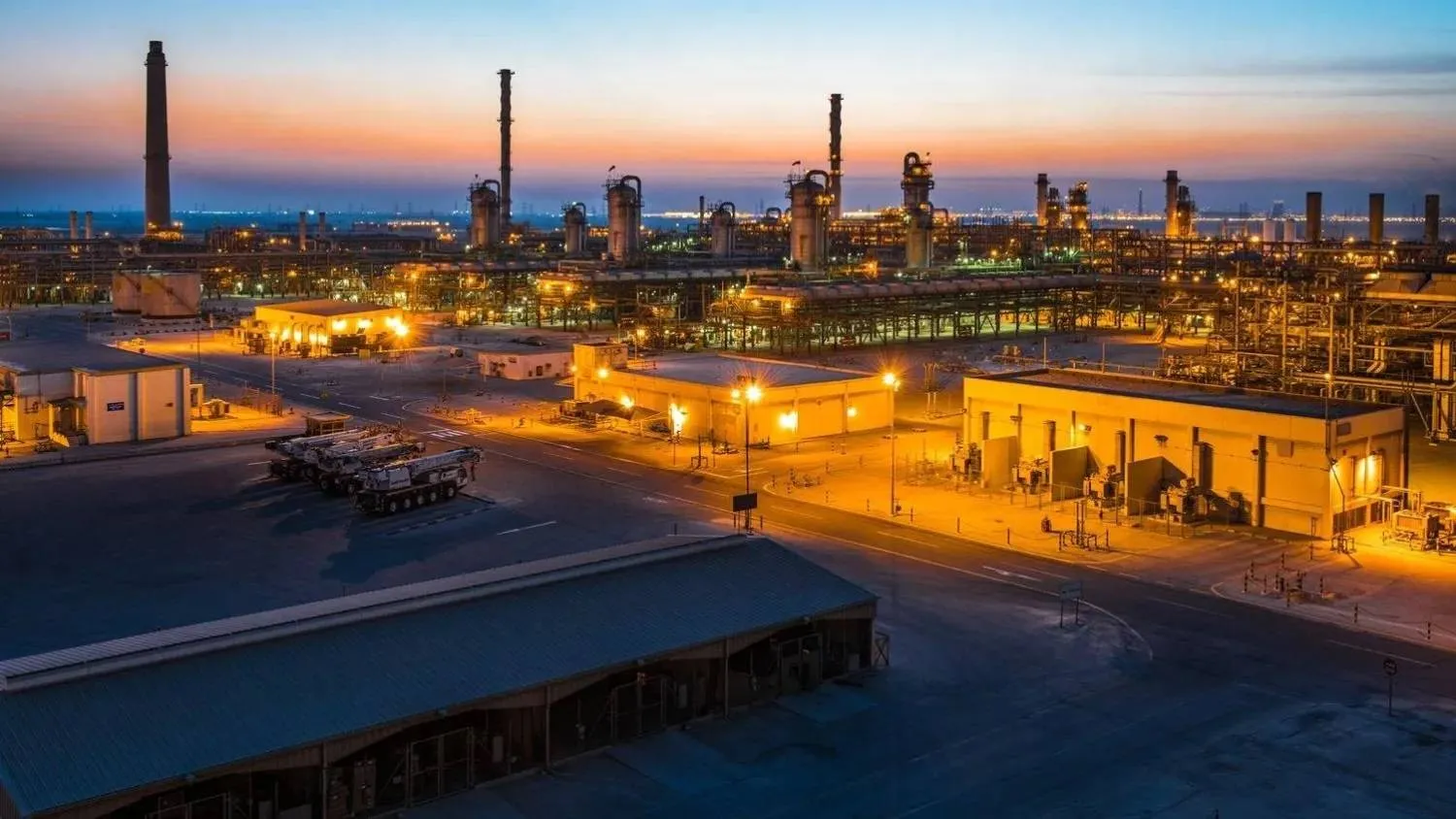
 A view of the Jafurah Shale Gas Field. (Saudi Aramco)
A view of the Jafurah Shale Gas Field. (Saudi Aramco)
TT

Saudi Arabia Forges Ahead with Jafurah Shale Gas Field Development  

 A view of the Jafurah Shale Gas Field. (Saudi Aramco)
A view of the Jafurah Shale Gas Field. (Saudi Aramco)

Saudi Aramco is pressing ahead with one of its most ambitious energy initiatives to date: the development of the Jafurah unconventional gas field, the largest of its kind in the Middle East, as part of a broader strategy to diversify the Kingdom’s energy mix and boost domestic gas output.

Located in the Eastern Province’s Jafurah Basin, which spans around 17,000 square kilometers, the project is seen as a cornerstone of Aramco’s transformation. The first phase is scheduled for completion in 2025, with plans to ramp up production to a sustained 2 billion standard cubic feet per day (scfd) of gas by 2030, alongside large volumes of ethane, natural gas liquids (NGLs), and condensates.

Speaking during the company’s second-quarter earnings announcement on Monday, Aramco CEO Amin Nasser confirmed that development at the Jafurah Gas Plant remains on track. The company posted net profits of $24.5 billion for the quarter, down from $29.07 billion a year earlier.

Jafurah holds an estimated 200 trillion standard cubic feet of natural gas, making it the richest shale gas play in the region. Aramco plans to invest more than $100 billion over the next 15 years to fully develop the field.

At the Al-Ahsa Investment Forum 2025, Nasser said the project is expected to contribute approximately $23 billion annually to Saudi Arabia’s GDP. It also aligns with Aramco’s goal to increase gas production capacity by over 60% by the end of the decade.

Global partnerships

According to former Saudi oil ministry adviser Dr. Mohammed Al-Sabban, the Jafurah field contains significant unconventional gas reserves, specifically shale gas, and may open the door to further technological partnerships.

“Given the complexity of the geology, Aramco could seek international partners with advanced expertise in shale gas extraction,” Al-Sabban told Asharq Al-Awsat.

He added that Saudi Arabia’s simultaneous expansion in oil, gas, and renewable energy investments positions the Kingdom as a comprehensive energy provider, rather than merely an oil exporter.

Decarbonization and industrial integration

The Jafurah project is also central to Aramco’s decarbonization drive, supporting the company's net-zero emissions target by 2050. It will provide high-value feedstock for the refining, processing, and petrochemicals sectors, including ethane, NGLs, and condensates.

Due to the low permeability and porosity of the basin’s shale formations, the project depends on advanced horizontal drilling and hydraulic fracturing techniques to extract gas from the sedimentary rocks of the Tuwaiq Mountain.

These technical demands classify Jafurah as an unconventional field, requiring specialized equipment and risk management protocols.

Aramco began by drilling both horizontal and vertical wells after confirming vast hydrocarbon deposits, alongside developing talent and creating detailed geologic maps to guide a three-year appraisal phase.

Billion-dollar contracts

On the ground, Aramco has introduced a suite of innovations to boost efficiency and safety. It has deployed mobile drilling rigs that can be relocated in one piece, and implemented advanced fracking practices that allowed the company to drill and complete wells more than five times faster, without traditional rigs, cutting costs and accelerating production timelines.

More than $10 billion in contracts have been awarded for the project’s initial phase, covering the construction of a fully integrated gas supply system. This includes a gas processing facility, an NGL fractionation plant, a gas compression network, and about 1,500 kilometers of pipelines for transportation and distribution, as well as a central power station and electrical infrastructure.

Turning point

Jafurah is not only a gas development megaproject; it is poised to reshape Saudi Arabia’s energy security. Once fully operational, it is expected to offset the equivalent of 500,000 barrels per day of crude oil used for domestic power generation, freeing up those volumes for value-added sectors such as refining and petrochemicals.

By 2030, the field is projected to produce more than 420 million scfd of ethane and up to 630,000 barrels per day of NGLs and condensates, helping to meet surging feedstock demand in the petrochemical industry.

The project is also expected to complement Aramco’s broader plans to scale up production of low-carbon hydrogen and blue ammonia.


Türkiye, Saudi Arabia Sign Comprehensive Power Purchase Agreement

Saudi Energy Minister Prince Abdulaziz bin Salman Al Saud and Turkish Energy and Natural Resources Minister Alparslan Bayraktar attend the signing of a power purchase agreement between Türkiye and ACWA Power in Istanbul on Friday (photo from the Turkish minister’s account on X).
TT

Türkiye, Saudi Arabia Sign Comprehensive Power Purchase Agreement

Saudi Energy Minister Prince Abdulaziz bin Salman Al Saud and Turkish Energy and Natural Resources Minister Alparslan Bayraktar attend the signing of a power purchase agreement between Türkiye and ACWA Power in Istanbul on Friday (photo from the Turkish minister’s account on X).

Türkiye’s Energy and Natural Resources Ministry signed a comprehensive power purchase agreement with Saudi energy giant ACWA Power to develop solar power plants and projects in Türkiye with major investments.

The agreement, signed in Istanbul on Friday, was attended by Türkiye’s Energy and Natural Resources Minister Alparslan Bayraktar and Saudi Energy Minister Prince Abdulaziz bin Salman Al Saud.

It includes the construction of two solar power plants in the Turkish provinces of Sivas and Karaman with a combined capacity of 2,000 megawatts and investments totaling $2 billion, as well as the implementation of large-scale solar projects with a total capacity of 5,000 megawatts in Türkiye.

Commenting on the agreement, Bayraktar said: “During our president Recep Tayyip Erdogan’s visit to Riyadh on Feb. 3, we signed an intergovernmental agreement on renewable power plant projects with my Saudi counterpart, Mr. Abdulaziz bin Salman Al Saud, which provides for total investments in solar and wind energy in Türkiye of 5,000 megawatts.”

“Today, we reinforced this cooperation by signing the agreement with ACWA Power in Istanbul. In the first phase of the project, two solar power plants with a total capacity of 2,000 megawatts will be built in Sivas and Karaman, with an investment of around $2 billion. This will add capacity to our grid to meet the electricity needs of 2.1 million households,” he added.

Bayraktar said on X that in Sivas, the agreed purchase price is 2.35 euro cents per kilowatt-hour, while in Karaman, electricity will be bought at a fixed price of 1.99 euro cents per kilowatt-hour, the lowest price recorded in Türkiye. The agreed prices will be valid for 25 years.

He said the projects, which are expected to make a significant contribution to the energy sector, require a minimum 50% local content ratio, adding that groundwork is targeted this year, operations are scheduled for 2028, and full production capacity will be reached as soon as possible.

In the second phase of the agreement, with a total capacity of 5,000 megawatts, “we aim to expand our cooperation with additional investments in solar and wind energy amounting to 3,000 megawatts,” Bayraktar said, expressing hope that the move would strengthen confidence in Türkiye’s renewable energy transition and investment climate and benefit the Turkish energy sector.

Two-phase plan

Construction under the first phase of ACWA Power’s investments in Türkiye is scheduled to begin in the first or second quarter of 2027, with electricity supply expected to start by mid-2028.

ACWA Power aims to sign an agreement with Türkiye on the second phase of its renewable energy investments before November.

The first-phase projects offer highly competitive electricity sale prices compared with other renewable power plants in Türkiye. In addition, the plants, valued at about $2 billion, will supply electricity to more than 2 million Turkish households.

A Turkish state-owned company will purchase the electricity generated by the plants for 30 years. During implementation, maximum use will be made of locally sourced equipment and services.

In recent years, Türkiye has sought to attract Gulf investments into its energy sector as it works to raise renewable power generation capacity to 120 gigawatts by 2035. Several previous attempts were not completed due to disagreements over financial valuations and pricing.

ACWA Power announced in June its intention to build two large solar power plants in Türkiye as part of a plan to invest billions of dollars in the Turkish energy sector.

Major investments

While the exact value of ACWA Power’s investment has not been disclosed, Türkiye said two years ago it was in talks with the company over projects worth up to $5 billion.

Türkiye’s Treasury and Finance Minister Mehmet Simsek described the intergovernmental energy agreement signed during Erdogan’s visit to Riyadh as a major boost for foreign direct investment inflows into Türkiye.

He said the pace of foreign direct investment in Türkiye is accelerating, reflecting growing confidence in its economic program, adding that the inflow of $2 billion in foreign direct investment into renewable energy projects through the agreement with Saudi Arabia would accelerate the green transition, strengthen energy security, and structurally reduce dependence on energy imports.

ACWA Power’s portfolio, 44% owned by Saudi Arabia’s Public Investment Fund, includes a gas-fired power plant in Türkiye. The company also expanded its solar energy projects in 2024 in Malaysia, Indonesia, and Uzbekistan.


Lagarde Dampens ECB Exit Talk, Expects to Finish her Term

FILE PHOTO: European Central Bank (ECB) President Christine Lagarde reacts during an address to the media after the ECB's Governing Council meeting, at the ECB headquarters in Frankfurt, Germany, December 18, 2025. REUTERS/Heiko Becker/File Photo
TT

Lagarde Dampens ECB Exit Talk, Expects to Finish her Term

FILE PHOTO: European Central Bank (ECB) President Christine Lagarde reacts during an address to the media after the ECB's Governing Council meeting, at the ECB headquarters in Frankfurt, Germany, December 18, 2025. REUTERS/Heiko Becker/File Photo

European Central Bank President Christine Lagarde has attempted to calm speculation about her stepping down early that has called into question the central bank's separation from politics, telling the Wall Street Journal she expects to complete her term.

Lagarde's status as leader of Europe's most important financial institution
was plunged into doubt this week after the Financial Times reported she planned to leave her job ahead of next spring's French presidential election, giving outgoing leader
Emmanuel Macron a say in picking her successor.

In an interview with the WSJ on Thursday, Lagarde dampened speculation about an imminent exit but still left the door slightly ajar to the possibility that she might leave before the end of her contract in October 2027.

“When I look back at all these years, I ‌think that we have ‌accomplished a lot, that I have accomplished a lot,” she told the ‌paper. “We ⁠need to consolidate ⁠and make sure that this is really solid and reliable. So my baseline is that it will take until the end of my term.”

Reuters exclusively reported that Lagarde had sent a private message to fellow policymakers reassuring them that she was still concentrating on her job and that they would hear it from her, rather than the press, if she wanted to step down.

The ECB has said that Lagarde has not made a decision about the end of her term, but stopped short of denying the FT report.

Some analysts thought an ⁠early exit risked tangling the ECB up in European politics as it could ‌give the impression of trying to make sure France's eurosceptic far ‌right, which could win next year's presidential vote, had no say in her succession.

Lagarde said last year she intended ‌to complete her term, a commitment she has conspicuously failed to repeat this week.

Bank of France Governor Francois ‌Villeroy de Galhau announced plans to step down from his job last week, in a move that gives President Macron a chance to pick the next French central bank chief, drawing sharp criticism from the far-right who called the move anti-democratic.

Villeroy's early departure and the confusion about Lagarde's future come just as US President Donald Trump is attacking the Federal Reserve, ‌further stoking debates about central bank independence from politics.

"After the recent events in the US, this is another reminder that although central banks are nominally ⁠independent, who leads them and ⁠their worldview is a matter for high politics," economists at Oxford Economics wrote on Friday.

As the head of the euro zone's second largest economy, the French president plays an important role in wider negotiations to select the head of the ECB.

Polls show either far-right National Rally leader Marine Le Pen, or her protege Jordan Bardella, could win the French presidency.

While the party has long dropped a call for France to leave the euro, it is still seen as something of an unknown quantity in central banking circles.

According to Reuters, Lagarde told the WSJ that she viewed her mission as price and financial stability, as well as "protecting the euro, making sure that it is solid and strong and fit for the future of Europe."

She also said that the World Economic Forum was "one of the many options" she was considering once she left the central bank.

When Lagarde's name first emerged as a possible candidate for ECB president in 2019, she said she had no interest in the job and would not leave the International Monetary Fund, where she was the managing director.


Stocks Drop, Oil Rises after Trump Iran Threat

Donald Trump has deployed warships, fighter jets and other military hardware to the Middle East as he puts pressure on Iran. Hannah Tross / US NAVY/AFP
TT

Stocks Drop, Oil Rises after Trump Iran Threat

Donald Trump has deployed warships, fighter jets and other military hardware to the Middle East as he puts pressure on Iran. Hannah Tross / US NAVY/AFP

Most Asia equities fell and oil prices rose on Friday after Donald Trump ratcheted up Middle East tensions by hinting at possible military strikes on Iran if it did not make a "meaningful deal" in nuclear talks.

The remarks fanned geopolitical concerns and cast a pall over a tentative rebound in markets following an AI-fueled sell-off this month.

Traders are also looking ahead to the release of US data later in the day that will provide a fresh snapshot of the world's top economy, said AFP.

A slew of forecast-beating figures over the past few days have lifted optimism about the outlook but tempered expectations for more interest rate cuts.

The US president told the inaugural meeting of the "Board of Peace", his initiative to secure stability in Gaza, that Tehran should make a deal.

"It's proven to be over the years not easy to make a meaningful deal with Iran. We have to make a meaningful deal otherwise bad things happen," he said, as he deployed warships, fighter jets and other military hardware to the region.

He warned that Washington "may have to take it a step further" without any agreement, adding: "You're going to be finding out over the next probably 10 days."

Israeli Prime Minister Benjamin Netanyahu earlier warned: "If the ayatollahs make a mistake and attack us, they will receive a response they cannot even imagine."

The threats come days after the United States and Iran held a second round of Omani-mediated talks in Geneva as Washington looks to prevent the country from getting a nuclear bomb, which Tehran says it is not pursuing.

The prospect of a conflict in the crude-rich Middle East has sent oil prices surging this week, and they extended the gains Friday to sit at their highest levels since June.

Equity traders were also spooked.

Hong Kong fell as it reopened from a three-day break, while Tokyo, Sydney, Wellington and Bangkok were also down. However, Seoul continued to rally to a fresh record thanks to more tech buying, with Singapore, Manila and Mumbai also up.

City Index market analyst Matt Simpson said a strike was not certain.

"At its core, this looks like pressure and leverage rather than a prelude to invasion," he wrote.

"The US is pairing military readiness with stalled nuclear negotiations, signaling it has credible strike options if talks fail. That doesn't automatically translate into boots on the ground or a regime-change campaign.

"While military assets dominate headlines, diplomacy is still in motion. The fact talks are continuing at all suggests both sides are still probing for a diplomatic off-ramp before tensions harden further."

Shares in Jakarta slipped even after Trump and Indonesian President Prabowo Subianto reached a trade deal after months of wrangling.

The accord sets a 19 percent tariff on Indonesian goods entering the United States. The Southeast Asian country had been threatened with a potential 32 percent levy before the pact.

Jakarta also agreed to $33 billion in purchases of US energy commodities, agricultural products and aviation-related goods, including Boeing aircraft.
